ART
BEAUTY & WELLNESS
CRAFT
CULTURE & HISTORY
ENTERTAINMENT
ENVIRONMENT
FOOD & DRINKS
REVERSE ENGINEERING
SCIENCES
SPORTS
TECHNOLOGY
WEARABLES
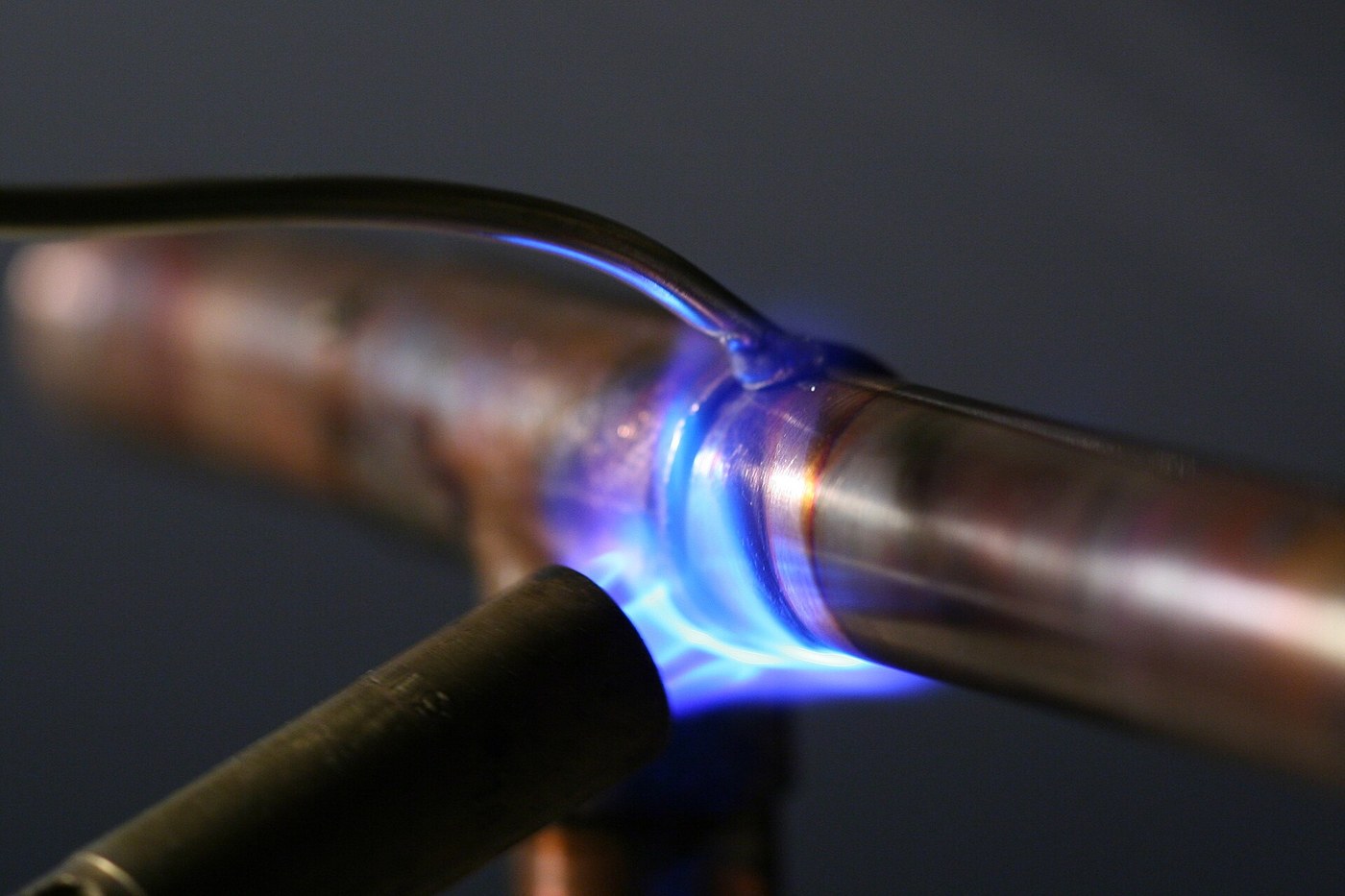


Lead-Free Plumbing Solder: Tin with 0.7 % Copper, Cast in Bars
Lead has been banned from drinking-water plumbing solder in the US since 1974; tin with a little copper took its place. Tin with 0.7 % copper melts at 227 °C, higher than the old tin-lead. Melt the tin, dissolve the copper in it and cast it into bars, the thick form plumbers use.
The picture: soldering a copper pipe joint with a torch.
Intermediate
Two hours
Instructions
1
1
Weigh
Weigh
Weigh 99.3 parts tin to 0.7 parts copper (step 5). Cut the copper wire into short pieces.
Materials for this step:
 Tin Ingot993 g
 Copper Wire7 g
Tools needed:
 Balance Scale
 Tin Snips
2
2
Melt and alloy
Melt and alloy
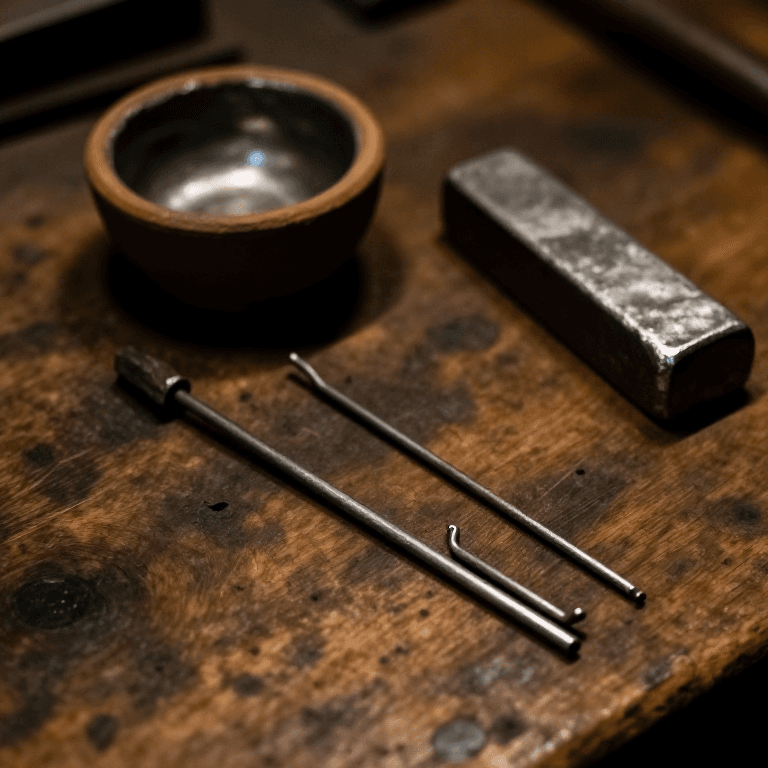
Melt the tin in an iron crucible on the forge hearth under a thin layer of charcoal dust (ours). Drop in the copper pieces and stir with an iron rod, keeping it hot, until no copper is left undissolved.
Tools needed:
 Iron Crucible
 Hearth (Forge Fire)
 Charcoal
 Iron Rod
 Crucible Tongs
 Welding Gloves
 Safety Glasses
3
3
Cast bars
Cast bars
Skim off the charcoal and pour the alloy into a warmed ingot mould. Knock the bars out when cold.
Tools needed:
 Ingot MouldCrucible TongsWelding GlovesSafety Glasses
4
4
Label
Label
Scratch a mark on each bar so it is never mixed with lead solder.
Tools needed:
Iron Rod5
5
Tin and copper
Tin and copper
Loading Jupyter Notebook...
This blueprint makes

Related Blueprints
These blueprints share knowledge with this one — techniques, materials, or principles that connect them in the learning graph.

CC0 Public Domain
This blueprint is released under CC0. You are free to copy, modify, distribute, and use this work for any purpose, without asking permission.
Support the Maker by purchasing products through their Blueprint where they earn a Maker Commission set by Vendors, or create a new iteration of this Blueprint and include it as a connection in your own Blueprint to share revenue.