ART
BEAUTY & WELLNESS
CRAFT
CULTURE & HISTORY
ENTERTAINMENT
ENVIRONMENT
FOOD & DRINKS
REVERSE ENGINEERING
SCIENCES
SPORTS
TECHNOLOGY
WEARABLES
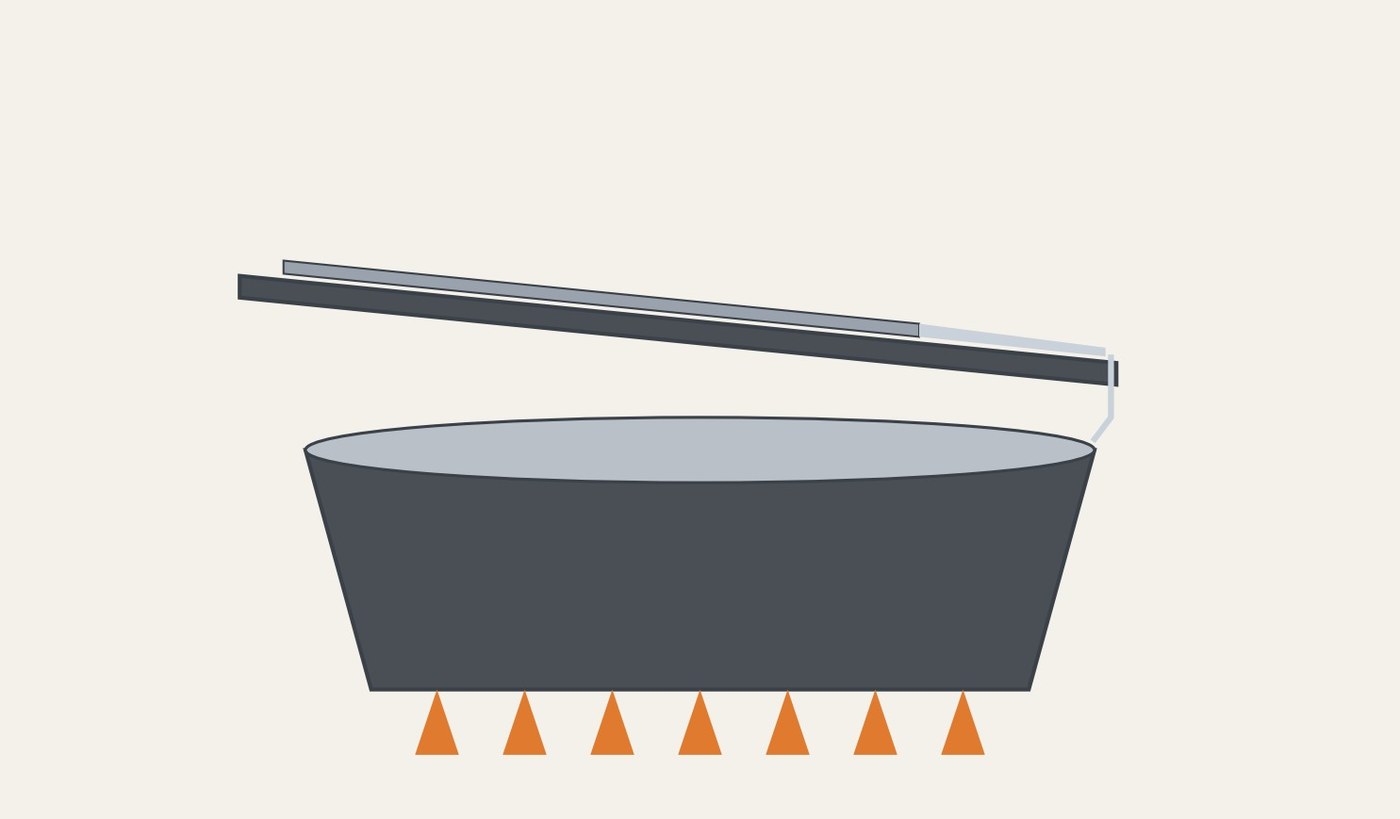


Lead Sheet Cast on a Tilted Iron Plate, Ure 1839
Thin lead sheet can be cast without rolling. Andrew Ure (1839) describes the white-lead works: melted lead is poured on an iron plate over the pot, and as soon as its surface begins to set the plate is tipped, so the still-liquid lead runs back and leaves a thin sheet that lifts off like paper. Their sheets were 1/24 inch thick or less.
The picture: our diagram, the plate tipped over the pot as the liquid runs off.
Intermediate
An afternoon
Instructions
1
1
Melt the lead
Melt the lead
Melt lead in a cast-iron pot over the fire. Work outdoors, keep food and drink away, and wash your hands after.
Materials for this step:
 Lead Ingot5 kg
 Charcoal3 as required
Tools needed:
 Cast Iron Melting Pot
 Blacksmith Forge
 Dust Mask
 Welding Gloves
 Safety Glasses
2
2
Set the plate
Set the plate
Lay a clean, dry iron plate across the pot so it can be tipped toward one side to drain into the pot.
Tools needed:
 Iron Sheet (Hammered)Cast Iron Melting PotWelding GlovesSafety Glasses
3
3
Pour and tip
Pour and tip
Ladle lead onto the plate. The moment its surface starts to set, tip the plate so the liquid runs back into the pot; the thin set layer stays as a sheet.
Tools needed:
 Foundry LadleIron Sheet (Hammered)Welding GlovesSafety Glasses
4
4
Lift and repeat
Lift and repeat
Lift the sheet off, cool the plate with water, and pour again. Trim the sheets with snips.
Materials for this step:
 Water5 liters
Tools needed:
 Tin SnipsWelding GlovesSafety Glasses
5
5
Sheet from a pot
Sheet from a pot
Loading Jupyter Notebook...
This blueprint makes
Related Blueprints
These blueprints share knowledge with this one — techniques, materials, or principles that connect them in the learning graph.


CC0 Public Domain
This blueprint is released under CC0. You are free to copy, modify, distribute, and use this work for any purpose, without asking permission.
Support the Maker by purchasing products through their Blueprint where they earn a Maker Commission set by Vendors, or create a new iteration of this Blueprint and include it as a connection in your own Blueprint to share revenue.