
Javanese Batik Wax Making — Klowong and Tembokan Traditional Wax Formulations
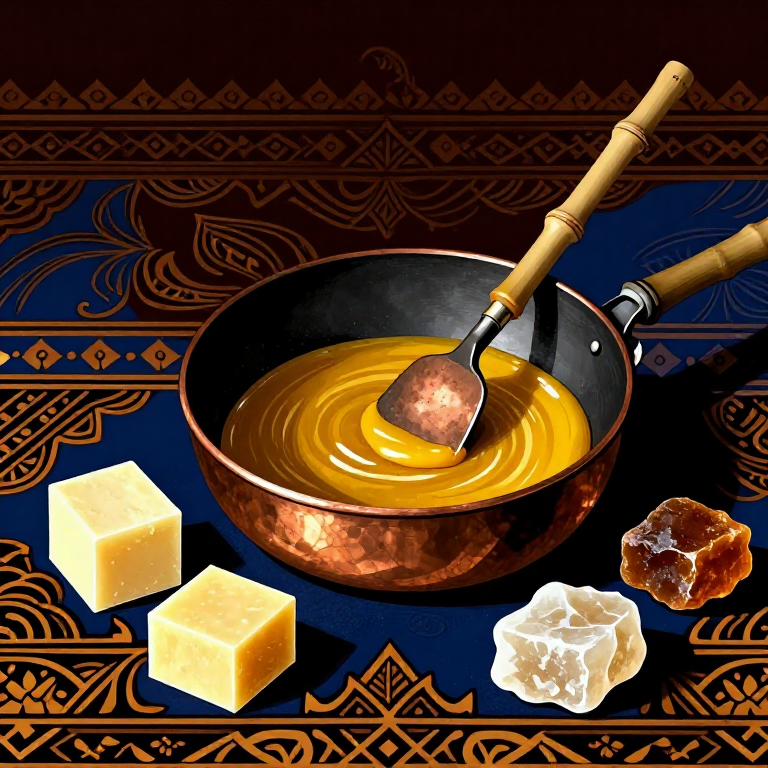
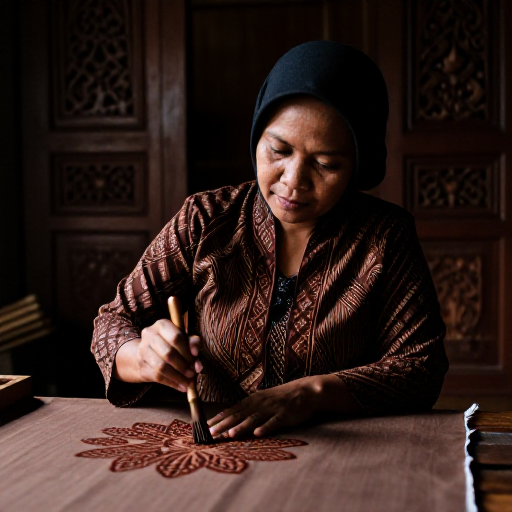
A complete guide to making batik wax (malam) for traditional Javanese hand-drawn batik (batik tulis). Batik wax is a mixture of beeswax (lilin tawon), paraffin, and gondorukem (damar resin) in specific recipes for different resist effects. Klowong wax (for lines/outlines) uses more beeswax so it stays flexible and does not crack easily. Tembokan wax (for covering large areas) uses more paraffin so it dries hard and cracks easily — these cracks create the characteristic 'crackle' effect in batik. The control temperature is very critical: 60-70°C for application with a canting; if too hot, the wax spreads and looks messy; if too cool, the wax does not penetrate the cloth. Javanese hand-drawn batik has been recognized by UNESCO as an Intangible Cultural Heritage of Humanity since 2009.
Instructions
Understanding batik wax and its function
Understanding batik wax and its function
Malam (batik wax) is a resist material used to cover cloth so that dye cannot penetrate the covered parts. This technique is called 'wax-resist dyeing' — a principle that has been used in Java for more than 1,000 years. Batik malam is not ordinary wax, but a specific mixture of several materials with different properties. The main materials are beeswax (lilin tawon), paraffin, and gondorukem (damar resin, from Shorea sp. trees). Each material has a role: beeswax makes the malam flexible and adheres strongly to the cloth; paraffin makes the malam harder and easily cracks (for a crackle effect); gondorukem makes the malam harder and increases its durability for lengthy dyeing processes. The proportions of the mixture vary depending on the type of malam desired — malam klowong, malam tembokan, and malam biron.
Selecting and Preparing Beeswax
Selecting and Preparing Beeswax
Beeswax is the most important primary ingredient of batik wax. Pure beeswax from honeybees (Apis cerana or Apis mellifera) ranges in color from young yellow to old yellow, with a slightly honey-like scent. The melting point of beeswax is 62-64°C. Choose clean beeswax, not mixed with impurities such as soil or bee debris. Raw beeswax usually comes in block or sheet form. Before mixing, beeswax must be melted and filtered through cloth strainers to remove small impurities. Beeswax makes batik wax flexible (flexible) — if the wax is only paraffin, it easily cracks when the cloth is folded. For outline wax (klowong), beeswax can make up 60-70% of the mixture. If pure beeswax is hard to find, do not use wax mixed with stearin — stearin makes the wax not adhere to the cloth.
Materials for this step:
 Beeswax Block (pure, yellow)2 kg
Tools needed:
 Kitchen Scale (digital, 0-5 kg)
Preparing the paraffin
Preparing the paraffin
Paraffin is a petroleum-based wax that is white in color, odorless, and has a melting point of 46-68°C depending on its type. For batik, choose paraffin with a medium melting point, namely 52-58°C (fully refined paraffin wax). Paraffin is usually sold in block form or as granules (pellets). Paraffin makes the wax harder and more brittle — this property is important for crackle wax, whose cracks create a thin line effect (crackle effect) during the dyeing process. Paraffin is also cheaper than beeswax, so it can reduce production costs. However, if there is too much paraffin, the wax does not adhere strongly to the fabric and easily comes off during the dyeing process. For crackle wax, paraffin can make up 50-70% of the mixture.
Materials for this step:
 Fully Refined Paraffin Wax (52-58°C melt point)2 kg
Tools needed:
Kitchen Scale (digital, 0-5 kg)Preparing gondorukem (damar resin)
Preparing gondorukem (damar resin)
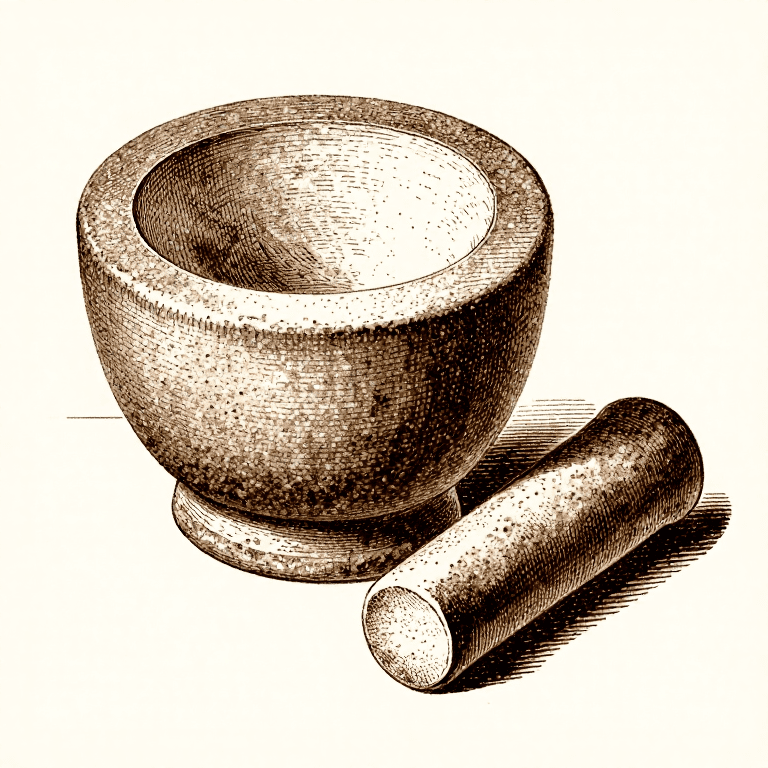
Gondorukem (or damar) is a tree resin from the genus Shorea (family Dipterocarpaceae), originating from the tropical forests of Southeast Asia. Its color ranges from clear yellow to light brown, and its form is hard and easily shattered (glassy/brittle). Its softening point (softening point) is about 75-85°C. Gondorukem makes batik wax harder, increases adhesion (adhesion) to the cloth, and increases resistance to prolonged immersion in dye baths. Before being mixed, gondorukem must be pounded into a coarse powder — large pieces take too long to melt and do not mix evenly. Pound the gondorukem in a stone mortar, or wrap it in cloth and then tap it with a hammer until it breaks into small pieces (size 5-10 mm). If there is too much gondorukem, the wax becomes very hard and difficult to use with the canting — usually the proportion of gondorukem is only 5-15% of the total mixture.
Materials for this step:
 Damar Resin (gondorukem, Shorea sp.)500 gram
Tools needed:
 Stone Mortar and PestleKitchen Scale (digital, 0-5 kg)
Klowong wax recipe (for outline lines)
Klowong wax recipe (for outline lines)
Klowong wax is used to draw the main lines (outline) of batik motifs using a tulis canting. This wax must be flexible, adhere strongly, and not crack easily so that the dye does not leak through cracks. Traditional klowong wax recipe from Central Java (Solo/Yogyakarta): beeswax 60-70%, paraffin 20-25%, gondorukem 10-15%. Example for 1 kg of klowong wax: beeswax 650 grams, paraffin 200 grams, gondorukem 150 grams. First melt the beeswax in the wok (highest melting point), then add the paraffin (melts faster), and finally add the gondorukem powder little by little while stirring evenly. Adding too much gondorukem can make the wax foam (become bubbly). The total temperature of the mixture must not exceed 100°C — if it boils, the beeswax is damaged and the wax easily scorches.
Materials for this step:
Beeswax Block (pure, yellow)650 gramParaffin Wax200 gramDamar Resin (gondorukem)150 gramTools needed:
 Brass Wax Pot
 Wooden Stirring Stick
 Charcoal Stove
Wall wax recipe (for covering large areas)
Wall wax recipe (for covering large areas)
Wall wax is used to cover large areas of cloth that are not to be dyed. Unlike line wax (malam klowong), wall wax is deliberately made harder and more prone to cracking so as to create a crackle effect (fine crack lines that are a hallmark of hand-drawn batik tulis). Traditional wall wax recipe: paraffin 50-60%, bee's wax 25-35%, gondorukem 10-15%. Example for 1 kg of wall wax: paraffin 550 grams, bee's wax 300 grams, gondorukem 150 grams. The mixing process is the same as for line wax — melt the bee's wax first, add the paraffin, and finally the gondorukem. If you want a greater crackle effect, increase the proportion of paraffin up to 65-70%. If you want a finer wall wax without crackle (for high-grade fine batik), reduce the paraffin and add bee's wax.
Materials for this step:
Paraffin Wax550 gramBeeswax Block (pure, yellow)300 gramDamar Resin (gondorukem)150 gramTools needed:
Brass Wax PotWooden Stirring StickCharcoal StoveProcess of heating and mixing the wax
Process of heating and mixing the wax
Set up the anglo (charcoal stove) and light the wood charcoal until it glows evenly red — the fire must be stable, not too big. Place the brass pan (wax pan) on top of the anglo. Put in the beeswax pieces first — this is the ingredient with the highest melting point (62-64°C), so it takes the longest time to liquefy. Stir slowly with a wooden skewer (don't use metal — metal conducts heat and can scorch the wax at the edges of the pan). Once all the beeswax has liquefied, add the paraffin pieces — liquid paraffin is faster (46-58°C). Keep stirring until smooth. Finally, add the powdered gondorukem (rosin) little by little — don't add a lot at once, as rosin can make the mixture foam up if too much is added at one time. Stir slowly until the gondorukem is completely dissolved and the mixture is smooth without lumps. Total mixing time is about 20-30 minutes.
Materials for this step:
 Lump Charcoal (hardwood)2 kg
Tools needed:
Charcoal StoveBrass Wax PotWooden Stirring Stick Cooking Thermometer (0-200°C)
Managing wax temperature for canting application
Managing wax temperature for canting application
Temperature control is the key to successful hand-drawn batik. Melted wax should be kept at a temperature of 60-70°C for application with a hand canting. Using a cooking thermometer, measure the wax temperature regularly. If the temperature is below 55°C: the wax becomes thick, does not flow smoothly from the canting, and does not penetrate the cloth — the result is that it only sticks to the surface and easily peels off when dipped. If the temperature is above 80°C: the wax becomes too thin, spreads on the cloth (lines become untidy/blurred), and can scorch the cloth. If the temperature is above 100°C: the wax can emit smoke and may catch fire (flash point of beeswax is around 204°C, but smoke is already released at 100-120°C — this is dangerous to health). To keep the temperature stable, adjust the distance of the pan from the fire — if it is too high, lift it slightly; if it is too low, move it closer.
Tools needed:
Cooking Thermometer (0-200°C)Charcoal StoveTesting the wax on the sample cloth
Testing the wax on the sample cloth
Before using the wax on genuine batik cloth, first test on a small piece of cotton cloth (sample). Dip the tip of the canting into the melted wax, then draw it across the cotton cloth. Note: the wax must penetrate the cloth until it is visible on the reverse side (penetrating both ways) — this is a sign of the correct temperature and consistency. If the wax only sticks to the top surface (does not penetrate), the temperature is too low or the cloth is not clean enough (has starch/sizing). If the wax spreads too much so the lines become wide, the temperature is too high — wait a moment until the temperature drops. If the wax cracks easily when the cloth is folded, there is too much paraffin — add a little beeswax. If the wax is very sticky and does not dry, there is too much beeswax — add a little paraffin. This test is very important — it saves materials and time compared with using it directly on expensive batik cloth.
Tools needed:
 Copper Canting Tool (medium spout)
 Cotton Fabric Sample (primissima grade)
Storing batik wax that has already been used
Storing batik wax that has already been used
Wax that has been melted can be stored for reuse. Turn off the charcoal stove and let the wax in the pan cool down completely on its own — do not pour water on it to speed up the cooling process, as this can make the wax crack and break unevenly. Once the wax has hardened in the pan, pry it out with a wooden skewer and break it into small pieces (about the size of a fist). Store the wax pieces in a plastic container or burlap sack in a place that is dry, cool, and not exposed to direct sunlight. Wax that is stored properly can last for many years without losing its quality. When you want to use it again, it only needs to be melted again in the pan. Each time it is reused, the wax may change its properties slightly — add a little new material (beeswax or gondorukem) to restore its consistency.
Tools needed:
Wooden Stirring Stick Plastic Storage Container (airtight, 5L)
Recycling used wax (dewaxing wax)
Recycling used wax (dewaxing wax)
Used wax from the dewaxing process (removing wax from fabric after dyeing) can be recycled. The dewaxing process uses boiling hot water to melt the wax out of the fabric. Wax floating on the surface of the hot water is collected using a ladle or large spoon. This dewaxing wax is still mixed with dye, dirt, and fabric starch. To recycle: remelt the dewaxing wax in a pan, then filter it through coarse cloth to remove large dirt particles. Recycled wax is darker in color (due to dye mixture) and its properties change slightly — usually harder and less flexible. Recycled wax is suitable for mixing into batik wax for tembokan (which doesn't require the highest quality). For high-quality klowong wax, keep using a mix with fresh materials.
Materials for this step:
 Used Batik Wax (malam lorodan)1 kg
 Coarse Cotton Filter Cloth1 piece
Tools needed:
Brass Wax Pot Metal LadleCharcoal Stove
Preparing the canting and wax pan tools for batik
Preparing the canting and wax pan tools for batik
Once the wax is ready, prepare the tools for the batik process. A canting is a small copper tool with a bamboo handle used to draw motifs with liquid wax. There are several types of canting according to the size of their spout: canting cecek (a small spout, for dots and fine details, diameter 0.5-1 mm), canting klowong (a medium spout, for main lines/outlines, diameter 1-2 mm), and canting tembokan (a large spout, for covering wide areas, diameter 2-4 mm). Clean the canting spout with thin wire to remove leftover wax that has hardened inside. Prepare a cloth rag to wipe wax drips from the canting before drawing on the fabric. Place the wax pan on a stove with a steady fire, add wax chunks, and wait until it melts evenly at a temperature of 60-70°C. Now you are ready to start batik.
Tools needed:
 Copper Canting Tool (cecek, fine spout)
 Copper Canting Tool (klowong, medium spout)Copper Canting Tool (tembokan, wide spout)
 Thin Brass Wire (for cleaning spouts)Charcoal StoveBrass Wax Pot
 Cotton Rag (for wiping drips)
Materials
7- 950 gramPlaceholder
- 750 gramPlaceholder
- 800 gramPlaceholder
- Placeholder
- Placeholder
- 1 piecePlaceholder
- 2 kgPlaceholder
Tools Required
14- Placeholder
- Placeholder
- Placeholder
- Placeholder
- Placeholder
- Placeholder
- Placeholder
- Placeholder
- Placeholder
- Placeholder
- Placeholder
- Placeholder
- Placeholder
- Placeholder
This blueprint makes
Related Blueprints
These blueprints share knowledge with this one — techniques, materials, or principles that connect them in the learning graph.

CC0 Public Domain
This blueprint is released under CC0. You are free to copy, modify, distribute, and use this work for any purpose, without asking permission.
Support the Maker by purchasing products through their Blueprint where they earn a Maker Commission set by Vendors, or create a new iteration of this Blueprint and include it as a connection in your own Blueprint to share revenue.