ART
BEAUTY & WELLNESS
CRAFT
CULTURE & HISTORY
ENTERTAINMENT
ENVIRONMENT
FOOD & DRINKS
REVERSE ENGINEERING
SCIENCES
SPORTS
TECHNOLOGY
WEARABLES
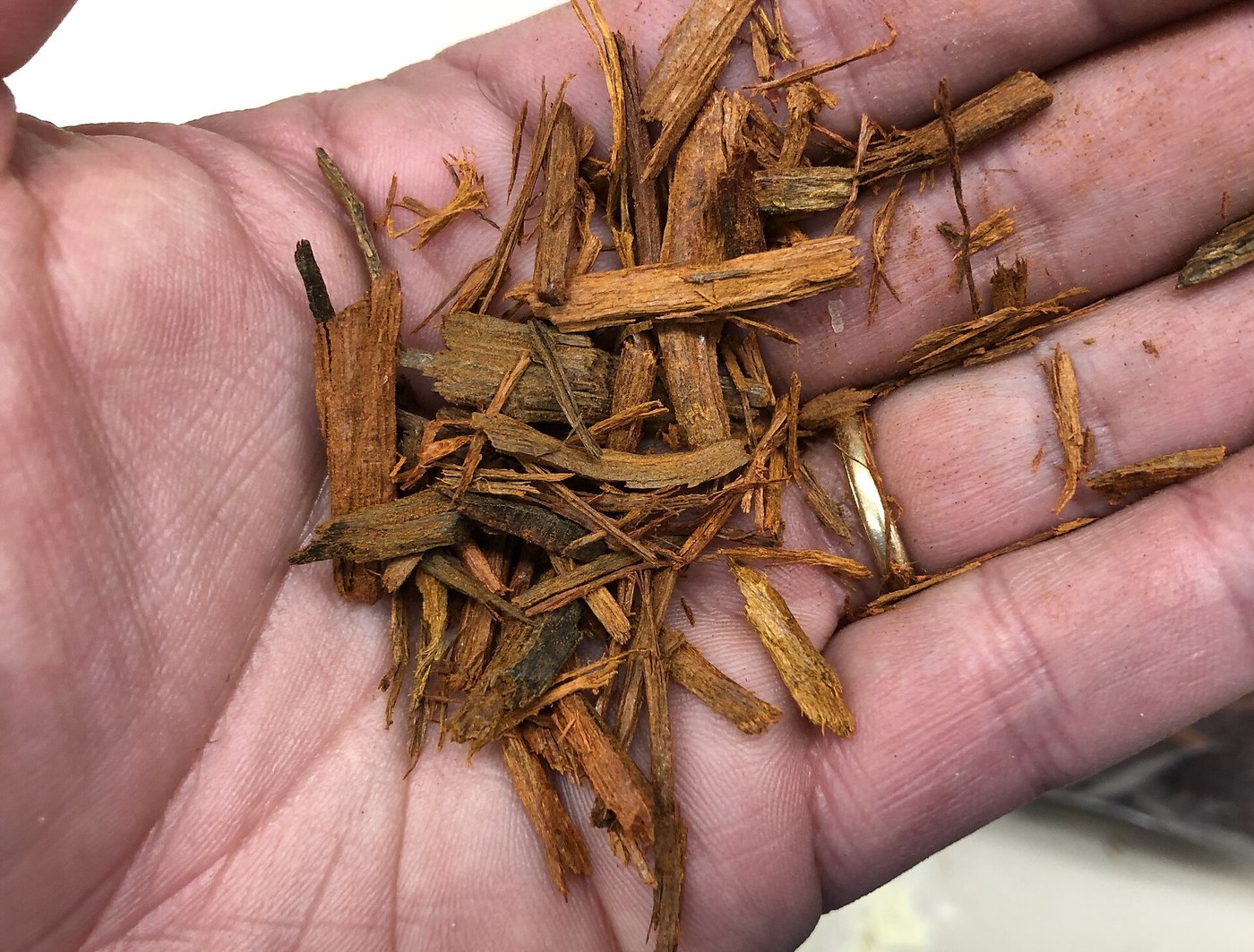


Logwood Chips: Campeachy Heartwood Chipped for the Dyer
Dyers never use logwood as a log: they chip or rasp the hard heartwood first (Thorpe, 1912). Old wood with little of the pale sapwood is best (Ure, 1839). Keep the chips closed up, because they lose dyeing power in the air. They can be "aged" in damp heaps first, though with a chrome mordant this is not needed.
The picture: logwood chips (photo by Waughd, Wikimedia Commons, CC BY-SA 4.0).
Beginner
A few hours
Instructions
1
1
Choose old heartwood
Choose old heartwood
Pick old logwood with dark bark and little of the white sapwood. Shave off bark and sapwood: only the dense dark-red heartwood dyes.
Materials for this step:
 Logwood1 kg
Tools needed:
 Drawknife
 Hatchet
2
2
Chip or rasp
Chip or rasp
Split the heartwood with the hatchet and cut it into small chips, or rasp it to a coarse powder.
Tools needed:
Hatchet Wood Rasp
 Digital Kitchen Scale
3
3
Ageing, if wanted
Ageing, if wanted
For iron blacks, the old trade wetted the chips and heaped them in an airy room until they warmed and darkened, turning them often so they did not over-age. With a chrome mordant, skip this.
Tools needed:
 Water
4
4
Store closed
Store closed
Bag the chips and keep them closed and dry: left open to the air they lose part of their dyeing power.
Tools needed:
 Jute Sack
This blueprint makes

CC0 Public Domain
This blueprint is released under CC0. You are free to copy, modify, distribute, and use this work for any purpose, without asking permission.
Support the Maker by purchasing products through their Blueprint where they earn a Maker Commission set by Vendors, or create a new iteration of this Blueprint and include it as a connection in your own Blueprint to share revenue.