ART
BEAUTY & WELLNESS
CRAFT
CULTURE & HISTORY
ENTERTAINMENT
ENVIRONMENT
FOOD & DRINKS
REVERSE ENGINEERING
SCIENCES
SPORTS
TECHNOLOGY
WEARABLES
Translated


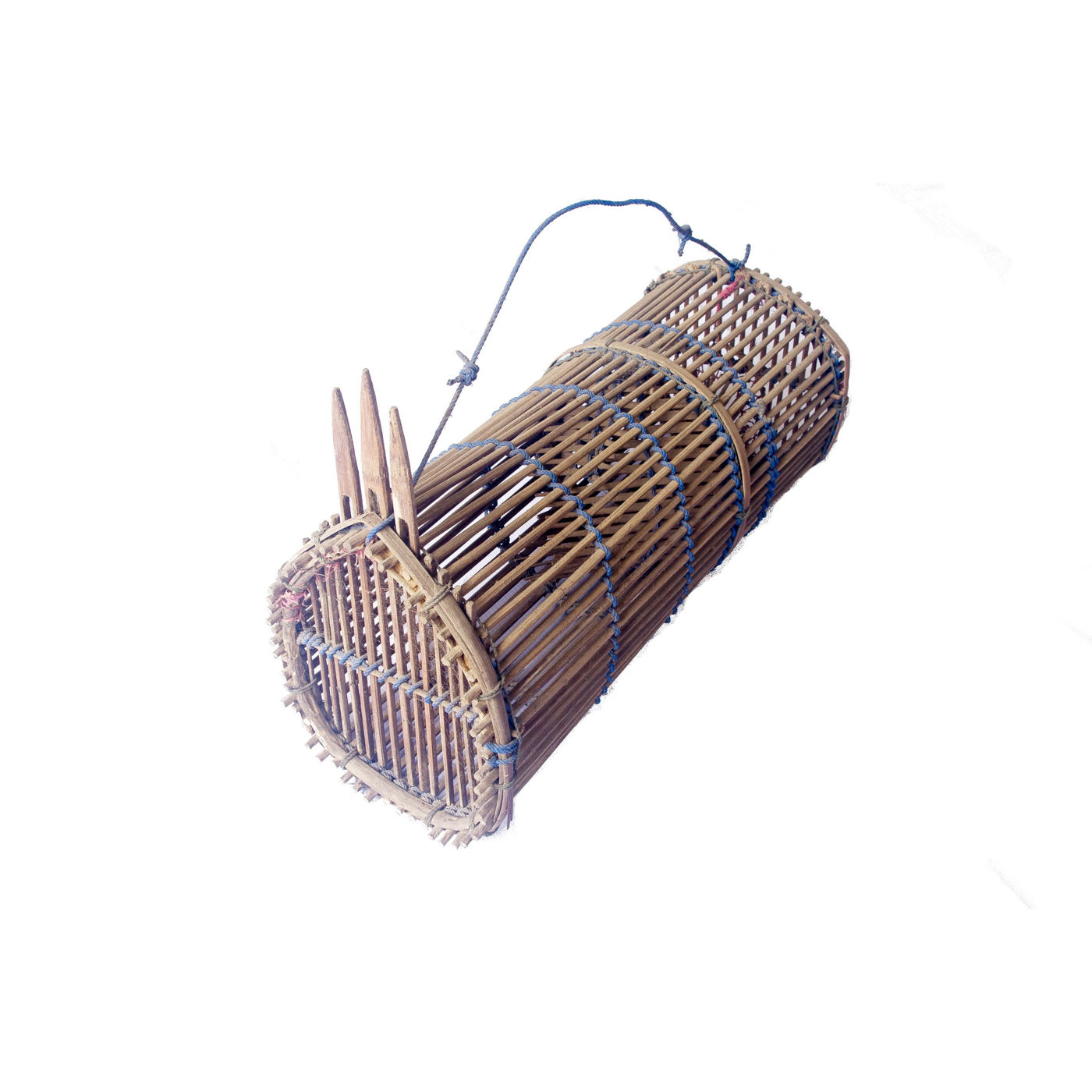
Lop (Thai Valve Fish Trap) — a Cylinder of Bamboo Slats on Hoops, With Funnels at the Mouth and in the Middle, Set in Drainage Channels Against the Current
ลอบ (lop) is a trap for water animals that lies still, waiting for them to stray inside. It is found in almost every rice-farming household in the countryside and is set in drainage channels.
This blueprint makes a real lop of the common size following the source.
Intermediate
About 1-2 days
Instructions
1
1
Real sizes
Real sizes
Loading Jupyter Notebook...
2
2
Fishing gear, before it
Fishing gear, before it
The sum must be pressed down by hand each time; the lop is left in place and the fish enter by themselves through the funnels.
3
3
Read from the source
Read from the source
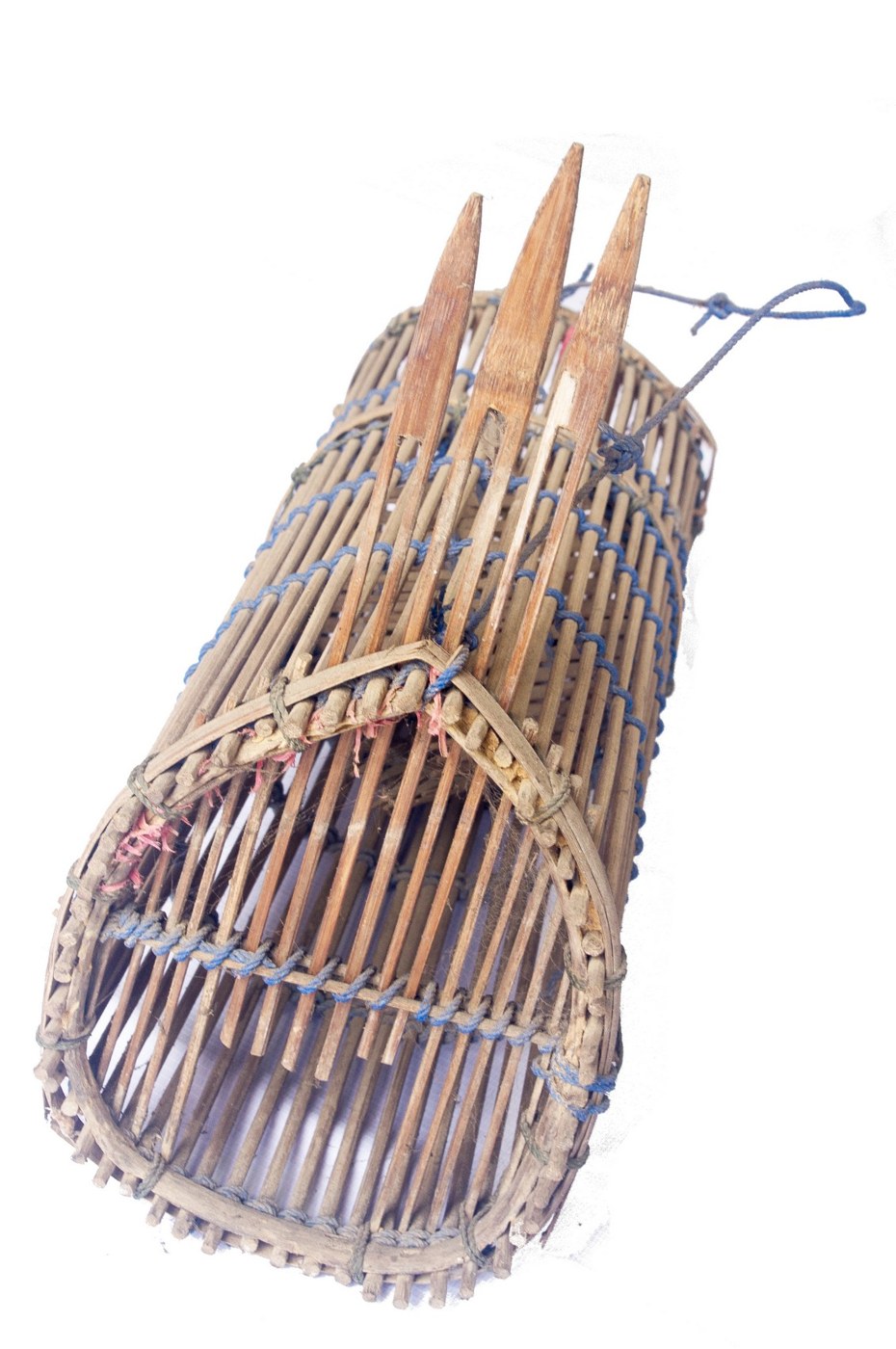
"At the mouth of the lop, slats are made into a funnel, tied with cord round the mouth with the funnel's tip turned inward; the funnel is cone-shaped. In the middle of the lop another funnel of the same kind is tied inside as a second layer." (Sirindhorn Anthropology Centre, author ทำนุ วรธงไชย (Thamnu Worathongchai), CC BY 4.0)
4
4
Slats and hoops
Slats and hoops
Whittle bamboo into slats of equal size and make several round frames, called plok, for a lop about 80 cm long and about 30 cm across.
Materials for this step:
 Bamboo Poles1 piece
Tools needed:
 Machete
 Knife
Knife5
5
The body
The body
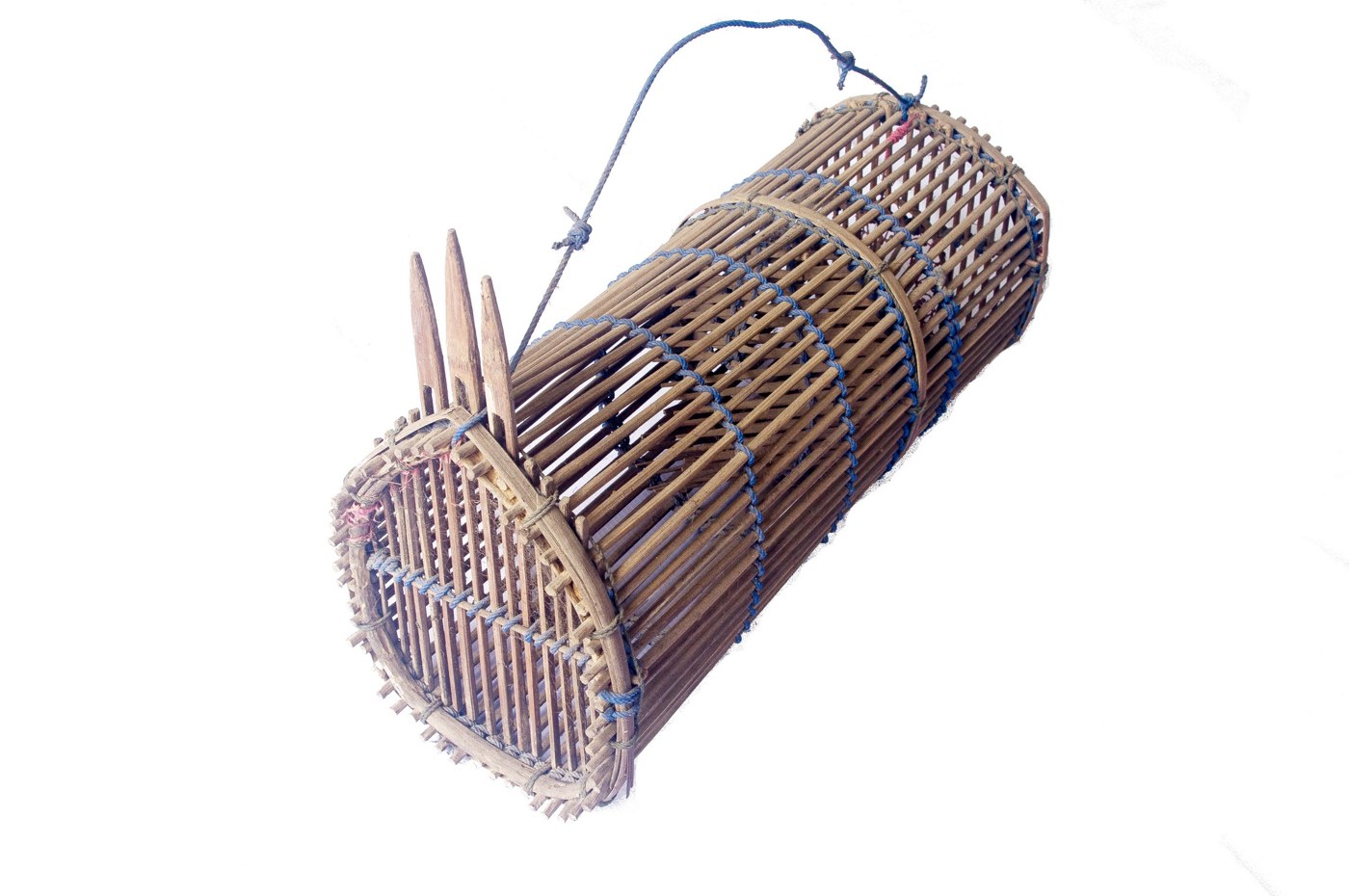
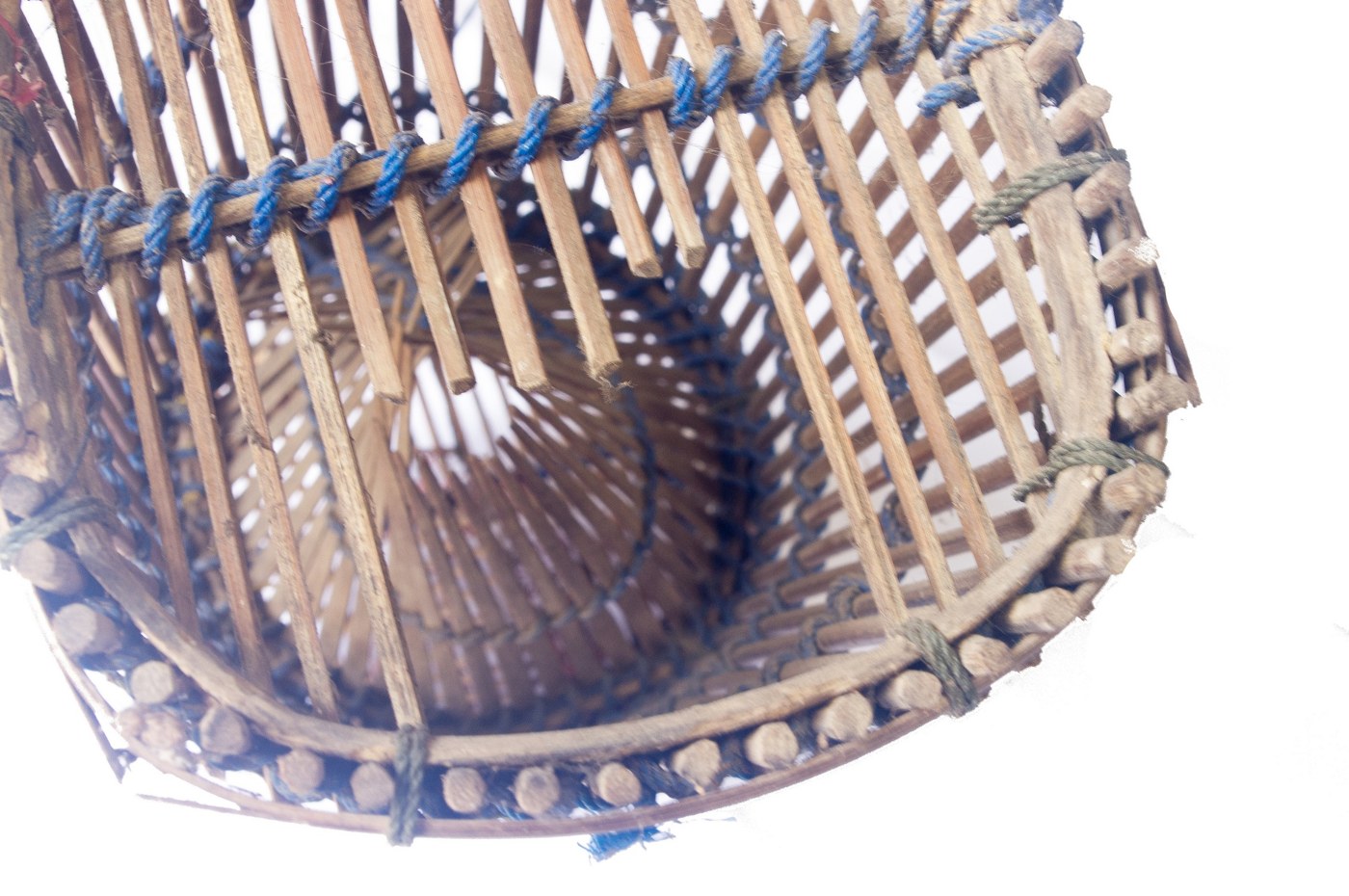
Tie the slats to the hoops at intervals along the length; between the hoops, bind each slat with cord so the gaps are even and the body is strong. The lop is a cylinder with a cut-off mouth, its upper end turned up slightly.
Materials for this step:
 Cotton Twine1 piece
6
6
Funnels and back
Funnels and back
Make a cone-shaped funnel of slats and tie it round the mouth with its tip turned inward; tie a second funnel inside the middle of the lop. Close the back with bamboo strung on cord as a square opening that can be untied to empty out the fish.
7
7
Real photos
Real photos
Photos of real lop traps from the Nong Bua Khok Folk Museum (Sirindhorn Anthropology Centre, author ทำนุ วรธงไชย (Thamnu Worathongchai), CC BY 4.0).
8
8
How it is used
How it is used
When the farmers drain water from the paddies through a drainage channel, set the lop with its back facing upstream so its mouth catches fish swimming against the current. Cover the top with grass and weigh it down with earth so the lop is not carried away. It traps by day and by night; check it from time to time.
9
9
Troubleshooting
Troubleshooting
Troubleshooting the lop.
Flow
Loading...
10
10
History and limits
History and limits
The name may come from the verb "lop", to lie in hiding, because the lop lies still waiting for water animals. A small lop is also used to trap frogs in paddies that are drying, baited with minnows, shrimp or fry put inside. Some have a square door at the mouth, and a "nga wai" funnel tied with a cord that can be pulled tight or let slack. Take care with spiny fish when emptying it.
Source: Sirindhorn Anthropology Centre, Traditional Objects of Everyday Use database, "ลอบ", author ทำนุ วรธงไชย (Thamnu Worathongchai), Nong Bua Khok Folk Museum, Buriram (CC BY 4.0 licence).
**Limits** The source does not give the number of slats or hoops, or the size of the funnels.
Materials
2- 1 piecePlaceholder
- 1 piecePlaceholder
Related Blueprints
These blueprints share knowledge with this one — techniques, materials, or principles that connect them in the learning graph.
CC0 Public Domain
This blueprint is released under CC0. You are free to copy, modify, distribute, and use this work for any purpose, without asking permission.
Support the Maker by purchasing products through their Blueprint where they earn a Maker Commission set by Vendors, or create a new iteration of this Blueprint and include it as a connection in your own Blueprint to share revenue.