ART
BEAUTY & WELLNESS
CRAFT
CULTURE & HISTORY
ENTERTAINMENT
ENVIRONMENT
FOOD & DRINKS
REVERSE ENGINEERING
SCIENCES
SPORTS
TECHNOLOGY
WEARABLES
Translated
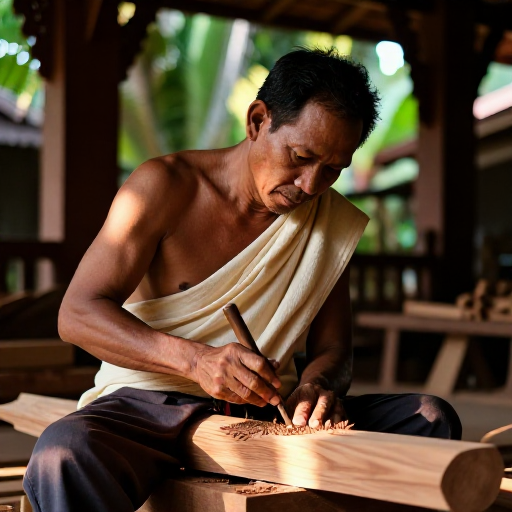

โม่ (mo) — Cast in Cement in an Earth Mould: a Base with a Channel Round It, a Top Stone with a Feed Hole and Handle
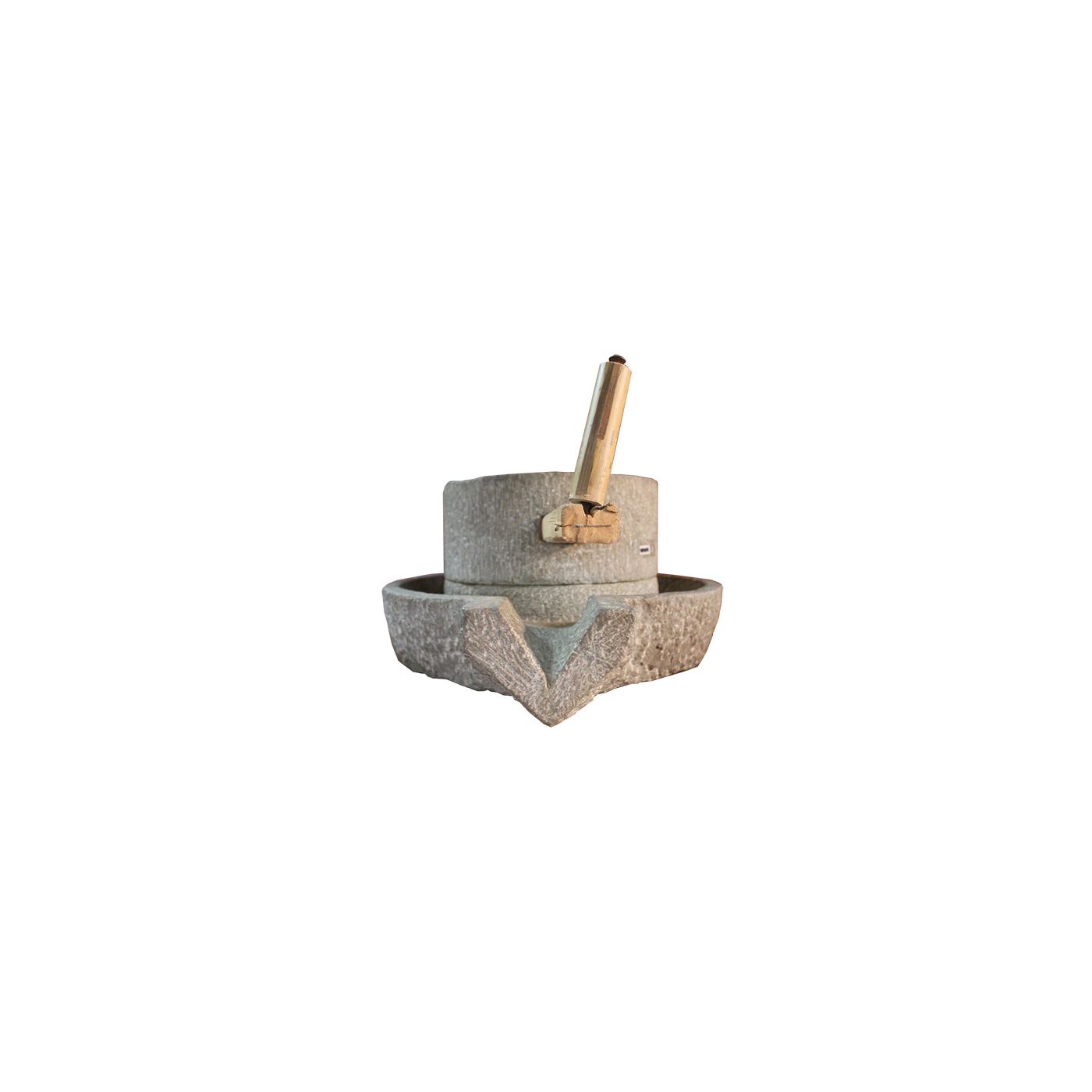
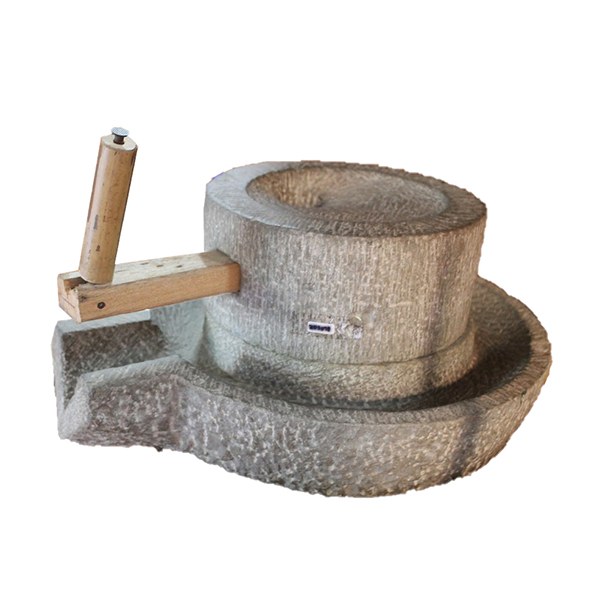
โม่ (mo) is a tool for grinding seeds such as milled rice and mung beans into flour. It has two parts, the base and the top stone, and is carved from stone or cast in cement.
This blueprint casts a cement mo by the method in the source.
Beginner
Several days (waiting for the cement to set)
Instructions
1
1
Real sizes
Real sizes
Loading Jupyter Notebook...
2
2
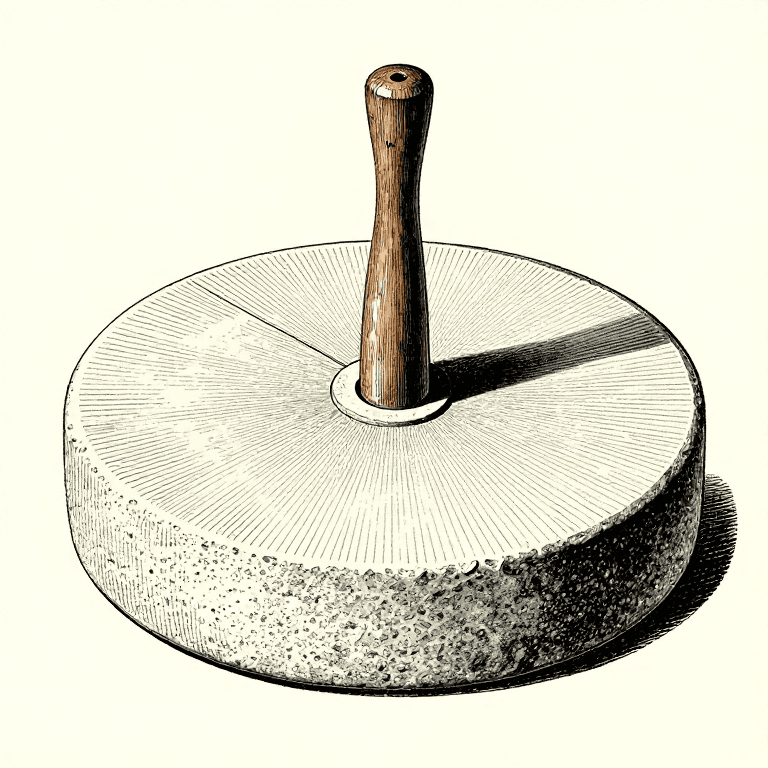
A stone quern before it
A stone quern before it
It is turned by hand in the same way, but the Thai mo grinds soaked rice into a wet flour.
3
3
Read from the source
Read from the source
"The top of the cover is made into a hollow to receive the rice to be ground; in this hollow a hole is bored through to the underside so the rice falls down to be ground into flour. In the side of the top stone one square hole is cut to take a piece of wood as the 'mue krok' (handle)." (Sirindhorn Anthropology Centre, author พิชชา ทองขลิบ (Phitcha Thongkhlip), CC BY 4.0)
4
4
The base
The base
Dig a mould in the ground as deep as the base is thick, line it with paper and fill it level with cement. Press a ring of rolled steel strip, the size of the channel's outer edge, down to the depth of the channel. Set a second ring the size of the grinding face and pour cement inside it to the height wanted. Scrape out the cement between the two rings to form the channel. Press a whittled stick the size of the pin into the centre, and split bamboo the size of the teeth into the face.
Materials for this step:
 Portland Cement1 piece
 Water1 piece
 Stainless Steel Sheet - 3041 piece
 Bamboo Poles1 piece
Tools needed:
 Trowel
 Bucket
 Knife
Knife5
5
The top stone
The top stone
Set a ring of steel strip on rammed, level ground. Stand a stick the size of the pin in the centre, a stick the size of the feed hole 4-6 cm from it, and the sticks for the teeth. Pour in the cement, shape the top into a hollow when it is half set, and leave it until fully dry.
Materials for this step:
 Hardwood Dowels1 piece
6
6
Finish and assemble
Finish and assemble
Lift the base and top stone out of their moulds and pull out the pin, feed-hole and teeth sticks. Let them harden fully, then finish the teeth and holes. Fit the pin, put the handle into the square side hole, grind the two faces together until smooth, and remove any loose cement before use.
Materials for this step:
 Hardwood Block1 piece
Tools needed:
 Chisel Set - Wood
7
7
Real photos
Real photos
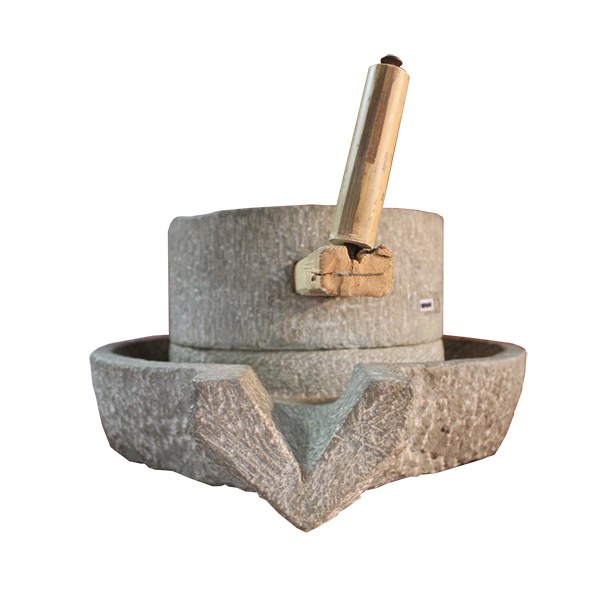
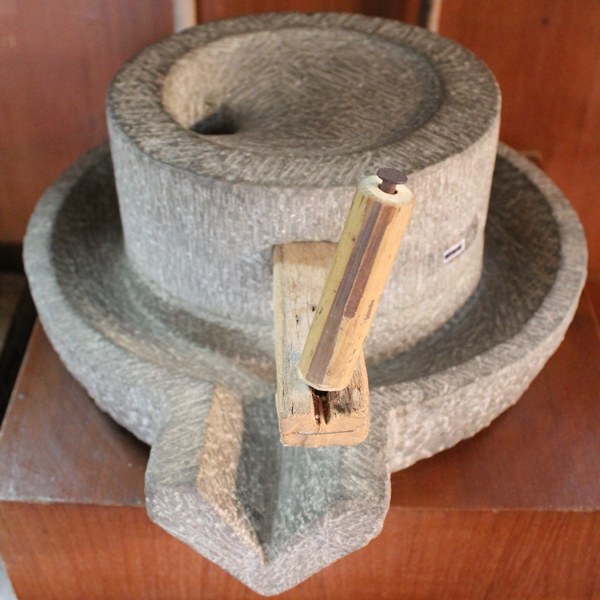
Real photos of a โม่ (mo) from พิพิธภัณฑ์พื้นบ้านจ่าทวี (Ja Thawee Folk Museum) (Sirindhorn Anthropology Centre, author พิชชา ทองขลิบ (Phitcha Thongkhlip), CC BY 4.0)
8
8
How to use the mo
How to use the mo
Set the mo at least a forearm's length (1 sok) above the floor so a vessel can stand at its spout. Soak the rice until it swells. Turn the mo and drop in rice with water. Too much rice and too little water make the flour thick; too little rice and too much water make it runny and can wear the teeth into the flour. Wash the mo clean after grinding and take out the pin.
9
9
Troubleshooting
Troubleshooting
Troubleshooting the mo.
Flow
Loading...
10
10
History and limits
History and limits
The mo, or krok bot, was once in almost every house. A top stone with 1 handle hole is called a krok mue diao (one-handed mill); a large one with 2 holes is called a krok 2 mue (two-handed mill). Ready-made flour is now sold, so the mo has slowly vanished from Thai kitchens.
Source: Sirindhorn Anthropology Centre, Traditional Objects of Everyday Use database, "โม่" (CC BY 4.0 licence).
**Limits** The source does not state clearly the cement mix, or the heights of the rim and the grinding face.
Materials
6- 1 piecePlaceholder
- 1 piecePlaceholder
- 1 piecePlaceholder
- 1 piecePlaceholder
- 1 piecePlaceholder
- 1 piecePlaceholder
Related Blueprints
These blueprints share knowledge with this one — techniques, materials, or principles that connect them in the learning graph.

CC0 Public Domain
This blueprint is released under CC0. You are free to copy, modify, distribute, and use this work for any purpose, without asking permission.
Support the Maker by purchasing products through their Blueprint where they earn a Maker Commission set by Vendors, or create a new iteration of this Blueprint and include it as a connection in your own Blueprint to share revenue.