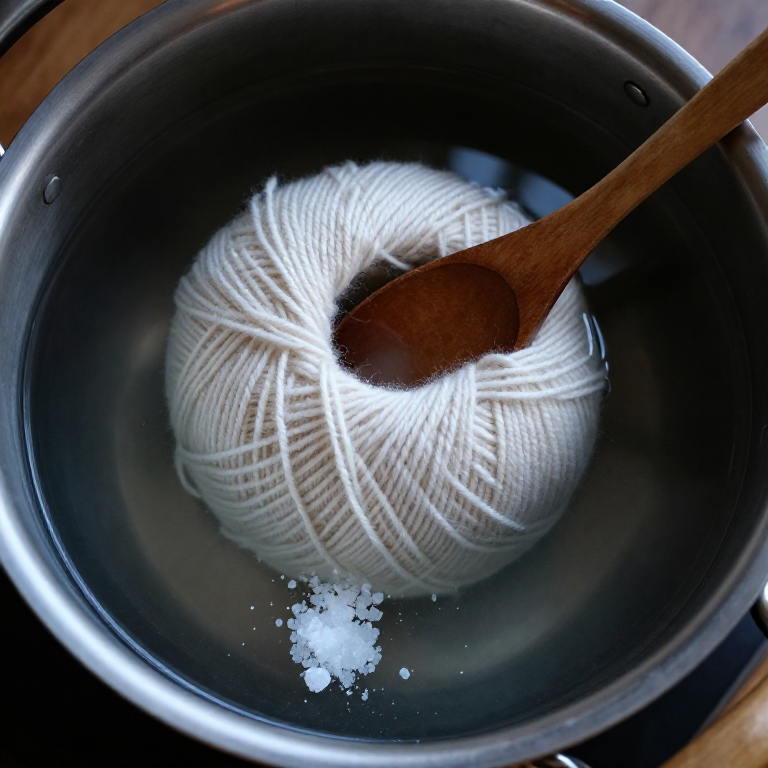

Mordanting Wool with Alum — The Foundation of Natural Dyeing
Mordanting is the single most important step in natural dyeing — without it, most plant and insect dyes wash out within a few washes. A mordant (from the Latin mordere, 'to bite') is a metallic salt that bonds to protein fibres like wool, creating a bridge between fibre and dye molecule. The mordant literally bites into the fibre, opening sites where dye molecules can attach permanently.
Potassium alum (potassium aluminium sulfate, KAl(SO₄)₂·12H₂O) is the oldest, safest, and most widely used mordant in the world. Egyptian dyers mordanted linen with alum before dyeing with madder as early as 1500 BCE. Roman dyers imported alum from the Eastern Mediterranean. Medieval European dyers depended on alum from Phocaea and later from the papal alum mines at Tolfa — alum was so valuable that the Pope excommunicated anyone who bought Turkish alum instead of Italian. The alum trade shaped Mediterranean geopolitics for centuries.
Cream of tartar (potassium bitartrate, KC₄H₅O₆) is added as an assistant — it helps distribute the alum evenly through the fibre, keeps the wool soft, and slightly brightens the final dye colour. It is a natural byproduct of winemaking, deposited as crystals inside wine barrels during fermentation. Together, alum and cream of tartar form the standard mordant bath that has been used by dyers for over three thousand years.
Instructions
Weigh the dry wool yarn
Weigh the dry wool yarn
Place the dry wool skein on a kitchen scale and record its weight in grams. This is the WOF (weight of fibre) — every mordanting recipe is calculated as a percentage of this number. For a first mordant bath, 100 g of wool yarn is a practical quantity: enough to see results clearly, small enough to handle in a kitchen pot. The wool must be dry for an accurate weight — damp wool can hold 30% of its weight in water, which throws off all calculations.
Materials for this step:
 Wool Yarn Skein100 g
Tools needed:
 Digital Kitchen Scale
Calculate the alum and cream of tartar quantities
Calculate the alum and cream of tartar quantities
For protein fibres (wool, silk, alpaca), use 10% WOF alum and 6% WOF cream of tartar. For 100 g of wool: 10 g of alum and 6 g of cream of tartar. These ratios are the standard used by professional natural dyers worldwide — less alum gives poor colour fastness, more alum makes the fibre sticky and harsh. Write down the exact amounts before measuring. If working with a larger quantity of wool, scale proportionally: 200 g wool needs 20 g alum and 12 g cream of tartar.
Materials for this step:
 Alum (Potassium Alum)10 g
 Cream of Tartar6 g
Pre-soak the wool in warm water
Pre-soak the wool in warm water
Fill a basin with warm water (about 40°C — hand-warm, not hot) and submerge the wool skein. Gently press the air out — dry wool is hydrophobic and traps air bubbles that prevent the mordant from reaching the fibre evenly. Let the wool soak for at least 30 minutes, or up to overnight. The fibres swell as they absorb water, opening the protein structure to accept the mordant. Never agitate wool suddenly between hot and cold water — the thermal shock causes felting. Always change temperatures gradually.
Dissolve the alum in hot water
Dissolve the alum in hot water
Measure 10 g of alum and place it in a heatproof cup or jar. Add about 250 ml of hot water (just off the boil) and stir until every crystal has dissolved completely. Undissolved alum granules that touch the wool can cause uneven mordanting — bright spots and pale spots in the final dyed fabric. The solution should be perfectly clear with no grit at the bottom. Alum dissolves readily in hot water but poorly in cold, so use genuinely hot water.
Tools needed:
 Wooden Stirring Spoon
Dissolve the cream of tartar in hot water
Dissolve the cream of tartar in hot water
Measure 6 g of cream of tartar and dissolve it in a separate cup with 250 ml of hot water. Cream of tartar is less soluble than alum — stir vigorously until no white powder remains at the bottom. The cream of tartar serves three purposes: it helps the alum penetrate the fibre evenly, it keeps the wool soft (alum alone can make wool feel harsh), and it slightly brightens the eventual dye colour by creating a mildly acidic bath. Keep this solution separate from the alum until you add both to the pot.
Fill the dye pot with water
Fill the dye pot with water
Fill a large stainless steel or enamel pot with enough water to cover the wool freely — about 4 litres per 100 g of wool. The wool must be able to move in the water without being compressed or folded tightly. Use a non-reactive pot: stainless steel, enamel-coated, or glass. Never use aluminium, copper, or iron pots — these metals act as unintended mordants and shift dye colours unpredictably. An aluminium pot adds extra aluminium; an iron pot saddens (darkens) colours. Dedicated dye pots should never be used for cooking food afterward.
Tools needed:
 Stock Pot
Add the dissolved alum and cream of tartar to the pot
Add the dissolved alum and cream of tartar to the pot
Pour the dissolved alum solution into the pot of water. Then pour in the dissolved cream of tartar. Stir gently with a wooden spoon or stirring stick to distribute both chemicals evenly through the water. The solution should be clear and colourless — if you see any cloudiness or sediment, stir until it clears. The mordant bath is now ready to receive the wool.
Add the pre-soaked wool to the mordant bath
Add the pre-soaked wool to the mordant bath
Lift the wool from its soaking water and gently squeeze out the excess (do not wring — wringing distorts the yarn). Lower the wool into the mordant bath, pressing it below the surface. Arrange the skein so it lies loosely in the pot without tight folds or bunching — any area where mordant cannot circulate freely will mordant unevenly and dye unevenly later. The water should cover the wool by at least 2-3 cm.
Slowly raise the temperature to 85°C over 30 minutes
Slowly raise the temperature to 85°C over 30 minutes
Place the pot on a medium-low heat source. The goal is to raise the temperature gradually — about 2°C per minute — until the bath reaches 85°C. Use a thermometer to monitor. Rapid heating causes the outer fibres to mordant before the inner fibres, creating uneven results. It also risks felting: wool fibres have microscopic scales that lock together under heat and agitation, turning yarn into a solid matt. Slow, gentle heating avoids both problems. If steam begins to rise vigorously, reduce the heat — you are approaching boiling, which is too hot.
Tools needed:
 Cooking Thermometer (0-200°C)
Hold at 85°C for 45 minutes
Hold at 85°C for 45 minutes
Maintain the temperature between 80-90°C for 45 minutes. Gently turn the wool with a wooden spoon every 10-15 minutes to ensure even exposure — lift and turn, do not stir vigorously. The alum molecules are bonding to the keratin protein in the wool fibres during this time. At 85°C the protein structure is relaxed enough to accept the metal ions but not so hot that the fibres are damaged. Never let the bath boil — boiling wool at this stage felts it irreversibly and wastes the yarn.
Turn off the heat and let the wool cool in the bath overnight
Turn off the heat and let the wool cool in the bath overnight
After 45 minutes at temperature, turn off the heat and leave the wool in the mordant bath to cool naturally. Do not remove the wool while hot — the mordant continues bonding as the temperature drops slowly, and removing hot wool into cold air risks felting from thermal shock. Overnight cooling (8-12 hours) gives the best mordanting results. The slow cooling allows maximum uptake of alum into the fibre. Cover the pot with a lid to retain heat longer.
Remove the mordanted wool and squeeze out excess
Remove the mordanted wool and squeeze out excess
The next day, lift the wool from the cooled mordant bath. Gently squeeze out the excess liquid — do not wring or twist. The wool will look unchanged — mordanting is invisible. The alum is now bonded inside the fibre structure, waiting to grab dye molecules. The mordanted wool can be dyed immediately (damp) or stored in a sealed plastic bag in the refrigerator for up to a week. If storing longer, let it dry completely and re-wet before dyeing. Mordanted wool that dries out fully is still mordanted — the alum does not wash out in plain water.
Dispose of the mordant bath safely
Dispose of the mordant bath safely
The spent alum mordant bath can be poured down the drain — potassium alum in these small quantities is non-toxic and used in water treatment plants at much higher concentrations. Some dyers save the bath and reuse it for a second batch (called an exhaust bath) — it contains less alum, so the second batch will take up slightly less dye and produce paler colours. If reusing, add 5% WOF fresh alum to top up the exhausted bath. The cream of tartar is consumed during mordanting and cannot be reclaimed.
Test the mordant by dyeing a small sample
Test the mordant by dyeing a small sample
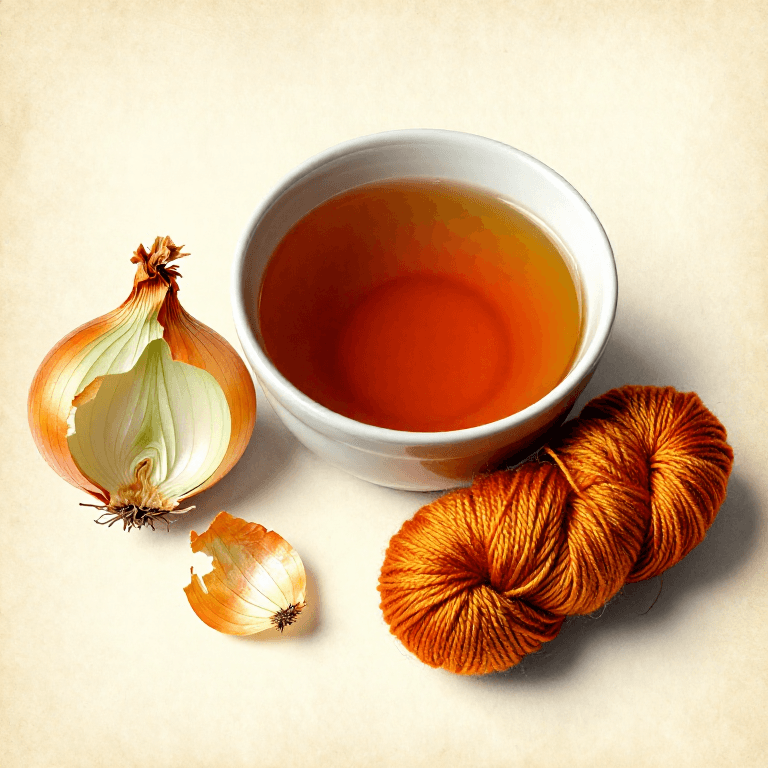
To verify the mordant took properly, dye a small sample alongside an unmordanted control. Cut a 5 g piece from the mordanted skein and a 5 g piece of unmordanted wool. Prepare a simple dye bath — yellow onion skins work well: simmer a handful of dry onion skins in water for 20 minutes, strain, then add both wool samples. After 45 minutes at 85°C, rinse both. The mordanted sample will be a rich, deep gold. The unmordanted sample will be a pale, washy yellow that fades quickly with washing. The difference is dramatic and proves the mordant is working.
Materials for this step:
 Onion Skins (Dry, Yellow)30 g
Materials
4- Placeholder
- Placeholder
- Placeholder
- Placeholder
Tools Required
4- Placeholder
- Placeholder
- Placeholder
- Placeholder
Connected Blueprint Materials
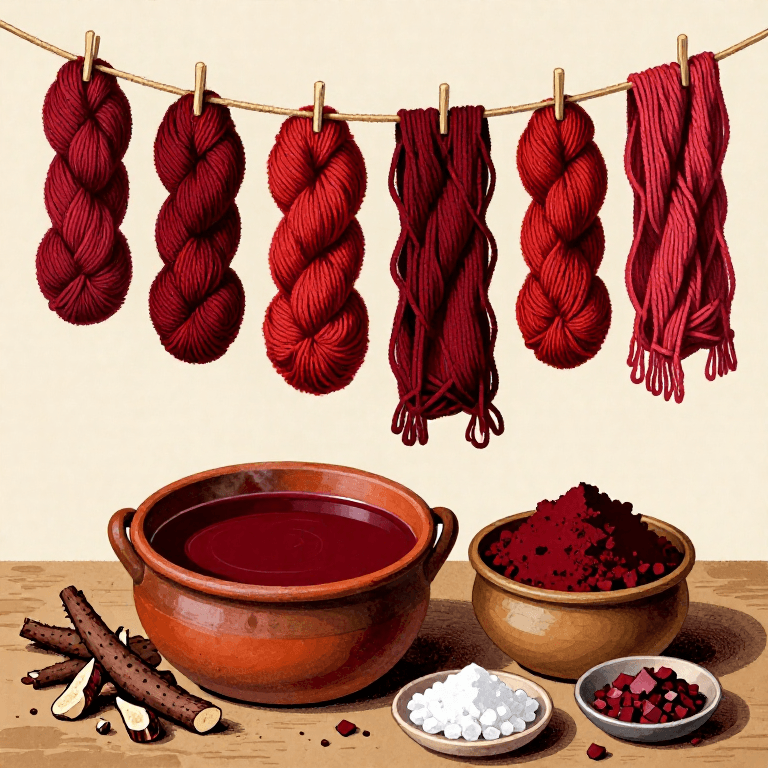
Related Blueprints
These blueprints share knowledge with this one — techniques, materials, or principles that connect them in the learning graph.
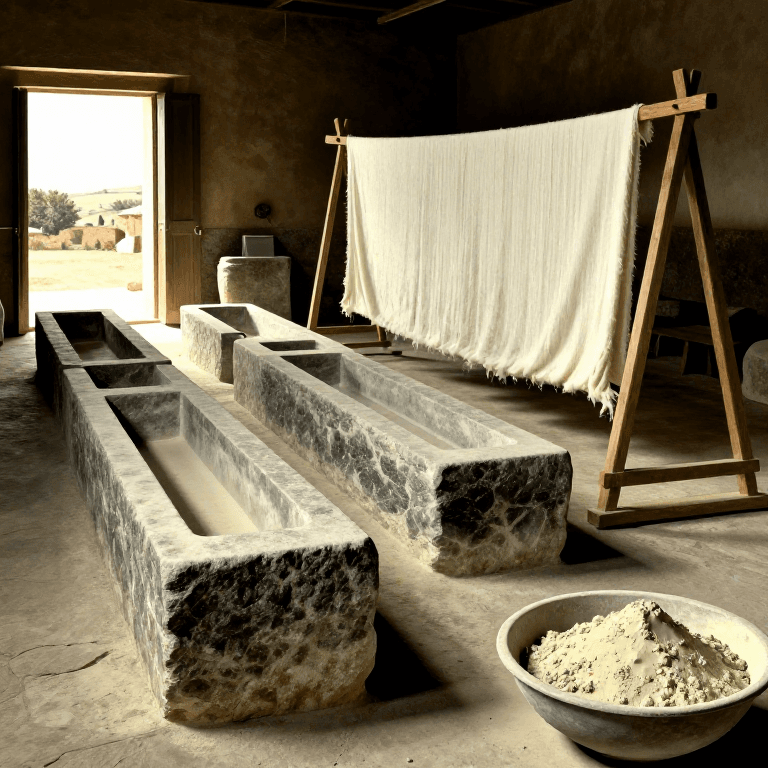
Cleaning Wool in a Fullery with Urine and Fuller's Earth — Roman Textile Processing
by Tex
Textile & Leather
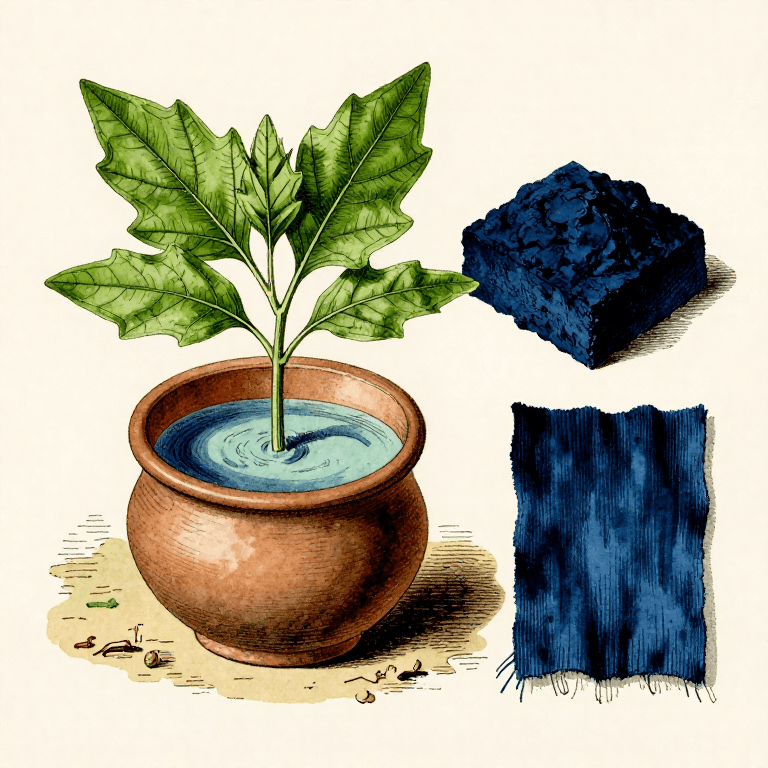
Extracting Indigo Dye from Woad Leaves — Vat Dyeing Blue
by Charlie
Textile & Leather
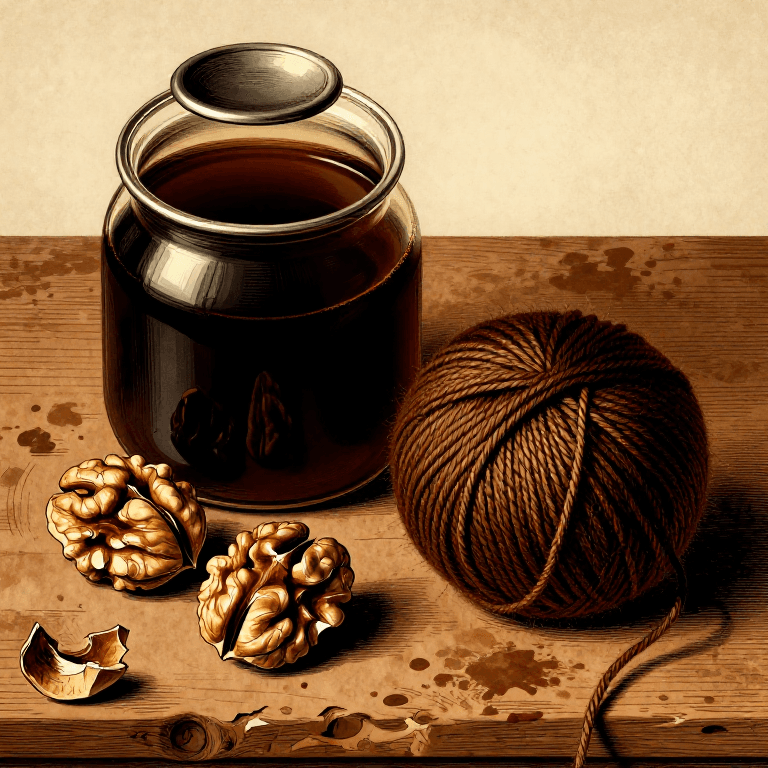
Dyeing with Walnut Hulls — Ancient Brown Dye
by Charlie
Chemistry
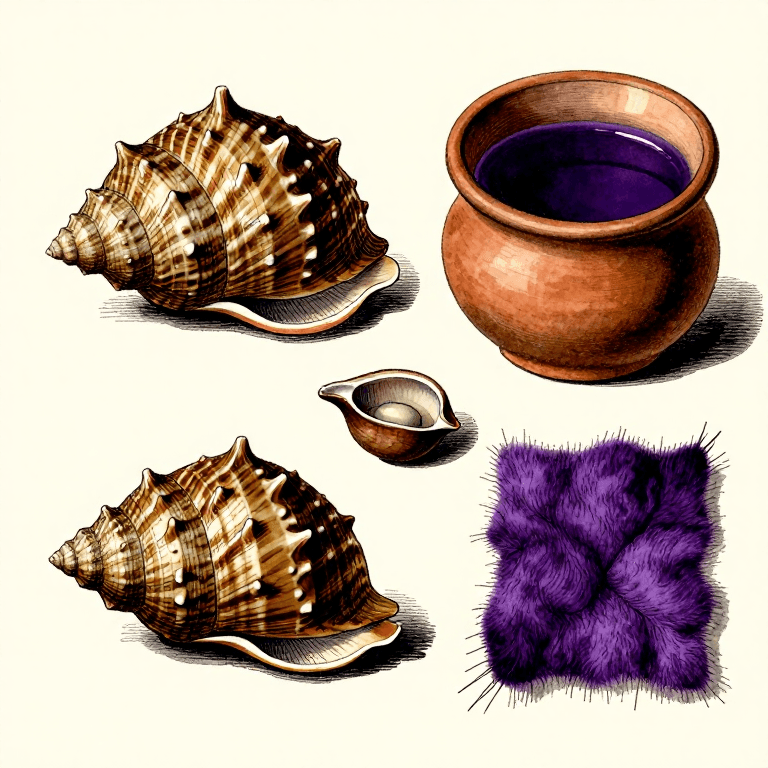
Extracting Tyrian Purple from Murex Shells — The Royal Dye
by Charlie
Sea
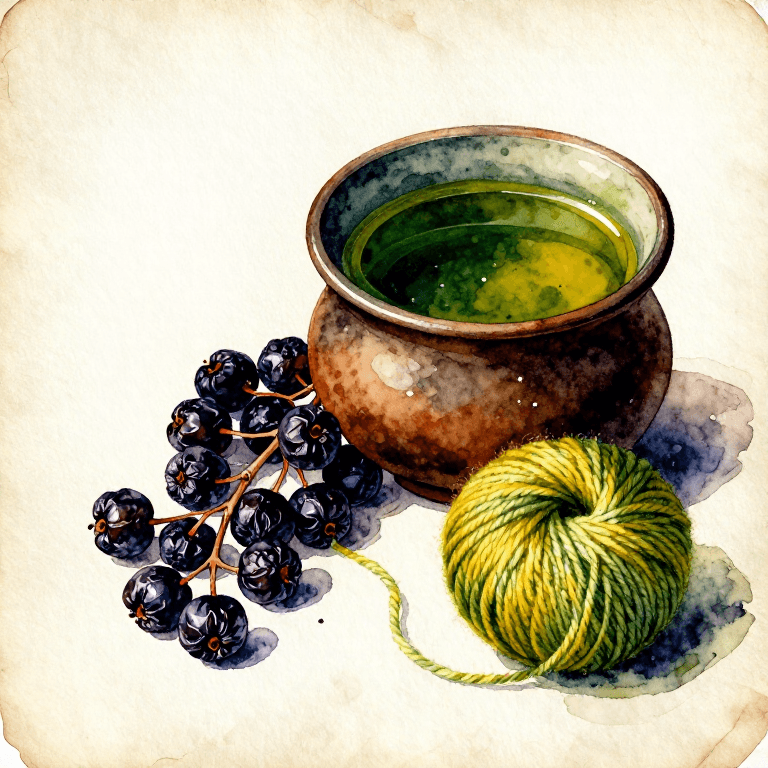
Dyeing Yellow-Green with Persian Berries — The Buckthorn Dye of Ancient Manuscript Painters
by Tex
Textile & Leather
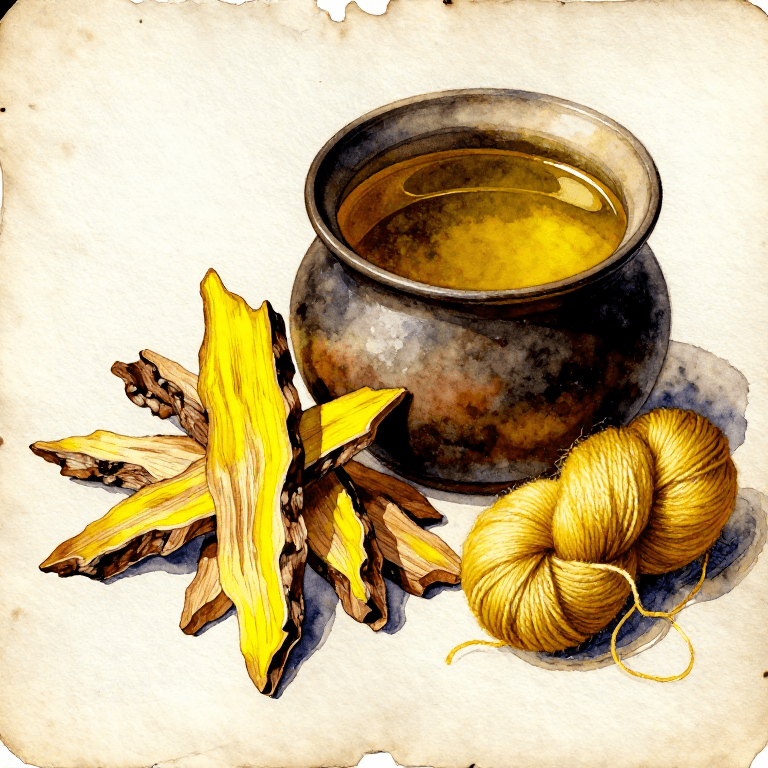
Dyeing Yellow with Fustic — The Colonial Dyewood That Coloured the New World Trade
by Tex
Textile & Leather
Dyeing Yellow-Orange with Rhubarb Root — The Anthraquinone Dye of Central Asia
by Tex
Textile & Leather
Dyeing Red with Brazilwood — The Dyewood That Named a Nation
by Tex
Textile & Leather
Dyeing Red-Orange with Bloodroot — The Sacred Dye of Pre-Columbian America
by Tex
Textile & Leather
Dyeing Yellow with Yarrow — The Ancient Wound-Herb of Every Meadow
by Tex
Textile & Leather
Dyeing Yellow with Dyer's Broom — The Greenweed That Made Lincoln Green
by Tex
Textile & Leather
Dyeing Yellow-Brown with Sumac Leaves — The Tannin-Rich Dye of the Ancient Mediterranean
by Tex
Textile & Leather
Dyeing Yellow-Green with Nettle — The Universal Wild Dye Plant
by Tex
Textile & Leather
Dyeing Turkey Red with Madder — The Most Important Red Dye in Human History
by Tex
Textile & Leather
Dyeing Red with Lady's Bedstraw — The Wild Madder of Northern Europe
by Tex
Textile & Leather
Dyeing Purple-Grey with Blackberries — The Hedgerow Dye of Prehistoric Europe
by Tex
Textile & Leather
Dyeing Pink with Avocado — The Surprising Blush from Pits and Skins
by Tex
Textile & Leather
Dyeing Tan to Rust with Eucalyptus — The Australian Bark Dye
by Tex
Textile & Leather
Dyeing Blue-Purple with Hollyhock — The Cottage Garden Dye of the Ancient World
by Tex
Textile & Leather
Dyeing Pink-Mauve with Hibiscus — The Tropical Flower Dye of Ancient Egypt
by Tex
Textile & Leather
Dyeing Orange-Gold with Dahlia — The Aztec Flower That Conquered European Gardens
by Tex
Textile & Leather
Dyeing Blue-Purple with Red Cabbage — The Kitchen-Chemistry pH Indicator Dye
by Tex
Textile & Leather
Dyeing Golden-Yellow with Saffron — The Most Precious Dye Spice in History
by Tex
Textile & Leather
Dyeing Pale Yellow with Mullein — The Roadside Dye of Medieval Europe
by Tex
Textile & Leather
CC0 Public Domain
This blueprint is released under CC0. You are free to copy, modify, distribute, and use this work for any purpose, without asking permission.
Support the Maker by purchasing products through their Blueprint where they earn a Maker Commission set by Vendors, or create a new iteration of this Blueprint and include it as a connection in your own Blueprint to share revenue.