ART
BEAUTY & WELLNESS
CRAFT
CULTURE & HISTORY
ENTERTAINMENT
ENVIRONMENT
FOOD & DRINKS
REVERSE ENGINEERING
SCIENCES
SPORTS
TECHNOLOGY
WEARABLES
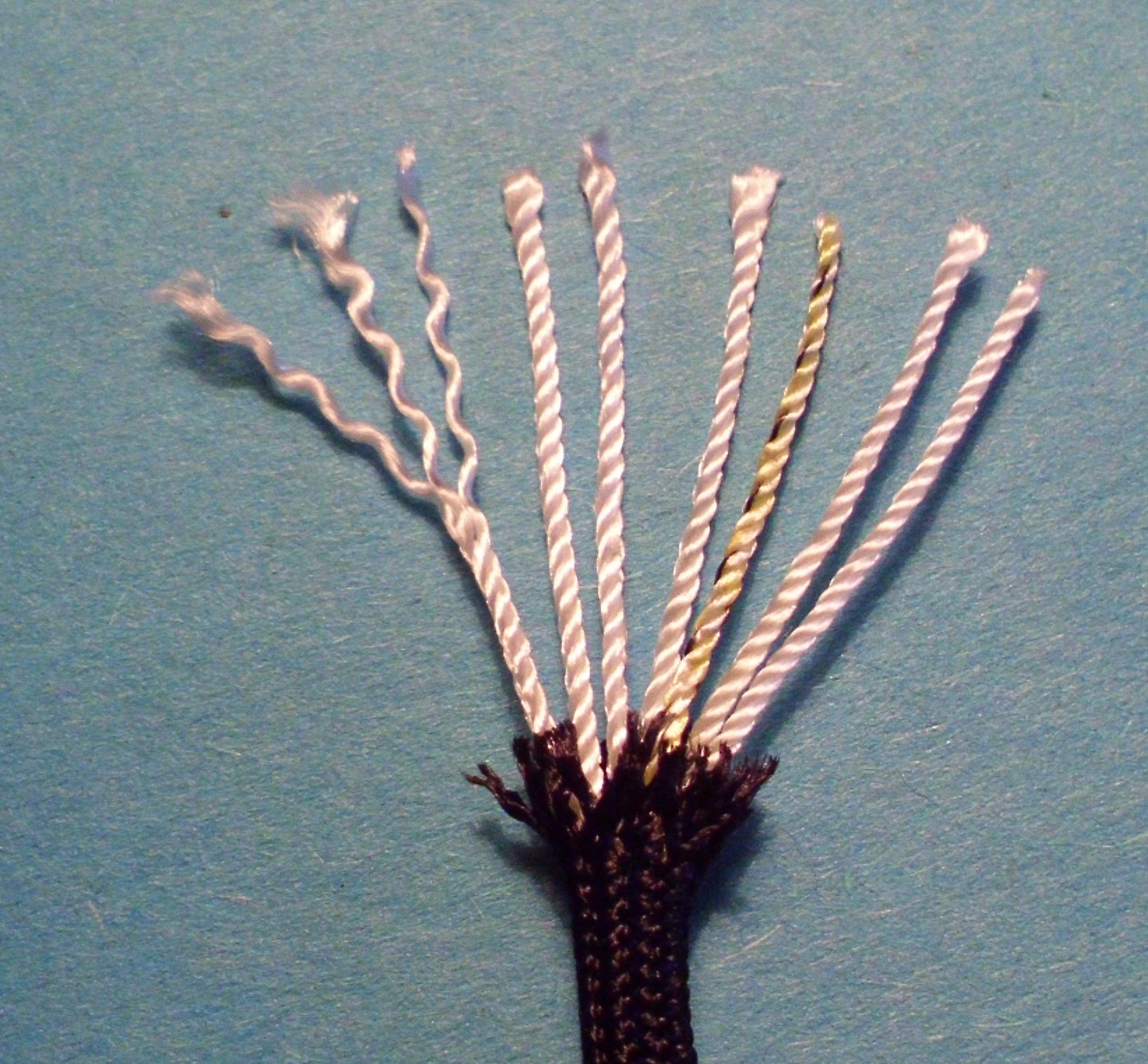


Paracord: Seven Twisted Nylon Yarns in a 32-Strand Braided Sheath
Parachute cord is a nylon core inside a braided nylon sheath. In the military Type III ('550 cord'), each core yarn is three bundles of fibre twisted tight, 7 to 9 yarns make the core, a 32-strand sheath is plaited over them, and the cord is steamed to tighten it (Wikipedia, from MIL-C-5040H). It must hold at least 550 lb.
The picture: Type III paracord opened to show its core yarns (Wikimedia Commons).
Advanced
Days
Instructions
1
1
Twist the core yarns
Twist the core yarns
Twist three bundles of nylon fibre tightly together into one core yarn. Make seven core yarns, as long as the cord you want.
Materials for this step:
 Nylon Fibre100 g
Tools needed:
 Drop Spindle
 Ruler
2
2
Set up 32 sheath strands
Set up 32 sheath strands
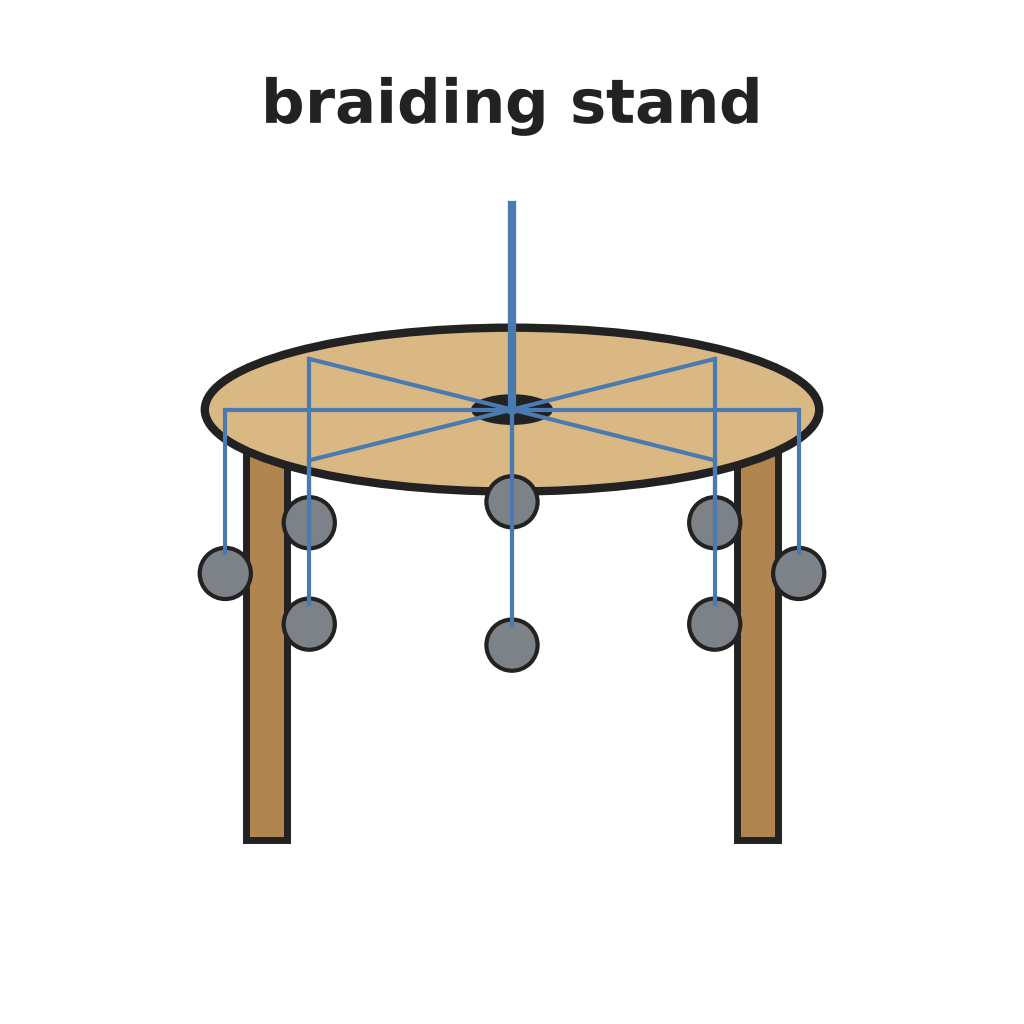
Lay the seven core yarns together through the centre of the stand. Hang 32 nylon strands round its rim for the sheath.
Tools needed:
 Round-Braiding Stand
3
3
Plait the sheath over the core
Plait the sheath over the core
Braid the 32 strands round and over the core, keeping the tension even, so the sheath closes tight round the yarns.
Tools needed:
Round-Braiding Stand4
4
Steam it tight
Steam it tight
Steam the finished cord to tighten it.
Tools needed:
 Garment Steamer
5
5
Check it
Check it
Type III should give at least 225 ft per pound of cord, hold at least 550 lb, and stretch at least 30 % before it breaks.
Tools needed:
 Balance ScaleRuler
Materials
1- 100 gPlaceholder
Tools Required
5- Placeholder
- Placeholder
- Placeholder
- Placeholder
- Placeholder
This blueprint makes

Related Blueprints
These blueprints share knowledge with this one — techniques, materials, or principles that connect them in the learning graph.
CC0 Public Domain
This blueprint is released under CC0. You are free to copy, modify, distribute, and use this work for any purpose, without asking permission.
Support the Maker by purchasing products through their Blueprint where they earn a Maker Commission set by Vendors, or create a new iteration of this Blueprint and include it as a connection in your own Blueprint to share revenue.