

Parsons Steam Turbine
Instructions
One stage cannot do it
One stage cannot do it
See the problem Parsons solved before seeing his solution.
- Fit a single row of vanes on a shaft and drive it with a jet of air.
- Note it spins fast but takes only a fraction of the energy from the stream.
- Air leaves at high speed — that leftover speed is wasted energy.
Materials for this step:
 Plywood Sheet (1/8 inch, 12x12)1 pack
 Ball Bearing2 pieces
Stage it
Stage it
Take a little energy many times instead of all of it once.
- Mount several rotor rows along one shaft.
- Between each pair, fix a row of stationary vanes attached to the casing.
- Angle the fixed rows to redirect the flow into the next moving row.
Let the blades grow
Let the blades grow
Steam expands as it gives up pressure, so it needs more room at every stage.
- Make each successive rotor row larger in blade height than the last.
- Widen the casing to match.
Run it and measure
Run it and measure
Drive it with compressed air — never with steam on a model.
- Feed air through the first stage at steady pressure.
- Count rotor speed with a marked blade and a timer, or a tachometer.
- Load the shaft by lifting a small mass and measure the work done per second.
Tools needed:
 Digital Kitchen Scale
 Stopwatch
History and context
History and context
Charles Algernon Parsons, youngest son of the Earl of Rosse, built his first multi-stage reaction turbine in 1884 while a junior partner at Clarke, Chapman on Tyneside. It produced about 7.5 kW at 18,000 rpm driving a dynamo he also had to design, because no existing generator could run at that speed.
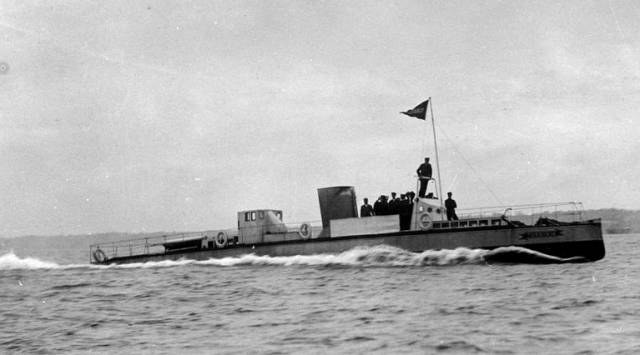
The Turbinia demonstration in 1897 is the most famous piece of engineering publicity of the century. Parsons could not get the Admiralty to take turbines seriously, so he built a 30-metre launch, fitted it with turbines driving three shafts with three propellers each, and drove it uninvited through the lines at Queen Victoria's Diamond Jubilee fleet review at Spithead. At about 34 knots she outran the picket boat sent to stop her. The Royal Navy ordered turbine destroyers shortly afterwards.
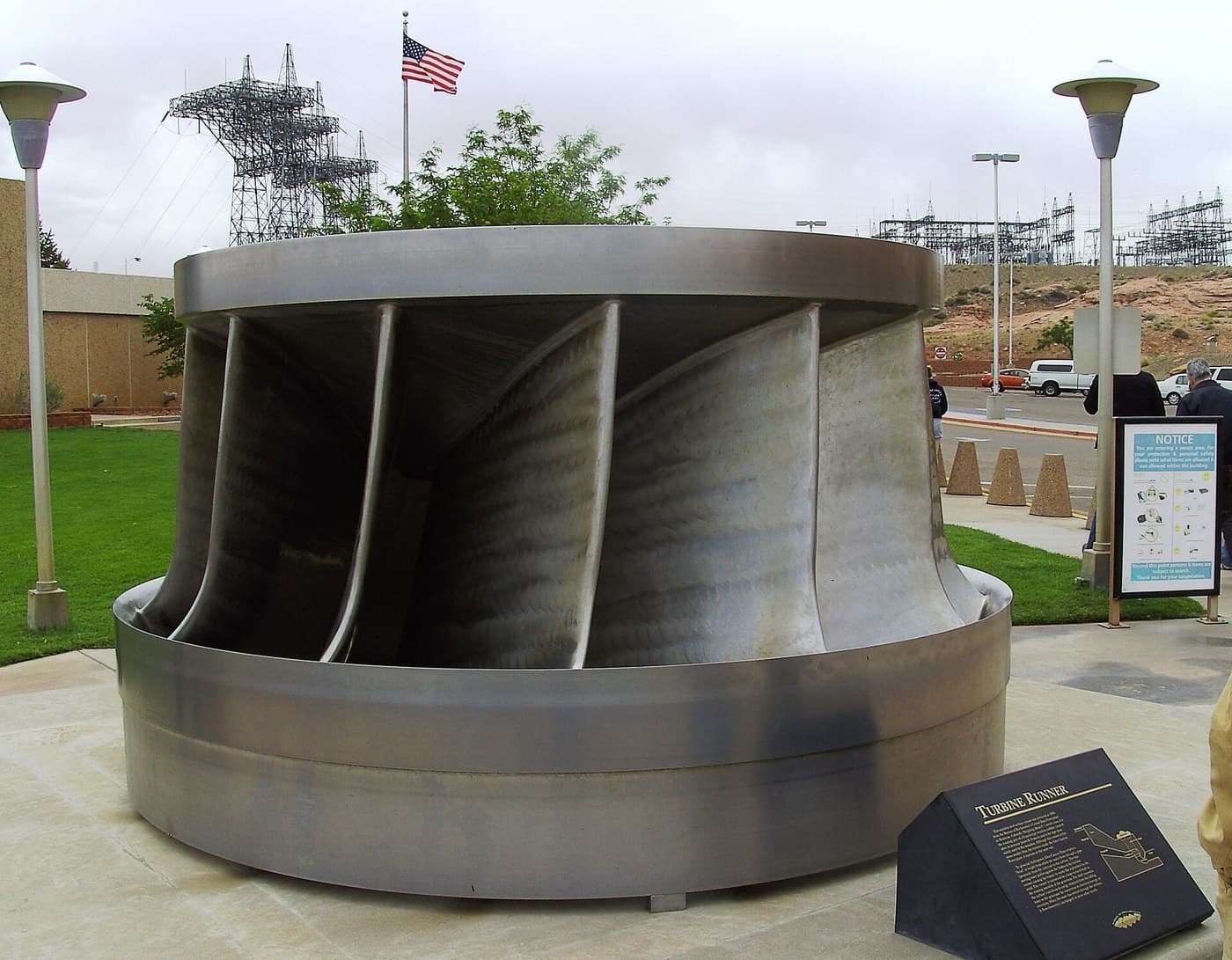
The propeller problem he had to solve first is a good example of an unexpected obstacle. Early Turbinia trials were badly disappointing because the propellers were cavitating — water vaporising on the blade faces and destroying thrust. Parsons built an early cavitation-observation apparatus to study it and fixed the problem by using more propellers of smaller pitch. The same phenomenon damages water turbine runners.
Where it went: turbines took over power generation because they scale up far better than piston engines and deliver smooth rotary motion straight to a generator. Almost all coal, gas, nuclear, geothermal and concentrated-solar electricity is generated by putting steam through a machine descended from the 1884 turbine. In ships, gearing solved the mismatch between fast turbines and slow propellers, and Parsons developed that too.
Materials
2- 1 packPlaceholder
- Placeholder
Related Blueprints
These blueprints share knowledge with this one — techniques, materials, or principles that connect them in the learning graph.


CC0 Public Domain
This blueprint is released under CC0. You are free to copy, modify, distribute, and use this work for any purpose, without asking permission.
Support the Maker by purchasing products through their Blueprint where they earn a Maker Commission set by Vendors, or create a new iteration of this Blueprint and include it as a connection in your own Blueprint to share revenue.