ART
BEAUTY & WELLNESS
CRAFT
CULTURE & HISTORY
ENTERTAINMENT
ENVIRONMENT
FOOD & DRINKS
REVERSE ENGINEERING
SCIENCES
SPORTS
TECHNOLOGY
WEARABLES
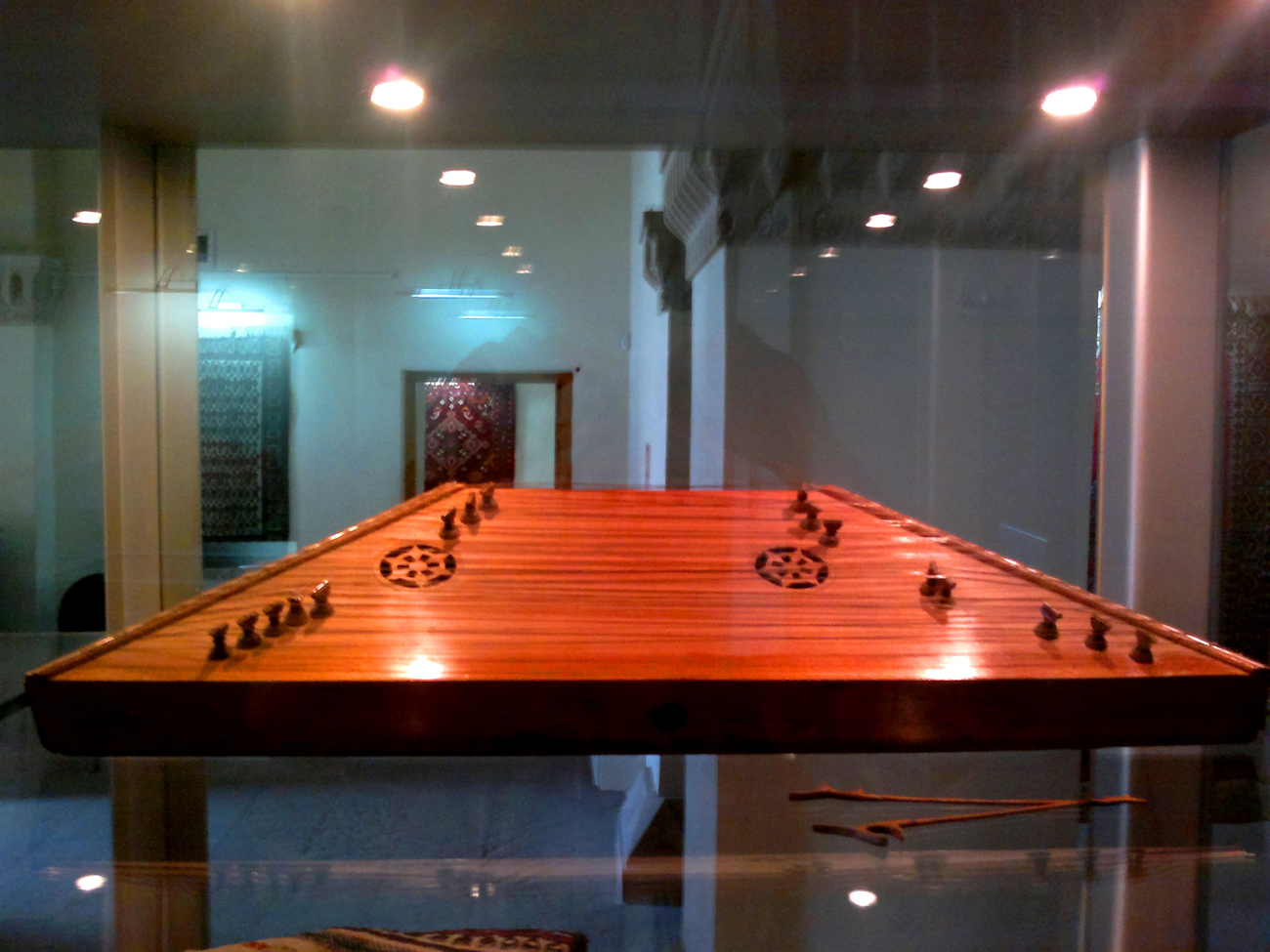


Building a Santur — The Persian Hammered Dulcimer
Build a santur, Persia's hammered dulcimer: dozens of strings stretched across a trapezoidal box over two rows of little bridges, struck with two tiny wooden hammers. Set the strings and bridges, tune the courses, and learn why a struck string shimmers — the mechanism that would one day become the piano. A serious maker build in the struck string.
Intermediate
Several hours over a few sessions
Instructions
1
1
Strings you hit, not pluck
Strings you hit, not pluck
The santur is Persia's hammered dulcimer: dozens of strings across a trapezoidal box, struck with two tiny wooden hammers. Struck strings shimmer — and this is the instrument the piano grew from.
2
2
Build the trapezoidal box
Build the trapezoidal box
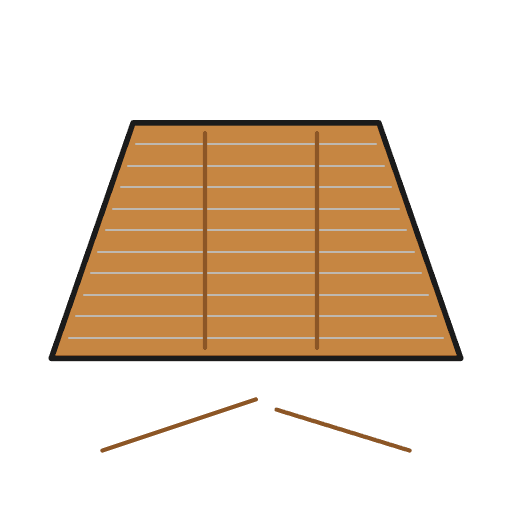
Build a shallow trapezoidal wooden box — wider at the front than the back — with a thin, light soundboard on top. This box is the resonator.
Materials for this step:
 Plywood Sheet (1/8 inch, 12x12)1 piece
 Dry Softwood Board1 piece
 PVA Wood Glue1 piece
Tools needed:
 Hacksaw
3
3
Set the pins
Set the pins
Fit a row of fixed hitch pins down one slanted side and a row of tuning pins down the other. The courses of strings will stretch between them.
Materials for this step:
 Tuning Pegs9 pieces
Tools needed:
 Awl
Awl4
4
String the courses
String the courses
Stretch the strings across in groups (courses) of three or four tuned together — thin steel for the high courses, thicker bronze for the low ones. A full santur has around seventy strings.
Materials for this step:
 Steel Music Wire 0.032"1 piece
 Bronze Wire1 piece
5
5
Stand the bridges
Stand the bridges
Carve two rows of small wooden bridges (kharak) and stand them under the strings. Each bridge lifts a course and splits some strings so one string gives two notes, one on each side.
Tools needed:
 Sloyd Carving Knife
6
6
Tune the courses
Tune the courses
Tune each course with its pin. The two rows of bridges and the pins together let you set the Persian scale, including its quarter-tones.
7
7
Make the hammers
Make the hammers
Carve two very light, springy wooden hammers (mezrab), thin enough to bend, that you hold loosely between your fingers.
Materials for this step:
 Dowel Rod1 piece
Tools needed:
Sloyd Carving Knife8
8
Strike a string
Strike a string
Tap a course with the tip of a hammer and let it bounce straight off. The strings ring out bright and shimmering — struck, not plucked.
9
9
Play across the bridges
Play across the bridges
Strike a string on both sides of its bridge to get two different notes from one string, and roll the two hammers fast for the santur's rippling tremolo.
10
10
Compendium — the struck string
Compendium — the struck string
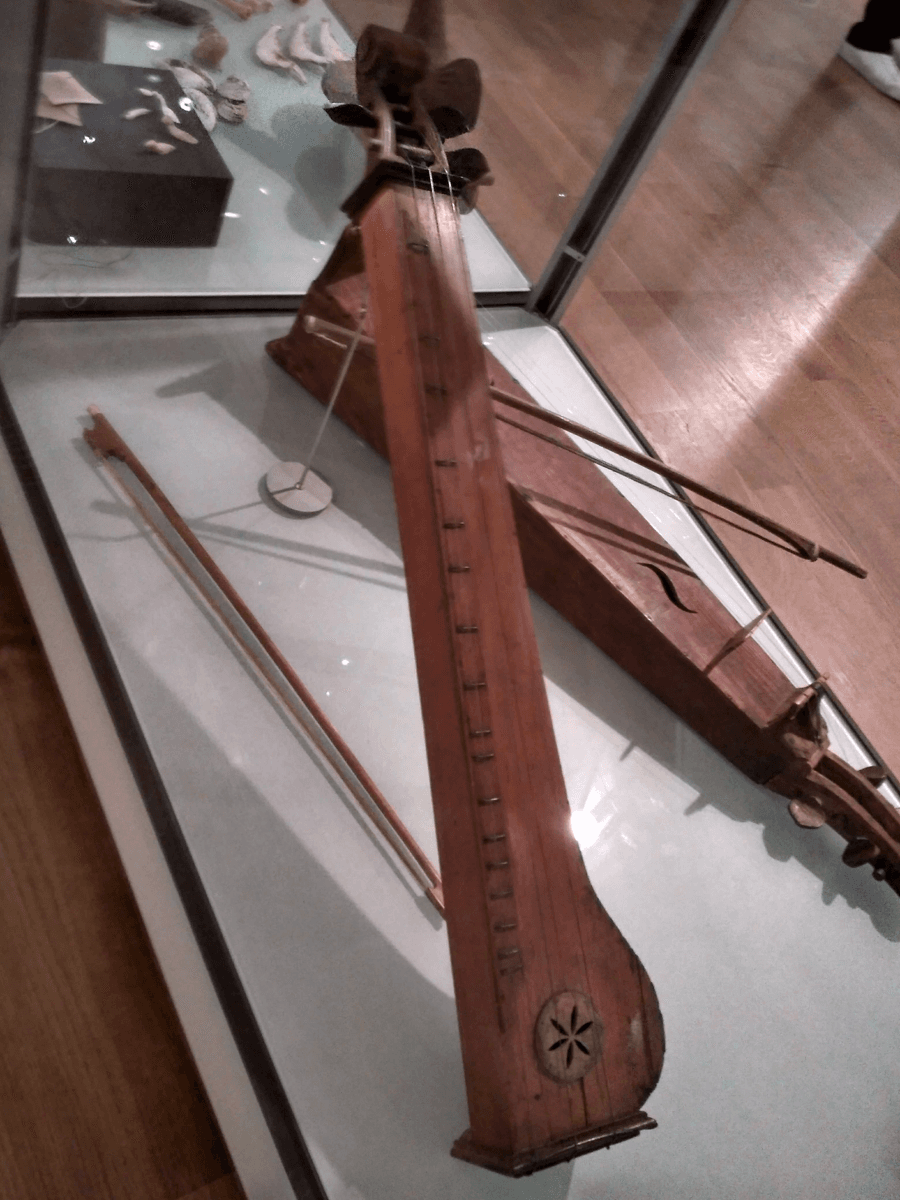
The santur is a hammered dulcimer: instead of plucking or bowing, you set each string ringing with a sharp, glancing blow from a tiny wooden hammer that bounces straight off, leaving the string free to sing. A struck string is still just a string — its pitch rises with tension and falls with length and mass, exactly as on a lyre or guitar — but the hammer starts it with a bright, percussive attack and a long shimmering decay, which is the whole character of the dulcimer family's sound. The santur's strings run in courses, several tuned together for fullness, over two rows of little bridges; each bridge not only lifts the strings but divides some of them, so one string sounds one note to the left of its bridge and a different note to the right, packing many pitches into a small box, tuned with pins to the microtonal scales of Persian music. The trapezoidal soundboard amplifies it all, as a soundboard does in any string instrument. The hammered dulcimer is ancient and spread far and wide — the Persian santur, the Iraqi and Indian santoor, the Chinese yangqin, the Hungarian cimbalom and the European and Appalachian hammered dulcimers are all the same idea. And it has one very famous descendant: put the little hammers on the ends of levers and let a keyboard throw them at the strings, and the hammered dulcimer becomes the PIANO. On Youblob its box-zither cousin is the langspil, whose strings can also be sounded by hammering.
Materials
7- 1 piecePlaceholder
- 1 piecePlaceholder
- 1 piecePlaceholder
- 9 piecesPlaceholder
- 1 piecePlaceholder
- 1 piecePlaceholder
- 1 piecePlaceholder
This blueprint makes
Related Blueprints
These blueprints share knowledge with this one — techniques, materials, or principles that connect them in the learning graph.
CC0 Public Domain
This blueprint is released under CC0. You are free to copy, modify, distribute, and use this work for any purpose, without asking permission.
Support the Maker by purchasing products through their Blueprint where they earn a Maker Commission set by Vendors, or create a new iteration of this Blueprint and include it as a connection in your own Blueprint to share revenue.