ART
BEAUTY & WELLNESS
CRAFT
CULTURE & HISTORY
ENTERTAINMENT
ENVIRONMENT
FOOD & DRINKS
REVERSE ENGINEERING
SCIENCES
SPORTS
TECHNOLOGY
WEARABLES
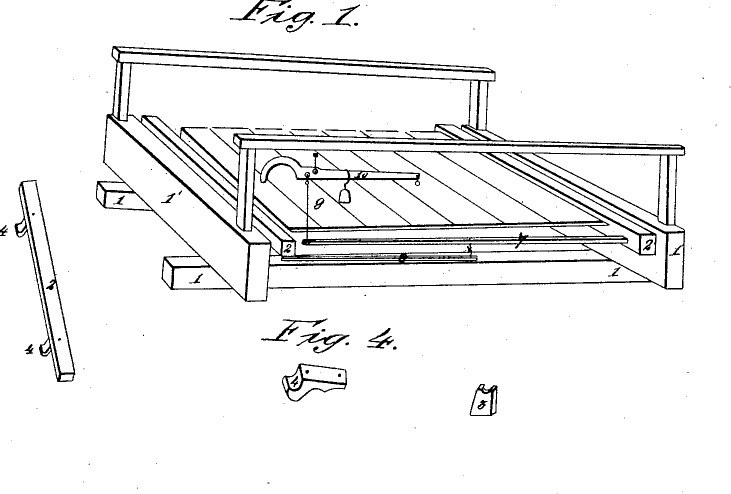


Platform Scale: Four Knife-Edge Hinges and Two Levers to a Steelyard (Fairbanks, 1831)
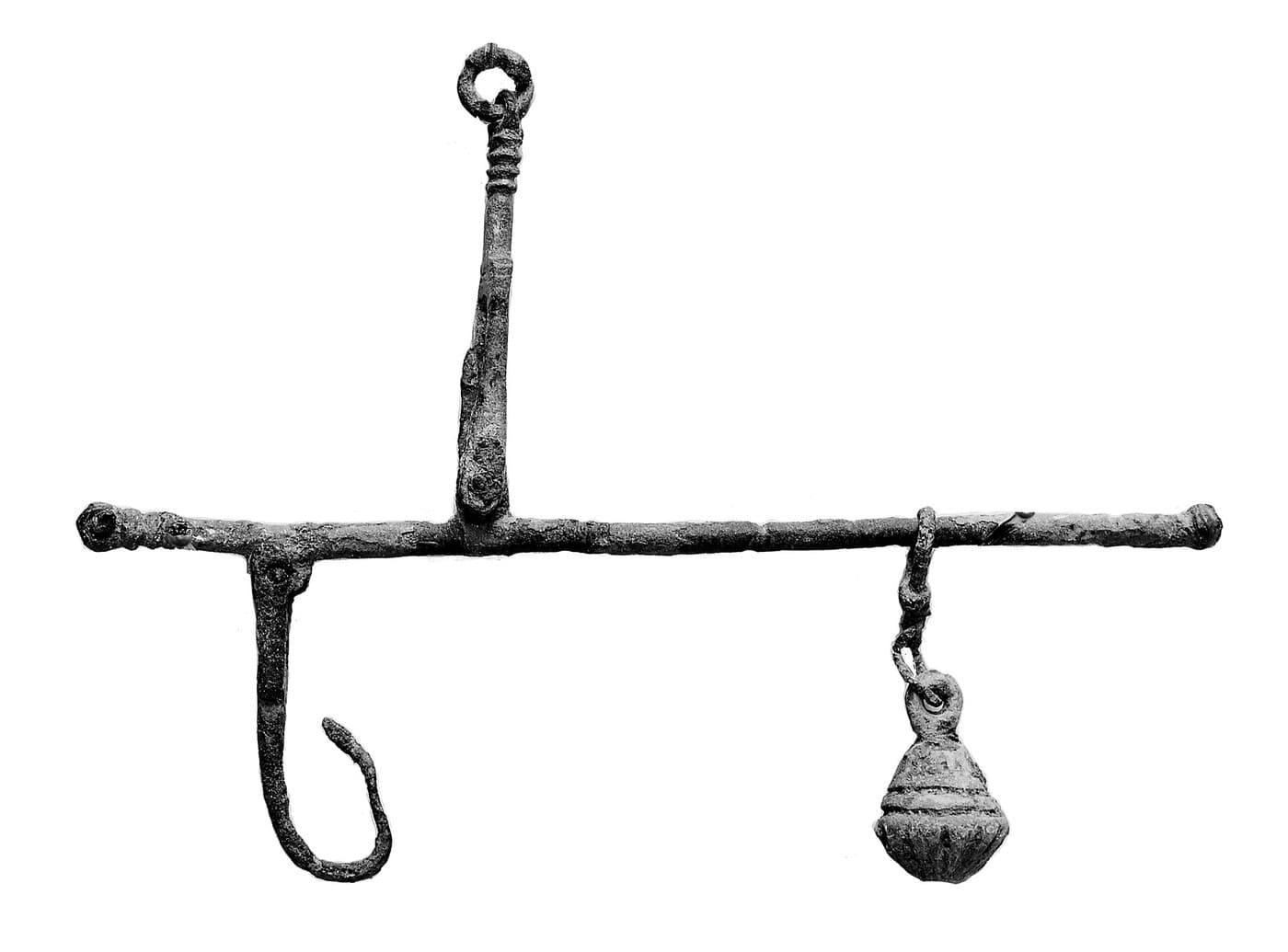
A scale for wagons and carts, reading the same wherever the load stands. Erastus and Thaddeus Fairbanks of St. Johnsbury, Vermont, patented it in 1831. A plank platform nine by twelve feet rests on four knife-edge hinges, one at each corner, and two levers gather the load from all four onto one rod. The rod pulls on an ordinary steelyard, which then reads only a tenth or a twentieth of the load.
Result: a platform scale reading ten times (or twenty times) what the steelyard shows, the same wherever the load stands on the platform.
Source: E. & T. Fairbanks, US Patent No. 118 (1837), restating their patent of 13 June 1831. Unknown: the material and sizes of the hinges, knife-edges, fulcra and levers. Picture: patent drawing.
Advanced
1 week
Instructions
1
1
Build the frame
Build the frame
Lay two timber bed-sills, about 10 inches square and 16 feet long, parallel and about 7 feet apart. Bolt two end timbers, 8 by 14 inches and 12 feet long, across them near their ends. Just inside the end timbers, lay the two rockers, 8 inches square and 9 feet long, with their tops flush with the end timbers. Ours: carriage bolts.
Materials for this step:
 Squared Timber6 2 sills, 2 end timbers, 2 rockers
 Carriage Bolt1 set
Tools needed:
 Crosscut Saw
 Auger
 Hammer
2
2
Fit the four knife-edge hinges
Fit the four knife-edge hinges
Bolt a hinge firmly under each end of each rocker, one at every corner of the machine. Each hinge carries two knife-edges. One rests on a fulcrum standing on the bed-sill; the other reaches out to carry the platform. Set every knife-edge parallel to the others: knife-edges at an angle cramp and bind. Not given: the material and size of the hinges, knife-edges and fulcra.
Materials for this step:
 Unknown Material1 4 hinges, 8 knife-edges, 4 fulcraCarriage Bolt1 set
Tools needed:
Auger Unknown Dimensions
3
3
Join the levers
Join the levers
Run a horizontal lever from each rocker. The longer lever reaches across nearly to the opposite rocker. The shorter one ends at a point equally far from the axes of both, and hangs there from the longer lever by a chain, rod or stirrup, so the two act as one. From the end of the longer lever a rod rises straight up to a steelyard hung from a fixed support. With the two knife-edges of each hinge 6 inches apart and the rod hung 60 inches from the lever's axis, the load is ten times the steelyard reading; at 120 inches it is twenty times. Not given: the lever material. Ours: an iron chain and a wrought iron rod.
Materials for this step:
Unknown Material1 2 levers Iron Chain1 lever link
 Wrought Iron Rod1 rod to the steelyard
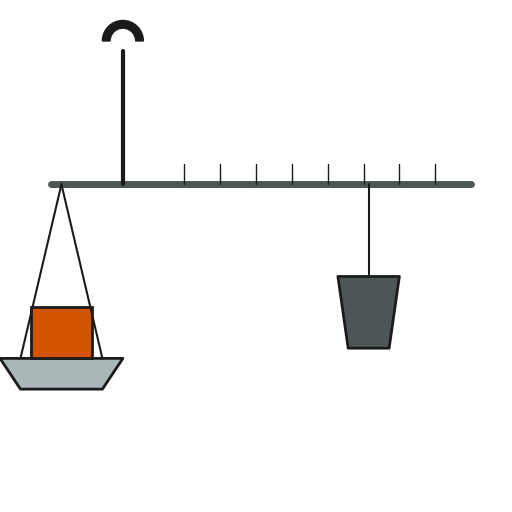 Steelyard1 piece
Tools needed:
Unknown Dimensions4
4
Lay the platform
Lay the platform
Lay two timbers, short enough to pass freely between the rockers, parallel over the bed-sills. Spike stout planks 9 feet long across them, making a platform of about 9 by 12 feet. Under these timbers fasten iron plates that rest on the inner knife-edges of the hinges. Ours: nails as the spikes.
Materials for this step:
Squared Timber2 platform timbers Timber Plank1 for 9 x 12 ft
 Iron Plate4 pieces
 Nails1 as needed
Tools needed:
Crosscut SawHammerMaterials
9- 2 platform timbersPlaceholder
- 2 setsPlaceholder
- 1 2 leversPlaceholder
- 1 lever linkPlaceholder
- 1 rod to the steelyardPlaceholder
- 1 piecePlaceholder
- 1 for 9 x 12 ftPlaceholder
- 4 piecesPlaceholder
- 1 as neededPlaceholder
Connected Blueprint Materials
This blueprint makes

Related Blueprints
These blueprints share knowledge with this one — techniques, materials, or principles that connect them in the learning graph.



CC0 Public Domain
This blueprint is released under CC0. You are free to copy, modify, distribute, and use this work for any purpose, without asking permission.
Support the Maker by purchasing products through their Blueprint where they earn a Maker Commission set by Vendors, or create a new iteration of this Blueprint and include it as a connection in your own Blueprint to share revenue.