ART
BEAUTY & WELLNESS
CRAFT
CULTURE & HISTORY
ENTERTAINMENT
ENVIRONMENT
FOOD & DRINKS
REVERSE ENGINEERING
SCIENCES
SPORTS
TECHNOLOGY
WEARABLES
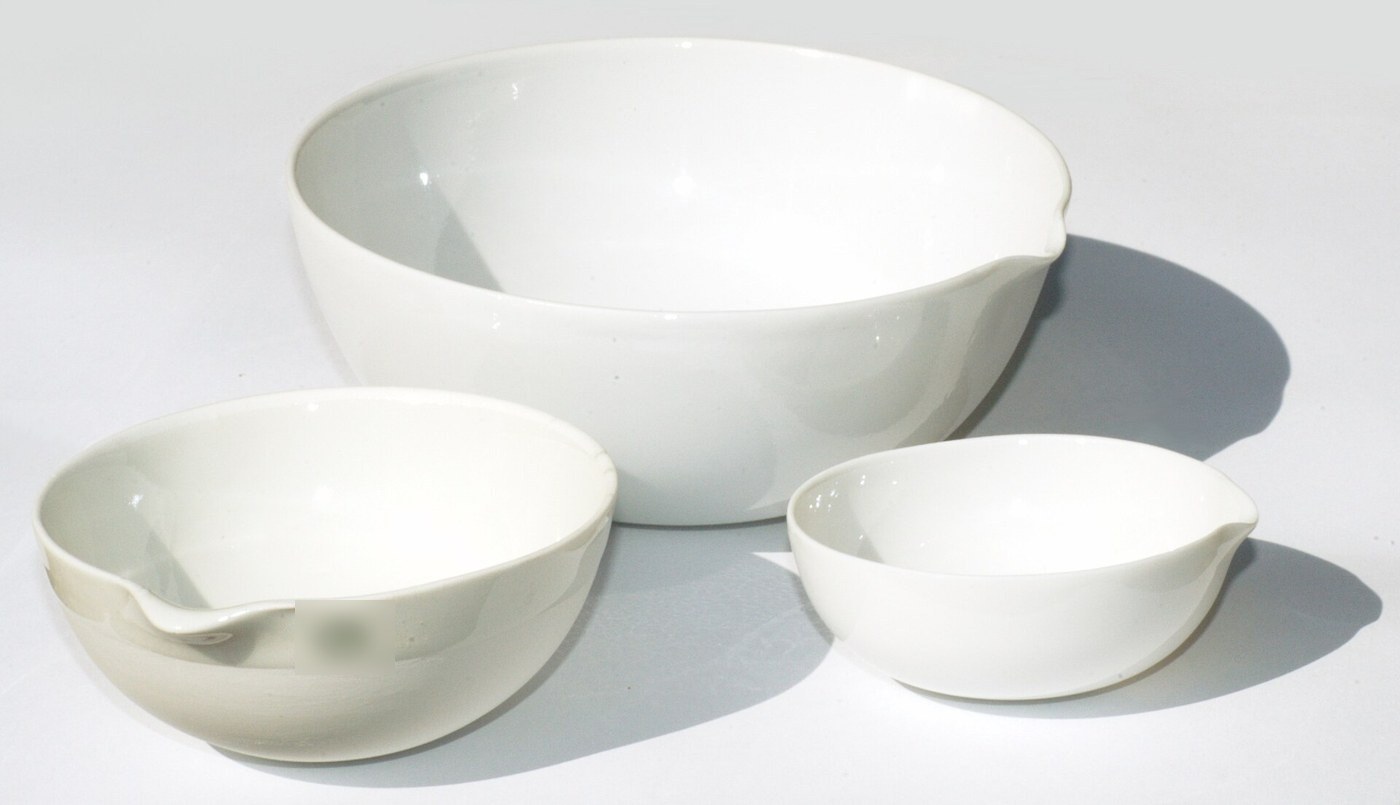


Porcelain Labware: Evaporating Dishes, Crucibles, Funnels and Streak Plates
Hard porcelain stands strong heat and most chemicals, so the laboratory's dishes, crucibles and filter funnels are made of it; left unglazed, its white biscuit is the streak plate for testing minerals. Form the pieces, give them a light first firing, dip them in ground-felspar glaze, and fire them hard in saggers, as Andrew Ure (1839) describes for Sèvres.
The picture: porcelain evaporating dishes in three sizes, glazed, with pouring lips.
Advanced
Weeks with drying and two firings
Instructions
1
1
Form the pieces
Form the pieces
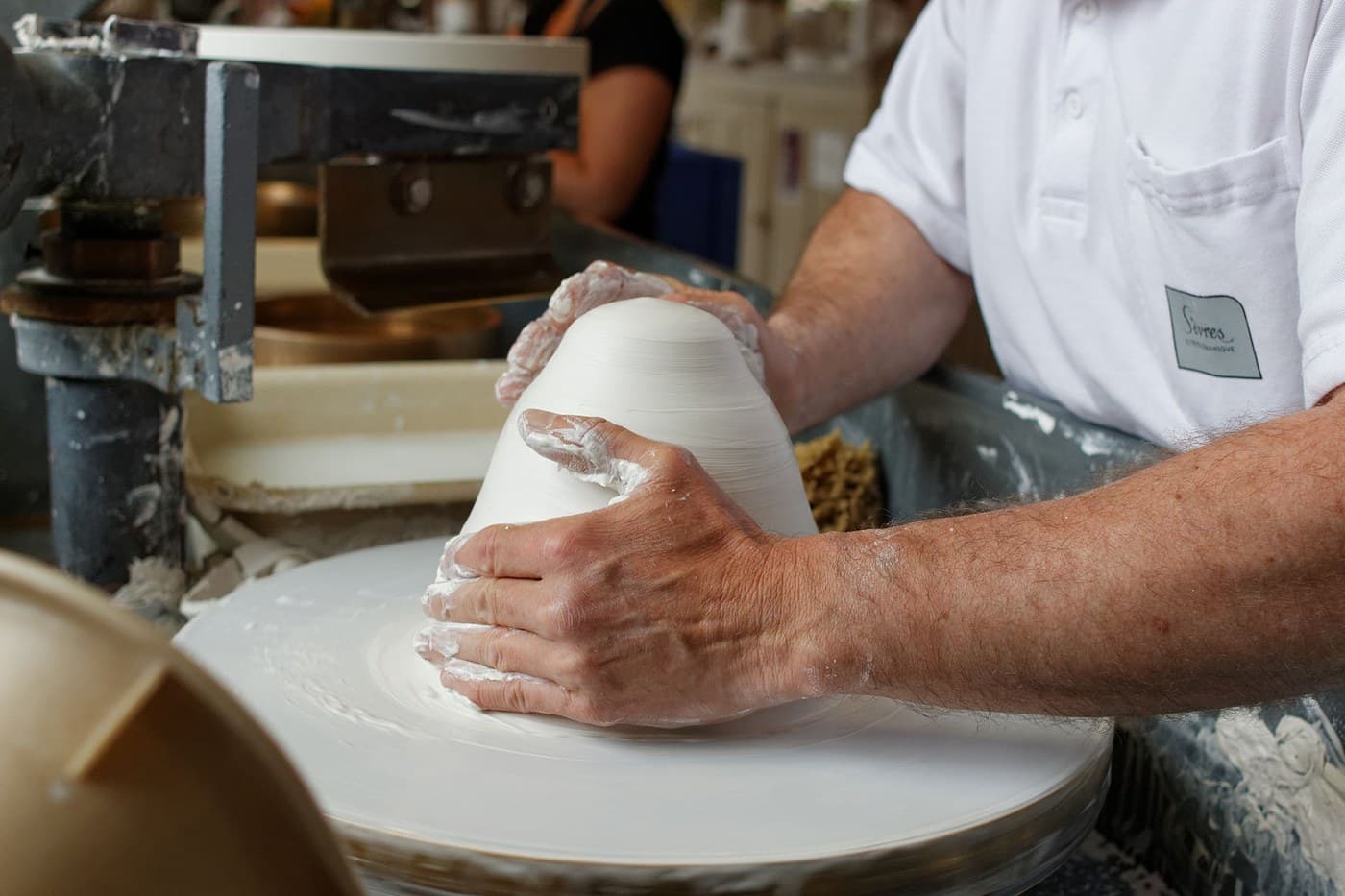
Throw shallow round dishes with a lip and small lidded crucibles on the wheel. For a Büchner funnel throw a cylinder with a flat floor, pierce the floor with many small holes and add a stem. Roll a slab and cut it into small tiles for streak plates.
Materials for this step:
 Porcelain Clay5 kg
Tools needed:
 Potter's Wheel
 Rolling Pin
 Clay Tool Set
 Ruler
Ruler2
2
Dry very slowly
Dry very slowly
Ure: dry them very slowly; a little hurry spoils them.
3
3
Light first firing
Light first firing
Fire them gently so they keep their shape but become strong enough to handle and be dipped in water.
Materials for this step:
 Firewood1 as required
Tools needed:
 Kiln
Kiln Heat-Resistant Gloves
4
4
Felspar glaze
Felspar glaze
Grind felspar very fine, stir it with water and a little vinegar to a thin pap. Dip each dish, crucible and funnel for an instant; the porous body draws the glaze on. Wipe the glaze off the feet. Leave the streak-plate tiles unglazed.
Materials for this step:
 Feldspar Chunk0.5 kg
 Water2 liters
 Vinegar0.05 liter
Tools needed:
 Muller
 Fine Mesh Sieve
 Vat
Vat Dust Mask
5
5
Set in saggers
Set in saggers
Set every piece in its own sagger on a flat, sand-dusted base so it cannot stick or sag out of shape; small pieces may share a base if they do not touch.
Materials for this step:
 Fine Sand1 kg
Tools needed:
 Sagger
6
6
The hard firing
The hard firing
Raise the fire slowly for about 15 hours to a cherry red, then fire hard until the kiln glows white inside, drawing trial pieces to judge when the glaze is smooth. Cool slowly over days.
Materials for this step:
Firewood1 as requiredTools needed:
KilnHeat-Resistant Gloves7
7
Ure's firing, hour by hour
Ure's firing, hour by hour
Loading Jupyter Notebook...
8
8
Limits
Limits
The firings, glaze and saggers are Ure's account of Sèvres; the forms of the four wares are ours. A full porcelain firing needs a kiln that reaches white heat.
Materials
6- 5 kgPlaceholder
- 1 as requiredPlaceholder
- 0.5 kgPlaceholder
- 2 litersPlaceholder
- 0.05 literPlaceholder
- 1 kgPlaceholder
This blueprint makes
Related Blueprints
These blueprints share knowledge with this one — techniques, materials, or principles that connect them in the learning graph.
CC0 Public Domain
This blueprint is released under CC0. You are free to copy, modify, distribute, and use this work for any purpose, without asking permission.
Support the Maker by purchasing products through their Blueprint where they earn a Maker Commission set by Vendors, or create a new iteration of this Blueprint and include it as a connection in your own Blueprint to share revenue.