ART
BEAUTY & WELLNESS
CRAFT
CULTURE & HISTORY
ENTERTAINMENT
ENVIRONMENT
FOOD & DRINKS
REVERSE ENGINEERING
SCIENCES
SPORTS
TECHNOLOGY
WEARABLES
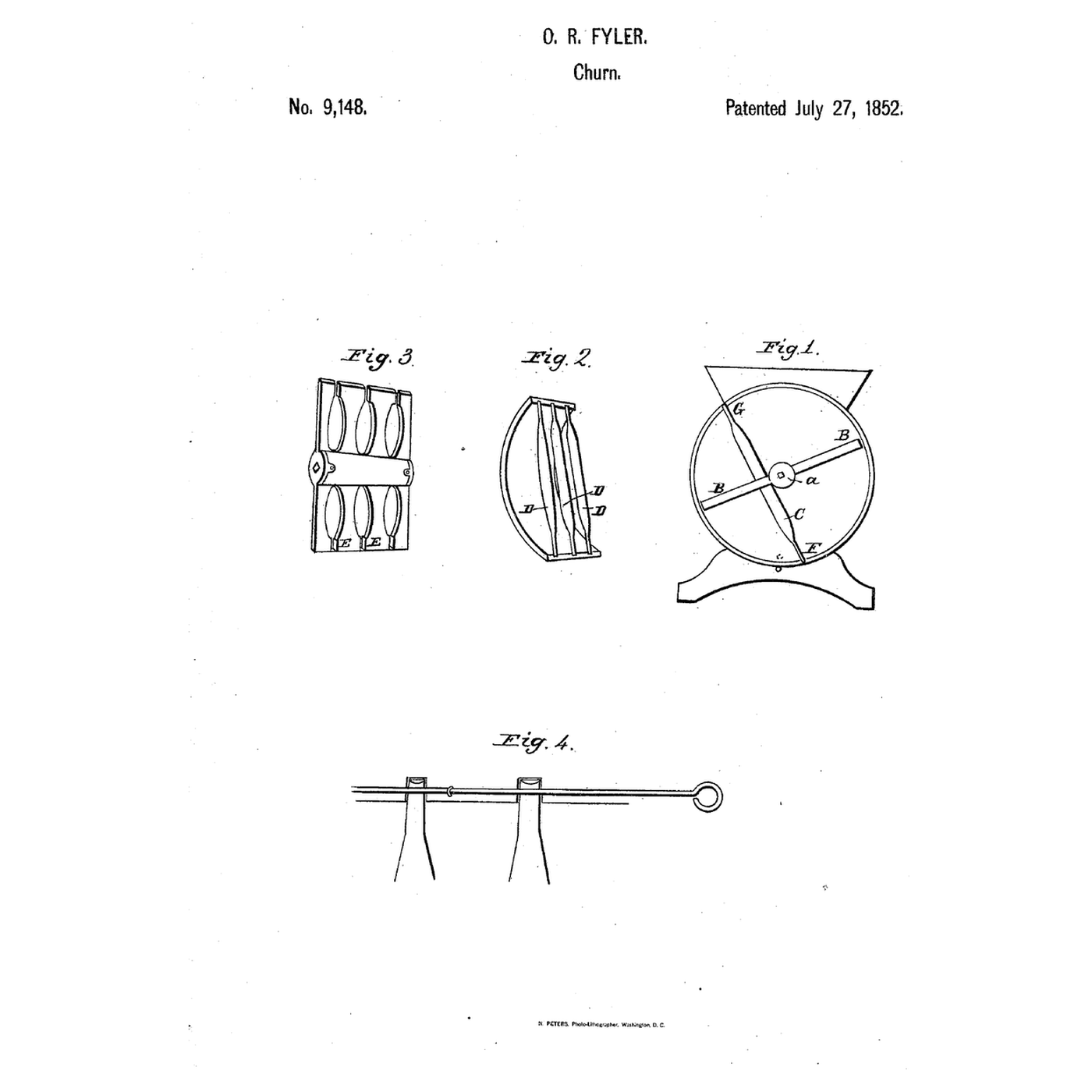

Post-and-Float Butter-Working Churn: Floats Revolving Astride Fixed Posts
Fyler built one machine to churn the cream and then work the butter, which he called the "Butter-Working Churn."
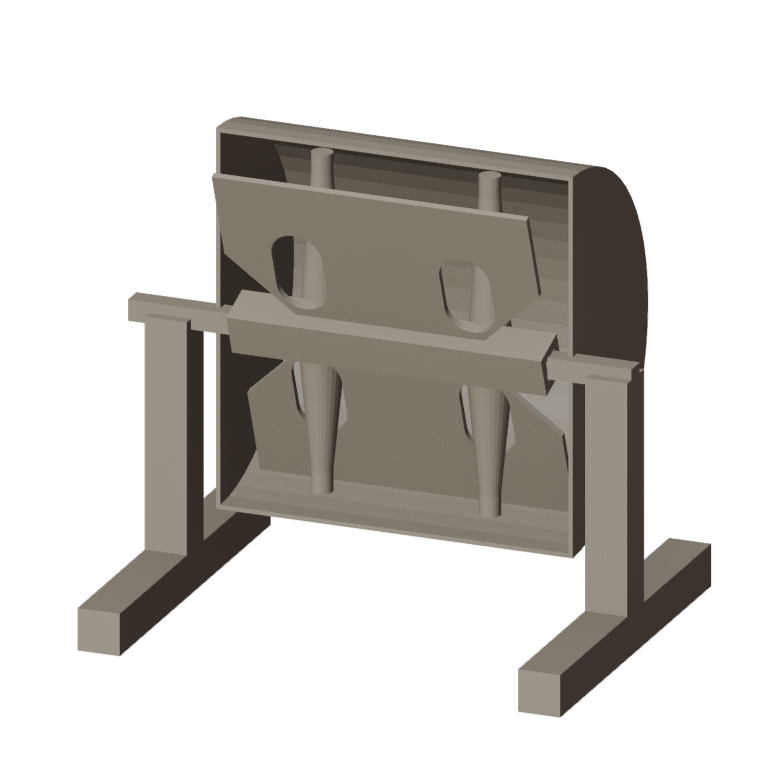
Orsamus R. Fyler of Brattleboro, Vermont, received US 9,148, dated 27 July 1852, for a cylinder churn whose floats, fixed to a shaft turned by a crank, "go astride of C the posts which stand firmly in the periphery of the churn and have their place as near as practicable to the axis." The posts are "large in their middle portions ... and small at each end"; the floats are "broad at their ends ... and narrow at the portion near the shaft," leaving oval passages. The posts lift out through the door; a slide lengthens the crank for the stiffer butter.
This rung looks at the crank's leverage, then prints the floats and posts, builds the drum, and makes and works butter.
Intermediate
About 4 hours, plus printing
Instructions
1
1
The longer crank
The longer crank
Loading Jupyter Notebook...
2
2
Churning and working in one churn before it
Churning and working in one churn before it
The embedded blueprint presses the butter between rollers and the churn's side. Fyler works it by drawing the floats through it past fixed posts.
3
3
Read US 9,148
Read US 9,148
"This smallness of the posts at each extremity enables them to pass through the butter with less resistance; and this wideness of the floats near the periphery and narrowness near the shaft makes them more efficient in moving and agitating the cream; in carrying more air into the cream; in reclosing the holes which the posts have cut in the butter; and in forcing the butter to pass through nearer the axis when the purchase upon it is greater."
4
4
Print the parts
Print the parts
Print two floats with their oval windows and square hubs (/uploads/blueprints/post-and-float-butter-working-churn-float.stl), two spindle-shaped posts (/uploads/blueprints/post-and-float-butter-working-churn-post.stl) and the crank arm (/uploads/blueprints/post-and-float-butter-working-churn-crank-arm.stl). Print in PLA at 0.2 mm layers, 30 % infill, 4 walls; wash before first use.
Materials for this step:
 PLA Filament1 piece
Tools needed:
 FDM 3D Printer
5
5
The drum
The drum
Use a round food-grade container about 180 mm across, laid on its side on a pine stand, with a door cut in its upper side. Drill holes in its lower side under the axis, 80 mm apart, and matching holes in the door, so the posts stand across the drum just beside the axis; a stainless skewer through holes above the door holds them.
Materials for this step:
 Food-Grade Storage Container1 piece
 Pine Board1 piece
 Mild Steel Rod1 piece
 #8 x 1" Wood Screw1 piece
Tools needed:
 Coping Saw
 Cordless Drill
 Drill Bit Set
 Hand Saw
6
6
Shaft, floats and crank
Shaft, floats and crank
Pass a 10 mm square hardwood shaft through the drum's ends and the two floats, set opposite each other so their windows pass the posts. Glue on the crank arm and a dowel handle; a second hole further out lengthens the crank for working the butter.
Materials for this step:
 Hardwood Dowels1 piece
 Wood Glue1 piece
 Leather Strip1 piece
Tools needed:
Hand Saw Sandpaper
7
7
The build in 3D
The build in 3D
FreeCAD model of this build, not of the patent: the drum cut away to show the two spindle-shaped posts standing across it beside the axis, and the floats with oval windows going astride them, on the stand.
8
8
Churn, then work the butter
Churn, then work the butter
Let the heavy cream stand until it reaches about 15 °C, checked with the thermometer. Pour in 1.5 litres and close the door. Crank steadily; time until the butter comes. Draw off the buttermilk, add cold water and crank on with the long crank hole, so the floats draw the butter past the posts and work it, until the water runs clear. Work in a pinch of salt the same way and weigh the butter.
Materials for this step:
 Heavy Cream1500 ml
 Coarse Sea Salt1 piece
 Water1 piece
Tools needed:
 Leave-In Probe Thermometer
 Stopwatch
 Digital Kitchen Scale
 Stainless Steel Mixing Bowl (Large)
9
9
Floats that catch the posts, a door that lifts
Floats that catch the posts, a door that lifts
Post-and-float churn troubleshooting.
Flow
Loading...
10
10
History and honest limits
History and honest limits
**Orsamus R. Fyler** of Brattleboro, Windham County, Vermont, received US 9,148, dated 27 July 1852 (the drawing sheet reads "O. R. Fyler"). He claimed the combination of floats on a revolving axis with stationary posts near the axis, and of dashers broad at their ends with posts small at each end and large in their middle.
**Honest limits.** A food-grade container and printed parts stand in for his cylinder; the notebook's loads are illustrative, not measured. FDM prints hold food in their layer lines, so wash well and replace when worn. Your times and weights are the result.
Materials
11- 1 piecePlaceholder
- 1 piecePlaceholder
- 1 piecePlaceholder
- 1 piecePlaceholder
- 1 piecePlaceholder
- 1 piecePlaceholder
- 1 piecePlaceholder
- 1 piecePlaceholder
- 1500 mlPlaceholder
- 1 piecePlaceholder
- 1 piecePlaceholder
Tools Required
10- Placeholder
- Placeholder
- 1 vendor sell this, none ship to you yetPlaceholder
- Placeholder
- Placeholder
- Placeholder
- Placeholder
- Placeholder
- Placeholder
- Placeholder
Design Files
1Related Blueprints
These blueprints share knowledge with this one — techniques, materials, or principles that connect them in the learning graph.
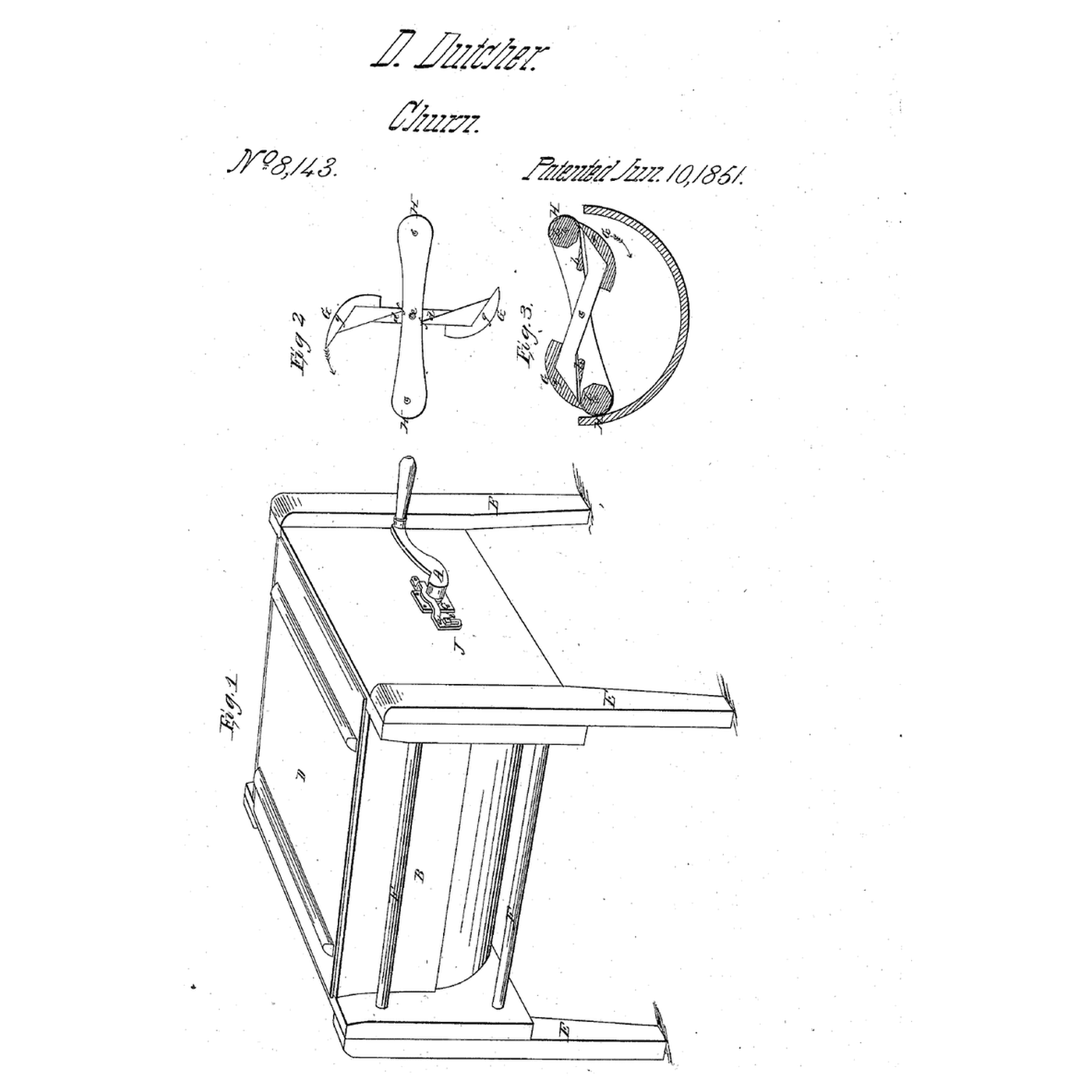
Roller-and-Float Gathering Churn: Floats That Fold Onto Rollers to Press the Butter
by Woody
Woodworking
0
0
0
0
0
0
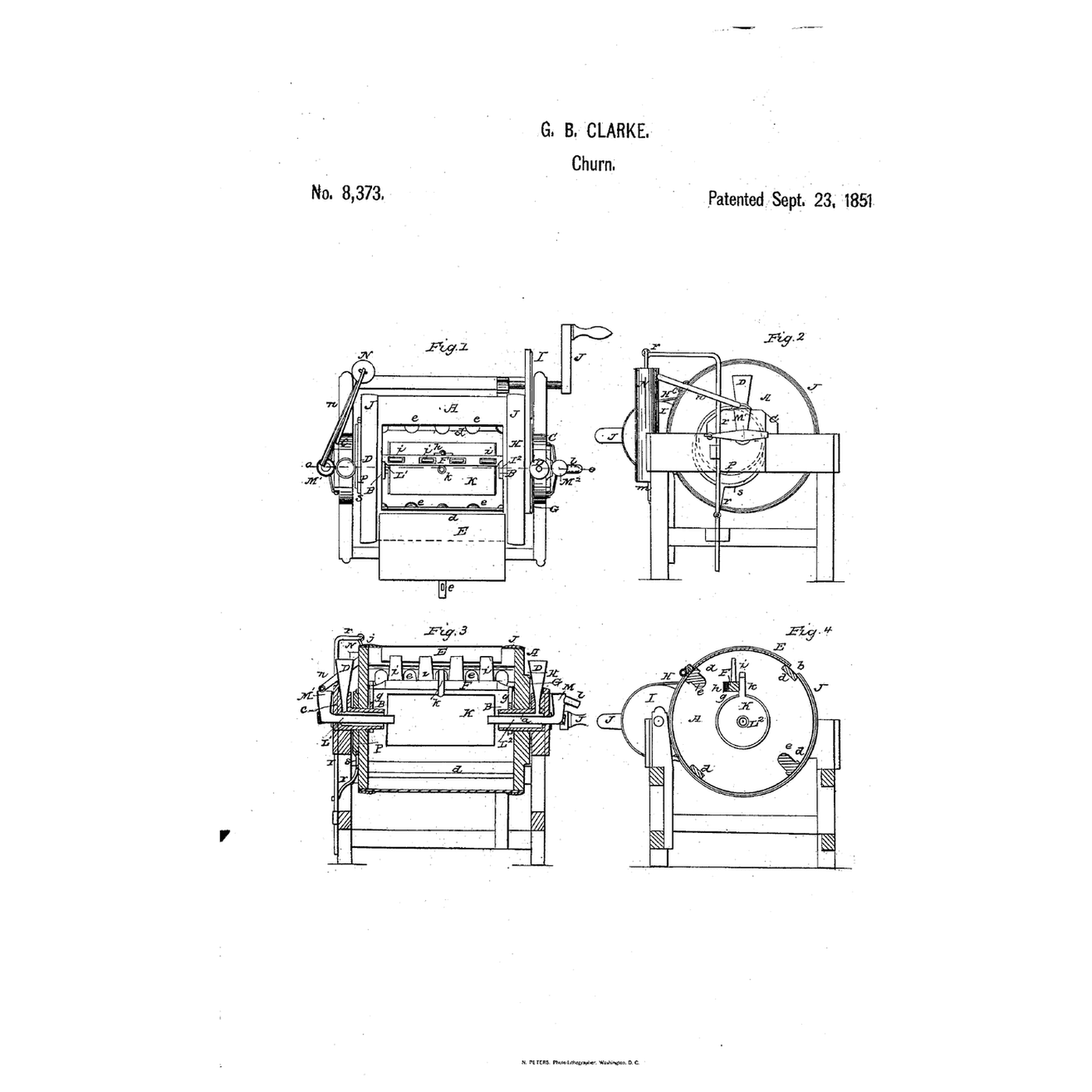
Revolving-Drum Toothed-Bar Churn: The Churn Turns Round a Fixed Toothed Bar
by Karen
FOOD & DRINKS
0
0
0
0
0
0
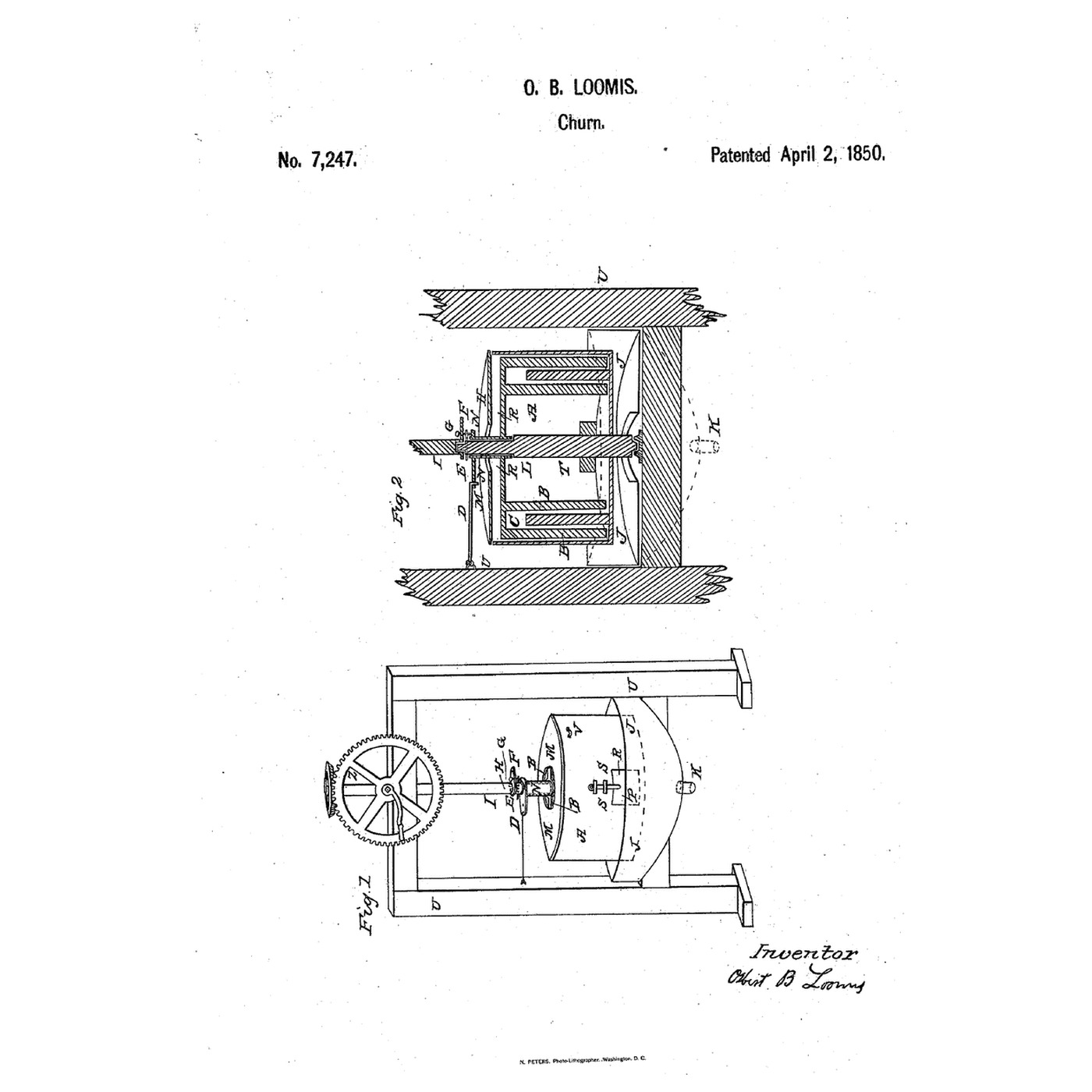
Centrifugal Buttermilk-Extractor Churn: A Spinning Drum That Throws the Buttermilk Out
by Martin
FOOD & DRINKS
0
0
0
0
0
0
CC0 Public Domain
This blueprint is released under CC0. You are free to copy, modify, distribute, and use this work for any purpose, without asking permission.
Support the Maker by purchasing products through their Blueprint where they earn a Maker Commission set by Vendors, or create a new iteration of this Blueprint and include it as a connection in your own Blueprint to share revenue.