ART
BEAUTY & WELLNESS
CRAFT
CULTURE & HISTORY
ENTERTAINMENT
ENVIRONMENT
FOOD & DRINKS
REVERSE ENGINEERING
SCIENCES
SPORTS
TECHNOLOGY
WEARABLES
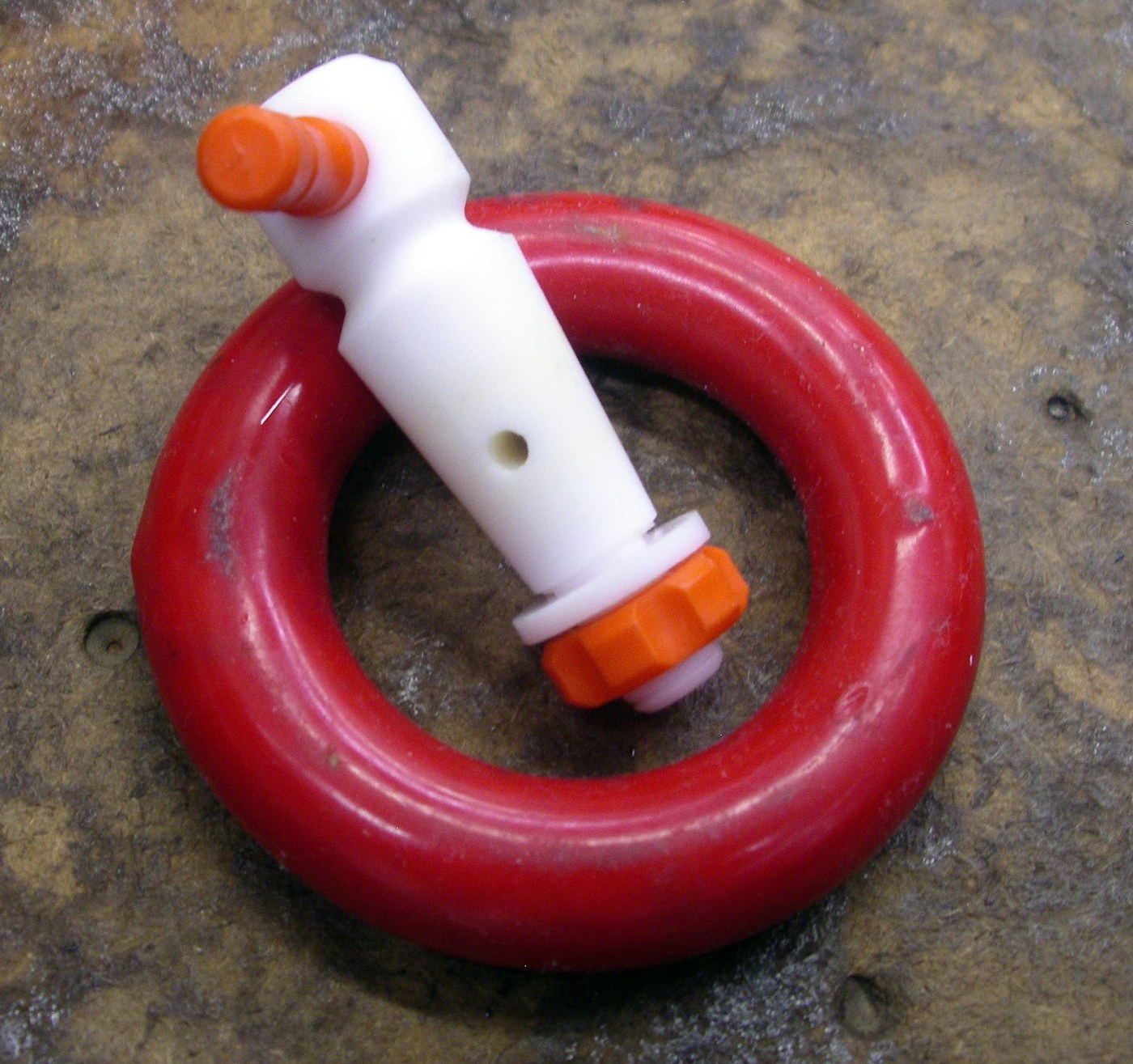


PTFE (Polytetrafluoroethylene)
On 6. April 1938 Roy Plunkett at DuPont opened the valve on a cylinder of tetrafluoroethylene gas, a candidate refrigerant, and nothing came out - though the cylinder still weighed full. Sawn open, it held a white waxy powder: the gas had polymerised by itself. The powder resisted every solvent and acid tried on it, did not melt like other plastics, and almost nothing would stick to it.
**US 2,230,654**, "Tetrafluoroethylene polymers", Plunkett, assigned to Kinetic Chemicals, granted 4. February 1941. Its first claim is two words: "Polymerized tetrafluoroethylene."
**Tetrafluoroethylene is explosive and is never handled outside a plant.** You build what the material is for: a hinged tilting ramp that measures the coefficient of friction of PTFE against steel, beside nylon, acrylic and steel itself.
Beginner
3 hours
Instructions
1
1
The rig
The rig
The whole rig: a 400 mm base, a hinged ramp with a steel strip on top, a prop under the raised end, and a faced sled.
2
2
Cut base and ramp
Cut base and ramp
From 18 mm plywood saw two boards 400 x 120 mm. Sand the edges.
Materials for this step:
 Plywood Sheet1 piece
Tools needed:
 Hand Saw
 Steel Ruler
 C-Clamp
3
3
Hinge them
Hinge them
Lay the boards end to end and fit the butt hinge across one short joint with 4 wood screws, pilot-drilled 2 mm. The ramp must lift from flat to 45° without rocking.
Materials for this step:
 Butt Hinge1 piece
 Wood Screws4 pieces
Tools needed:
 Cordless Drill
 Drill Bit Index
 Screwdriver Set
4
4
Fit the steel counterface
Fit the steel counterface
Stick a 360 x 100 mm strip of mild steel sheet to the ramp's top face with double-sided tape. Wipe it with isopropyl alcohol - grease halves any reading.
Materials for this step:
 Mild Steel Sheet1 piece
 Double-Sided Tape1 roll
 Isopropyl Alcohol 99%10 ml
Tools needed:
 Clear Safety Glasses
5
5
Make four sleds
Make four sleds
Saw four 60 x 60 mm plywood blocks. Face one each with PTFE, nylon, acrylic and steel cut to 60 x 60 mm, fixed with double-sided tape. Clean every face with alcohol.
Materials for this step:
 PTFE Sheet1 piece
 Nylon Sheet (6/6)1 piece
 Acrylic Sheet1 pieceMild Steel Sheet1 pieceDouble-Sided Tape1 roll
Tools needed:
Hand Saw Utility Knife
6
6
Tilt until it goes
Tilt until it goes
Set a sled 100 mm from the top. Raise the ramp slowly, about 1° per second. Stop the instant it slides and read the angle finder on the ramp. Five tries per sled.
Tools needed:
 Protractor/Angle FinderSteel Ruler
7
7
Load it
Load it
Repeat the PTFE sled with a weight taped on top. The angle should not change.
Tools needed:
 WeightProtractor/Angle Finder
8
8
Angles into friction
Angles into friction
Loading Jupyter Notebook...
9
9
History & Context
History & Context
**What the patent specifies:** the polymer of tetrafluoroethylene itself, a solid insoluble in ordinary solvents. **Modern build (derived):** machined PTFE sheet against clean mild steel on a tilting plane.
Its first large use was seals and gaskets for the Manhattan Project's uranium hexafluoride plant, a gas that attacked everything else. DuPont registered Teflon in 1945; non-stick pans followed in the 1950s, and stretched PTFE became Gore-Tex. Its limits: it creeps under steady load, wears quickly without fillers, cannot be glued without etching, and above about 260 °C in use it begins to give off harmful fumes.
Materials
9- 1 piecePlaceholder
- 1 piecePlaceholder
- 4 piecesPlaceholder
- 1 piecePlaceholder
- 1 rollPlaceholder
- Placeholder
- 1 piecePlaceholder
- 1 piecePlaceholder
- 1 piecePlaceholder
Tools Required
10- Placeholder
- Placeholder
- Placeholder
- 1 vendor sell this, none ship to you yetPlaceholder
- Placeholder
- Placeholder
- Placeholder
- Placeholder
- Placeholder
- Placeholder
Design Files
1Related Blueprints
These blueprints share knowledge with this one — techniques, materials, or principles that connect them in the learning graph.


CC0 Public Domain
This blueprint is released under CC0. You are free to copy, modify, distribute, and use this work for any purpose, without asking permission.
Support the Maker by purchasing products through their Blueprint where they earn a Maker Commission set by Vendors, or create a new iteration of this Blueprint and include it as a connection in your own Blueprint to share revenue.