ART
BEAUTY & WELLNESS
CRAFT
CULTURE & HISTORY
ENTERTAINMENT
ENVIRONMENT
FOOD & DRINKS
REVERSE ENGINEERING
SCIENCES
SPORTS
TECHNOLOGY
WEARABLES
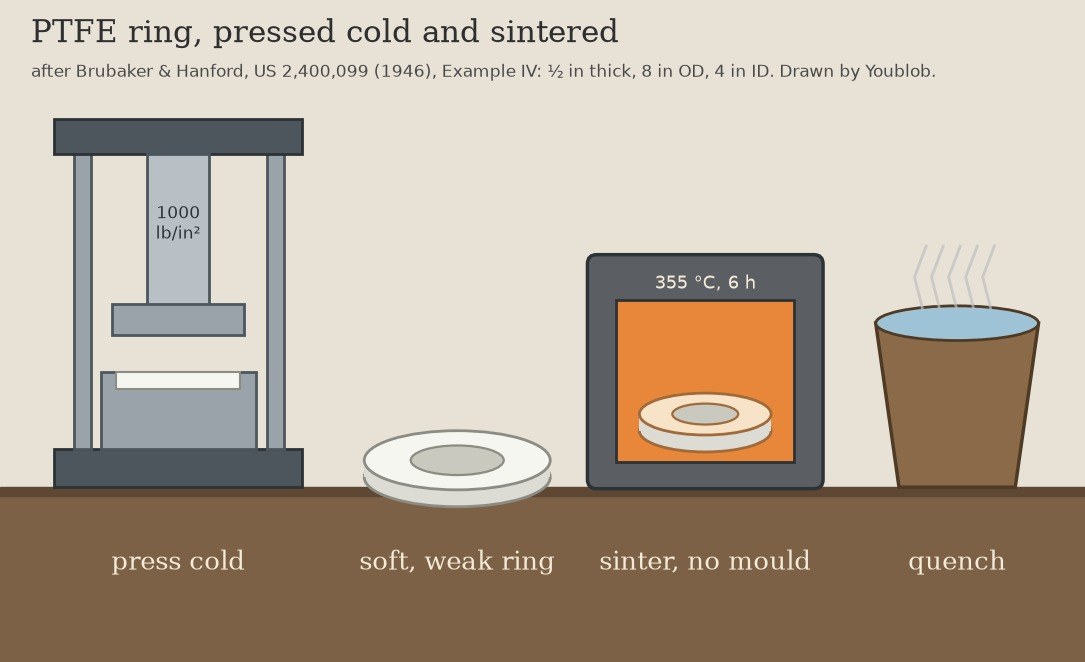


PTFE Ring: Pressed Cold, Sintered Out of the Mould (Brubaker & Hanford 1946)
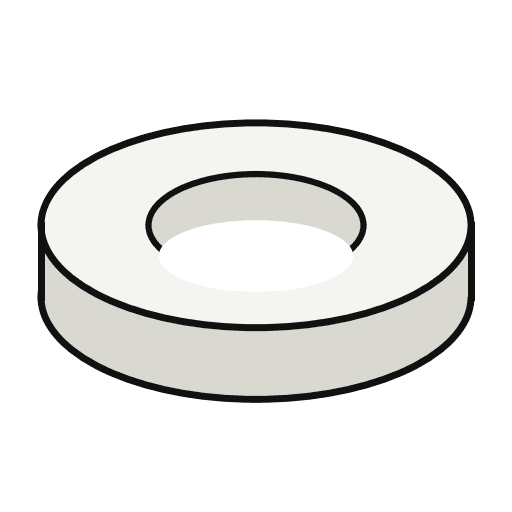
PTFE will not flow like other plastics, so it cannot be injection moulded. Du Pont's answer was to press the powder cold into shape, take it out of the mould, and only then heat it above 327 °C. The soft, weak pressing keeps its shape in the furnace and comes out tough. This is their Example IV: a ring 8 in across.
Source: M. M. Brubaker and W. E. Hanford (du Pont), US 2,400,099 (1946), Example IV. The press, die and furnace are ours. Picture drawn by Youblob.
Intermediate
1 day
Instructions
1
1
Fill the ring mould with powder
Fill the ring mould with powder
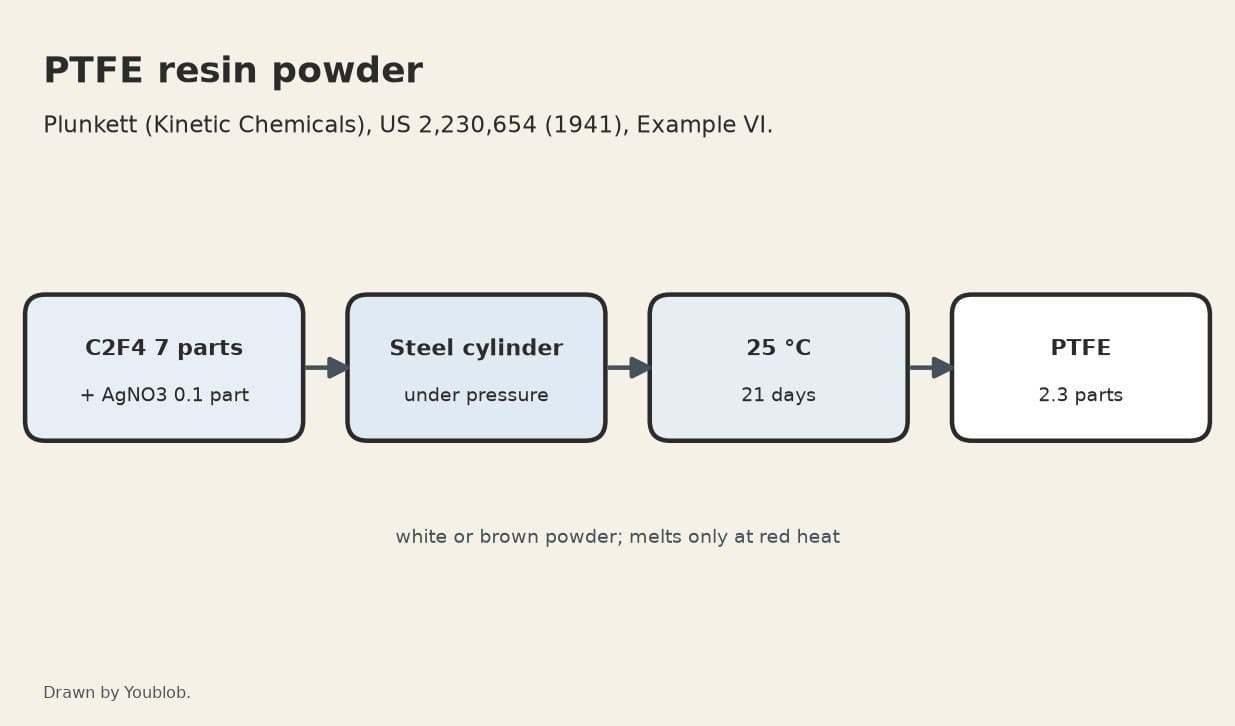
At room temperature, fill a ring mould with powdered PTFE. The finer the powder, the better the result (the patent).
Materials for this step:
 PTFE Resin Powder1 as required to fill the mould
Tools needed:
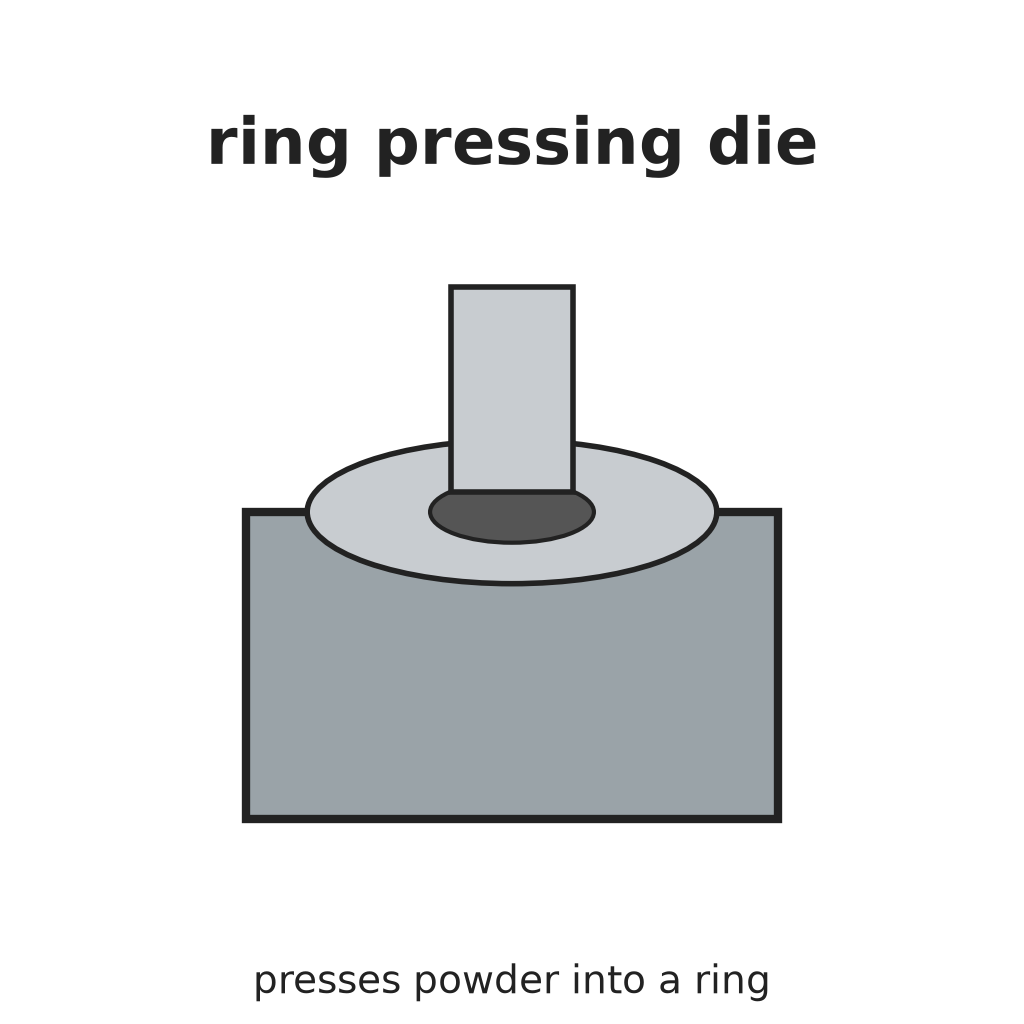 Ring Pressing Die
2
2
Press at 1000 psi
Press at 1000 psi
Press it at 1000 lb/sq in into a ring ½ in thick, 8 in outside and 4 in inside diameter. The pressed ring is soft and weak: handle it gently.
Tools needed:
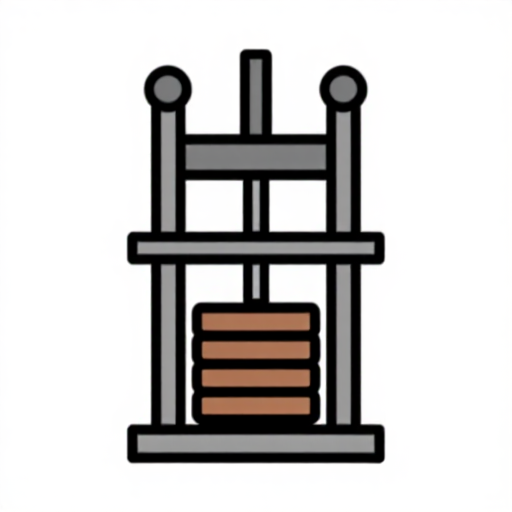 Hydraulic PressRing Pressing Die
 Ruler
3
3
Sinter at 355 °C for 6 hours
Sinter at 355 °C for 6 hours
Take the ring out of the mould and heat it, free-standing, in a furnace at 355 °C for 6 hours. Air is fine; no mould is needed to hold its shape.
Tools needed:
 Muffle Furnace
 Thermocouple with Readout
4
4
Quench in cold water
Quench in cold water
Lift the hot ring out and quench it in cold water. It comes out hard and tough. It shrinks a little but stays symmetrical.
Tools needed:
 Tongs
 Quench Bucket
Materials
1- 1 as required to fill the mouldPlaceholder
Tools Required
7- Placeholder
- Placeholder
- Placeholder
- Placeholder
- Placeholder
- Placeholder
- Placeholder
This blueprint makes
Related Blueprints
These blueprints share knowledge with this one — techniques, materials, or principles that connect them in the learning graph.

CC0 Public Domain
This blueprint is released under CC0. You are free to copy, modify, distribute, and use this work for any purpose, without asking permission.
Support the Maker by purchasing products through their Blueprint where they earn a Maker Commission set by Vendors, or create a new iteration of this Blueprint and include it as a connection in your own Blueprint to share revenue.