ART
BEAUTY & WELLNESS
CRAFT
CULTURE & HISTORY
ENTERTAINMENT
ENVIRONMENT
FOOD & DRINKS
REVERSE ENGINEERING
SCIENCES
SPORTS
TECHNOLOGY
WEARABLES


PTFE Thread Seal Tape: Paste-Extruded, Calendered, Never Sintered
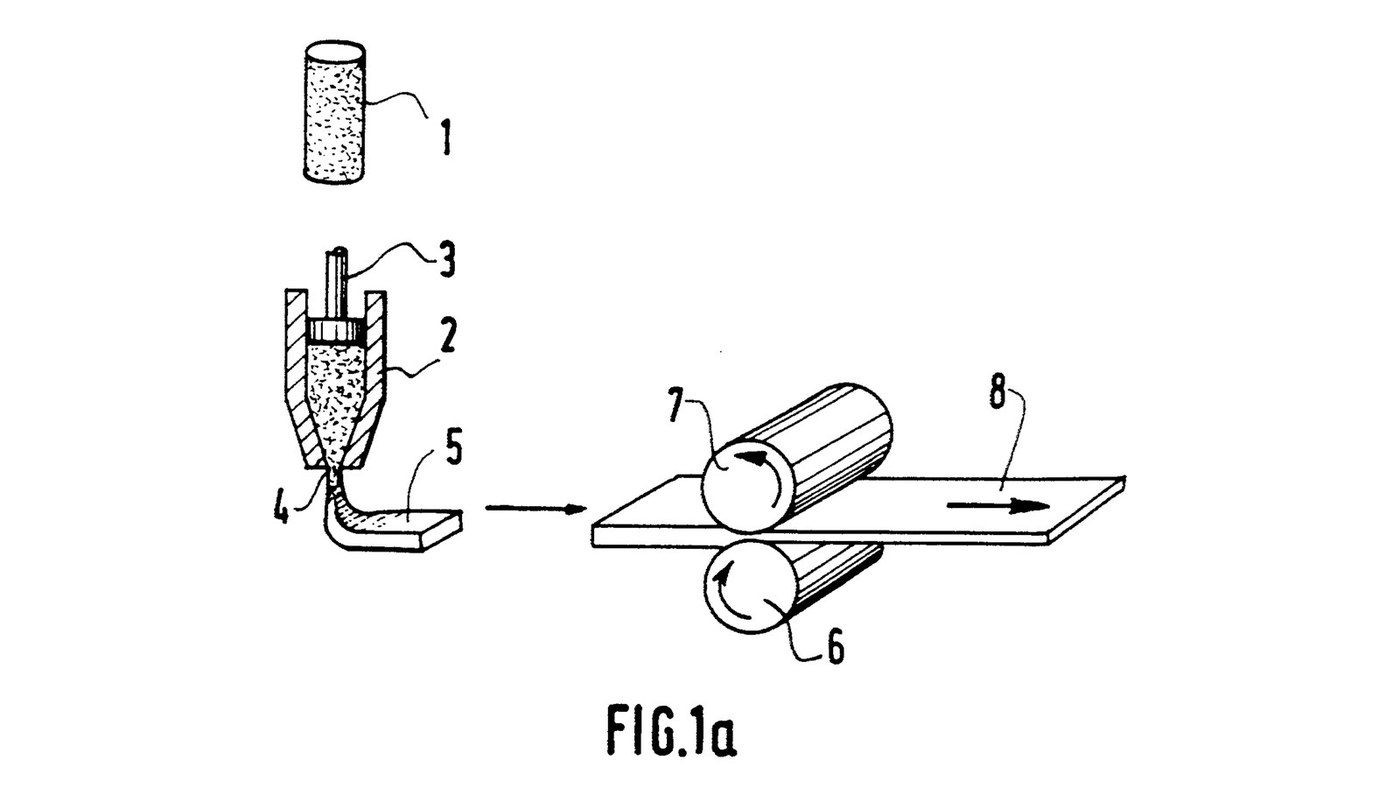
The white tape wound on pipe threads is PTFE that has never been melted. Fine PTFE powder is mixed with a lubricant, pressed into a slug, squeezed through a slit die by a ram, rolled thin between two rolls, and dried. Kept below the sintering heat (about 350 °C) it stays soft and conforms to the thread (process: US 5,415,939, 1995). The targets and tests are those of the Indian standard IS 14643 (from BS 4375): no fillers, at most 0.1 % lubricant left, usually 12 mm wide and 0.075 mm thick.
The lubricant (naphtha) and the slitter are ours. The picture: Fig. 1a of the patent.
Advanced
1 day
Instructions
1
1
Wet the powder
Wet the powder
Mix fine (dispersion-made) virgin PTFE powder with a lubricant that can be driven off completely. Granular PTFE will not paste-extrude. No fillers. Ours: naphtha, as required.
Materials for this step:
 PTFE Fine Powder1 batch
Tools needed:
 Naphtha
2
2
Press a preform
Press a preform
Compact the wet powder into a cylindrical preform in a mould with a plunger.
Tools needed:
 Compression Mould
 Hydraulic Press
3
3
Ram-extrude a flat tape
Ram-extrude a flat tape
Put the preform in the extrusion press. The plunger pushes it out through a slit die as a thick flat tape.
Tools needed:
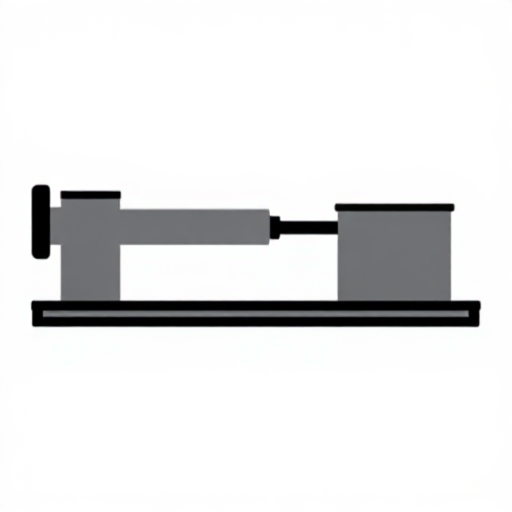 Hydraulic Extrusion Press
4
4
Calender it thin
Calender it thin
Pass the tape between two counter-rotating rolls to a thin tape, aiming at about 0.075 mm.
Tools needed:
 Rolling Mill
 Micrometer
5
5
Dry off the lubricant
Dry off the lubricant
Dry the tape until the lubricant is gone. Keep it well below the sintering heat (about 350 °C): sintered tape is stiff and will not seal.
Tools needed:
 Drying Oven
6
6
Slit and spool
Slit and spool
Slit it to width, usually 12 mm (±0.5 mm), and wind it on spools.
Tools needed:
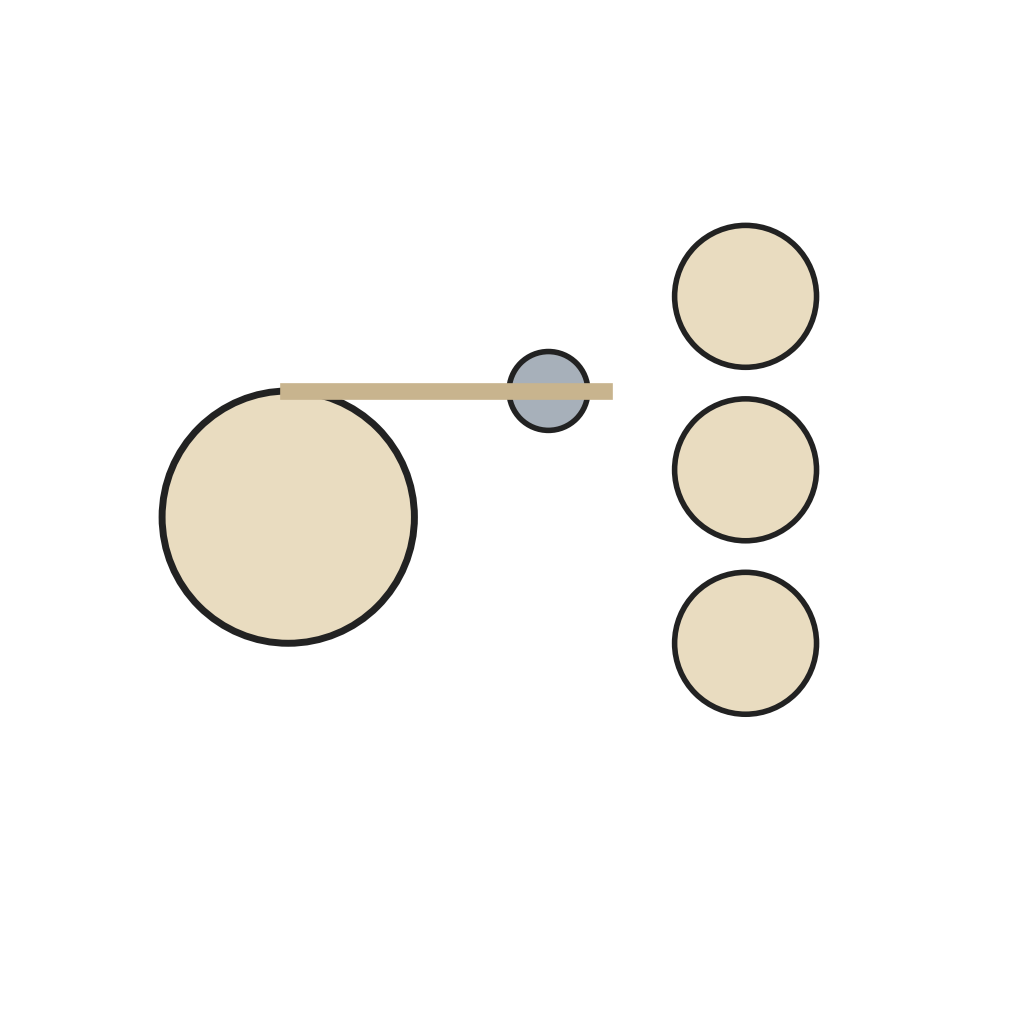 Slitter-Rewinder
7
7
Check the tape
Check the tape
It must look white, with no visible specks or torn edges. Measure the thickness at five points along a sample; each must be within 10 % of their mean.
Tools needed:
Micrometer8
8
Test the residual lubricant
Test the residual lubricant
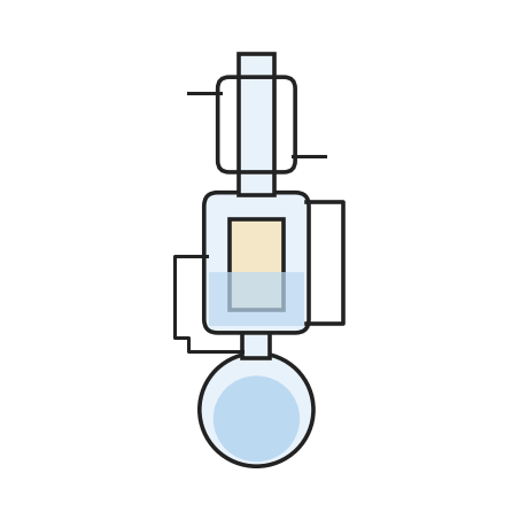
Weigh about 15 g of tape. Extract it in a Soxhlet with petroleum spirit (40-60 °C) for at least 4 h, dry it at 100 °C, then heat it at 300 °C for 6 h, cool and weigh. The loss must be 0.1 % or less.
Tools needed:
 Soxhlet Extractor
 Petroleum SpiritDrying Oven
 Steel Crucible
 Desiccation Chamber (Small)
 Precision Scale
9
9
Wrap a thread
Wrap a thread
Wind tape round an R 1/2 taper pipe thread with 50 % overlap, two layers deep, just tight enough to take the thread form. It must hold the form, not break, and its end must stay put.
Tools needed:
 Threaded Pipe Fitting
Materials
1- 1 batchPlaceholder
Tools Required
14- Placeholder
- Placeholder
- Placeholder
- Placeholder
- Placeholder
- Placeholder
- Placeholder
- Placeholder
- Placeholder
- Placeholder
- Placeholder
- Placeholder
- Placeholder
- Placeholder
This blueprint makes


Related Blueprints
These blueprints share knowledge with this one — techniques, materials, or principles that connect them in the learning graph.


CC0 Public Domain
This blueprint is released under CC0. You are free to copy, modify, distribute, and use this work for any purpose, without asking permission.
Support the Maker by purchasing products through their Blueprint where they earn a Maker Commission set by Vendors, or create a new iteration of this Blueprint and include it as a connection in your own Blueprint to share revenue.