

Puddling Wrought Iron from Pig Iron — Burning Out the Carbon in a Reverberatory Furnace
Pig iron straight from the blast furnace is cheap and plentiful but nearly useless for anything that must bend or take a blow: its high carbon makes it brittle as glass. To turn it into the tough, malleable wrought iron that built the railways and bridges of the 1800s, the carbon has to be burned out. Henry Cort's puddling process, patented in 1784, did exactly that — at scale, with coal.
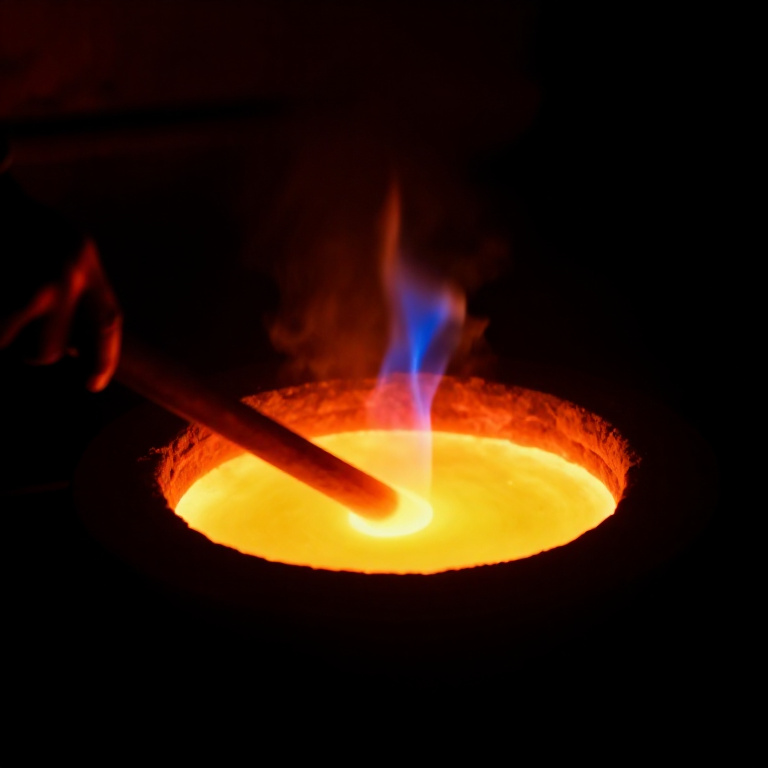
The trick is the reverberatory furnace, which keeps the fuel separate from the metal. Coal burns in a side firebox and the flame is drawn over a low bridge and reflected down off the furnace roof onto a hearth of pig iron, so the sulphurous coal smoke never touches the iron. A workman called a puddler stirs the molten bath through a small door with a long iron rabble, exposing every part of it to the air until the carbon oxidises away.
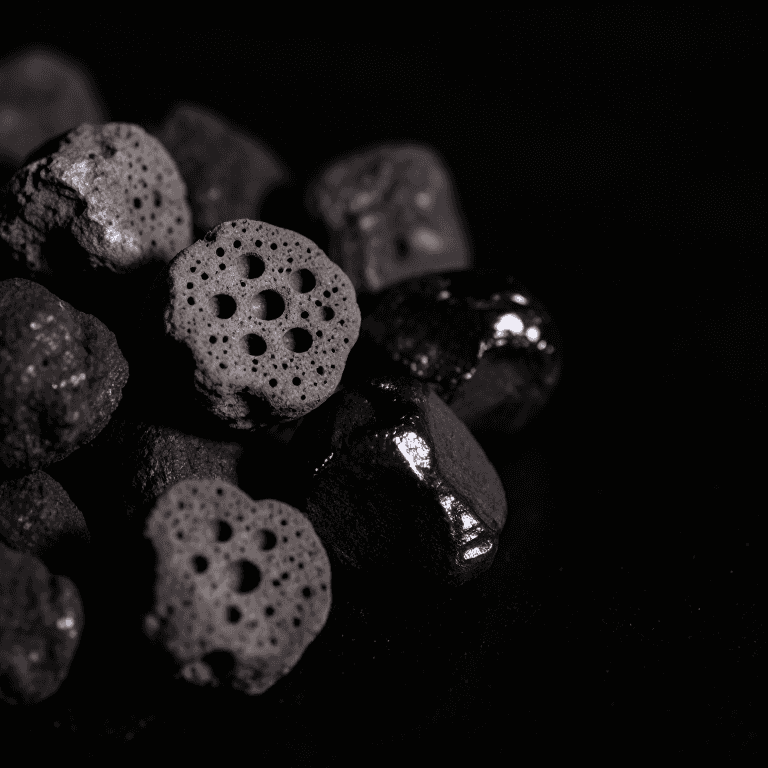
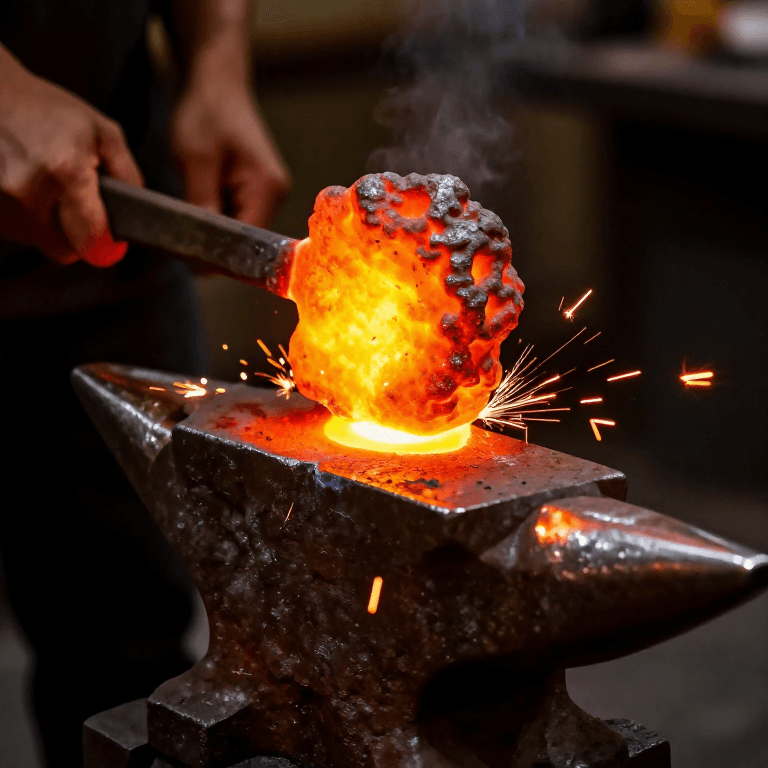
As the carbon leaves, something strange happens: the purer iron's melting point rises above the furnace temperature, so the metal grows stiff and pasty even in the heat. The puddler gathers it into spongy balls, which are then hammered and rolled to squeeze out the slag and consolidate the fibres into bars of wrought iron.
Instructions
Understand the goal
Understand the goal
Build a reverberatory furnace
Build a reverberatory furnace
Materials for this step:
 Firebrick100 pieces
Tools needed:
 Trowel
Fettle the hearth
Fettle the hearth
Materials for this step:
 Iron Scale5 kg
Fire the furnace with coal
Fire the furnace with coal
Materials for this step:
 Bituminous Coal60 kg
Charge and melt the pig iron
Charge and melt the pig iron
Materials for this step:
 Pig Iron Ingots30 kg
Puddle the bath
Puddle the bath
Tools needed:
 Puddling Rabble
Bring on the boil
Bring on the boil
Let it come to nature
Let it come to nature
Tools needed:
Puddling RabbleBall up the iron
Ball up the iron
Tools needed:
Puddling RabbleShingle the ball
Shingle the ball
Tools needed:
 Sledgehammer
Roll into bars
Roll into bars
Tools needed:
 Rolling Mill
Identify wrought iron
Identify wrought iron
Tools needed:
 Hammer
Materials
4- 100 piecesPlaceholder
- 5 kgPlaceholder
- 60 kgPlaceholder
- 30 kgPlaceholder
Tools Required
5- Placeholder
- Placeholder
- Placeholder
- Placeholder
- Placeholder
Connected Blueprint Materials

Related Blueprints
These blueprints share knowledge with this one — techniques, materials, or principles that connect them in the learning graph.

CC0 Public Domain
This blueprint is released under CC0. You are free to copy, modify, distribute, and use this work for any purpose, without asking permission.
Support the Maker by purchasing products through their Blueprint where they earn a Maker Commission set by Vendors, or create a new iteration of this Blueprint and include it as a connection in your own Blueprint to share revenue.