ART
BEAUTY & WELLNESS
CRAFT
CULTURE & HISTORY
ENTERTAINMENT
ENVIRONMENT
FOOD & DRINKS
REVERSE ENGINEERING
SCIENCES
SPORTS
TECHNOLOGY
WEARABLES
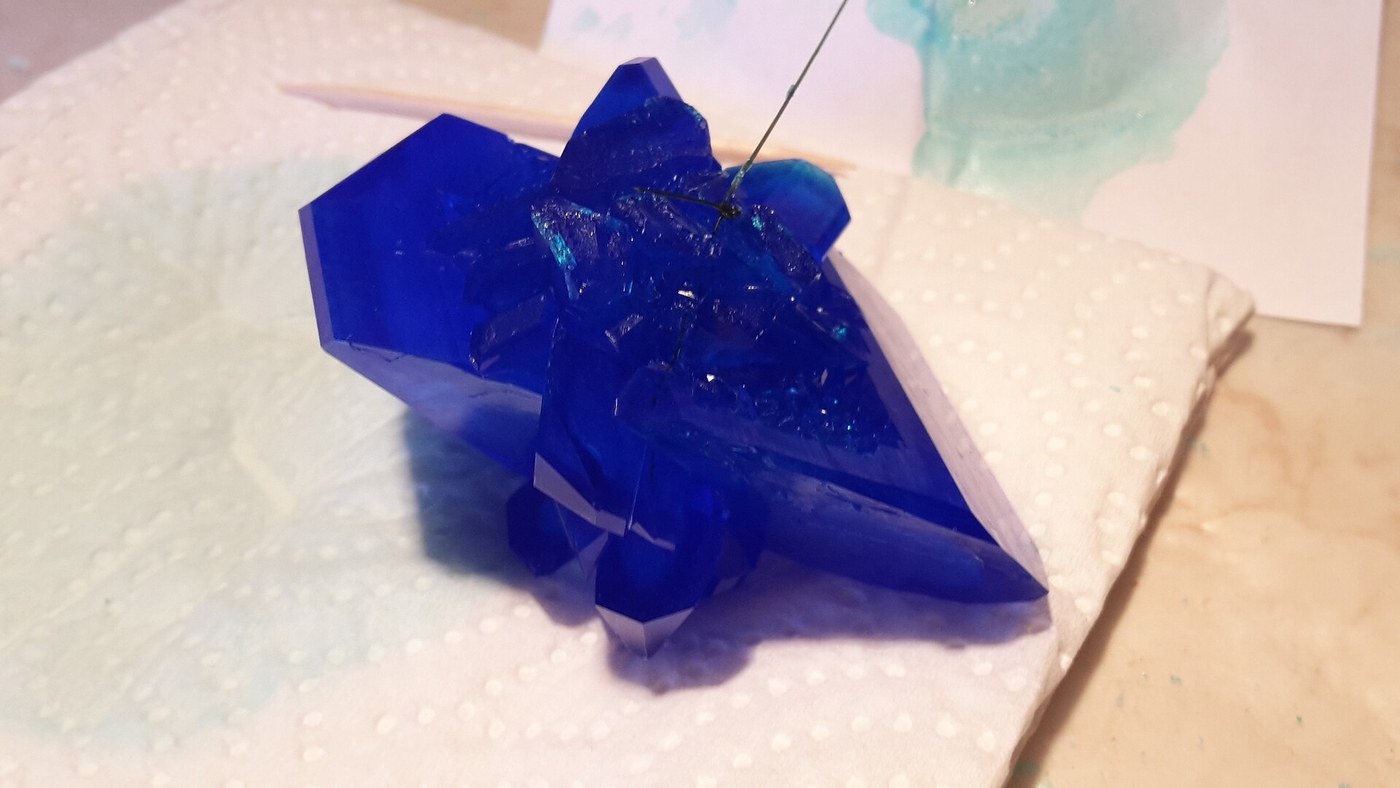


Purified Copper Sulphate: Iron Thrown Down by Fresh Copper Carbonate, Then Recrystallised
Ordinary copper sulphate usually carries a little iron sulphate. The 1907 US Dispensatory gives the cure: add freshly precipitated copper carbonate, which throws the iron down as carbonate, then filter and crystallise. The pharmacopoeia salt had to be at least 99.5 % pure copper sulphate. Making the copper carbonate from part of the same solution, and drying below 30 °C, are our choices. The source gives no quantities, so none are given here.
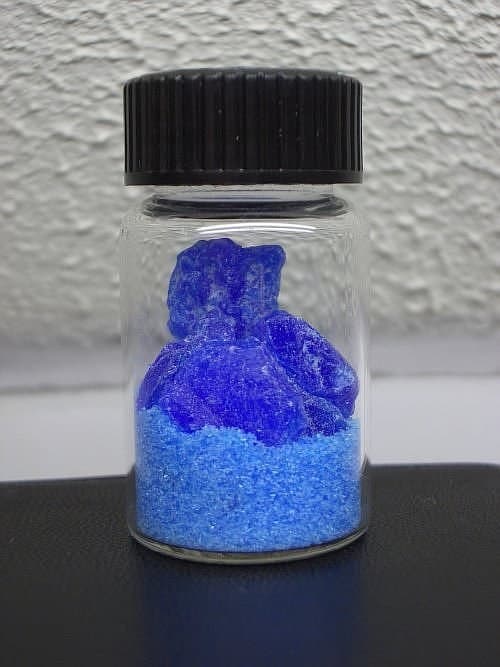
The picture: a copper sulphate crystal (Crystal Titan, Wikimedia Commons, CC BY-SA 4.0).
Intermediate
Two to three days
Instructions
1
1
Dissolve in boiling water
Dissolve in boiling water
Dissolve the copper sulphate in boiling distilled water: it takes about half its weight of boiling water (and about 2.2 times its weight of water at 25 °C).
Materials for this step:
 Copper Sulfate Pentahydrate (CuSO₄·5H₂O)1 as required
Tools needed:
 Distilled Water
 Borosilicate Beaker
 Glass Stirring Rod
 Hot Plate
 Chemical Splash Goggles
 Rubber Gloves
2
2
Make fresh copper carbonate
Make fresh copper carbonate
Take a small part of the solution and stir in sodium carbonate solution: alkaline carbonates decompose copper sulphate and copper carbonate falls. Filter it and wash it with distilled water. Use it fresh.
Tools needed:
 Sodium Carbonate (soda ash)Distilled WaterBorosilicate BeakerGlass Stirring Rod
 Glass Funnel - Stemmed
 Filter PaperChemical Splash GogglesRubber Gloves
3
3
Throw down the iron and filter
Throw down the iron and filter
Stir the fresh copper carbonate into the hot solution, in excess. The iron is deposited as carbonate. Filter the hot solution clear.
Tools needed:
Borosilicate BeakerGlass Stirring RodHot PlateGlass Funnel - StemmedFilter PaperChemical Splash GogglesRubber Gloves4
4
Crystallise and dry
Crystallise and dry
Evaporate the filtrate in a dish until crystals begin to form, then let it cool. Large, transparent, deep blue crystals grow. Drain them and dry them in the air below 30 °C: at 30 °C the salt starts to lose its water of crystallisation. It slowly loses water in dry air too, so keep it in stoppered bottles.
Tools needed:
 Evaporating DishHot Plate
 Glass Bottles with StoppersRubber Gloves
5
5
Test for iron
Test for iron
Dissolve a crystal in water in a test tube and add ammonia water drop by drop. A pale blue precipitate forms and then dissolves in more ammonia to a deep azure-blue solution. Any iron is thrown down with it and does not dissolve again in the excess, so the solution should stay clear. A salt that turns green on the surface in air still contains iron.
Tools needed:
 Test TubesDistilled Water
 Ammonia Solution - DiluteChemical Splash GogglesRubber Gloves
Materials
1- 1 as requiredPlaceholder
Tools Required
13- Placeholder
- Placeholder
- Placeholder
- Placeholder
- Placeholder
- Placeholder
- Placeholder
- Placeholder
- Placeholder
- Placeholder
- Placeholder
- Placeholder
- Placeholder
This blueprint makes

Related Blueprints
These blueprints share knowledge with this one — techniques, materials, or principles that connect them in the learning graph.
CC0 Public Domain
This blueprint is released under CC0. You are free to copy, modify, distribute, and use this work for any purpose, without asking permission.
Support the Maker by purchasing products through their Blueprint where they earn a Maker Commission set by Vendors, or create a new iteration of this Blueprint and include it as a connection in your own Blueprint to share revenue.