ART
BEAUTY & WELLNESS
CRAFT
CULTURE & HISTORY
ENTERTAINMENT
ENVIRONMENT
FOOD & DRINKS
REVERSE ENGINEERING
SCIENCES
SPORTS
TECHNOLOGY
WEARABLES
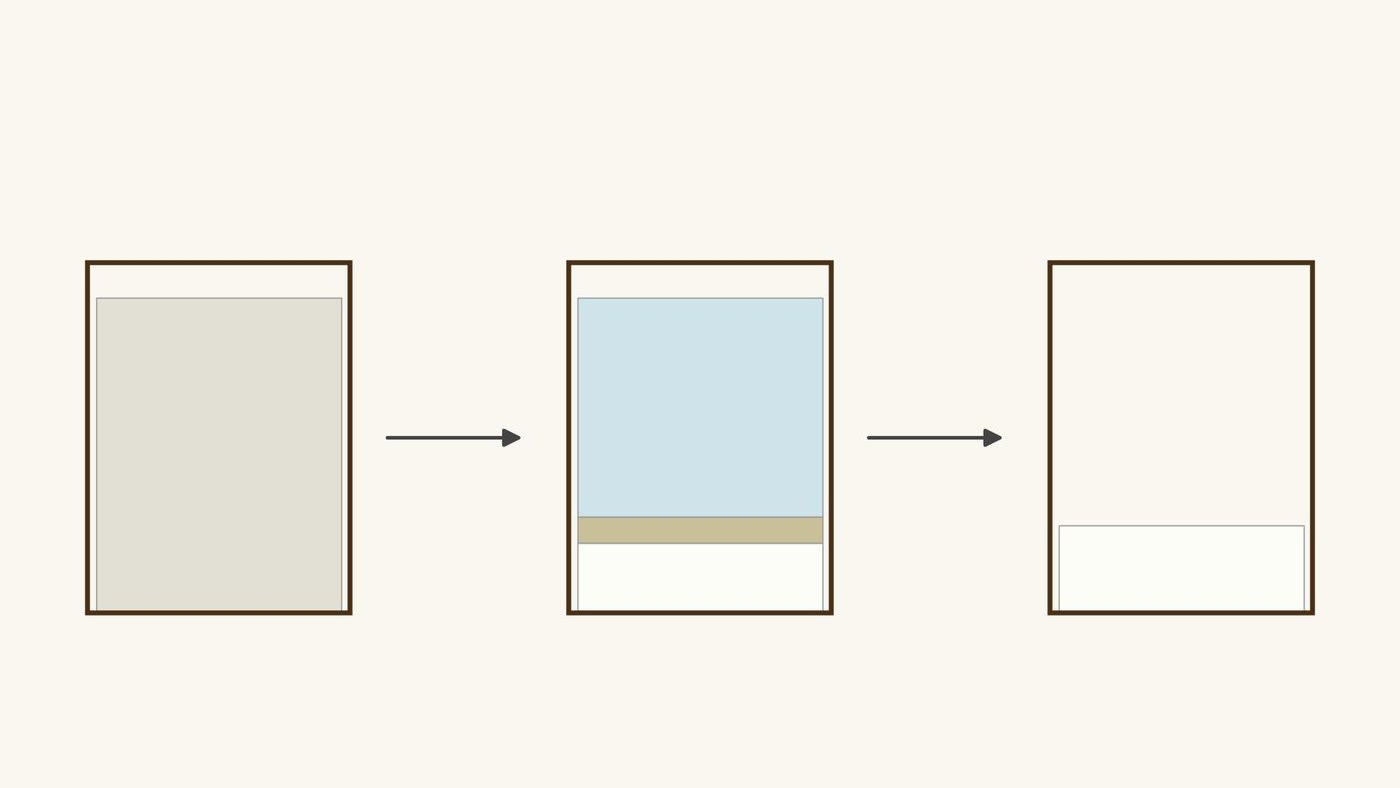


Rice Starch: Steeped, Ground Wet, Settled and Washed
Starch can be drawn from rice as from wheat. Steep the grain soft, grind it wet, and wash the milky water off into a tub where the starch settles. Pour off and wash again until the water stays clear, then sieve, drain and dry it. Rice starch has sized paper in China since 700 CE.
The picture: our diagram, milky liquor, settled layers, washed starch.
Beginner
About a week
Instructions
1
1
Steep
Steep
Cover the rice with water and leave it until the grains crush easily between the fingers.
Materials for this step:
 Short-grain Japanese Rice2 kg
Tools needed:
 Wooden Tub
 Water
Water Balance Scale
2
2
Grind wet and wash out
Grind wet and wash out
Grind the soft grain wet on the quern. Stir the mash with water and pour the milky liquor through muslin into a tub; repeat with fresh water until it runs nearly clear.
Tools needed:
 Quern Stone
 Muslin ClothWooden Tub
 BucketWater
3
3
Settle and wash
Settle and wash
Let the starch settle, pour off the water, stir in fresh water and settle again. Repeat as long as the water takes any colour. Scrape off the slimy top layer.
Tools needed:
Wooden Tub Wooden PaddleWater
4
4
Sieve, drain and dry
Sieve, drain and dry
Stir the starch with water and pass it through a fine sieve. Settle once more, pour off, and lay the starch on cloth in a basket to drain. Cut it into pieces and dry them fully; scrape off the dusty surface.
Tools needed:
 Fine SieveMuslin Cloth
 BasketBalance Scale
5
5
Starch from your rice
Starch from your rice
Loading Jupyter Notebook...
Materials
1- Placeholder
This blueprint makes

Related Blueprints
These blueprints share knowledge with this one — techniques, materials, or principles that connect them in the learning graph.

CC0 Public Domain
This blueprint is released under CC0. You are free to copy, modify, distribute, and use this work for any purpose, without asking permission.
Support the Maker by purchasing products through their Blueprint where they earn a Maker Commission set by Vendors, or create a new iteration of this Blueprint and include it as a connection in your own Blueprint to share revenue.