ART
BEAUTY & WELLNESS
CRAFT
CULTURE & HISTORY
ENTERTAINMENT
ENVIRONMENT
FOOD & DRINKS
REVERSE ENGINEERING
SCIENCES
SPORTS
TECHNOLOGY
WEARABLES
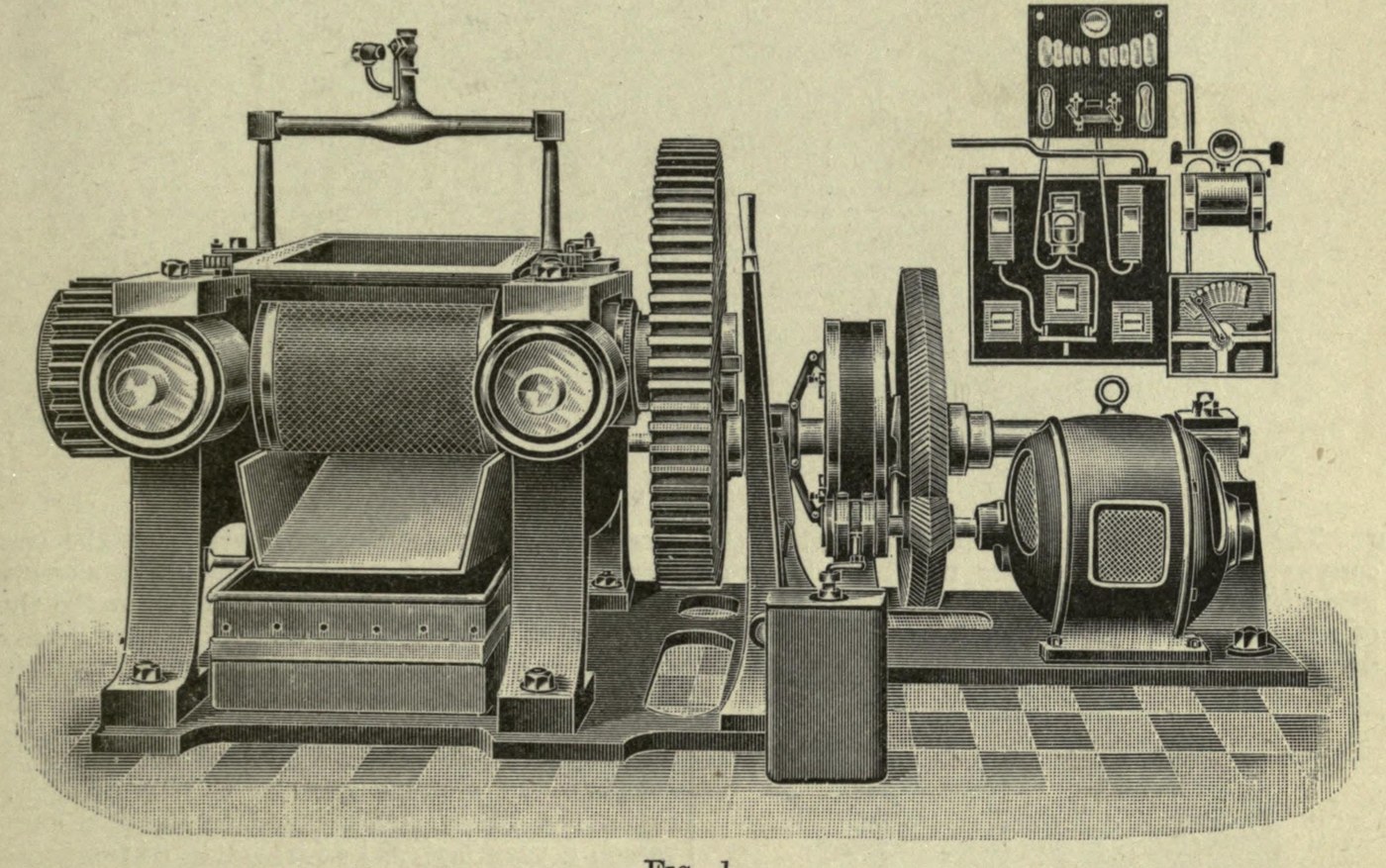


Rubber Compound: Raw Rubber Washed, Dried and Mixed with Sulphur on Hot Rolls (Thorpe, 1913)
How a rubber works of 1913 turned raw rubber into a 'mixing' ready for shaping and curing: the rubber is washed between corrugated rolls under running water, dried on racks, broken down on hot smooth rolls until plastic, and then worked together with fillers and finally sulphur into an even dough.
Very few goods were made of rubber and sulphur alone: pure mixings cost too much and are too soft for most uses.
Unknown: which fillers, and how much of them and of sulphur. Thorpe names the kinds of materials but gives no mixing.
Source: T. E. Thorpe, Dictionary of Applied Chemistry vol. IV (1913), pp. 586-587. Picture: Fig. 1, a washing machine.
Intermediate
3-4 days drying
Instructions
1
1
Steep and wash the rubber
Steep and wash the rubber
Cut the raw rubber into lumps or slabs and steep them for some hours in warm water. Pass them again and again through corrugated, diamond-cut or fluted rolls running at a speed difference of 6 : 4 down to one tooth, with a stream of water on the rubber, until the rough crepe-like sheet is clean and thin.
Materials for this step:
 Smoked Rubber Sheet1 raw rubber
 Water1 warm, then running
Tools needed:
 Two-Roll Rubber Mill
2
2
Dry on racks
Dry on racks
Hang the sheet on racks in a drying room until it holds only about 0.25-0.5 per cent moisture: about 3-4 days at about 80°F with good ventilation. Cooler, drier air is better, as warm rubber turns soft and tacky.
Tools needed:
 Drying Rack
3
3
Break it down
Break it down
Pass the dry rubber repeatedly through the steam-heated smooth rolls of the mixing machine, which run at different speeds, tightening the rolls gradually until the rubber is thoroughly plastic.
Tools needed:
Two-Roll Rubber Mill4
4
Mix in the fillers and sulphur
Mix in the fillers and sulphur
Add the other materials gradually: reclaimed rubber, ground waste, 'substitute' and other organic fillers first, then the minerals and the sulphur last. Work it into a thoroughly even dough without overworking ('tiring') the rubber.
Materials for this step:
 Unknown Material1 fillers and minerals; not given
 Sulfur Powder1 amount not given
Tools needed:
Two-Roll Rubber MillMaterials
4- 1 raw rubberPlaceholder
- 1 warm, then runningPlaceholder
- 1 fillers and minerals; not givenPlaceholder
- 1 amount not givenPlaceholder
Tools Required
2- Placeholder
- Placeholder
This blueprint makes
CC0 Public Domain
This blueprint is released under CC0. You are free to copy, modify, distribute, and use this work for any purpose, without asking permission.
Support the Maker by purchasing products through their Blueprint where they earn a Maker Commission set by Vendors, or create a new iteration of this Blueprint and include it as a connection in your own Blueprint to share revenue.