ART
BEAUTY & WELLNESS
CRAFT
CULTURE & HISTORY
ENTERTAINMENT
ENVIRONMENT
FOOD & DRINKS
REVERSE ENGINEERING
SCIENCES
SPORTS
TECHNOLOGY
WEARABLES
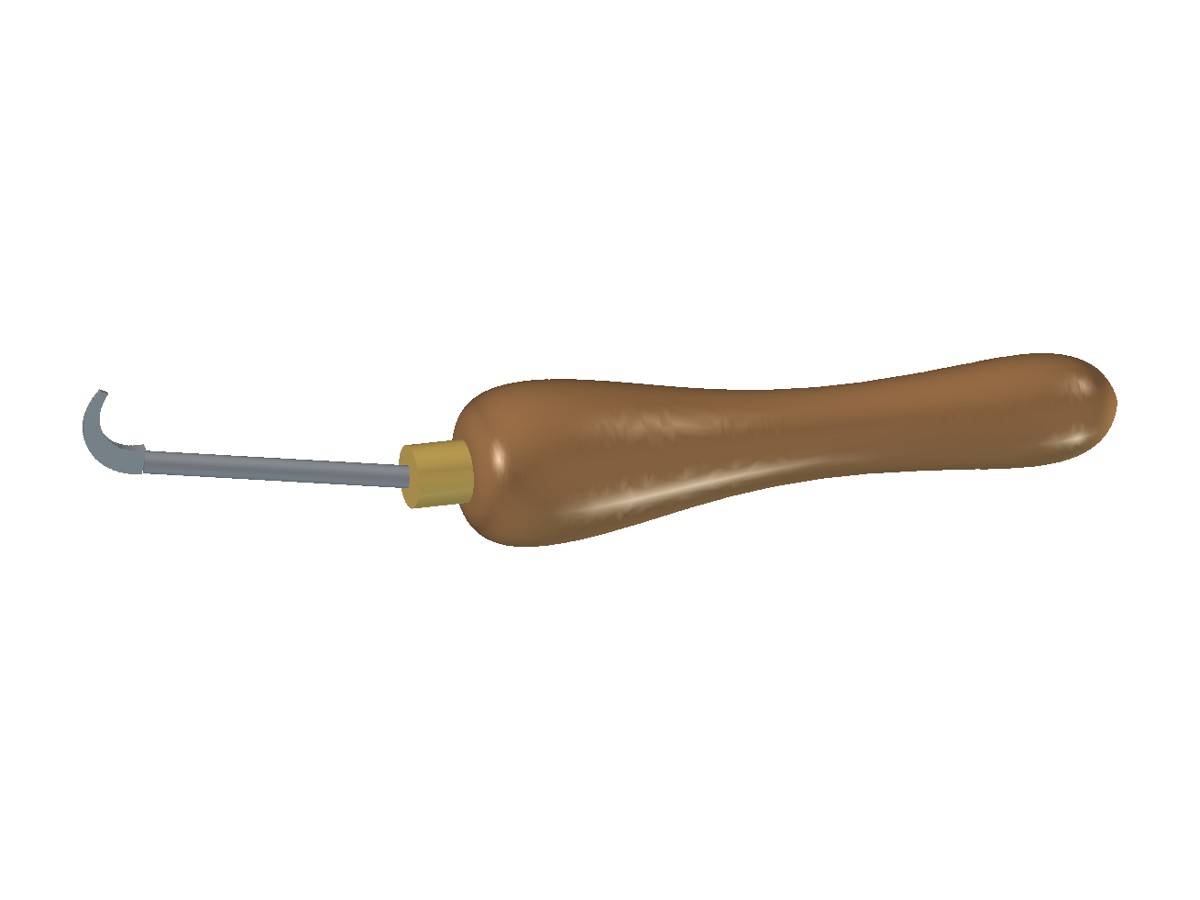


Seam Ripper: a Hook Blade with a Flat Under Face on an Upturned Shank (after Beavin, 1945)
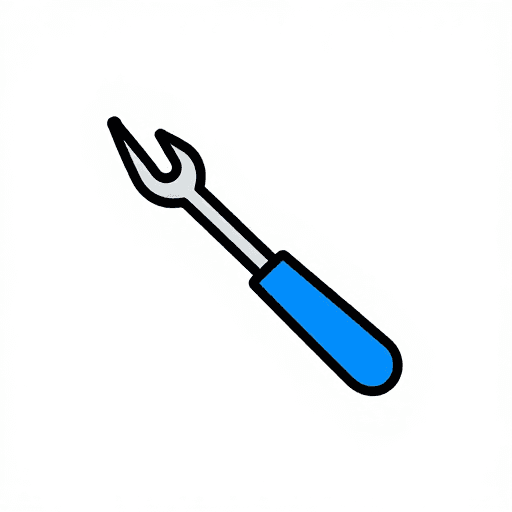
A seam ripper forged from piano wire: a small hook-shaped blade, flat underneath so it slides on the cloth, sharpened on the inside of its curve to cut stitches without cutting the fabric, on a shank bent up so your hand clears the work. Alfred Beavin patented this shape in 1945.
Intermediate
About 3 hours
Instructions
1
1
How a seam ripper is used
How a seam ripper is used
Unpicking stitches without hurting the fabric (Wendi Gratz). Ours is a single hook blade that slides on its flat side.
2
2
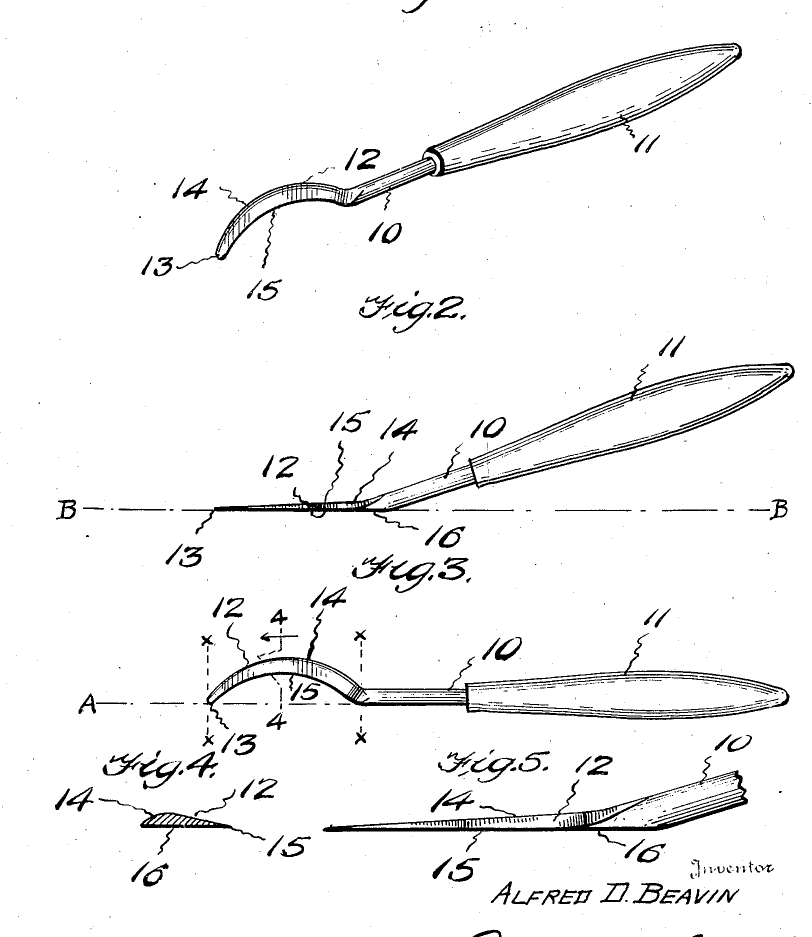
Beavin's seam ripper, 1945
Beavin's seam ripper, 1945
US 2,370,440: a hook-like blade 12 curved to one side of the shank, its rounded apex 13 in line with the shank's edge; bevelled on top from the convex back 14 to the concave cutting edge 15; a flat under face 16 that slides on the cloth so the edge cuts the thread with a shearing action; the shank 10 bent up so the hand clears the work; the blade tempered.
3
3
Forge the blade
Forge the blade
Cut 70 mm of 3 mm piano wire. Heat the last 25 mm to a bright red and hammer it flat on the anvil, about 1.2 mm thick and 4 mm wide, thinner towards the tip. While hot, bend the flat end sideways round the nose of the pliers into a hook about 8 mm in radius, its tip in line with the edge of the shank. Bend the shank up about 15 degrees just behind the hook.
Materials for this step:
 Piano Wire1 piece (3 mm, 70 mm)
Tools needed:
 Hacksaw
 Propane Torch
 Ball Peen Hammer
 Anvil
 Round-nose Pliers
 Flat-Nose Pliers
 Heat-Resistant Gloves
 Safety Glasses
 Digital Caliper 6-Inch
4
4
File and grind the edge
File and grind the edge
File the under face dead flat. File the top face as a bevel from the outer curve down to the inner curve, which becomes the edge, and taper it towards the tip. Round the tip smooth so it slips under a stitch without snagging.
Tools needed:
 Metal File
 Needle File Set
 Bench Vise
5
5
Harden and temper
Harden and temper
Heat the hook until a magnet no longer sticks and quench in warm cooking oil. Clean it bright and temper in the oven at 200 degrees C for one hour (light straw).
Materials for this step:
 Cooking Oil0.5 l
Tools needed:
Propane Torch Small Magnet
 Quench Bucket
 Oven
 Emery PaperHeat-Resistant Gloves
6
6
Fit the handle
Fit the handle
Shape 90 mm of hardwood dowel to a comfortable grip. Drill a 3 mm hole 35 mm deep in one end, fit 10 mm of brass tube over that end as a ferrule, and glue the shank in with epoxy.
Materials for this step:
 Hardwood Dowels1 piece (16 mm, 90 mm)
 Brass Tube1 piece (about 8 mm, 10 mm)
 Epoxy Resin2 g
Tools needed:
 Wood Rasp
 Sandpaper
 Drill Bit SetBench ViseHacksaw
7
7
Hone and use
Hone and use
Hone the inner edge on the stone, keeping the under face flat. To rip, lay the flat face on the cloth, slip the tip under a stitch, and draw the tool along the seam.
Tools needed:
 Sharpening Stone
8
8
Troubleshooting
Troubleshooting
Ripper problems and fixes.
Flow
Loading...
9
9
History and honest limits
History and honest limits
Alfred D. Beavin, Eastport, Maryland: US 2,370,440, "Seam Ripper", filed 10 August 1944, granted 27 February 1945. He gives no sizes or steel: ours are 3 mm piano wire, the blade sizes, the handle and the heat treatment. Not made by us yet.
Materials
5- 1 piece (3 mm, 70 mm)Placeholder
- 0.5 lPlaceholder
- 1 piece (16 mm, 90 mm)Placeholder
- 1 piece (about 8 mm, 10 mm)Placeholder
- 2 gPlaceholder
Tools Required
20- Placeholder
- Placeholder
- Placeholder
- Placeholder
- Placeholder
- Placeholder
- Placeholder
- Placeholder
- Placeholder
- Placeholder
- Placeholder
- Placeholder
- Placeholder
- Placeholder
- Placeholder
- Placeholder
- Placeholder
- Placeholder
- Placeholder
- Placeholder
This blueprint makes
Related Blueprints
These blueprints share knowledge with this one — techniques, materials, or principles that connect them in the learning graph.
CC0 Public Domain
This blueprint is released under CC0. You are free to copy, modify, distribute, and use this work for any purpose, without asking permission.
Support the Maker by purchasing products through their Blueprint where they earn a Maker Commission set by Vendors, or create a new iteration of this Blueprint and include it as a connection in your own Blueprint to share revenue.