ART
BEAUTY & WELLNESS
CRAFT
CULTURE & HISTORY
ENTERTAINMENT
ENVIRONMENT
FOOD & DRINKS
REVERSE ENGINEERING
SCIENCES
SPORTS
TECHNOLOGY
WEARABLES
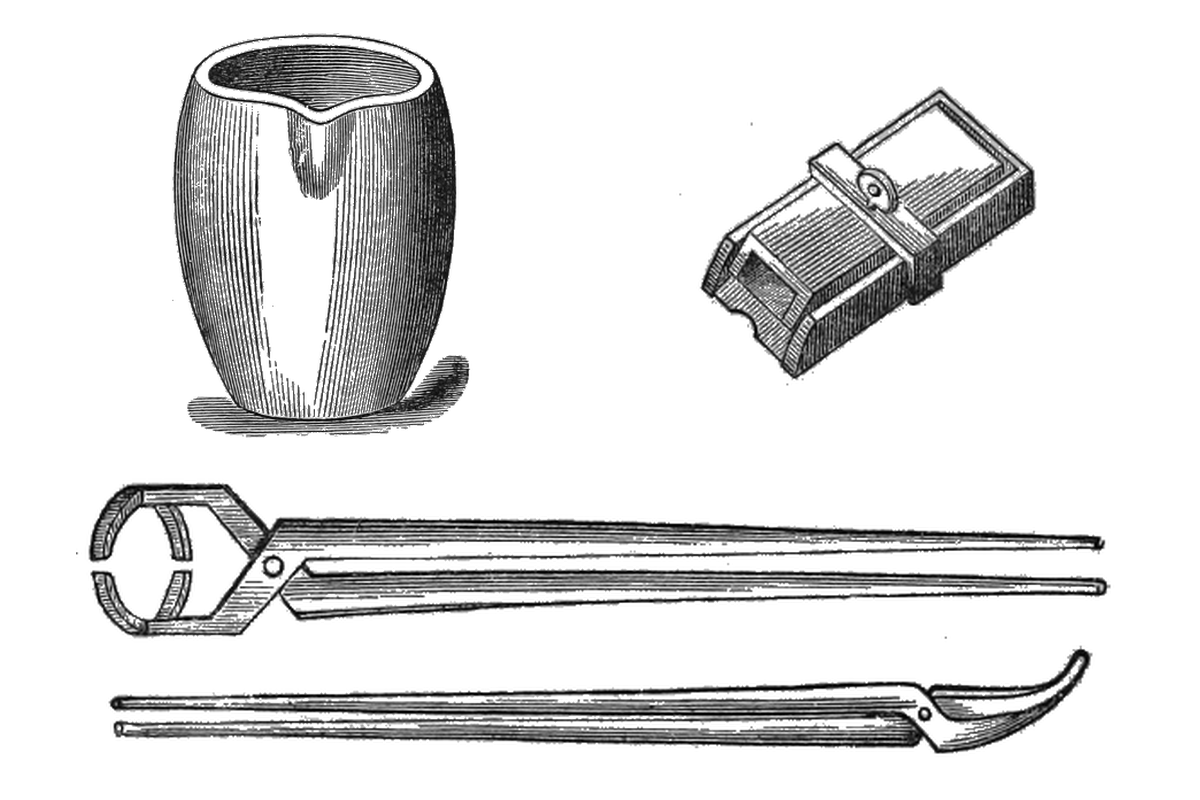


Silver Solder from Fine Silver, Copper and Spelter: Gee, 1877
Silver solder joins silver, copper and brass with a strong, hard seam. The silversmith George Gee preferred one made of fine silver, shot copper and a little spelter (zinc), melted only once: his best hard solder is 16 dwt of fine silver, 3 dwt 12 gr of shot copper and 12 gr of spelter to the ounce, about 80, 17.5 and 2.5 per cent. More copper and zinc make it flow sooner (his medium, easy and common solders). Silver and copper alone give the hardest, least fusible solder; too much zinc makes it eat away during soldering.
Intermediate
Two hours
Instructions
1
1
Weigh the metals
Weigh the metals
Loading Jupyter Notebook...
Materials for this step:
 Fine Silver80 g
 Copper (shot copper)17.5 g
 Spelter (zinc)2.5 g
Tools needed:
 Weighing Scale
 Cold Chisel
2
2
Anneal and test the crucible
Anneal and test the crucible
Before a new plumbago (graphite) crucible is charged, heat it slowly to redness on a fire that is dying down and has no blaze, so it does not crack. Touch it with a cold iron bar: if cracks show, reject it.
Tools needed:
 Graphite-Clay Crucible
 Charcoal Furnace
 Crucible Tongs
3
3
Melt silver and copper
Melt silver and copper
Put the copper at the bottom of the crucible, the silver on top, and melt them in the furnace. Stir them well together with an iron stirrer, tapered at the point and first heated to redness. When the metals are just beginning to fuse, cover the melt with finely divided, pure charcoal to keep the air off it.
Materials for this step:
 Charcoal - Crushed Fine1 as required
Tools needed:
Charcoal Furnace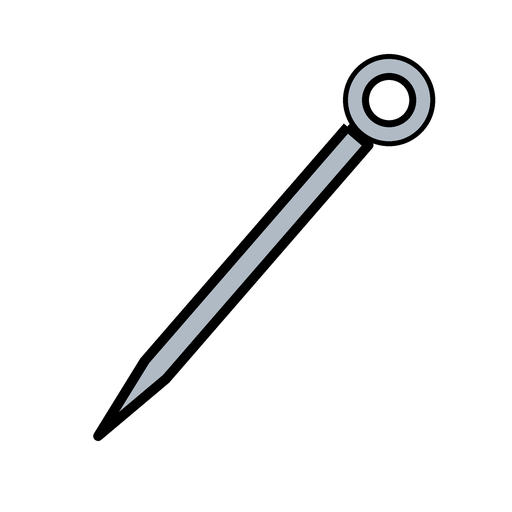 Iron Stirrer
 Heat-Resistant Gloves
4
4
Add the spelter
Add the spelter
Hold the spelter in a long pair of tongs over the mouth of the crucible, inside the furnace, until it has almost reached its melting point, then drop it into the molten metal and stir quickly so it mixes in. Zinc burns away quickly in the air, so it goes in last.
Tools needed:
 TongsIron StirrerHeat-Resistant Gloves
5
5
Pour the ingot
Pour the ingot
Withdraw the crucible from the furnace at once and pour into an ingot mould that is clean, smooth, lightly greased, dusted with fine charcoal and warmed: a cold mould makes the metal spout, but do not overheat it either. Melt solder only once; Gee found that solders containing volatile metals grow hard, brittle and drossy with repeated melting.
Materials for this step:
Charcoal - Crushed Fine1 as requiredTools needed:
Crucible Tongs Ingot MouldHeat-Resistant Gloves
6
6
Roll into pallions or file to dust
Roll into pallions or file to dust
Roll the solder out thin between flattening rollers and cut it lengthways and then crossways with hand shears into little bits (pallions), or file it into fine dust, according to the work in hand. The work is then bound together, wetted with a paste of borax and water, and the pallions laid on the joints and melted with a blowpipe flame.
Tools needed:
 Rolling Mill
 Metal Shears
 Files (Hand File)
Materials
4- 80 gPlaceholder
- 17.5 gPlaceholder
- 2.5 gPlaceholder
- 1 as requiredPlaceholder
Tools Required
12- Placeholder
- Placeholder
- Placeholder
- Placeholder
- Placeholder
- Placeholder
- Placeholder
- Placeholder
- Placeholder
- Placeholder
- Placeholder
- Placeholder
This blueprint makes

Related Blueprints
These blueprints share knowledge with this one — techniques, materials, or principles that connect them in the learning graph.
Hazardous
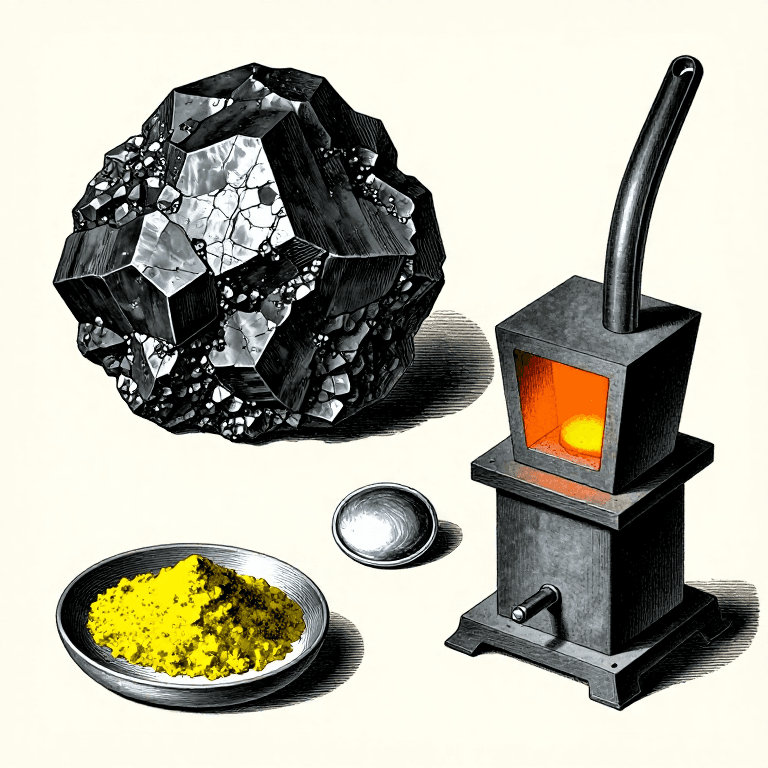
Extracting Silver by Cupellation — Separating Noble Metal from Lead Ore
by Peter
Metalworking
70
0
0
0
2
0
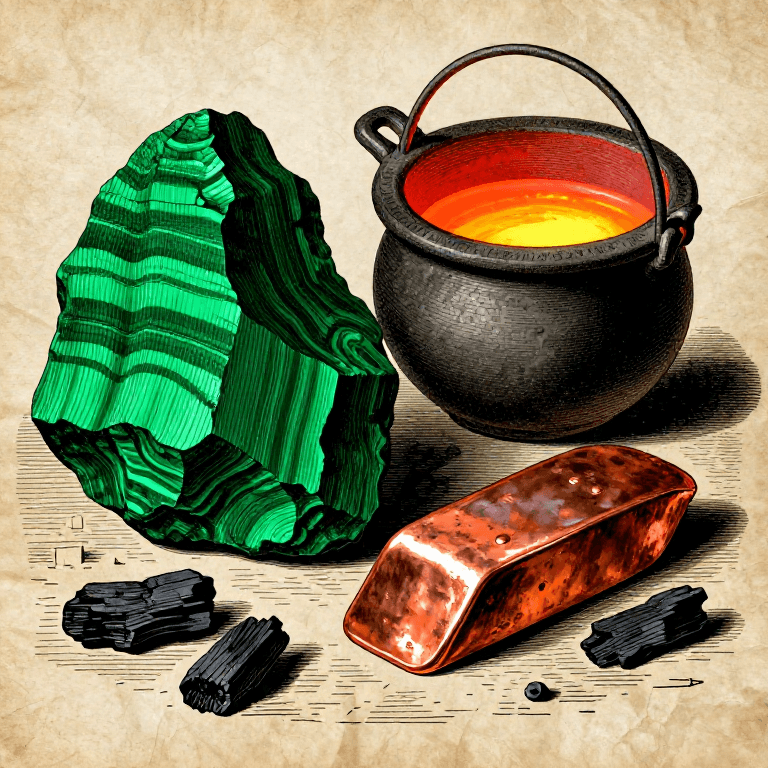
Smelting Copper from Malachite — From Green Ore to Red Metal
by Peter
Metalworking
104
0
0
0
10
0
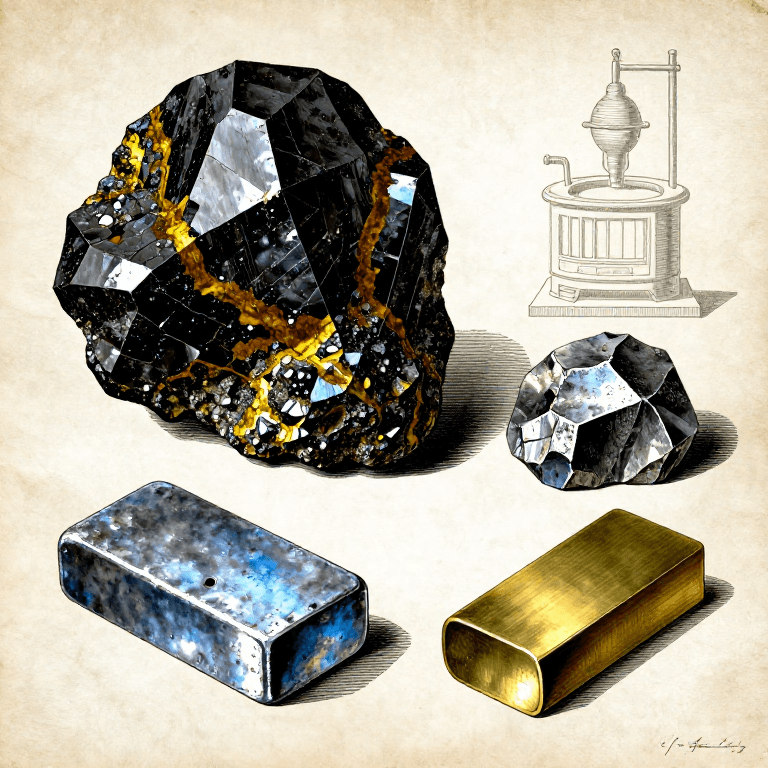
Extracting Zinc from Sphalerite — Roasting and Reduction of the Invisible Metal
by Peter
Metalworking
77
0
0
0
8
0
CC0 Public Domain
This blueprint is released under CC0. You are free to copy, modify, distribute, and use this work for any purpose, without asking permission.
Support the Maker by purchasing products through their Blueprint where they earn a Maker Commission set by Vendors, or create a new iteration of this Blueprint and include it as a connection in your own Blueprint to share revenue.