ART
BEAUTY & WELLNESS
CRAFT
CULTURE & HISTORY
ENTERTAINMENT
ENVIRONMENT
FOOD & DRINKS
REVERSE ENGINEERING
SCIENCES
SPORTS
TECHNOLOGY
WEARABLES


Steel Balls for Ball Bearings: Headed, Ground and Lapped
Bearing balls start as steel wire: cut into short pellets, pressed into rough spheres, rolled round between grooved plates, hardened, then ground and lapped until they are almost perfectly round and smooth.
Advanced
Works process
Instructions
1
1
Watch: how ball bearings are made
Watch: how ball bearings are made
How It's Made: ball bearings, from steel to finished balls and rings.
2
2
Shear and head
Shear and head
Shear the wire into pellets of about the ball's volume. Head each pellet into a rough sphere.
Materials for this step:
 Spring Steel Wire1 as required
Tools needed:
 Wire Cutters
 Cold Heading Machine
3
3
Roll off the flash
Roll off the flash
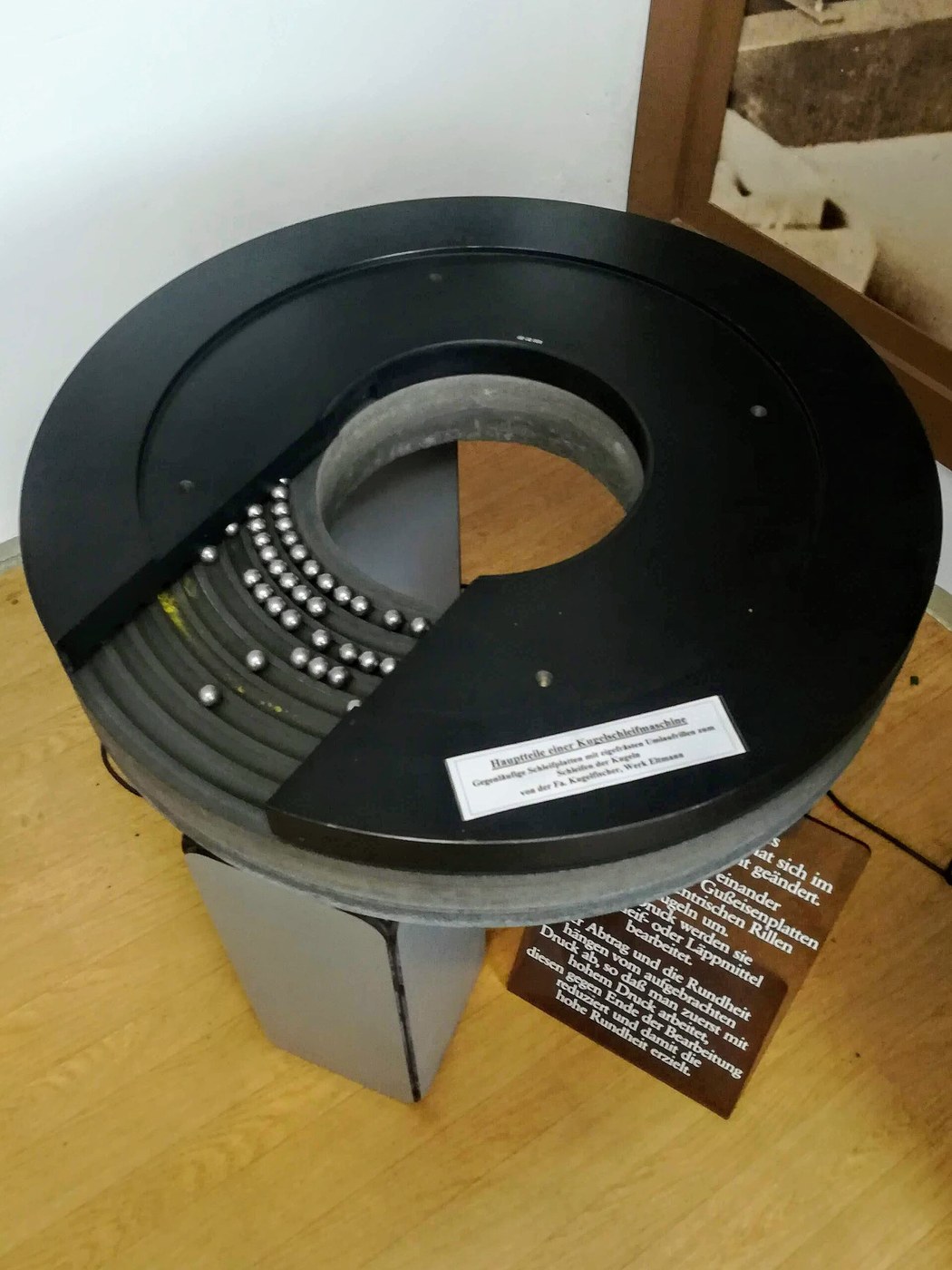
Run the balls between rill plates, one fixed and one turning, with coolant pumped between them. This takes off the flash and rounds them; the pressure also hardens the surface a little.
Tools needed:
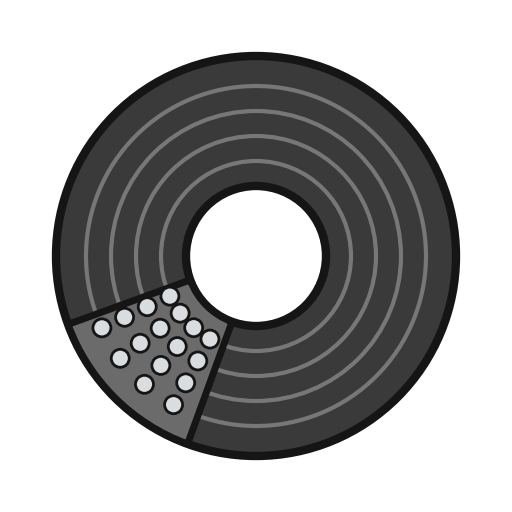 Rill Plate Ball Grinder
 Cutting Oil
4
4
Harden and descale
Harden and descale
Heat-treat the steel balls (harden and quench), then tumble off the scale.
Tools needed:
 Heat Treating Oven
 Quench Bucket
 Deflashing Tumbler
5
5
Grind and lap
Grind and lap
Hard-grind them in the same kind of machine with a fine grinding wheel or abrasive in the coolant, to within about a ten-thousandth of an inch. Lap them for more precision. Check sizes with a micrometer.
Tools needed:
 Grinding WheelRill Plate Ball Grinder
 Ball Lapping Machine
 Lapping Compound
 Micrometer
6
6
Limits
Limits
Process from Wikipedia's Bearing ball article. Wikipedia lists chrome steel among bearing-ball steels; high-carbon spring-steel wire is our choice here.
Materials
1- 1 as requiredPlaceholder
Tools Required
11- Placeholder
- Placeholder
- Placeholder
- Placeholder
- Placeholder
- Placeholder
- Placeholder
- Placeholder
- Placeholder
- Placeholder
- Placeholder
This blueprint makes

CC0 Public Domain
This blueprint is released under CC0. You are free to copy, modify, distribute, and use this work for any purpose, without asking permission.
Support the Maker by purchasing products through their Blueprint where they earn a Maker Commission set by Vendors, or create a new iteration of this Blueprint and include it as a connection in your own Blueprint to share revenue.