ART
BEAUTY & WELLNESS
CRAFT
CULTURE & HISTORY
ENTERTAINMENT
ENVIRONMENT
FOOD & DRINKS
REVERSE ENGINEERING
SCIENCES
SPORTS
TECHNOLOGY
WEARABLES
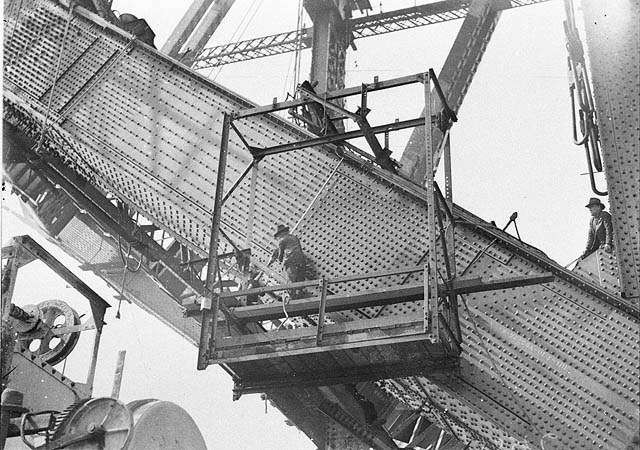


Steel Rivets Forged in a Nail Header
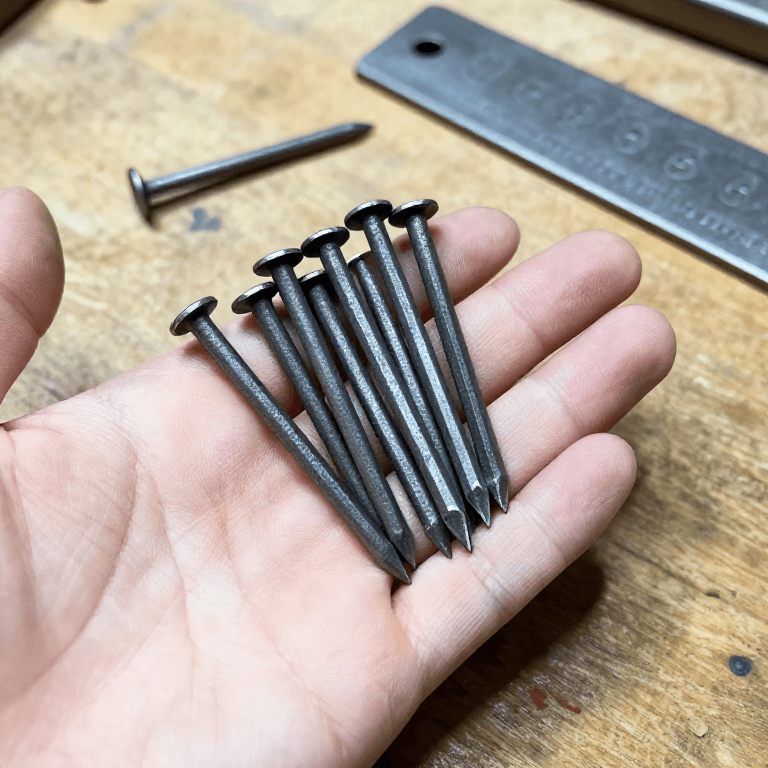
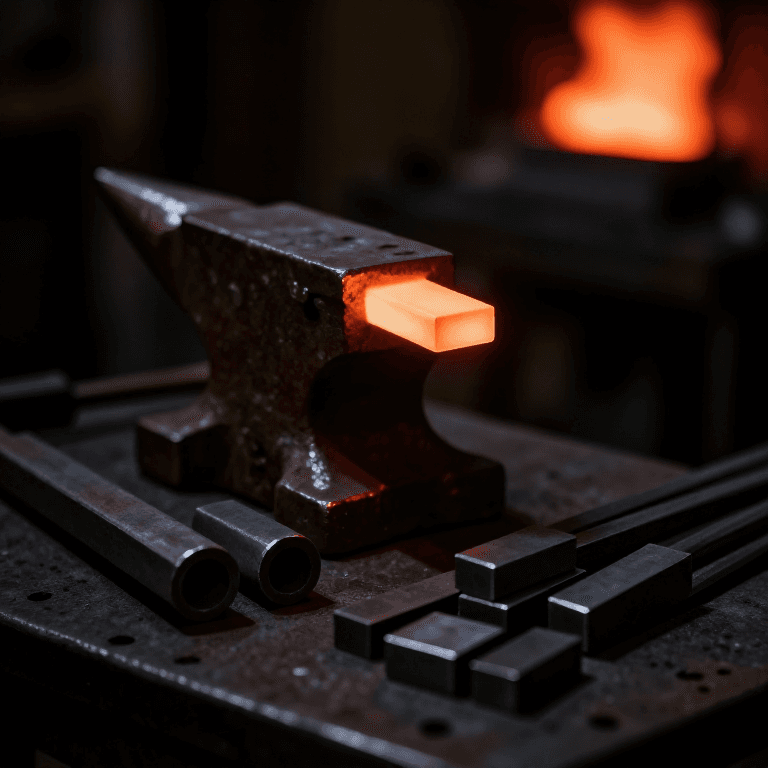
A rivet is a short rod with a head on one end; set through a hole, its tail is hammered into a second head, and it holds the parts together for good. Solid rivets go back to the Bronze Age. They are forged the way nails are, headed in a nail header, only the shank is cut off square instead of drawn to a point.
The picture: riggers setting red-hot rivets on the Sydney Harbour Bridge, 1930–31 (Sam Hood).
Intermediate
An afternoon for a few dozen
Instructions
1
1
Heat the rod end
Heat the rod end
Heat the end of a mild steel rod of the rivet's diameter in the forge to a bright orange.
Materials for this step:
 Mild Steel Rod1 m
 Charcoal1 as required
Tools needed:
 Blacksmith Forge
 Blacksmith Tongs
 Welding Gloves
 Safety Glasses
2
2
Nick at length
Nick at length
Nick the rod nearly through on the hot cut hardy at the rivet's length plus enough for the head (see the notebook).
Tools needed:
 Anvil
Anvil Hot Cut Hardy
 Cross Peen HammerWelding GlovesSafety Glasses
3
3
Head it
Head it
Drop the end into the nail header over the anvil's pritchel hole, with the head stock standing proud, and spread it with three to five quick blows, as for a nail head. Snap it free at the nick.
Tools needed:
 Nail HeaderAnvilCross Peen HammerWelding GlovesSafety Glasses
4
4
Cool and check
Cool and check
Let the rivets cool (do not harden them: the tail must spread cold or hot when set). Check the shank with a caliper; file off any burr so it slips into its hole.
Tools needed:
 Quench Bucket
 Digital Caliper 6-Inch
5
5
Rod for each rivet
Rod for each rivet
Loading Jupyter Notebook...
Tools Required
10- Placeholder
- Placeholder
- Placeholder
- Placeholder
- Placeholder
- Placeholder
- Placeholder
- Placeholder
- Placeholder
- Placeholder
This blueprint makes
Related Blueprints
These blueprints share knowledge with this one — techniques, materials, or principles that connect them in the learning graph.
CC0 Public Domain
This blueprint is released under CC0. You are free to copy, modify, distribute, and use this work for any purpose, without asking permission.
Support the Maker by purchasing products through their Blueprint where they earn a Maker Commission set by Vendors, or create a new iteration of this Blueprint and include it as a connection in your own Blueprint to share revenue.