ART
BEAUTY & WELLNESS
CRAFT
CULTURE & HISTORY
ENTERTAINMENT
ENVIRONMENT
FOOD & DRINKS
REVERSE ENGINEERING
SCIENCES
SPORTS
TECHNOLOGY
WEARABLES
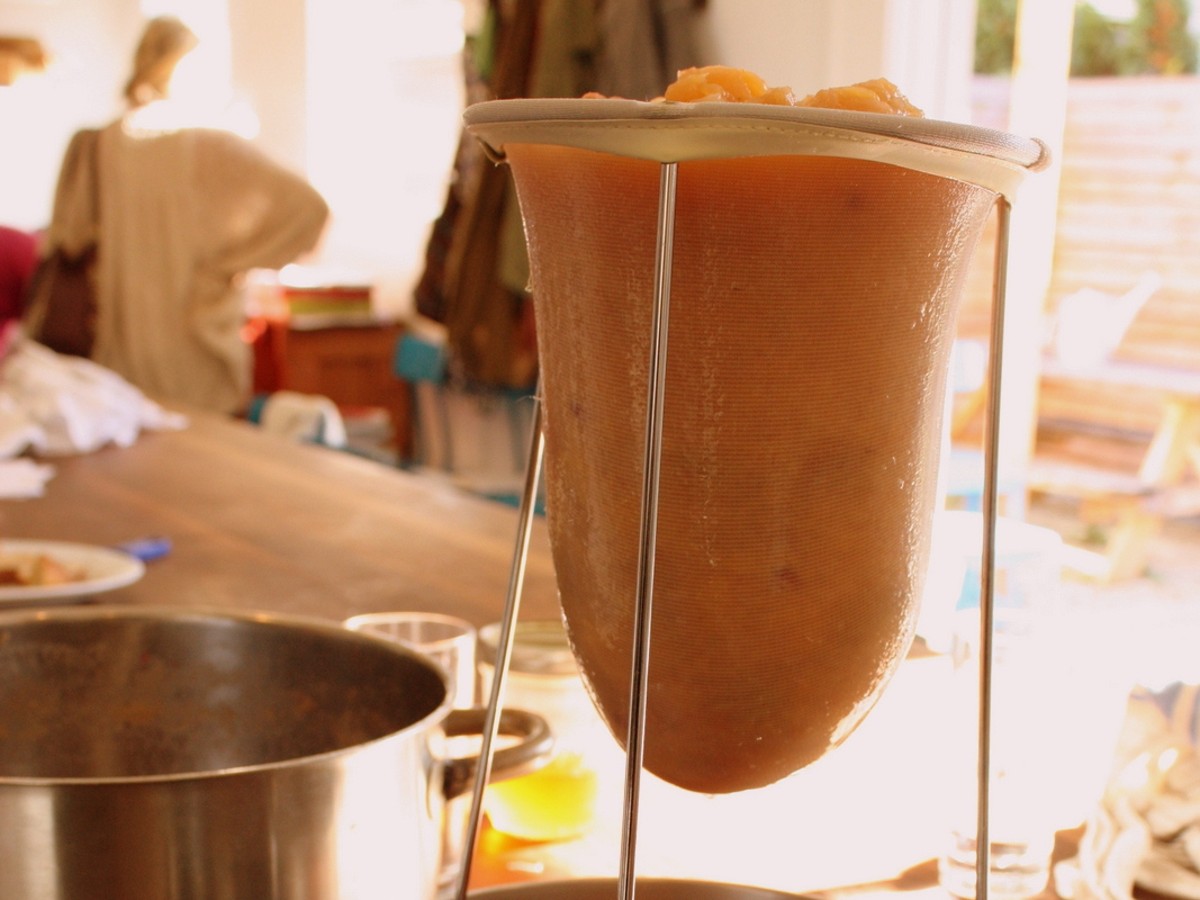


Straining Bag: a Cloth Bag on a Banded, Hooked Wire Hoop (after Milks, 1913)
A cloth straining bag for jelly, juice, wine and vinegar, with its own hanger: the bag is sewn to a band of heavy cloth with eyelets, which hangs on hooks round a wire hoop. The hoop, its arm and its wall hook are one wire. Kate Milks patented it in 1913 so the bag could be lifted off to wash and mended without the frame.
Beginner
About 3 hours
Instructions
1
1
How a jelly bag is used
How a jelly bag is used
Cooked fruit poured into a jelly bag and left to drip (Homemakers101).
2
2
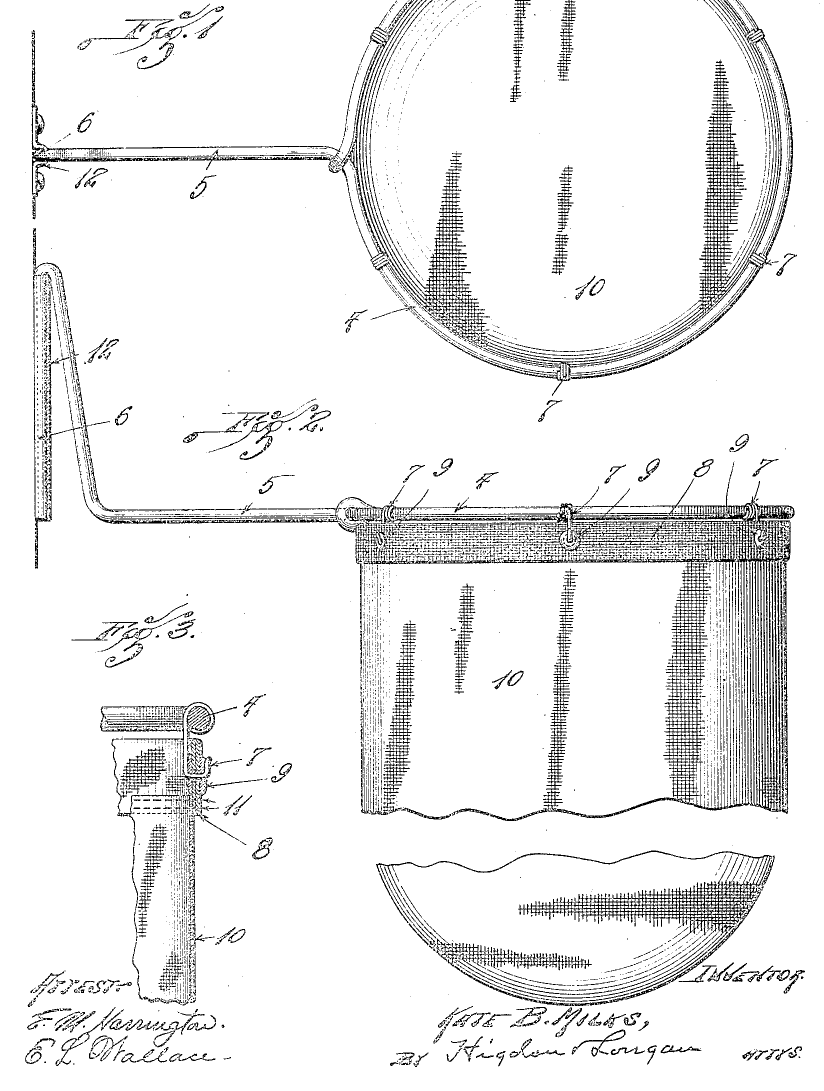
Milks's jelly strainer, 1913
Milks's jelly strainer, 1913
US 1,053,850: a hoop 4, its stem 5 and hook 6 are one piece of wire; hooks 7 hang from the hoop. A band 8 of heavy fabric with eyelets 9 hangs on the hooks, and the open bag 10 is stitched to the band, so it can be taken off to mend. A bracket 12 on the wall holds the hook.
3
3
Print the layout
Print the layout
Sizes for the bag, band, wire and bracket (not to scale).
4
4
Sew the bag
Sew the bag
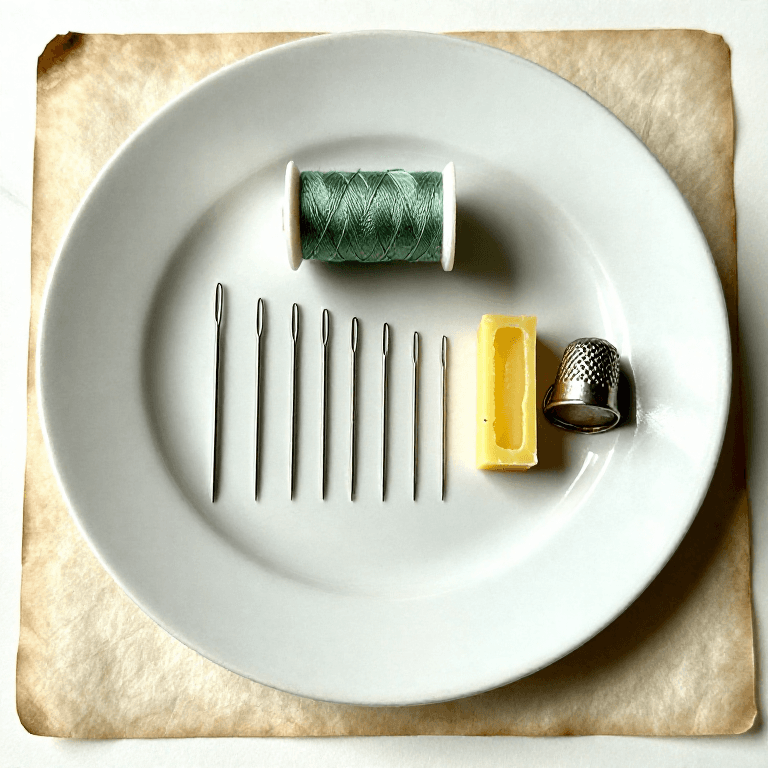
Wash and iron the cloth. Cut a piece 660 x 330 mm and a circle 224 mm across. Sew the long edges into a tube, 10 mm seam, then sew the circle into one end; it hangs round when full. Sew every seam twice so no juice runs past it.
Materials for this step:
 Cotton Muslin Cloth0.4 m2
 Sewing Thread10 m
Tools needed:
 Fabric Scissors
 Tape Measure
 Sewing Machine
 Clothes Iron
5
5
Make the band
Make the band
Cut canvas 660 x 100 mm, fold it to 50 mm wide and sew the ends into a ring with 20 mm overlap. Punch six 5 mm holes 15 mm below the fold, 107 mm apart, and work each as an eyelet with close buttonhole stitches. Slip the bag's top edge into the band and stitch round twice.
Materials for this step:
 Canvas Fabric0.07 m2Sewing Thread6 m
Tools needed:
Fabric Scissors Hole Punch
 Sewing NeedleSewing Machine
6
6
Bend the hoop and hooks
Bend the hoop and hooks
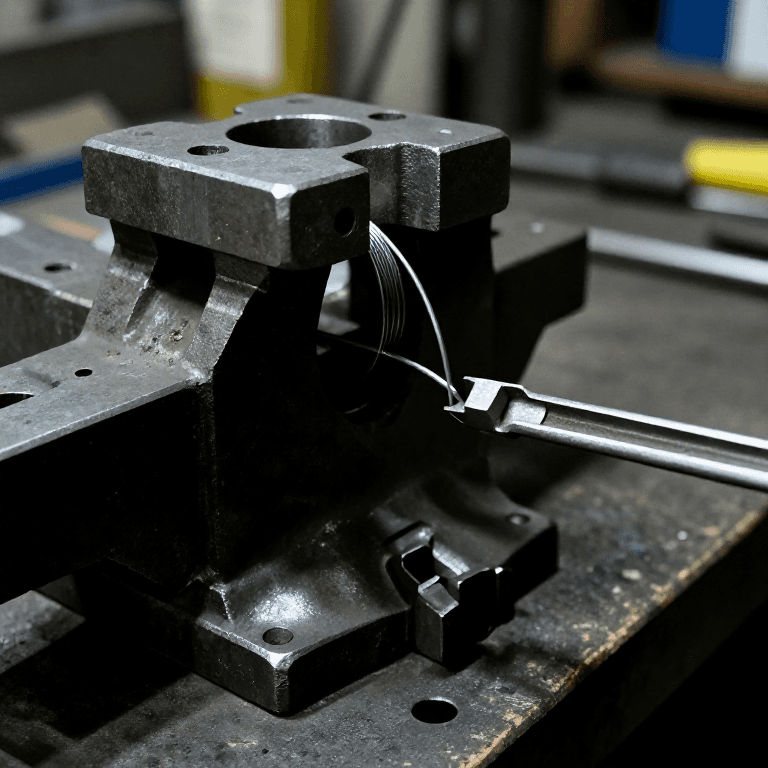
From one 1050 mm length of 3 mm stainless wire: bend the hook (60 mm down, over, 100 mm up), turn 90 degrees, run the 150 mm arm, then bend a 200 mm hoop and wrap the end twice round the arm. Cut six 60 mm pieces of 2 mm wire; wrap the top of each twice round the hoop, evenly spaced, and turn the lower 10 mm up as a hook.
Materials for this step:
 Stainless Steel Wire1 piece (3 mm, 1050 mm)Stainless Steel Wire1 piece (2 mm, 360 mm)
Tools needed:
 Wire Cutters
 Round-nose Pliers
 Flat-Nose Pliers
 Bench Vise
7
7
Make the bracket
Make the bracket
Cut a 15 x 120 mm strip of 1 mm stainless sheet, file the edges, drill a screw hole 15 mm from each end and bend the middle out 5 mm. Screw it to a wall or cupboard side above where the bowl will stand.
Materials for this step:
 Stainless Steel Sheet1 piece (1 mm, 15 x 120 mm)
 Wood Screws2 pieces
Tools needed:
 Hacksaw
 Metal File
 Drill Bit SetBench Vise
 Screwdriver Set
8
8
Hang and strain
Hang and strain
Slip the hook down behind the bracket, hang the band's eyelets on the six hooks and set a bowl under the bag. Wet the bag, pour in the cooked fruit or mash and let it drip. Wash the bag in hot water after use and dry it.
9
9
Troubleshooting
Troubleshooting
Strainer problems and fixes.
Flow
Loading...
10
10
History and honest limits
History and honest limits
Kate B. Milks, St. Louis, Missouri: US 1,053,850, "Jelly-Strainer", filed 10 June 1912, granted 18 February 1913. She names no cloth and gives no sizes: the cotton bag, canvas band, stainless wire and all sizes are ours. The picture shows a modern jelly bag on a wire stand (photo Leslie Seaton, CC BY 2.0, Wikimedia Commons). Not made by us yet.
Materials
6- 0.4 m2Placeholder
- 16 mPlaceholder
- 0.07 m2Placeholder
- 1 piece (2 mm, 360 mm)Placeholder
- 1 piece (1 mm, 15 x 120 mm)Placeholder
- 2 piecesPlaceholder
Tools Required
14- Placeholder
- 1 vendor sell this, none ship to you yetPlaceholder
- Placeholder
- Placeholder
- Placeholder
- Placeholder
- Placeholder
- Placeholder
- Placeholder
- Placeholder
- Placeholder
- Placeholder
- Placeholder
- Placeholder
Design Files
1Connected Blueprint Materials

This blueprint makes
Related Blueprints
These blueprints share knowledge with this one — techniques, materials, or principles that connect them in the learning graph.
CC0 Public Domain
This blueprint is released under CC0. You are free to copy, modify, distribute, and use this work for any purpose, without asking permission.
Support the Maker by purchasing products through their Blueprint where they earn a Maker Commission set by Vendors, or create a new iteration of this Blueprint and include it as a connection in your own Blueprint to share revenue.