ART
BEAUTY & WELLNESS
CRAFT
CULTURE & HISTORY
ENTERTAINMENT
ENVIRONMENT
FOOD & DRINKS
REVERSE ENGINEERING
SCIENCES
SPORTS
TECHNOLOGY
WEARABLES
English

Takkataen (Thai Coconut-Leaf Grasshopper) — 10-Inch Coconut Leaflets Wrapped Alternately Left and Right into Wings and Body, a Folded Triangle Head, Split-Rib Antennae, Hung for Display
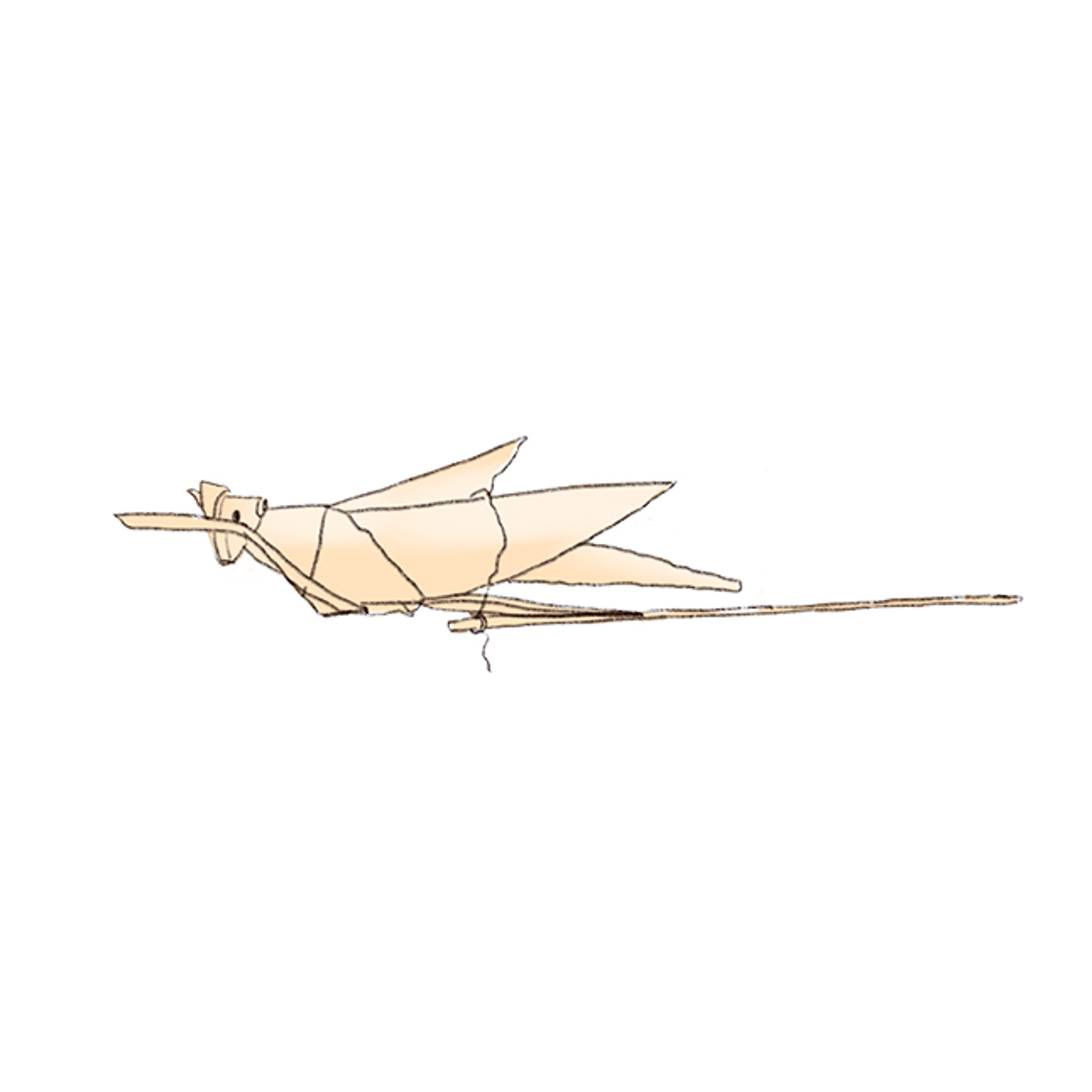
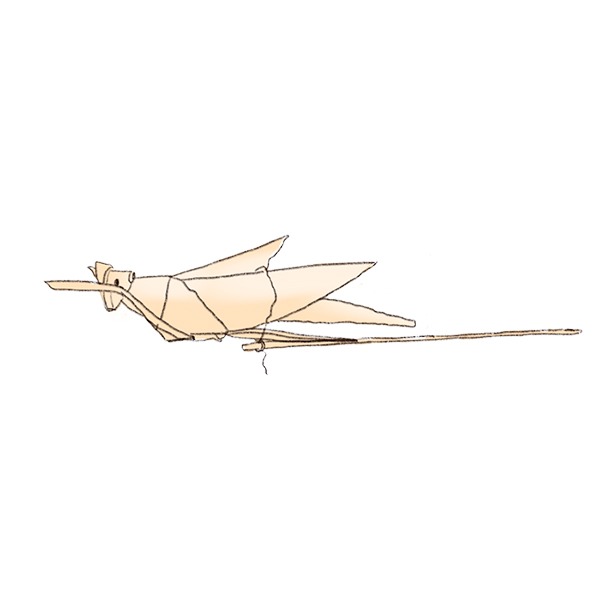
The takkataen grasshopper is woven from coconut fronds, a material found locally, and hung up for decoration.
This blueprint weaves a real takkataen by the steps in the source.
Beginner
About 30 minutes
Instructions
1
1
Real sizes
Real sizes
Loading Jupyter Notebook...
2
2
Leaf toys, before it
Leaf toys, before it
The pla taphian is woven from strips of coconut leaf; the grasshopper uses whole leaflets on their rib, slit and wrapped round the rib.
3
3
Read from the source
Read from the source
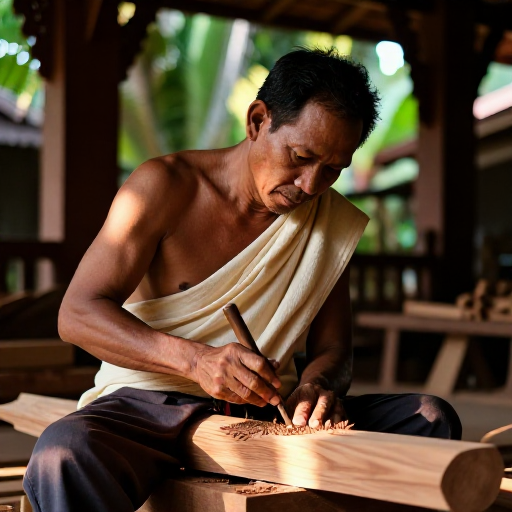
"Use a knife to split the middle of the coconut rib, taking care that it does not come apart, to make the antennae; hang it up for decoration." (Sirindhorn Anthropology Centre, CC BY 4.0)
4
4
Wings
Wings
Cut 3 coconut leaflets about 10 inches long, and cut the tip of one on a slant. Slit the leaf lengthwise, leaving a gap of about 5 inches. Wrap the slit leaf round behind the rib and thread it up over the top, then down under, alternating left and right.
Tools needed:
 Knife
Knife Scissors
5
5
Body
Body
Take another leaflet cut about 10 inches long and lay the wings together as the body. Fold the leaflet up over the wings and back down, tuck the end underneath, weave it down and pull tight, left over right, right over left, about 3-4 turns depending on the length.
6
6
Head and antennae
Head and antennae
Take another leaflet cut about 5 inches long, fold the tip down into a triangle and fold back and forth to the end, stitching it so it does not come loose: this is the head. Cut the body's ribs to leave about 5-6 inches, set the head across the triangle, and split the middle of the rib with a knife, without separating it, to make the antennae.
7
7
Real photos
Real photos
Drawing of a coconut-leaf grasshopper (Sirindhorn Anthropology Centre, CC BY 4.0).
8
8
How it is used
How it is used
Hang it up for decoration.
9
9
Troubleshooting
Troubleshooting
Troubleshooting the takkataen.
Flow
Loading...
10
10
History and limits
History and limits
The woven grasshopper is a folk toy made from coconut fronds; the source lists coconut fronds, a straw, a knife and scissors. Take care with the knife and the leaf edges.
Source: Sirindhorn Anthropology Centre, Traditional Objects of Everyday Use database, "ตั๊กแตน" (CC BY 4.0 licence).
**Limits** The source does not say where the straw is used or what the head is stitched with. Step 3 of the source reads "left wraps parallel"; here it follows step 6, alternating left and right. There is no listing for coconut fronds, so they are named in the text.
Related Blueprints
These blueprints share knowledge with this one — techniques, materials, or principles that connect them in the learning graph.
CC0 Public Domain
This blueprint is released under CC0. You are free to copy, modify, distribute, and use this work for any purpose, without asking permission.
Support the Maker by purchasing products through their Blueprint where they earn a Maker Commission set by Vendors, or create a new iteration of this Blueprint and include it as a connection in your own Blueprint to share revenue.