ART
BEAUTY & WELLNESS
CRAFT
CULTURE & HISTORY
ENTERTAINMENT
ENVIRONMENT
FOOD & DRINKS
REVERSE ENGINEERING
SCIENCES
SPORTS
TECHNOLOGY
WEARABLES
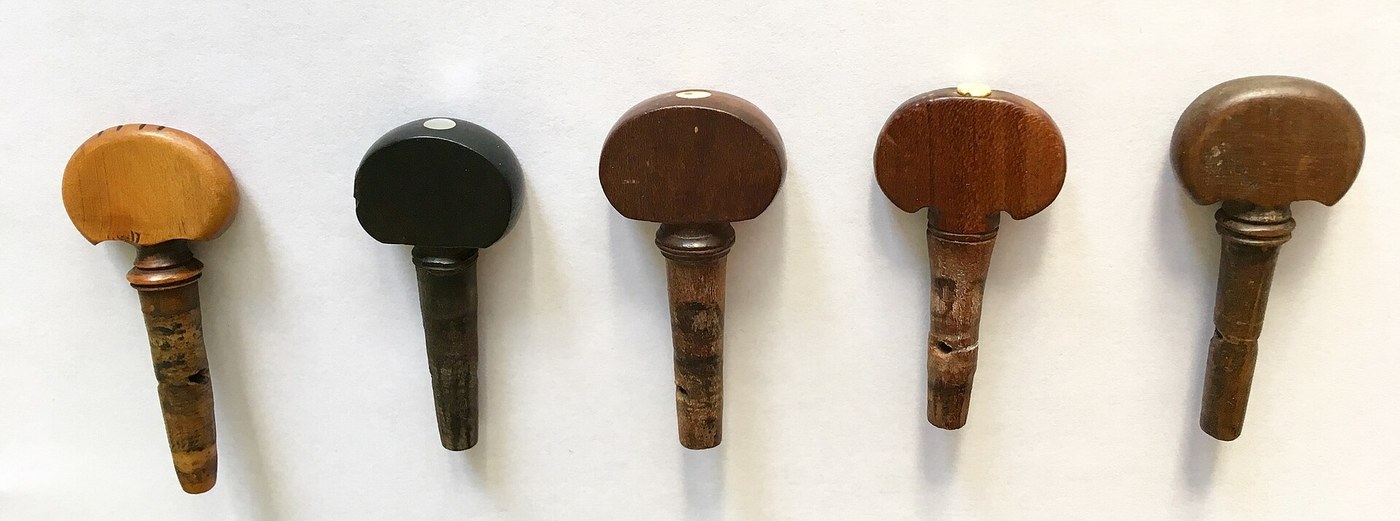


Tapered Tuning Pegs: Turned to 1:30 and Reamed to Fit
A friction tuning peg is a cone of hard wood that holds a string's tension simply by sitting tight in a matching tapered hole. A good one turns easily and holds without slipping. Violin and viola pegs are turned to a 1:30 taper, 1 mm narrower for every 30 mm of length; the hole is reamed to the same taper.
The picture: tapered wooden pegs for baroque violins, each with a collar and a flat grip.
Intermediate
An afternoon for a set
Instructions
1
1
Turn the shaft
Turn the shaft
Mount a hardwood dowel blank in the lathe and turn the shaft to a straight cone: check the diameter at both ends with a caliper against the notebook's figures for a 1:30 taper.
Materials for this step:
 Hardwood Dowels1 piece
Tools needed:
 Wood Lathe
 Digital Caliper 6-Inch
 Safety Glasses
2
2
Shape the grip
Shape the grip
Leave a collar at the wide end, then flatten and shape the head into a grip with a spokeshave and knife.
Tools needed:
 Spokeshave
 Knife
Knife3
3
Ream the hole
Ream the hole
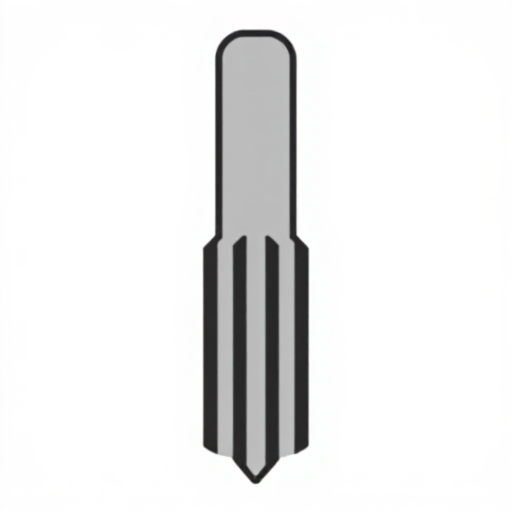
Drill a pilot hole through both cheeks of the pegbox and open it with a reamer of the same taper until the peg seats with most of its shaft in contact.
Tools needed:
 Hand Drill
 Reamer
4
4
String hole and fit
String hole and fit
Drill a small string hole through the shaft where it sits in the middle of the pegbox. Smooth the shaft; it should turn evenly and hold. If it slips, ream a touch further; if it sticks, lightly sand the shaft.
Tools needed:
Hand Drill Sandpaper
5
5
The 1:30 taper
The 1:30 taper
Loading Jupyter Notebook...
Materials
1- 1 piecePlaceholder
This blueprint makes

Related Blueprints
These blueprints share knowledge with this one — techniques, materials, or principles that connect them in the learning graph.
CC0 Public Domain
This blueprint is released under CC0. You are free to copy, modify, distribute, and use this work for any purpose, without asking permission.
Support the Maker by purchasing products through their Blueprint where they earn a Maker Commission set by Vendors, or create a new iteration of this Blueprint and include it as a connection in your own Blueprint to share revenue.