ART
BEAUTY & WELLNESS
CRAFT
CULTURE & HISTORY
ENTERTAINMENT
ENVIRONMENT
FOOD & DRINKS
REVERSE ENGINEERING
SCIENCES
SPORTS
TECHNOLOGY
WEARABLES

Tempered-Air Bellows Churn: Bellows Blow Air Past a Can of Water and Up Through the Cream
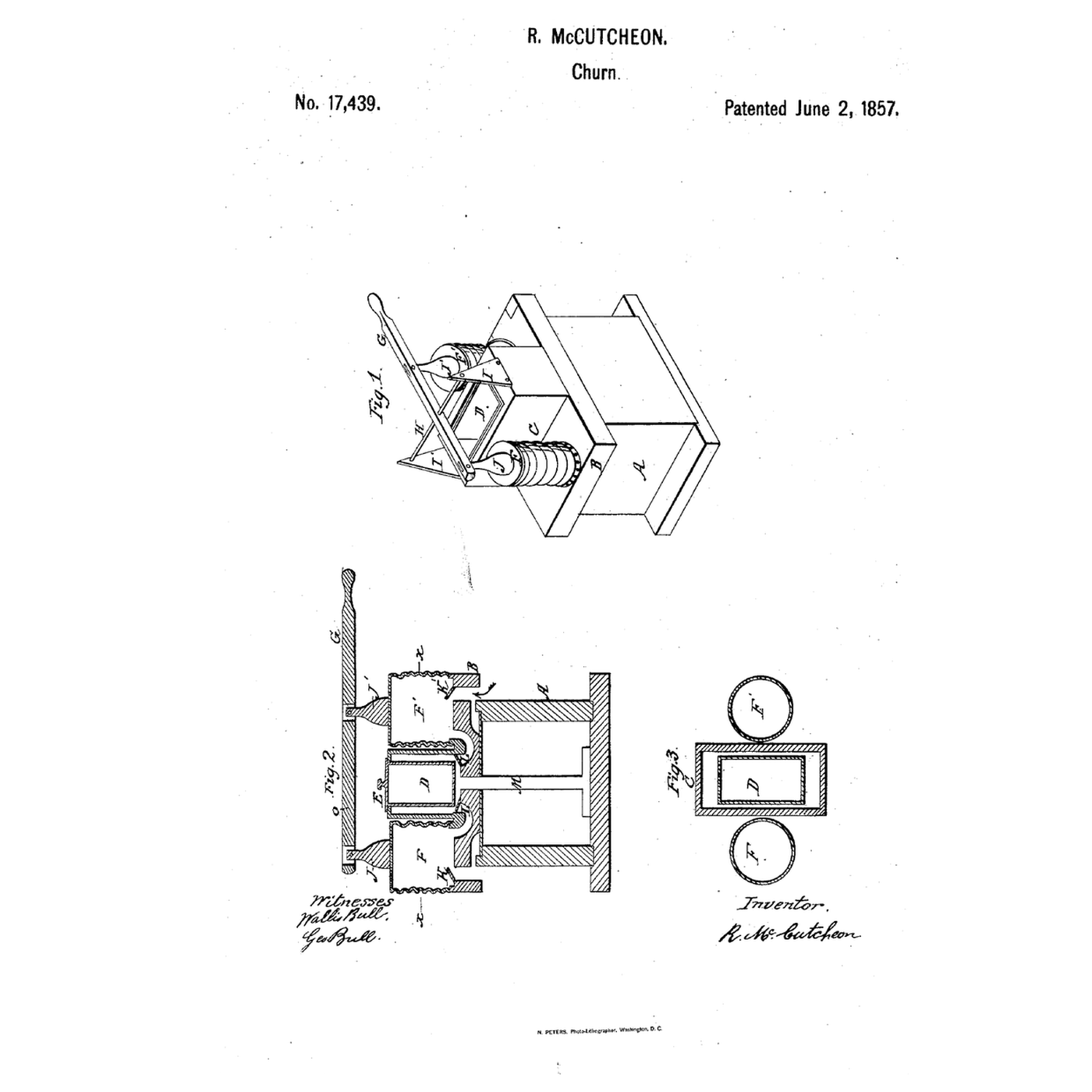
Robert McCutcheon of Towanda, Pennsylvania, received US 17,439, dated 2 June 1857, for an "Atmospheric Churn": bellows worked by a lever blow air through a chamber round a reservoir of cold or warm water, "where it is cooled or heated as needed," and down a pipe whose branches spread it through the cream.
This rung prints the air chamber, valves and branch foot, builds the churn and makes butter.
Intermediate
About 4 hours, plus printing
Instructions
1
1
Air through the cream
Air through the cream
Loading Jupyter Notebook...
2
2
Tempering with water before it
Tempering with water before it
Harrison tempers the cream with water in the dasher; McCutcheon tempers the air he blows through it.
3
3
Read US 17,439
Read US 17,439
"The bellows are then operated by working the lever G up and down, forcing the current of air created by them first through the reservoir C, where it is cooled or heated as needed, by coming in contact with the cooled or heated surface of the interior reservoir, and from thence through the air-pipe M, which distributes it through the milk or cream in the body of the churn."
4
4
Print the parts
Print the parts
Print the air chamber (/uploads/blueprints/tempered-air-bellows-churn-air-chamber.stl), two flap valves (/uploads/blueprints/tempered-air-bellows-churn-flap-valve.stl) and the branch foot (/uploads/blueprints/tempered-air-bellows-churn-branch-foot.stl). Print in PETG at 0.2 mm layers, 30 % infill, 4 walls; wash before first use.
Materials for this step:
 PETG Filament1 piece
Tools needed:
 FDM 3D Printer
5
5
Chamber, can and pipe
Chamber, can and pipe
Glue a flap valve inside each inlet port of the chamber so it opens inward. Stand a clean tin can inside the chamber as the water reservoir and seal the chamber's lid round its rim with food-safe silicone. Glue a 20 mm food-grade pipe from the chamber's outlet, through the churn's lid, down to the branch foot near the bottom of a food-grade container.
Materials for this step:
 Tinplate Food Can1 piece
 Silicone Sealant1 piece
 PVC Pipe1 piece
 Two-Part Epoxy1 piece
 Food-Grade Storage Container1 piece
Tools needed:
 Hacksaw
 Cordless Drill
 Hole Saw Kit
6
6
Bellows and lever
Bellows and lever
Fix two hand bellows on the lid, one each side, their nozzles in the chamber's ports. Pivot a pine lever on a post between them and join it to each bellows' top board with a pine rod, so one bellows closes as the other opens.
Materials for this step:
 Bellows2 pieces
 Pine Board1 piece
 Mild Steel Rod1 piece
 #8 x 1" Wood Screw1 piece
Tools needed:
 Hand SawCordless Drill
 Screwdriver Set
7
7
The patent drawing
The patent drawing
US 17,439 drawing sheet, public domain (expired patent).
8
8
Temper the air and churn
Temper the air and churn
Let the heavy cream stand until it reaches about 15 °C, checked with the thermometer. Pour in 2 litres. Fill the can with cold water if the room is warm, or lukewarm if it is cold. Work the lever steadily so the air bubbles up through the cream; time until the butter comes. Pour off the buttermilk, add cold water, churn a little and pour off again until it runs clear; work in a pinch of salt and weigh the butter.
Materials for this step:
 Heavy Cream2000 ml
 Coarse Sea Salt1 piece
 Water1 piece
Tools needed:
 Leave-In Probe Thermometer
 Stopwatch
 Digital Kitchen Scale
 Stainless Steel Mixing Bowl (Large)
9
9
Troubleshooting
Troubleshooting
Tempered-air churn troubleshooting.
Flow
Loading...
10
10
History and honest limits
History and honest limits
**Robert McCutcheon** of Towanda, Bradford County, Pennsylvania, US 17,439, 2 June 1857. He made the outer chamber of wood "for its non-conduction of heat" and the inner one of tin plate. He did not claim using air in a churn; he claimed the bellows, the two chambers and the air pipe arranged together. Bought bellows, a tin can, a container and printed parts stand in for his. FDM prints hold food in their layer lines, so wash well and replace when worn.
Materials
13- 1 piecePlaceholder
- 1 piecePlaceholder
- 1 piecePlaceholder
- 1 piecePlaceholder
- 1 piecePlaceholder
- 1 piecePlaceholder
- 2 piecesPlaceholder
- 1 piecePlaceholder
- 1 piecePlaceholder
- 1 piecePlaceholder
- 2000 mlPlaceholder
- 1 piecePlaceholder
- 1 piecePlaceholder
Tools Required
10- Placeholder
- Placeholder
- 1 vendor sell this, none ship to you yetPlaceholder
- Placeholder
- Placeholder
- Placeholder
- Placeholder
- Placeholder
- Placeholder
- Placeholder
Related Blueprints
These blueprints share knowledge with this one — techniques, materials, or principles that connect them in the learning graph.
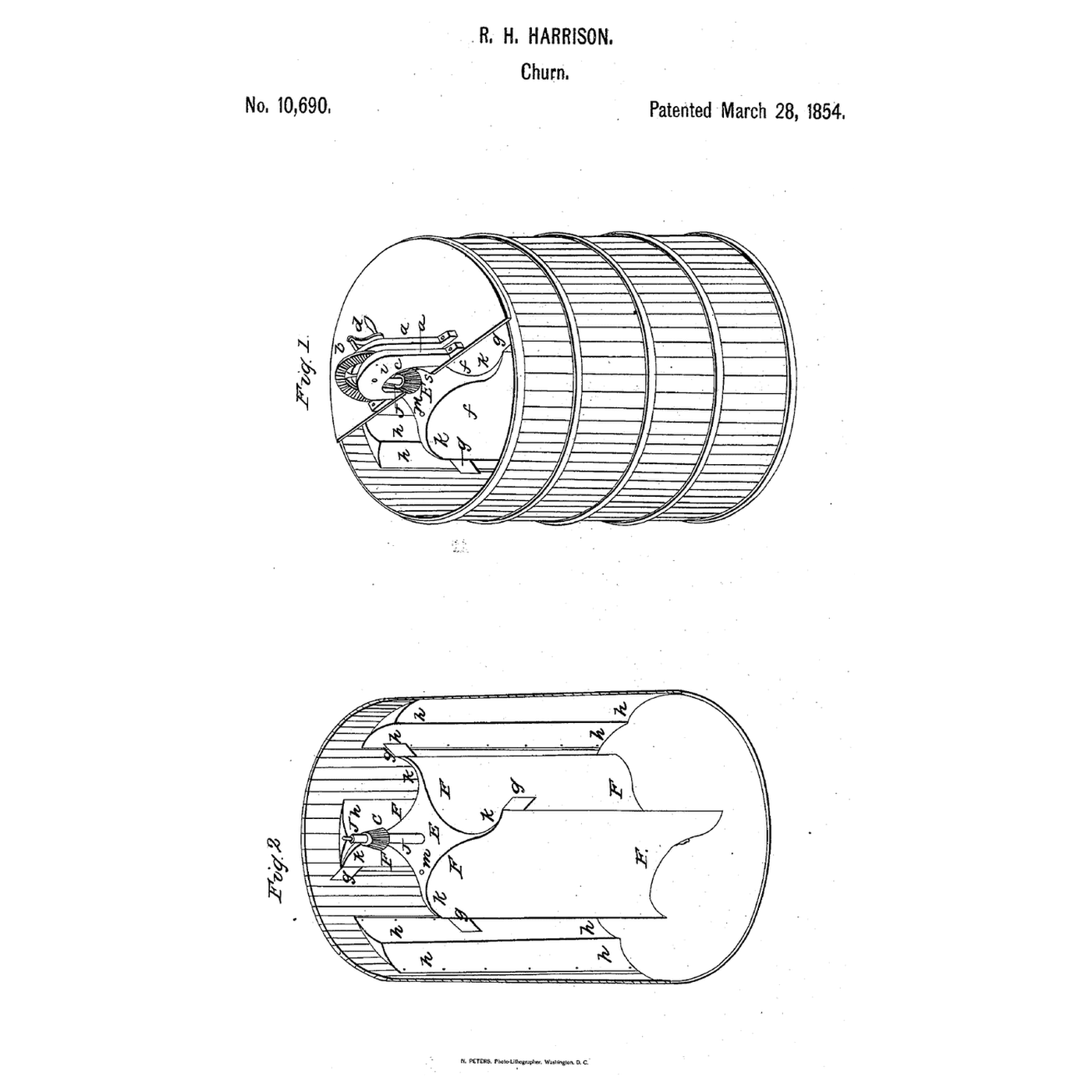
Hydrothermal Reservoir Dasher Churn: Warm Water in the Dasher to Churn, Cold to Firm the Butter
by Karen
FOOD & DRINKS
3
0
0
0
0
0
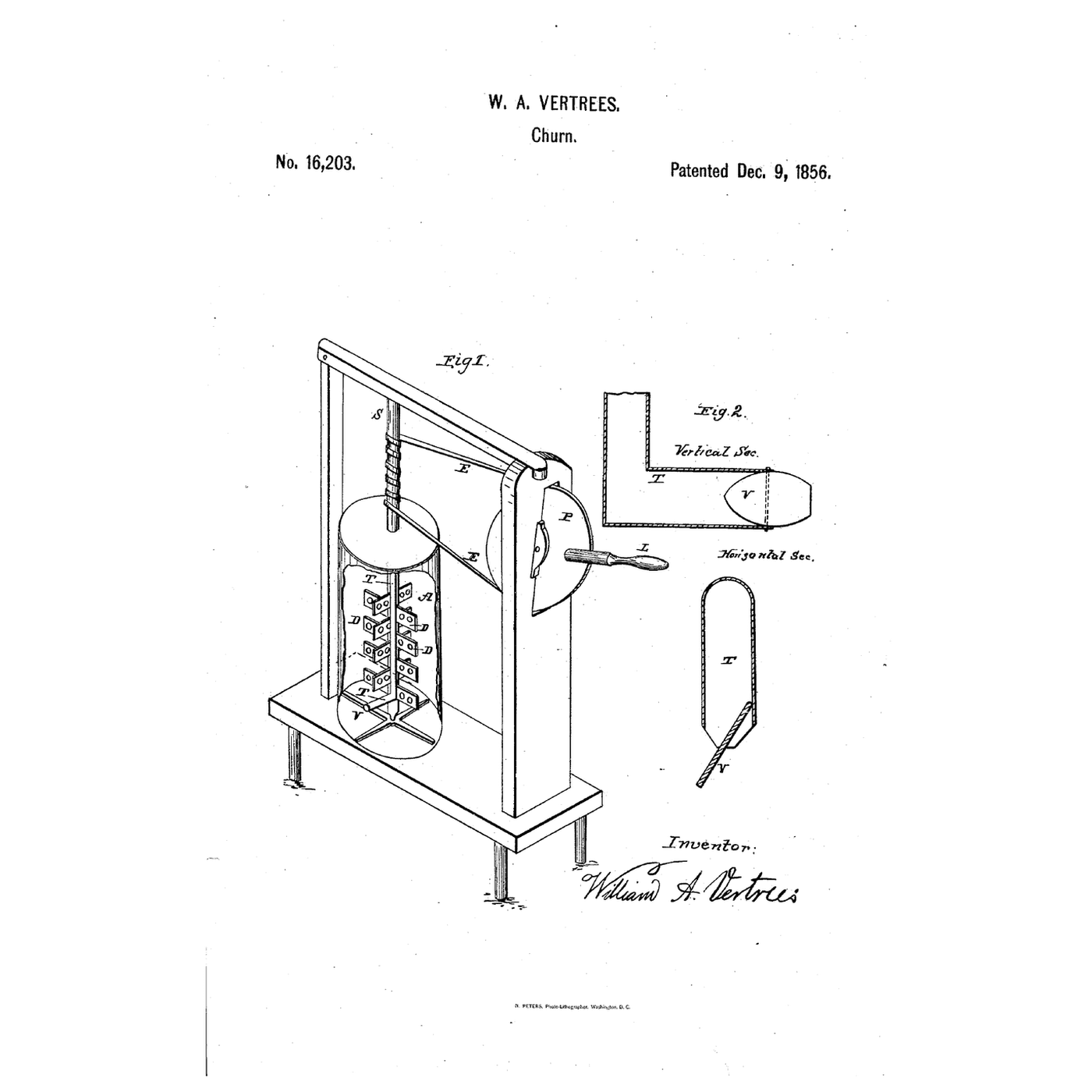
Valved Air-Tube Dasher Churn: A Double-Acting Valve Lets Air Out of a Tube That Swings With the Dashers
by Buttercup
FOOD & DRINKS
3
0
0
0
0
0
Churning Butter from Cream — The 5,000-Year-Old Fat Separation
by TheChef
CRAFT
47
0
0
0
0
0
CC0 Public Domain
This blueprint is released under CC0. You are free to copy, modify, distribute, and use this work for any purpose, without asking permission.
Support the Maker by purchasing products through their Blueprint where they earn a Maker Commission set by Vendors, or create a new iteration of this Blueprint and include it as a connection in your own Blueprint to share revenue.