ART
BEAUTY & WELLNESS
CRAFT
CULTURE & HISTORY
ENTERTAINMENT
ENVIRONMENT
FOOD & DRINKS
REVERSE ENGINEERING
SCIENCES
SPORTS
TECHNOLOGY
WEARABLES
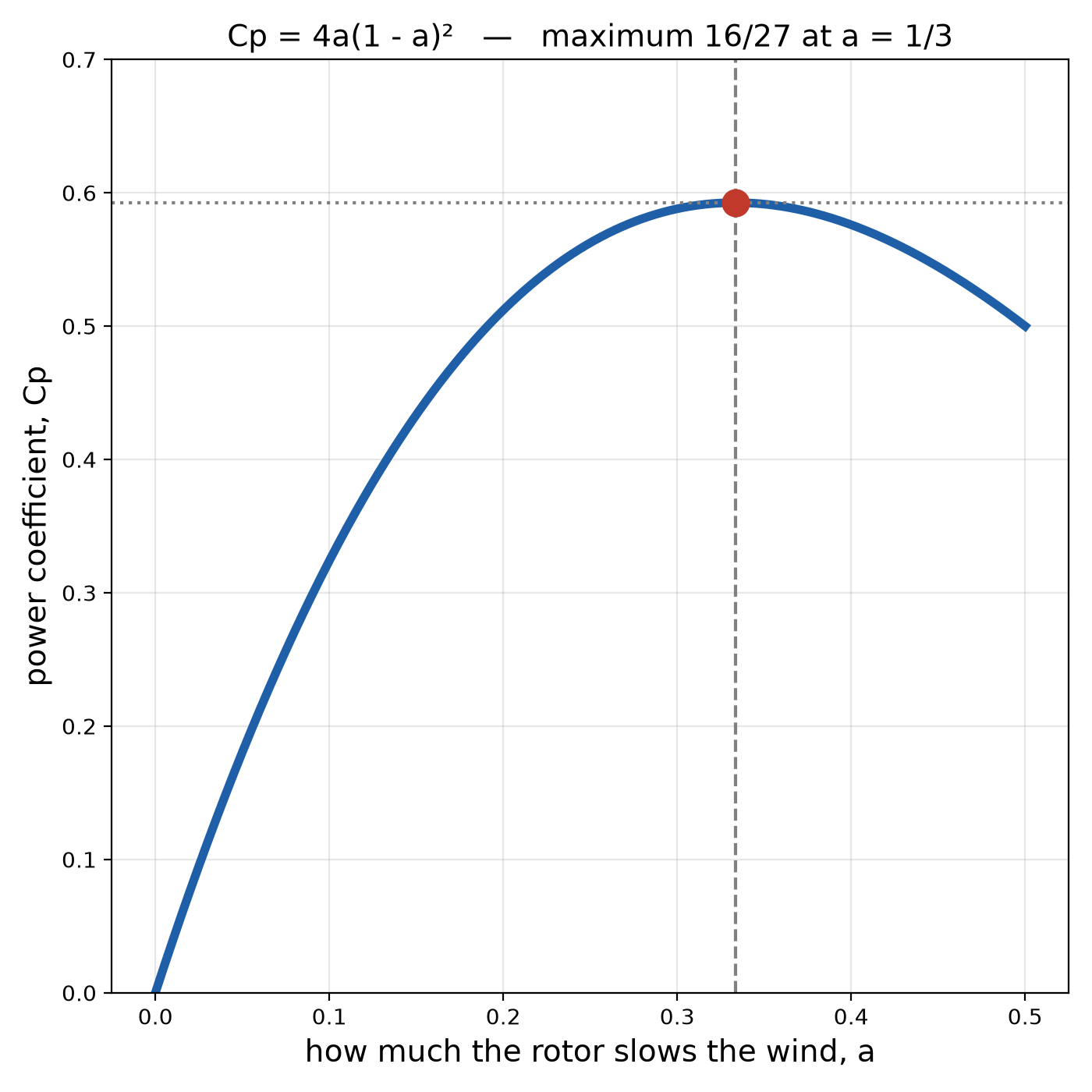
Youblob (generated from this blueprint's notebook) · CC0

The Betz Limit: Why No Rotor Takes More Than 16/27 of the Wind
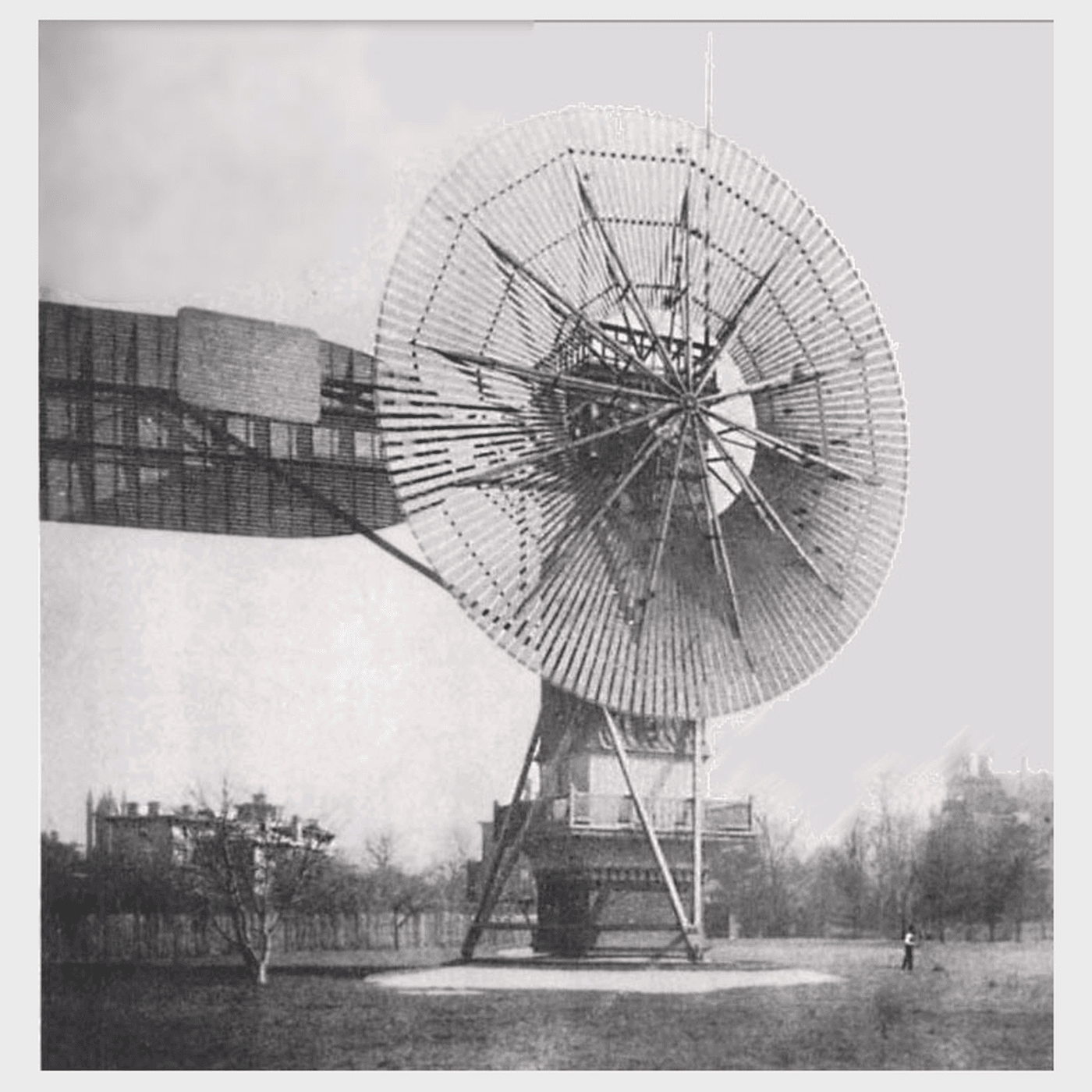
A wind rotor makes power by slowing the wind. Slow it too little and most of the energy blows through; slow it too much and the air piles up and goes round the rotor instead of through it. Between the two lies a best amount, and it caps every rotor that has ever been built at 16/27 — 59.3 % — of the power in the wind.
Albert Betz published the result in 1919–20; Frederick Lanchester and Nikolai Zhukovsky reached it independently, and it is sometimes given all three names.
This practice rung derives the limit in a notebook and uses it to rate the small rotor built in the first rung of this batch.
Beginner
About 2 hours
Instructions
1
1
Derive the limit
Derive the limit
Loading Jupyter Notebook...
2
2
See the slowed wake
See the slowed wake
Set the rung-1 rotor in front of the box fan and hold a smouldering incense stick just upstream of the rotor disc, then just downstream, and watch the smoke. Measure the wind speed with the anemometer a rotor diameter in front, and a rotor diameter behind — with the rotor loaded, and then with the load disconnected so it free-wheels.
The loaded rotor leaves a slower wake than the free-wheeling one: slowing the air is where the power comes from. The notebook says the best wake is one third of the incoming wind; see how close your rotor's gets.
Tools needed:
 Box Fan (Variable Speed)
 Handheld Anemometer
 Tape Measure
 Incense Sticks for Smoke Visualisation
3
3
Rate your rotor against Betz
Rate your rotor against Betz
From the first rung's measurements, take the electrical power at one wind speed. Divide it by the wind power through your rotor's disc at that speed (the notebook prints it): that is your Cp. Divide again by 0.593 to see what fraction of the theoretical best you reached.
Expect a small printed rotor on a hobby motor to reach only a fraction of the Betz limit: the motor's own losses, the blade drag at low Reynolds number and the tip losses all take their share. That gap is what a century of blade design has closed.
Tools needed:
 MultimeterHandheld Anemometer
4
4
Context
Context
**Albert Betz**, Göttingen, published the limit in 1919–20. It uses nothing but conservation of mass, momentum and energy through an idealised disc, which is why it applies to every kind of rotor — Savonius, Darrieus and propeller alike (the next two rungs). It is a practice rung: no patent anchors it.
**Honest limits of the model.** It ignores the swirl a rotor leaves behind, blade drag and tip losses — all of which lower the real figure further. It applies to an open rotor in a free stream; a rotor in a duct or a pipe (the Kaplan turbine) is a different problem.
Tools Required
5- Placeholder
- Placeholder
- 1 vendor sell this, none ship to you yetPlaceholder
- Placeholder
- Placeholder
Related Blueprints
These blueprints share knowledge with this one — techniques, materials, or principles that connect them in the learning graph.


CC0 Public Domain
This blueprint is released under CC0. You are free to copy, modify, distribute, and use this work for any purpose, without asking permission.
Support the Maker by purchasing products through their Blueprint where they earn a Maker Commission set by Vendors, or create a new iteration of this Blueprint and include it as a connection in your own Blueprint to share revenue.