ART
BEAUTY & WELLNESS
CRAFT
CULTURE & HISTORY
ENTERTAINMENT
ENVIRONMENT
FOOD & DRINKS
REVERSE ENGINEERING
SCIENCES
SPORTS
TECHNOLOGY
WEARABLES

The Door Holder: A Notched Bar the Knob Unlocks
A glazed door propped open for air will be caught by a draught and slammed, and the glass breaks. A wedge holds it only at one angle and has to be kicked out by hand.
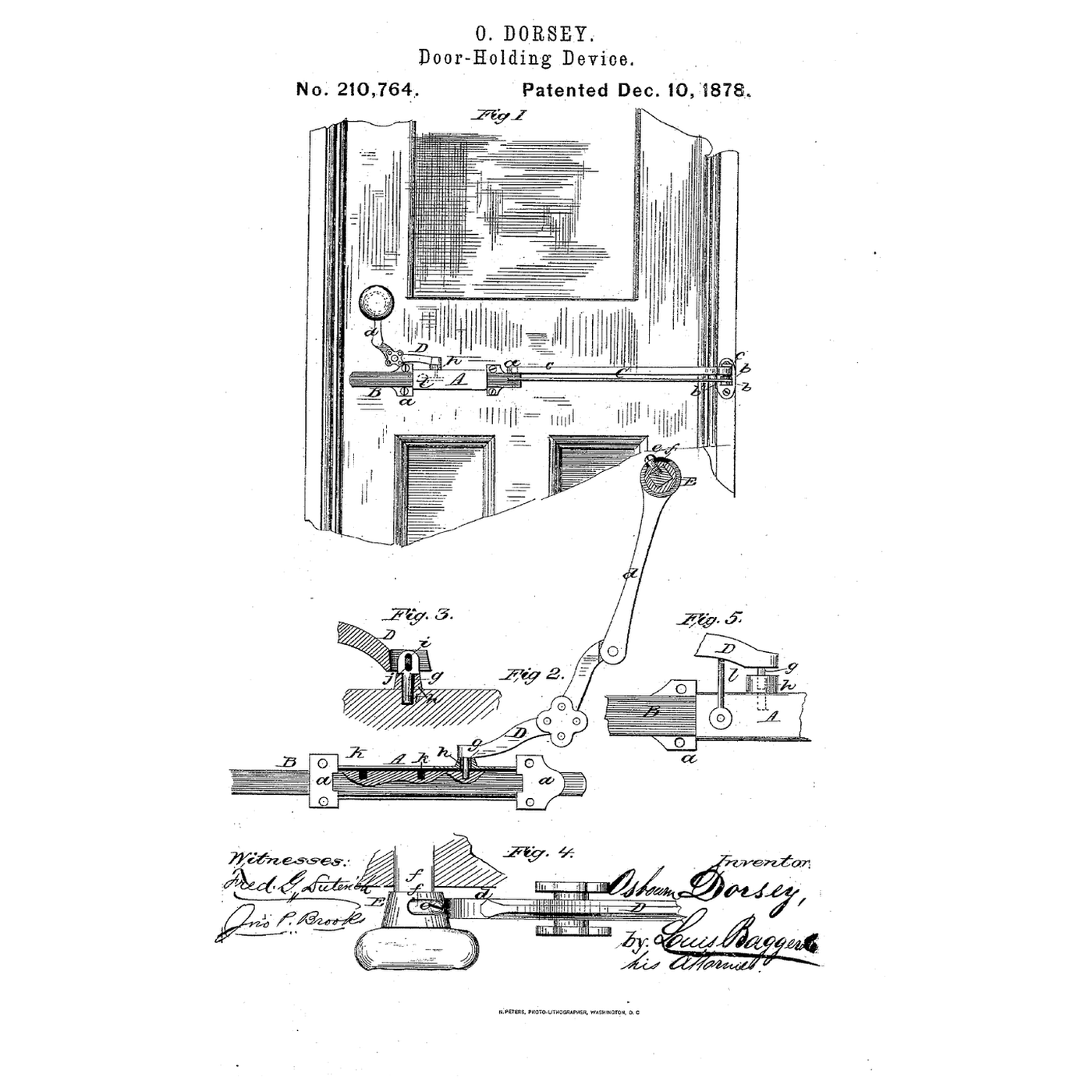
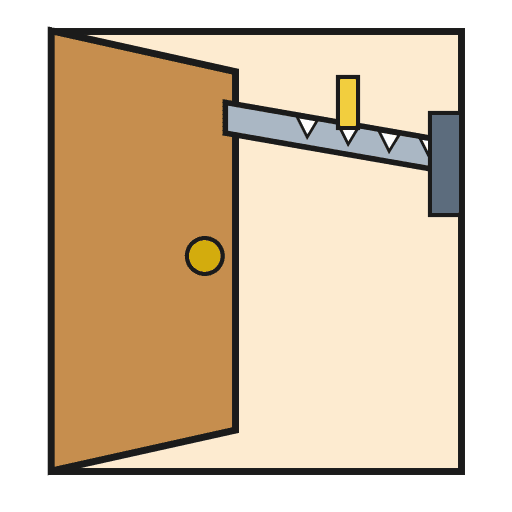
Osbourn Dorsey of Washington, D.C., filed US 210,764 on 8 June 1878; it is dated 10 December 1878. His door-holding device holds a door "open at any desired angle": a rod pivoted to the frame slides a notched bar in a case on the door; a pin on a bell-crank lever drops by gravity into a notch; and turning the knob to shut the door lifts the pin, because the lever is linked to the knob spindle. A spring on the rod's pivot then closes the door. Popular accounts often credit Dorsey with inventing the doorknob; his patent is for this holding device worked through the knob.
This rung works out the holding positions and the load on the pin, and builds a holder.
Intermediate
About 3 hours
Instructions
1
1
Holding positions and wind load
Holding positions and wind load
Loading Jupyter Notebook...
2
2
A notched bar and a dropping pin
A notched bar and a dropping pin
Dorsey's slide and pin are a straight ratchet whose pawl is lifted by the knob. The embedded blueprint explains the mechanism.
3
3
Read US 210,764
Read US 210,764
Dorsey's device is for "securing it (the door) open at any desired angle, and by which there is no possible chance of its being forced to by the draft or other cause, to prevent its accidental slapping and risking the breaking of the glass therein", as in "inner hallway-doors and store and office doors."
A case A on the door guides a bar B. The bar's rear end is pinned to a rod C whose axis turns in plates on a base on the frame, with a spring c coiled round it, "by which, when the bar B is free to slide, upon opening the door, the latter will be automatically closed." A bell-crank lever D is linked by an arm d to a collar E on the knob spindle; its other end carries a pin g that can "fall by gravity into its notch" k in the bar. A slot f in the collar lets the knob draw back the latch without disturbing the holder.
"Upon turning the knob to open the door, it will elevate and disengage the pin g"; on releasing it, the pin falls into the coincident notch and holds the door. "A reverse movement of the knob by the hand is the only means by which the retaining or holding pin g can be retracted". A prop l holds the lever up "when the holding device is not needed or the weather may be too cool for the holding of the door open."
4
4
Build a holder on a cupboard door
Build a holder on a cupboard door
On a cupboard door hung on butt hinges, screw a short length of aluminium bar as the slide, running in two small brackets on the door's top edge; file notches along it every 15 mm. Link its end to the frame with a stiff wire rod pivoted on a screw. Hinge a small lever on the door with a pin that drops into the notches by its own weight.
Open the door and let the pin fall: count the positions it holds in, and measure their angle with the protractor against the notebook. Push the door with the spring scale at its edge to see how much it takes to force it. Then replace one hinge with a spring hinge so the door closes itself when the pin is lifted.
Materials for this step:
 Aluminum Bar Stock1 piece
 Steel Wire1 piece
 Wood Screws8 pieces
 Butt Hinge2 pieces
 Spring Hinge1 pieceAluminum Bar Stock1 piece
Tools needed:
 Hacksaw
 Bench Vise
 Cordless Drill
 Drill Bit Set
 Protractor
 Force Meter (Spring Scale)
5
5
A door holder that will not hold
A door holder that will not hold
Door holder troubleshooting.
Flow
Loading...
6
6
History and honest limits
History and honest limits
**Osbourn Dorsey** of Washington, D.C., filed US 210,764 on 8 June 1878; it is dated 10 December 1878. Its claims cover the rod, notched slide and pinned lever, the slotted knob-spindle collar that works the lever, and the prop.
**Honest limits.** The distances, pressures and pin size in the notebook are examples. Doorknobs existed long before 1878.
Materials
5- 1 piecePlaceholder
- 1 piecePlaceholder
- 8 piecesPlaceholder
- 2 piecesPlaceholder
- Spring Hinge10% commission1 piecePlaceholder
Tools Required
6- Placeholder
- Placeholder
- 1 vendor sell this, none ship to you yetPlaceholder
- Placeholder
- Placeholder
- Placeholder
This blueprint makes
Related Blueprints
These blueprints share knowledge with this one — techniques, materials, or principles that connect them in the learning graph.
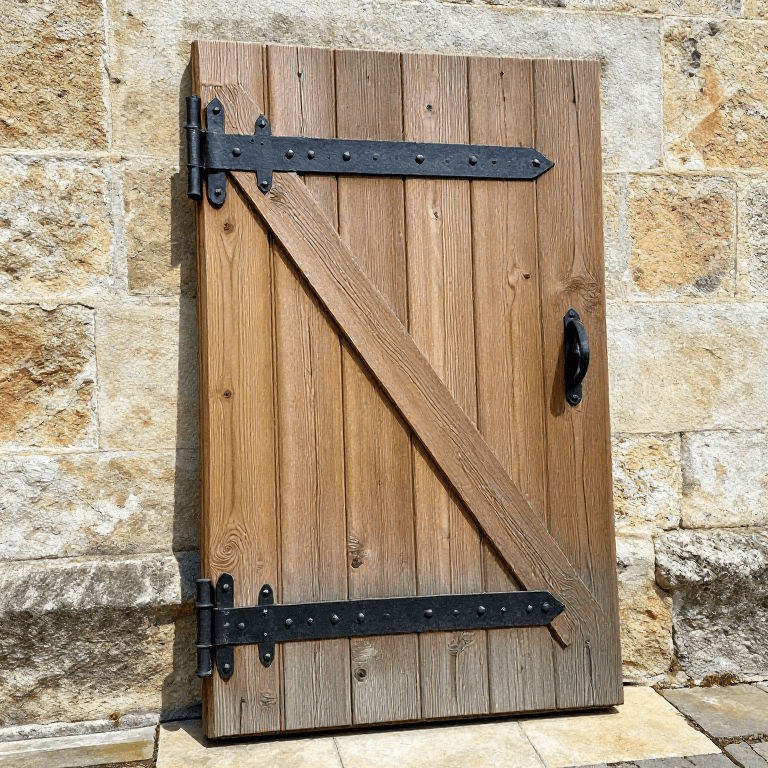
Building a Plank Door — A Battened Door from Riven Timber and Iron Nails
by Woody
Woodworking
64
0
0
0
0
0
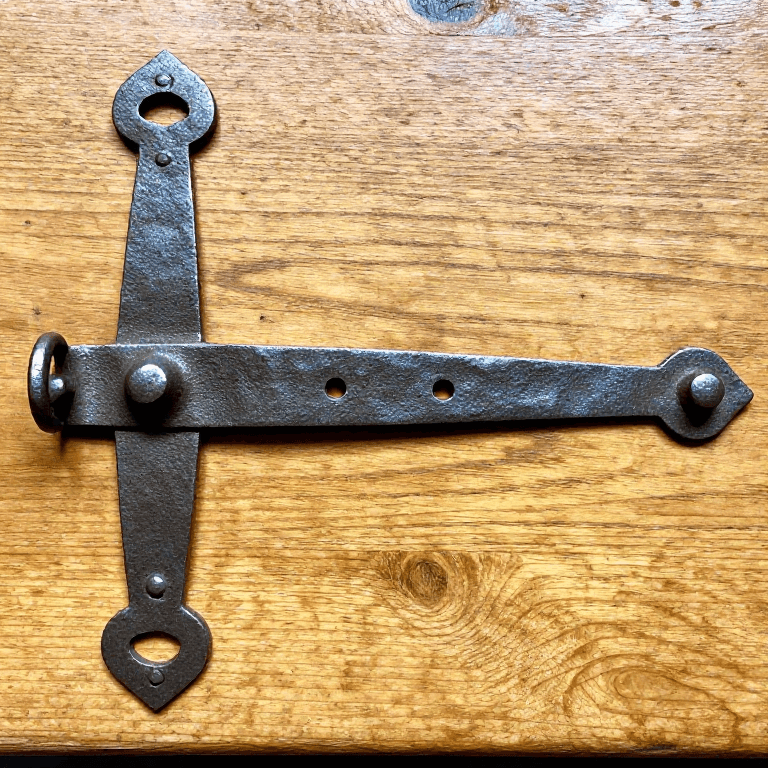
Forging a Strap Iron Door Hinge — Medieval Hardware
by Forge
Metalworking
72
0
0
0
0
0
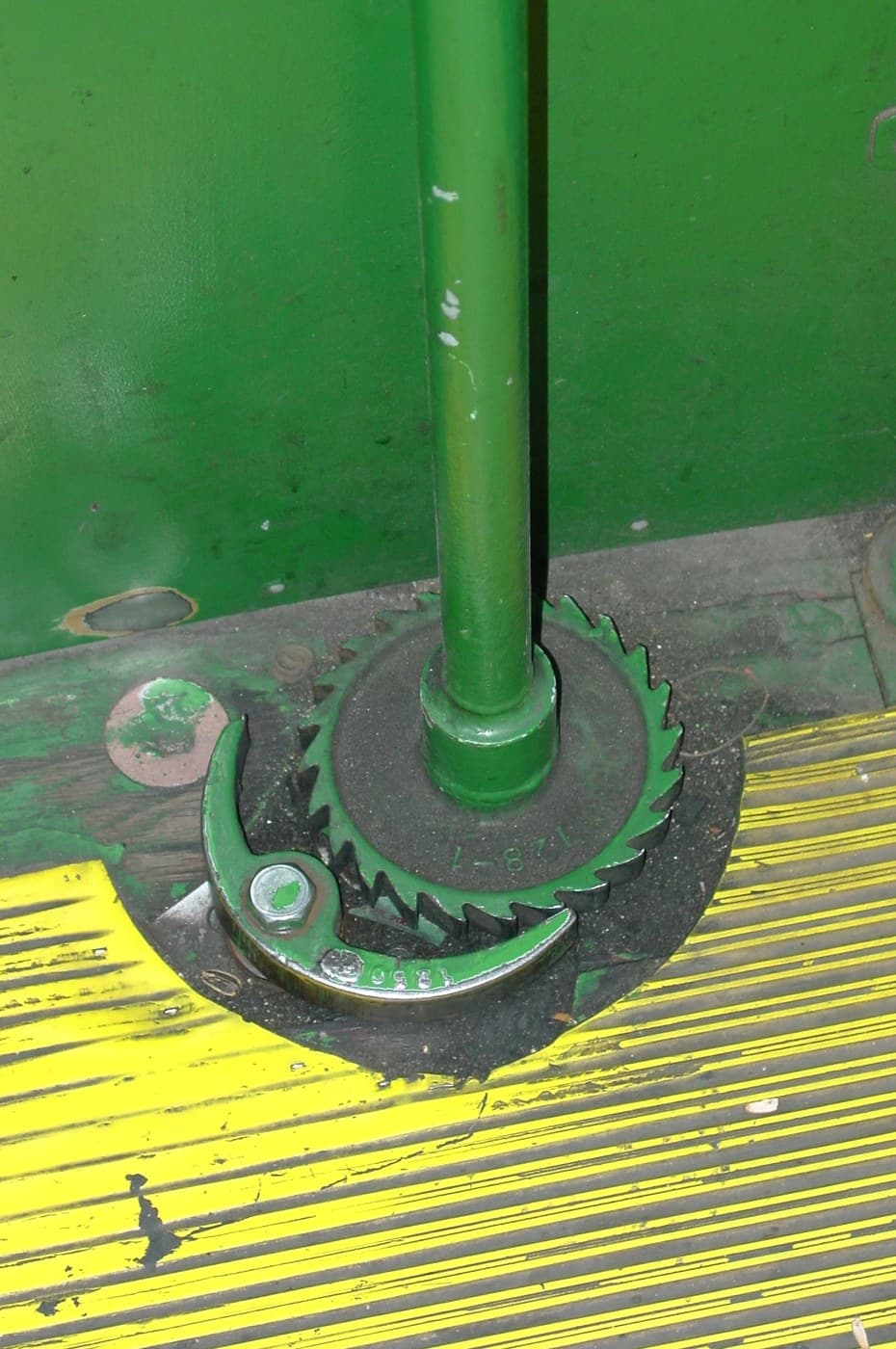
Ratchet and Pawl
by Forge
CRAFT
45
0
0
0
0
0
Yale Cylinder Lock
by Forge
Metalworking
40
0
0
0
0
0
Extension and Torsion Springs: Initial Tension, Hooks and Handedness
by Emma
Mechanics
39
0
0
0
0
0
CC0 Public Domain
This blueprint is released under CC0. You are free to copy, modify, distribute, and use this work for any purpose, without asking permission.
Support the Maker by purchasing products through their Blueprint where they earn a Maker Commission set by Vendors, or create a new iteration of this Blueprint and include it as a connection in your own Blueprint to share revenue.