ART
BEAUTY & WELLNESS
CRAFT
CULTURE & HISTORY
ENTERTAINMENT
ENVIRONMENT
FOOD & DRINKS
REVERSE ENGINEERING
SCIENCES
SPORTS
TECHNOLOGY
WEARABLES
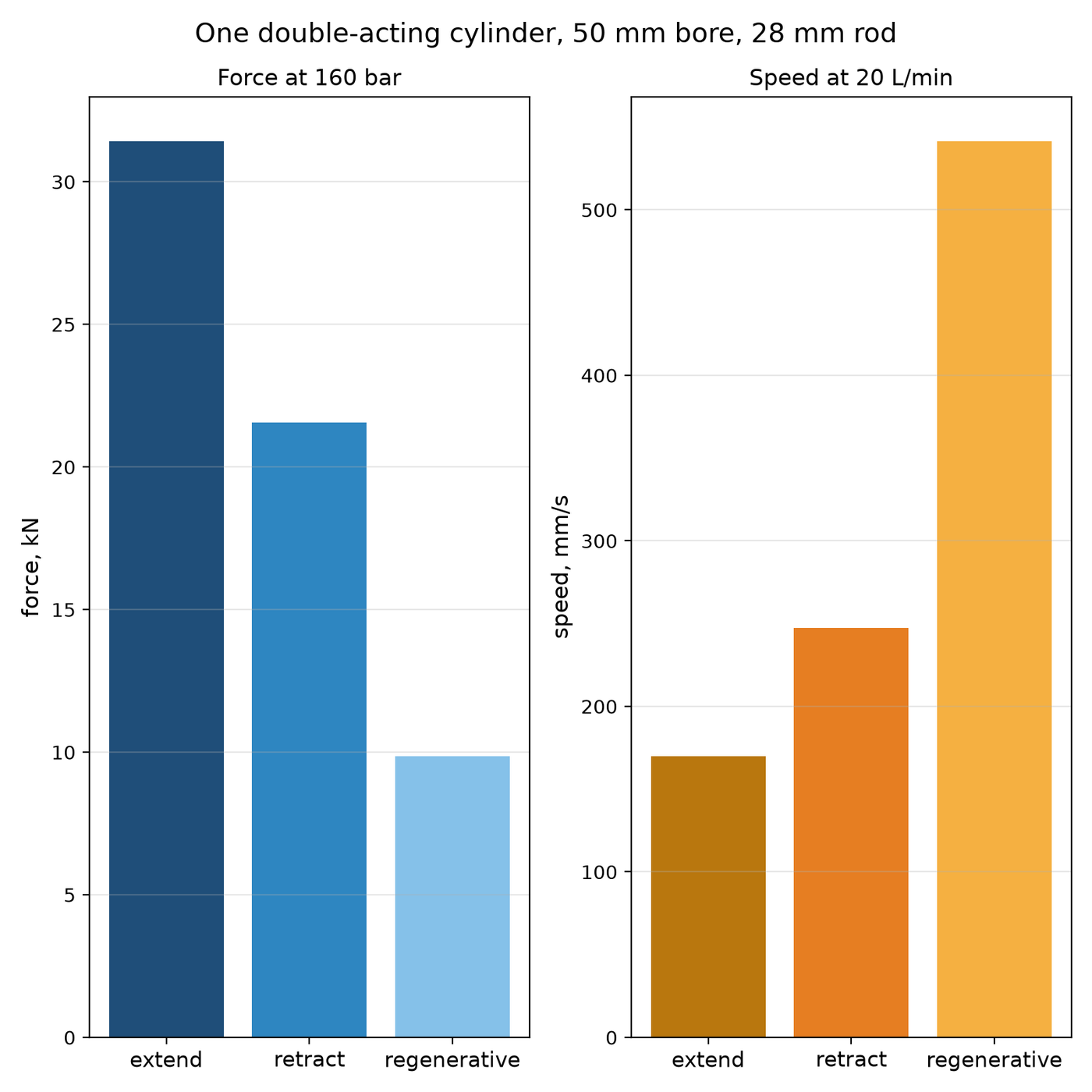
Youblob (generated from this blueprint's notebook) · CC0


The Double-Acting Cylinder: Push With the Bore, Pull With the Ring
Bramah's press and the hydraulic jack push one way and let the load fall back. Most machines need power in both directions: a digger's arm, a tractor's lift, a press that must open as well as close. The double-acting cylinder has a port at each end, so oil drives the piston out and oil drives it back.
The rod makes the two directions unequal. Pushing uses the whole bore; pulling uses only the ring round the rod. That one fact decides a cylinder's forces and speeds, hides a pressure trap that can burst a hose, and — with a long stroke — lets the rod buckle long before the oil runs out of pressure.
This rung works all three out and builds a double-acting cylinder from a syringe to measure the difference.
Beginner
About 3 hours
Instructions
1
1
Force, speed, intensification and buckling
Force, speed, intensification and buckling
Loading Jupyter Notebook...
2
2
Start from Pascal's principle
Start from Pascal's principle
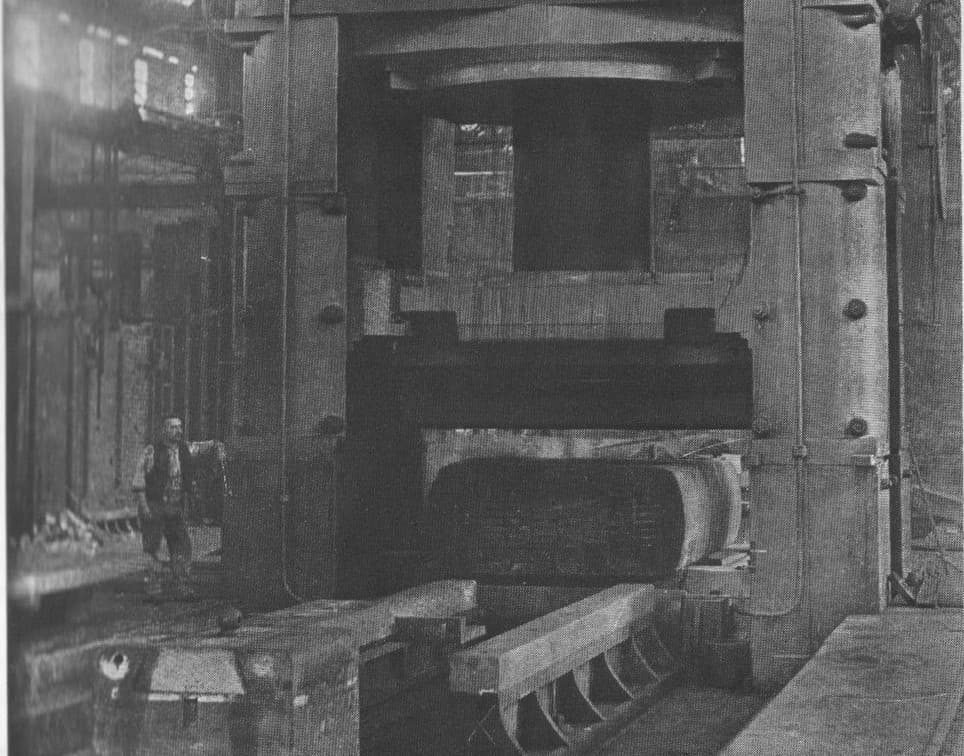
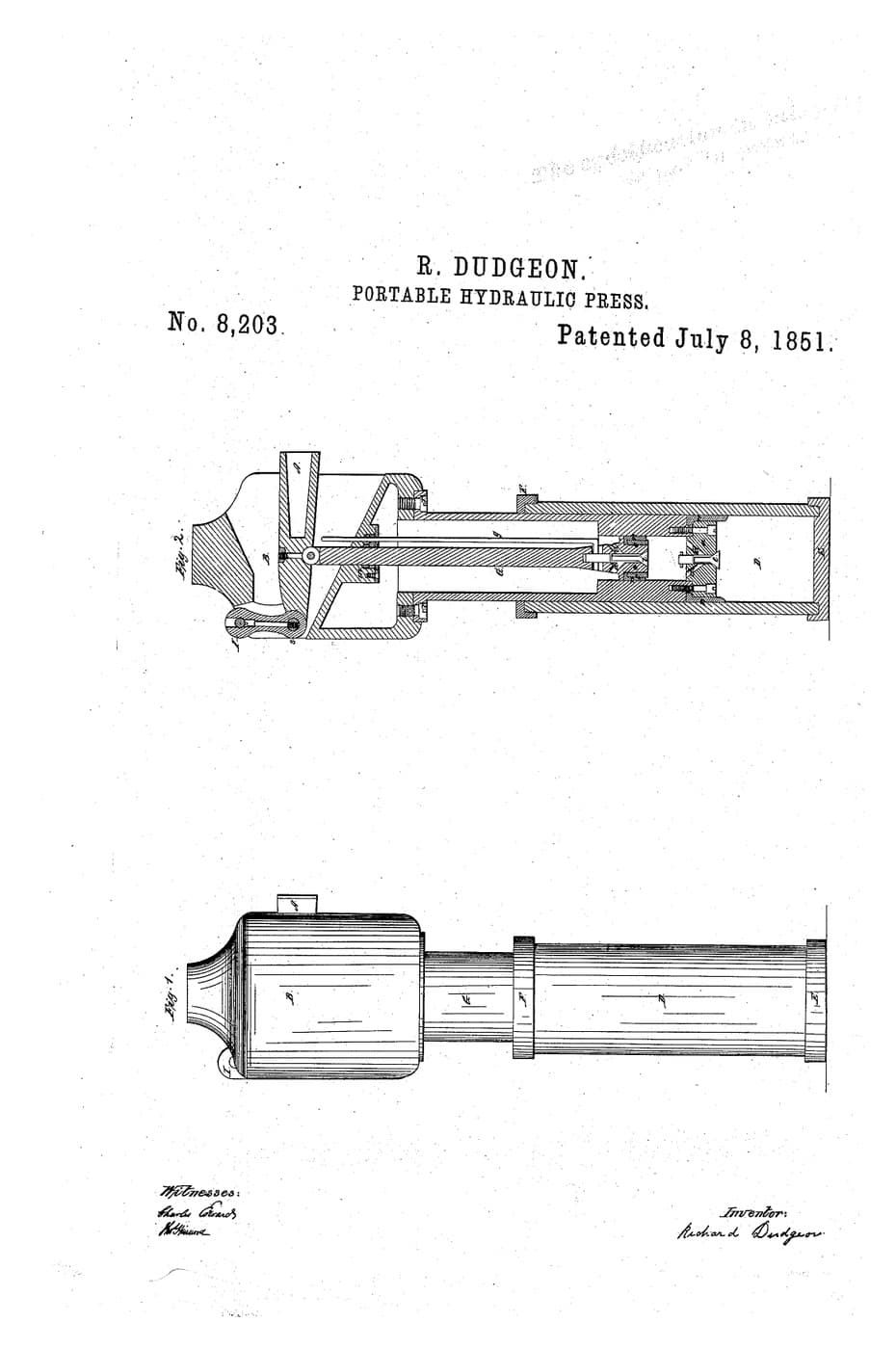
Every cylinder turns pressure into force by area. The embedded blueprint shows it in its first working form, Bramah's single-acting press.
3
3
Make a syringe double-acting
Make a syringe double-acting
A syringe is single-acting: it has one sealed chamber. Make it double-acting by closing its open end.
Measure the barrel bore and the plunger rod with a caliper. 3D-print an end cap that slides over the barrel's open end, with a central hole for the rod carrying an O-ring in a groove (the gland), and a side port with a hose barb. Seal the cap to the barrel with silicone sealant. Cut the plunger's cross-shaped rod down to a round pushrod: glue a steel dowel pin into it so the O-ring seals on a smooth round rod.
Fill both chambers and two hand syringes with coloured water, bleeding out every bubble. Connect one hand syringe to the tip (cap side) and one to the new side port (rod side).
Materials for this step:
 Syringe Set1 piece
 Steel Dowel Pin1 piece
 O-Ring Assortment Kit1 piece
 Silicone Tubing1 meter
 Silicone Sealant1 piece
 Water1 liter
 Food Colouring - Dye for Flow Visualisation1 piece
Tools needed:
 FDM 3D Printer
 PETG Filament
 Digital Caliper 6-Inch
 Hot Glue Gun
4
4
Measure the two directions
Measure the two directions
From your measured bore $D$ and rod $d$, work out the travel that 2 mL should give each way: $2000 / A_{cap}$ mm going out, $2000 / A_{ann}$ mm coming back (areas in mm²).
Push 2 mL into the cap side, with the rod-side hand syringe free to fill, and measure the rod's travel with the caliper. Then push 2 mL into the rod side and measure the travel back. Repeat three times each way. The return stroke is longer for the same volume — exactly the ratio $A_{cap}/A_{ann}$ in the notebook.
Now hold the rod-side hand syringe's plunger firmly and push gently on the cap side: you feel the rod-side plunger pushed back hard. That is intensification. Do not push hard — a syringe is not rated for it.
Tools needed:
Digital Caliper 6-Inch Steel Ruler
 Clear Safety Glasses
5
5
A cylinder that misbehaves
A cylinder that misbehaves
Cylinder faults show up as a handful of symptoms.
Flow
Loading...
6
6
Context and honest limits
Context and honest limits
The double-acting cylinder is not one invention but the working form every hydraulic machine settled on: a honed tube, a piston with seals, a chromed rod through a gland with a wiper, and a port at each end. Its sizes are standardised, so a cylinder of one make fits the mountings of another.
**Honest limits.** A cylinder only turns pressure into force; the valve decides where it goes and the pump how fast. Real cylinders lose a little force to seal friction and need cushions at the ends of stroke, which the notebook leaves out. And hydraulic oil at working pressure can pierce skin from a pinhole leak: never feel for a leak with your hand.
Materials
7- 1 piecePlaceholder
- 1 piecePlaceholder
- 1 piecePlaceholder
- 1 meterPlaceholder
- 1 piecePlaceholder
- 1 literPlaceholder
- Placeholder
Tools Required
6- Placeholder
- Placeholder
- Placeholder
- Placeholder
- Placeholder
- Placeholder
Related Blueprints
These blueprints share knowledge with this one — techniques, materials, or principles that connect them in the learning graph.



CC0 Public Domain
This blueprint is released under CC0. You are free to copy, modify, distribute, and use this work for any purpose, without asking permission.
Support the Maker by purchasing products through their Blueprint where they earn a Maker Commission set by Vendors, or create a new iteration of this Blueprint and include it as a connection in your own Blueprint to share revenue.