ART
BEAUTY & WELLNESS
CRAFT
CULTURE & HISTORY
ENTERTAINMENT
ENVIRONMENT
FOOD & DRINKS
REVERSE ENGINEERING
SCIENCES
SPORTS
TECHNOLOGY
WEARABLES
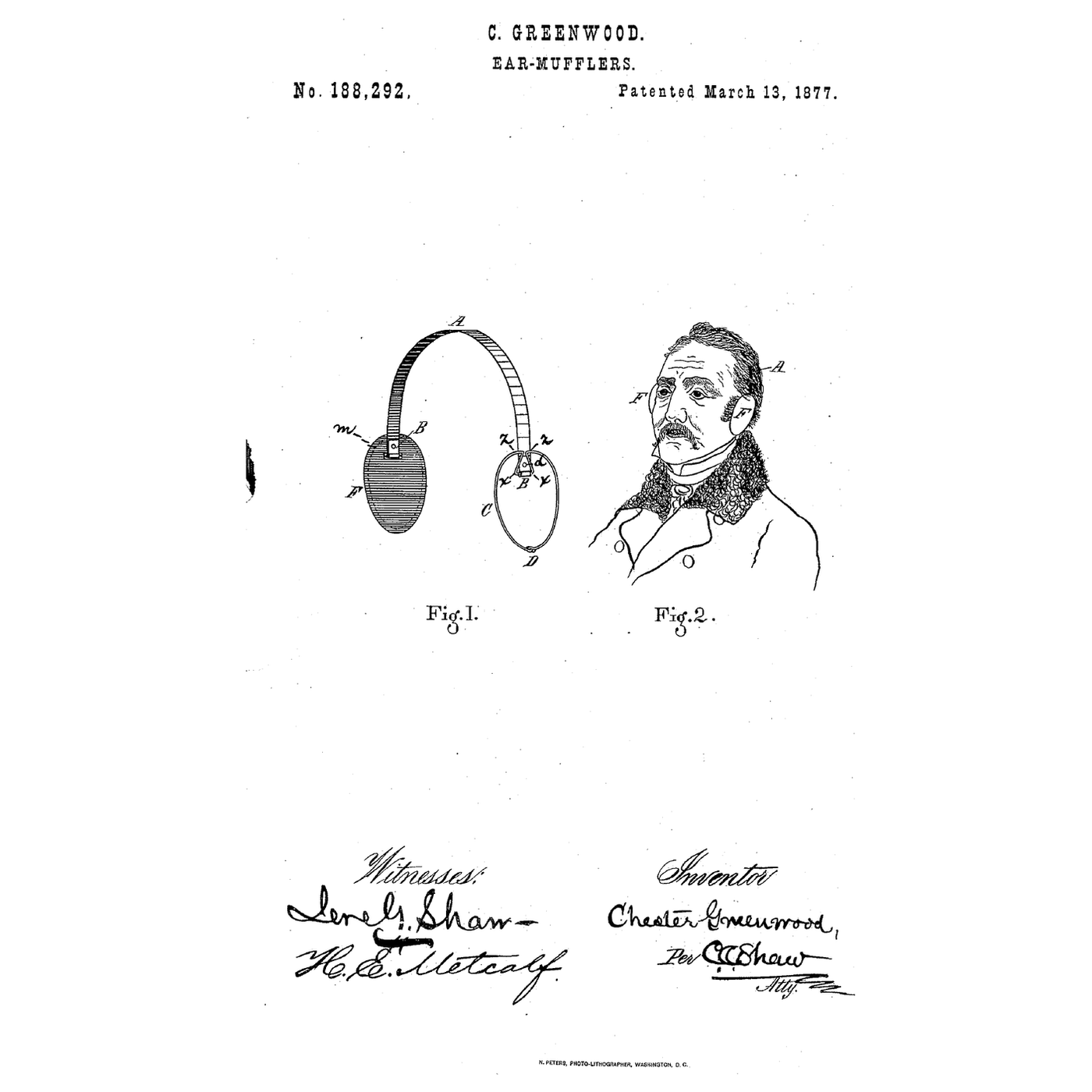


The Ear-Mufflers: A Steel Spring Over the Head and a Pad on Each Ear
Ears are thin and stick out into the wind, so they chill first. A muffler keeps a warm pad on each ear with a spring band over the head, and leaves the head free.
Chester Greenwood of Farmington, Maine, received US 188,292, dated 13 March 1877 (filed 8 February 1877), for ear-mufflers "kept in contact with the ears by means of a spring, which forms the body, and also connects the pads". The body is "a flattened metallic spring, semicircular in shape"; each pad is an oval wire frame covered with cloth and lined with "fur, wool, skin, or any other fibrous non-conductor of heat".
This rung works out the pad force and the heat an ear loses bare and covered. Then it makes a pair and tests a pad on a warm bottle in front of a fan.
Beginner
About 2 hours
Instructions
1
1
Spring force and heat loss
Spring force and heat loss
Loading Jupyter Notebook...
2
2
The pad: a fibrous non-conductor
The pad: a fibrous non-conductor
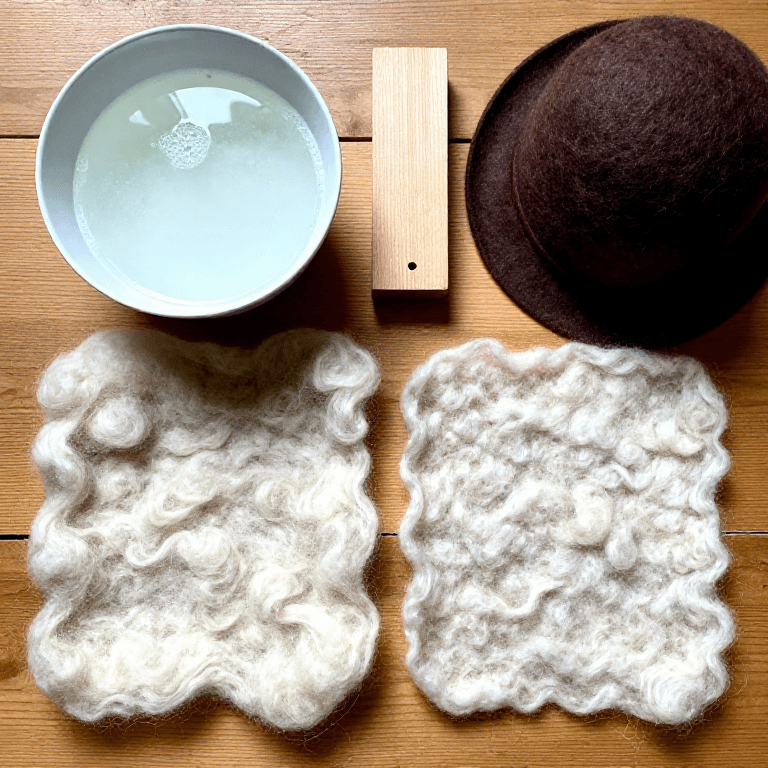
Felt traps still air between wool fibres. The embedded blueprint fulls wool into felt.
3
3
Read US 188,292
Read US 188,292
"My invention relates to that class of ear-mufflers which are kept in contact with the ears by means of a spring, which forms the body, and also connects the pads of the muffler".
"A represents the body of the muffler, which consists of a flattened metallic spring, semicircular in shape, and having its ends bent or overlapped, and riveted down, as seen at d, to form portions of the joints B. The frame of the pad F consists of a single piece of wire, C, having its ends joined at D and bent into an oval shape". "The frame C is covered with cloth, and may be also lined or covered with fur, wool, skin, or any other fibrous non-conductor of heat, as desired."
"In the use of my improvement the body A is passed over the top of the head of the wearer, as seen in Fig. 2, its contractile action causing the pads F to press firmly against the ears, and protect them from cold".
4
4
Make a pair and test a pad
Make a pair and test a pad
Bend a spring steel strip into a half circle that fits over your head with the ends about 3 cm closer together than your head is wide. Wear gloves and eye protection; file the ends smooth. Bend two ovals of stiff wire to cover an ear, cover them in wool felt and stitch them on, and fix one to each end of the band.
To test a pad without a head: fill two identical glass bottles with water at 40 C. Wrap one in a single layer of the felt. Stand both 1 m in front of a fan and read their temperatures with a kitchen thermometer every two minutes for twenty minutes. Plot both; the bare bottle is the bare ear.
Materials for this step:
 Spring Steel Strip1 piece
 Wool Felt Sheet1 piece
 Water2 liters
Tools needed:
 Earmuffs
 Leather Work Gloves
 Clear Safety Glasses
 Box Fan (Variable Speed)
 Kitchen Thermometer
 Stopwatch
5
5
Mufflers that slip, pinch or let the cold in
Mufflers that slip, pinch or let the cold in
Ear-muffler troubleshooting.
Flow
Loading...
6
6
History and honest limits
History and honest limits
**Chester Greenwood** of Farmington, Maine, filed US 188,292 on 8 February 1877; it is dated 13 March 1877. His claim covers the elastic metallic body with pads whose wire frames have bends that stop them swinging too far.
**Honest limits.** The patent gives no sizes or spring strength. Ear area, air-film coefficients, pad conductivity and spring stiffness in the notebook are examples; the bottle test is the measurement.
Materials
3- 1 piecePlaceholder
- 1 piecePlaceholder
- 2 litersPlaceholder
Tools Required
6- Placeholder
- Placeholder
- Placeholder
- Placeholder
- Placeholder
- Placeholder
This blueprint makes
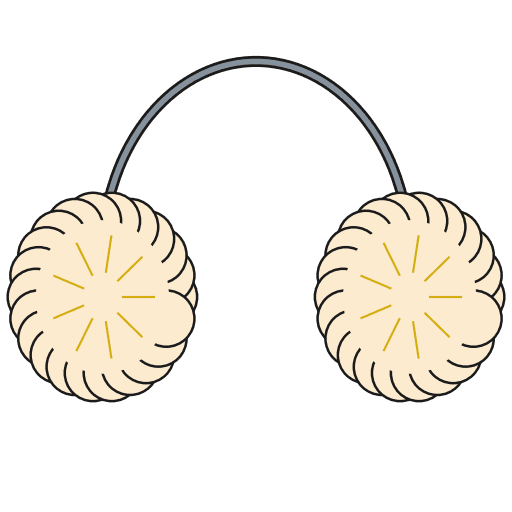
Related Blueprints
These blueprints share knowledge with this one — techniques, materials, or principles that connect them in the learning graph.


CC0 Public Domain
This blueprint is released under CC0. You are free to copy, modify, distribute, and use this work for any purpose, without asking permission.
Support the Maker by purchasing products through their Blueprint where they earn a Maker Commission set by Vendors, or create a new iteration of this Blueprint and include it as a connection in your own Blueprint to share revenue.