ART
BEAUTY & WELLNESS
CRAFT
CULTURE & HISTORY
ENTERTAINMENT
ENVIRONMENT
FOOD & DRINKS
REVERSE ENGINEERING
SCIENCES
SPORTS
TECHNOLOGY
WEARABLES
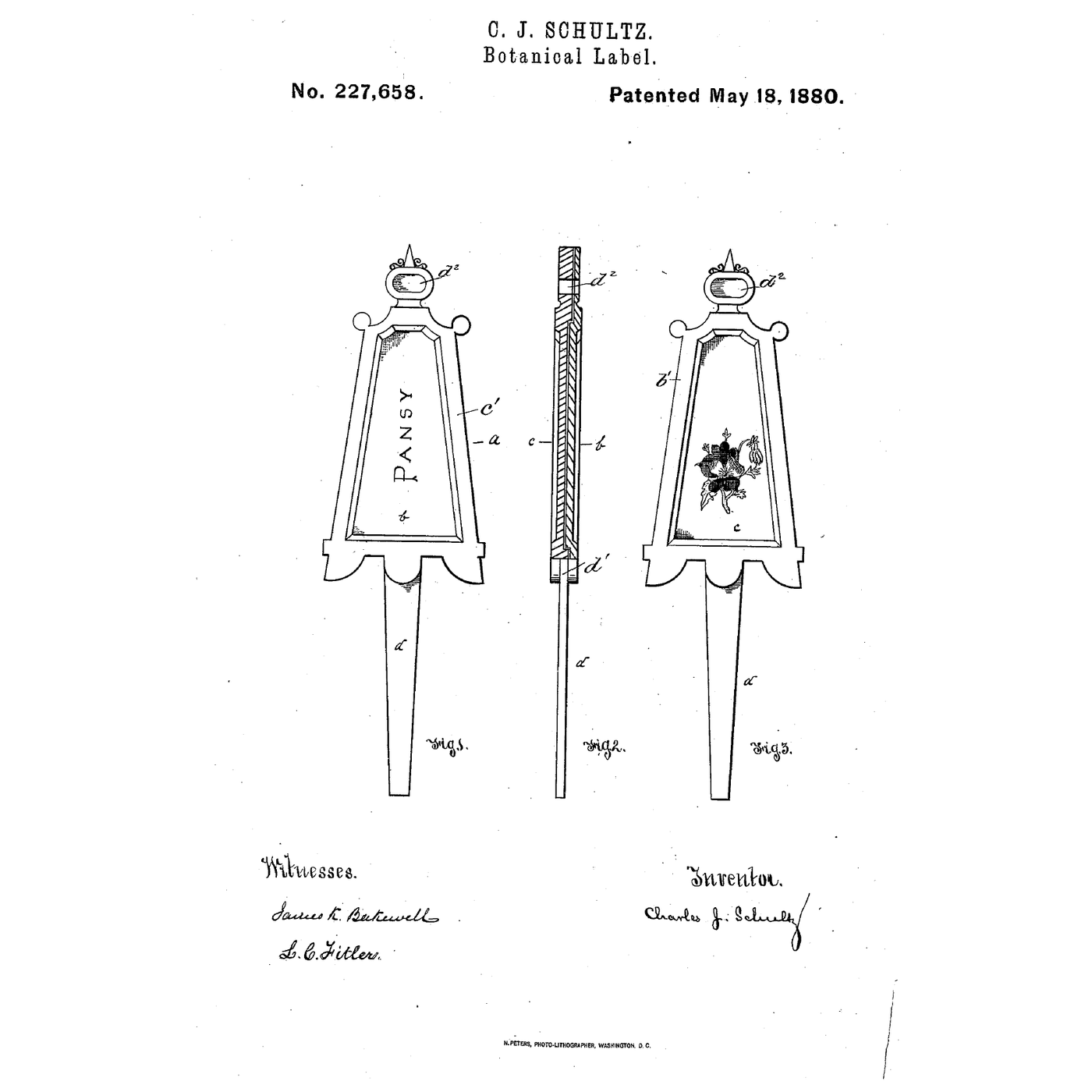


The Glass Botanical Label: The Name Sealed Between Two Panes
A plant's name written on wood or card fades, rots or washes off within a season, and then nobody knows what was sown where.
Charles J. Schultz of Allegheny, Pennsylvania, received US 227,658, dated 18 May 1880, for botanical labels: "a label-holder having a separable frame with transparent panels, said holder provided with a suspension-eye and stake-socket, whereby the same may be employed either to designate trees and plants or the spot where seeds have been planted." The name sits between the panels and the frame is "cemented together so as effectually to exclude moisture."
This rung works out how big the name must be and how much light two panes take, then seals a card label between two glass slides, mounts it in a slotted stake and soaks it beside a bare card.
Beginner
About 1 hour
Instructions
1
1
Letter height and light through the panes
Letter height and light through the panes
Loading Jupyter Notebook...
2
2
What the label marks
What the label marks
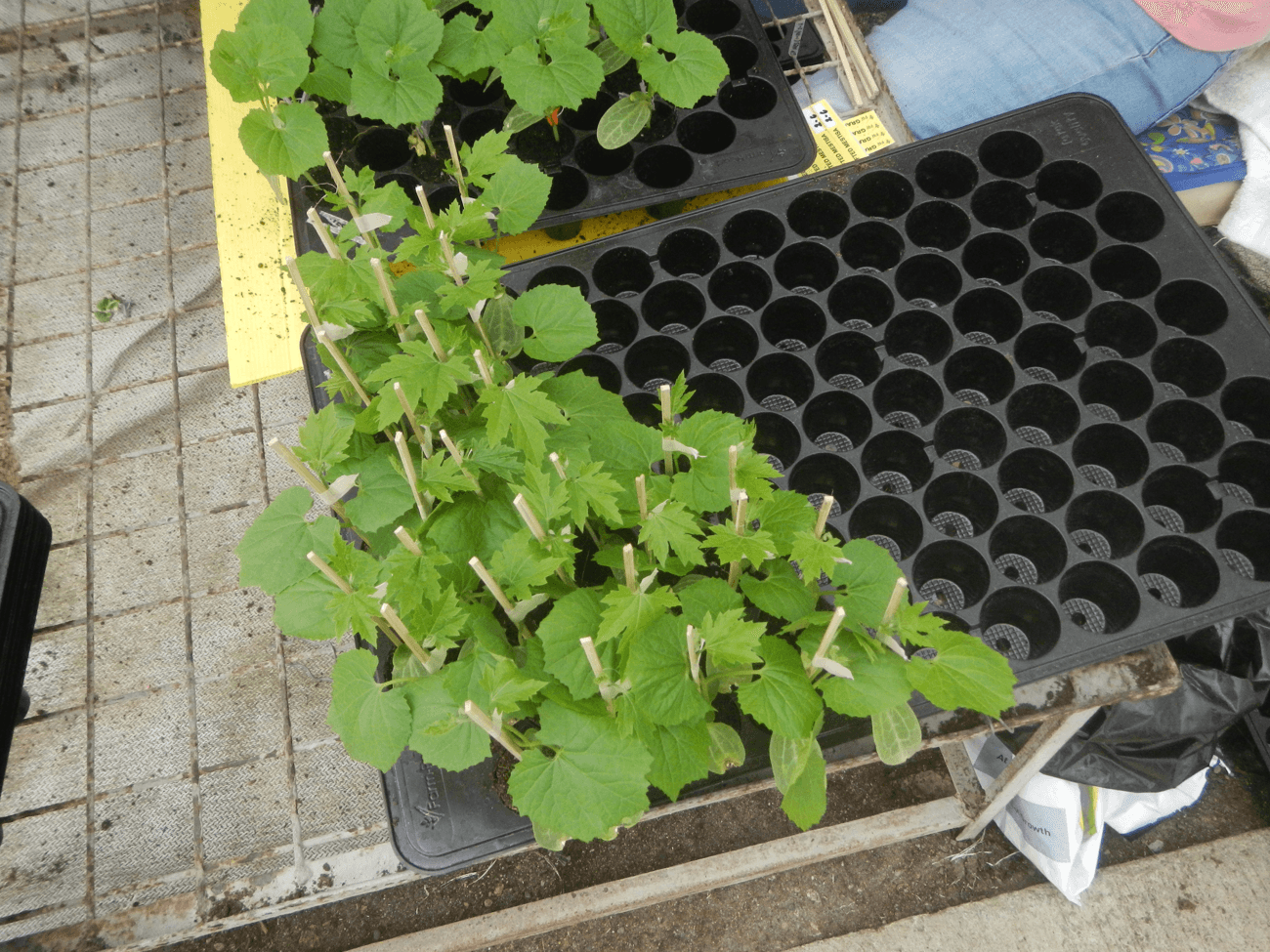
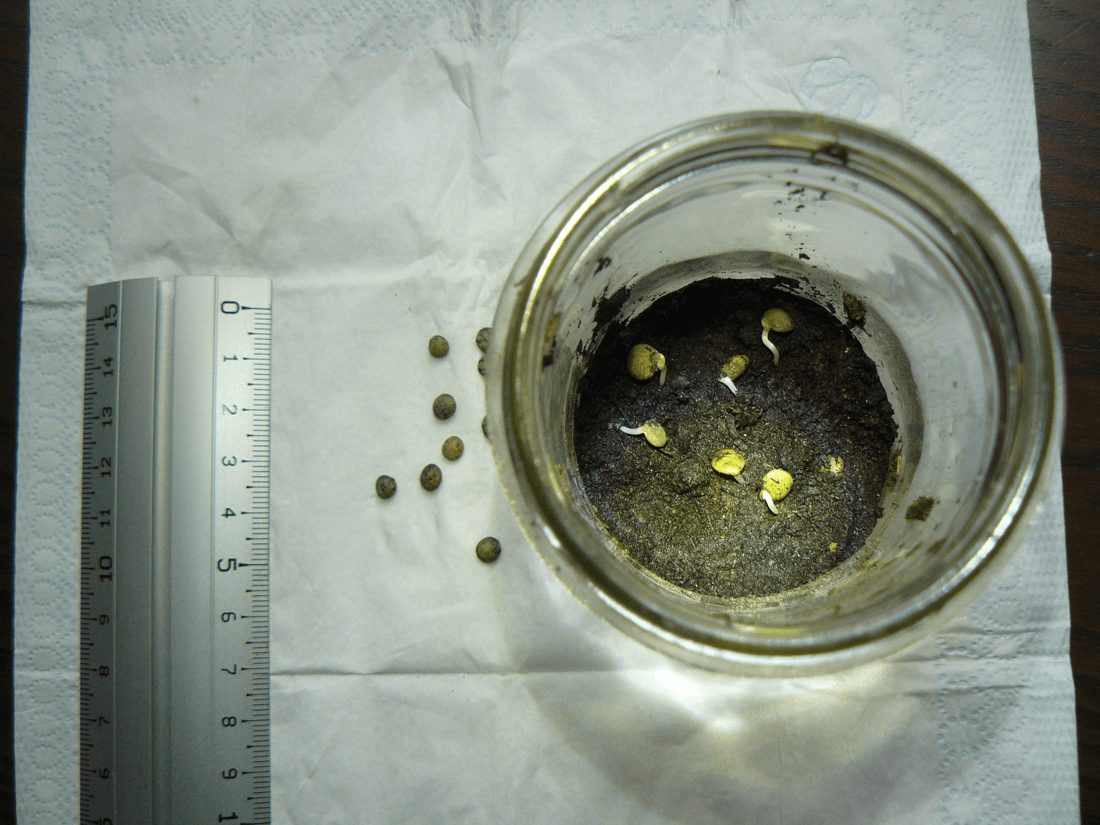
The embedded blueprint raises seedlings in trays. Schultz's stake-socket was for marking "the position of seeds or a fragile plant" like these.
3
3
Read US 227,658
Read US 227,658
"My invention relates to the construction of that class of articles known as 'labels' used for indicating the botanical names of plants, &c."
"The designating-marks, which may be the name of the plant or a representation of it or its flower, or both, having been placed on the inner face of one or both panels c b or inclosed between the same, the frame is closed and the parts cemented together so as effectually to exclude moisture."
4
4
Seal the label and soak it
Seal the label and soak it
Cut a card 70 × 20 mm, a little smaller than a 75 × 25 mm glass slide. Write the plant's name on it in pencil with letters 5 mm tall. Lay it on one slide, lay a second slide on top and run a bead of silicone sealant round all four edges with no gap. Leave it a day to cure.
Saw two cuts 25 mm deep side by side down the middle of the top of a wooden stake and file between them until the sealed label slides in snugly: this is Schultz's stake-socket.
Cut a second card the same size and write the same name on it. Stand the sealed label and the bare card in a glass jar with 3 cm of water for three days, then compare the two cards. Push the stake into a pot and walk back until you can no longer read the name; measure that distance with the tape and compare it with the notebook. Do the same with a plain plant label.
Materials for this step:
 Glass Slide2 pieces
 Card Stock1 piece
 Silicone Sealant10 ml
 Wooden Stake1 piece
 Water0.2 liter
Tools needed:
 Pencil
 Ruler
Ruler Craft Knife
 Hacksaw
 Files (Hand File)
 Glass Jar
 Flower Pot
 Tape Measure
 Plant Label
5
5
A label that lets water in or cannot be read
A label that lets water in or cannot be read
Glass botanical label troubleshooting.
Flow
Loading...
6
6
History and honest limits
History and honest limits
**Charles J. Schultz** of Allegheny, Pennsylvania, filed US 227,658 on 9 February 1880; it is dated 18 May 1880. His panels could be glass or mica, the name "etching, engraving, molding, or painting" on the glass or written on a card between the panels, and the two framed halves were counterparts united by cement. The eye at the top hung the label on a tree or shrub; the socket at the bottom took a stem for seeds.
**Honest limits.** Microscope slides and silicone stand in for Schultz's framed panels and cement, and the suspension eye is not built. The notebook's letter heights are the 20/20 threshold, not a comfortable size, and its refractive indices are typical values. Your soak and your reading distance are the result.
Materials
5- 2 piecesPlaceholder
- 1 piecePlaceholder
- 10 mlPlaceholder
- 1 piecePlaceholder
- 0.2 literPlaceholder
Tools Required
9- 1 vendor sell this, none ship to you yetPlaceholder
- Placeholder
- Placeholder
- Placeholder
- Placeholder
- Placeholder
- Placeholder
- 1 vendor sell this, none ship to you yetPlaceholder
- Placeholder
This blueprint makes

Related Blueprints
These blueprints share knowledge with this one — techniques, materials, or principles that connect them in the learning graph.


CC0 Public Domain
This blueprint is released under CC0. You are free to copy, modify, distribute, and use this work for any purpose, without asking permission.
Support the Maker by purchasing products through their Blueprint where they earn a Maker Commission set by Vendors, or create a new iteration of this Blueprint and include it as a connection in your own Blueprint to share revenue.