ART
BEAUTY & WELLNESS
CRAFT
CULTURE & HISTORY
ENTERTAINMENT
ENVIRONMENT
FOOD & DRINKS
REVERSE ENGINEERING
SCIENCES
SPORTS
TECHNOLOGY
WEARABLES
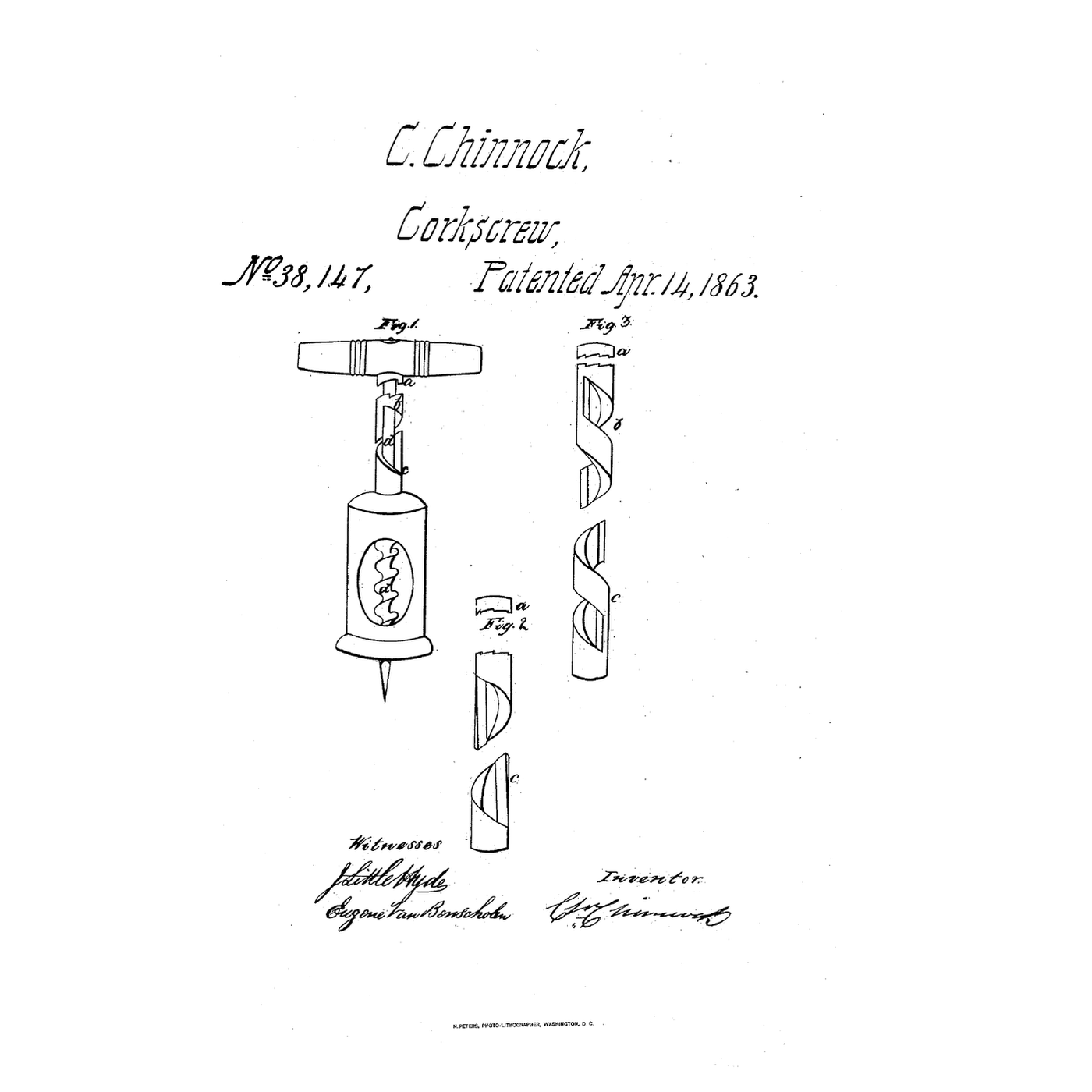


The Ratchet-Cam Cork-Drawer: A Screw That Stops Inside the Cork, Lifted by Two Cams
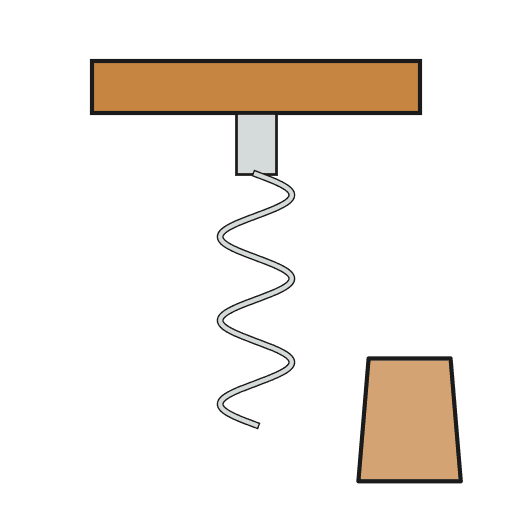
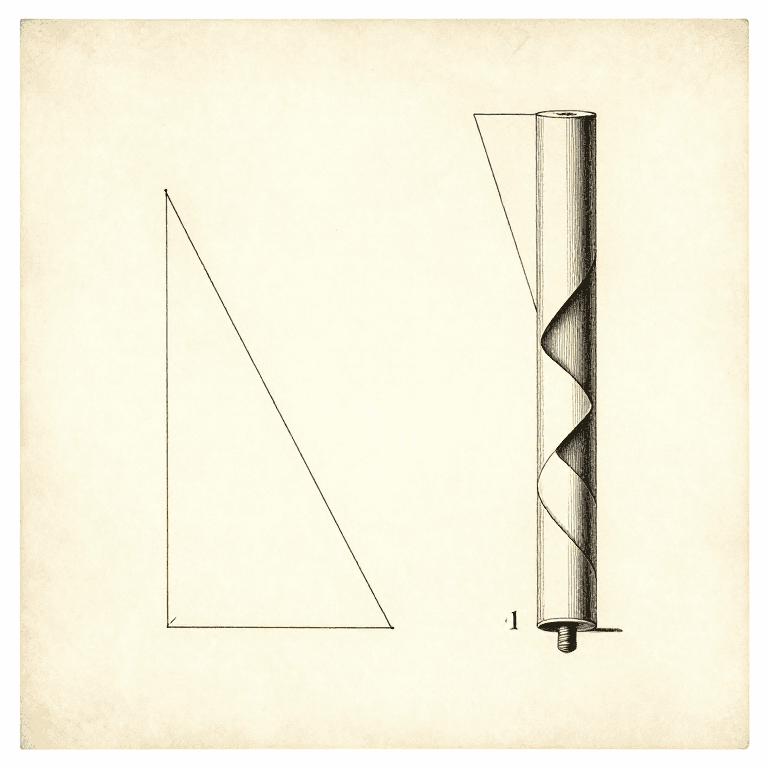
A corkscrew that lifts the cork by climbing its own thread must pass right through the cork, and an old cork then drops its dust into the wine.
Charles Chinnock of Brooklyn, New York, received US 38,147, dated 14 April 1863, for a cork-drawer that improves on his own 1862 patent. The screw's shaft drops loosely through two cams in a cage: it is driven into the cork like an ordinary corkscrew and does not pass through it. A ratchet on the handle then catches the ratchet teeth on top of the loose upper cam, and "The inclined plane on b, pressing on the inclined plane c, draws the screw and the cork, as the friction on the metal cams is less than that of the screw on the cork."
This rung works out the lift of the cams, with a work check, then prints the cage, cams and ratchet, and draws corks without piercing them.
Advanced
About 6 hours, with printing
Instructions
1
1
Lift from the cams
Lift from the cams
Loading Jupyter Notebook...
2
2
The corkscrew it improves
The corkscrew it improves
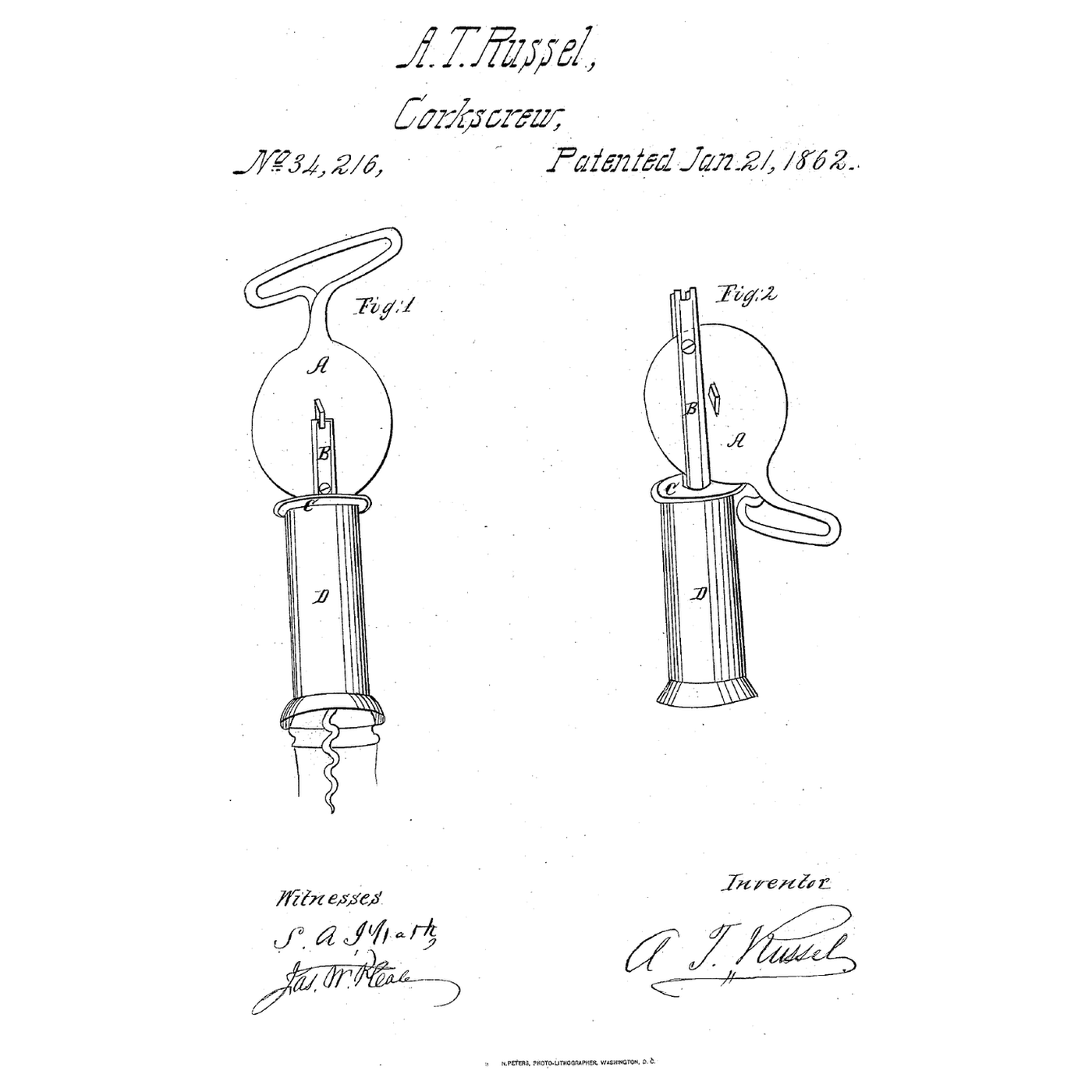
The embedded blueprint is Chinnock's 1862 corkscrew, whose screw had to pass through the cork. His 1863 cork-drawer stops the screw inside the cork and lifts it with cams.
3
3
Read US 38,147
Read US 38,147
"This arrangement is an improvement on my former invention, patented May 27, 1862. Although the corkscrew then patented will draw the corks almost without fail, objections have been made to it, it being necessary with that one that the screw pass entirely through the cork. Consequently with an old wine and old cork dust will fall into the wine."
"When used, the action may be seen by the drawings. The shaft of the screw dropping loose through the cams, the screw is forced into the cork, as with an ordinary corkscrew, and will not pass through a cork of the usual length. The ratchet fastened to the handle then catches in the ratchet on the upper end of the loose cam b. The inclined plane on b, pressing on the inclined plane c, draws the screw and the cork, as the friction on the metal cams is less than that of the screw on the cork."
4
4
Print the cams and draw corks
Print the cams and draw corks
**Cage.** Print a tube 35 mm across and 70 mm tall with a window in its side and a foot that sits on a bottle's mouth. On its top, print a fixed ring whose upper face is a helical ramp rising 25 mm in one turn, with a hole for the shaft.
**Loose cam.** Print a ring with the same helical ramp on its underside, so it sits on the fixed ramp, and ratchet teeth on its top face.
**Screw and handle.** Cut 18 cm of 6 mm mild steel rod. Wind 2 mm steel wire round its lower 4 cm, file a point, and silver-solder the wire along as a coarse thread. Print a handle with a hole across for the rod and matching ratchet teeth on its underside, fix it at the rod's top with epoxy, and pass the rod down through both cams.
**Test.** Cork several bottles of water with the corking kit, some with old corks. Set the cage on a bottle and turn the handle: the screw goes into the cork until the handle's teeth meet the loose cam's teeth, then the cam rides up the ramp and lifts the cork. Check that the screw's point has not come through the cork's end.
Materials for this step:
 PETG Filament1 piece
 Mild Steel Rod0.18 meter
 Steel Wire0.4 meter
 Silver Solder Set (Easy/Medium/Hard)1 piece
 Flux1 piece
 Two-Part Epoxy1 piece
 Glass Bottle (Clear)4 pieces
 Corks4 pieces
 Water3 liters
Tools needed:
 FDM 3D Printer
 Hacksaw
 Files (Hand File)
 Bench Vise
 Propane Torch
 Round-nose Pliers
 Digital Caliper 6-Inch
 Wine Bottle Corking Kit
 Clear Safety Glasses
 Leather Work Gloves
5
5
A cork-drawer that spins, pierces or will not lift
A cork-drawer that spins, pierces or will not lift
Ratchet-cam cork-drawer troubleshooting.
Flow
Loading...
6
6
History and honest limits
History and honest limits
**Charles Chinnock** of Brooklyn, Kings County, New York, received US 38,147, dated 14 April 1863. The lower cam or inclined plane c was fastened to the cage, the upper cam b had ratchet teeth on its top, and the ratchet a was fixed to the handle; an extended form gave a longer lift. His claim is the ratchet cap, the loose snail-like cam and the corresponding cam or screw, with the independent worm and pillar, working together.
**Honest limits.** Printed PETG cams and ratchets stand in for his metal ones, and a wire thread soldered to a rod for his worm. The notebook ignores friction; its forces and lengths are examples. Your drawn corks are the result.
Materials
9- 1 piecePlaceholder
- 0.18 meterPlaceholder
- 0.4 meterPlaceholder
- 1 piecePlaceholder
- 1 piecePlaceholder
- 1 piecePlaceholder
- 4 piecesPlaceholder
- 4 piecesPlaceholder
- 3 litersPlaceholder
Tools Required
10- Placeholder
- Placeholder
- Placeholder
- Placeholder
- Placeholder
- Placeholder
- Placeholder
- Placeholder
- Placeholder
- Placeholder
This blueprint makes
Related Blueprints
These blueprints share knowledge with this one — techniques, materials, or principles that connect them in the learning graph.


CC0 Public Domain
This blueprint is released under CC0. You are free to copy, modify, distribute, and use this work for any purpose, without asking permission.
Support the Maker by purchasing products through their Blueprint where they earn a Maker Commission set by Vendors, or create a new iteration of this Blueprint and include it as a connection in your own Blueprint to share revenue.