ART
BEAUTY & WELLNESS
CRAFT
CULTURE & HISTORY
ENTERTAINMENT
ENVIRONMENT
FOOD & DRINKS
REVERSE ENGINEERING
SCIENCES
SPORTS
TECHNOLOGY
WEARABLES
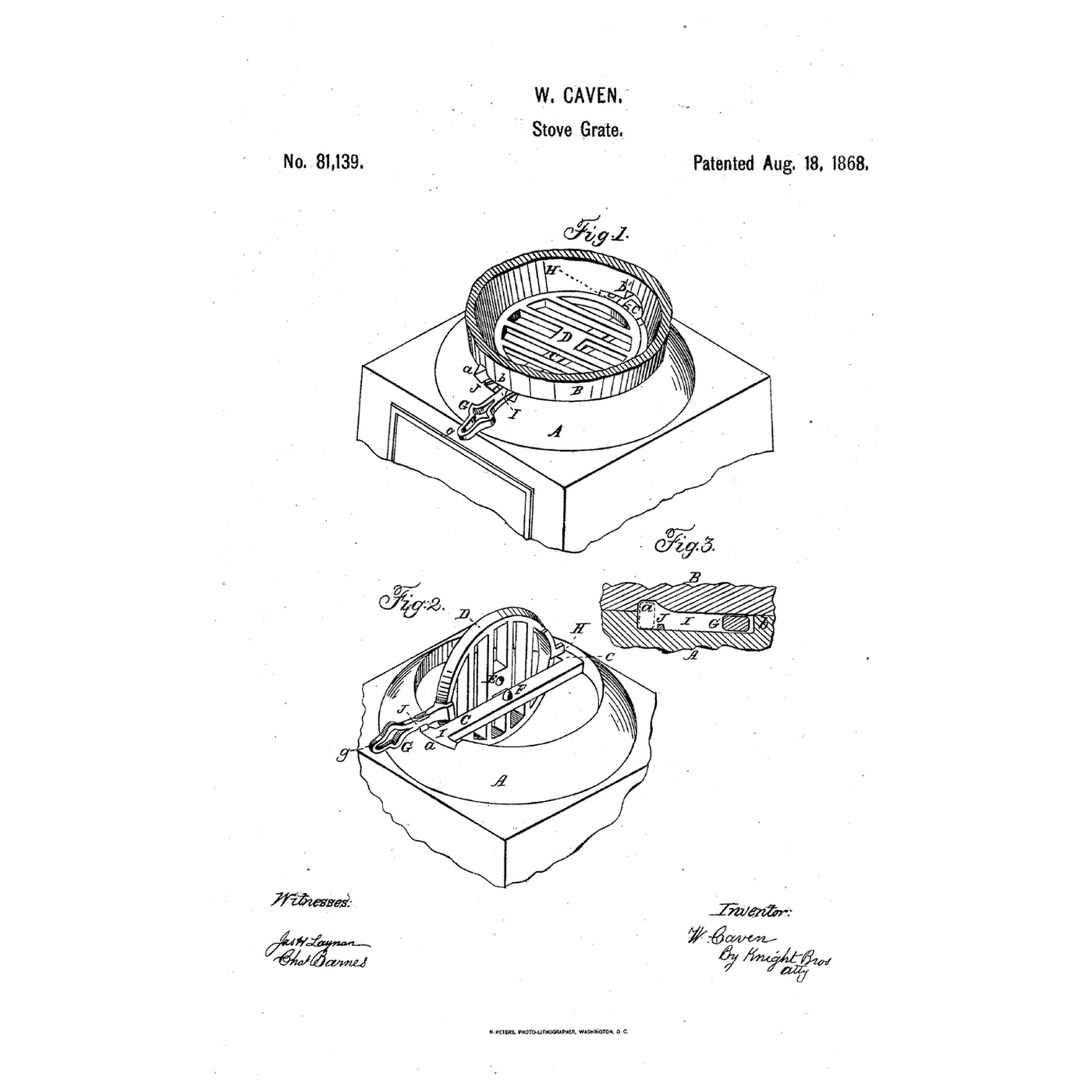


The Shaking Grate: Turn It to Sift the Ash, Tilt It to Dump the Fire
A coal stove burns on a grate: air comes up through it, ash falls down through it. As the fire burns the ash fills the openings, the air slows and the fire dies unless someone clears it.
William Caven of Cincinnati received US 81,139, dated 18 August 1868, for a "Dumping and Shaking-Grate for Stoves": a round grate on a central stud that a handle can shake "about its axis for precipitation of its ashes, or, by a slight change of location, of being tilted into a vertical position for the purpose of dumping the spent fuel into the ash-pit."
This rung models how ash starves a fire and how often to shake, then measures airflow through a mesh as 'ash' builds up and is shaken off.
Beginner
About 1 hour
Instructions
1
1
Ash, air and shaking
Ash, air and shaking
Loading Jupyter Notebook...
2
2
The iron stove before the grate
The iron stove before the grate
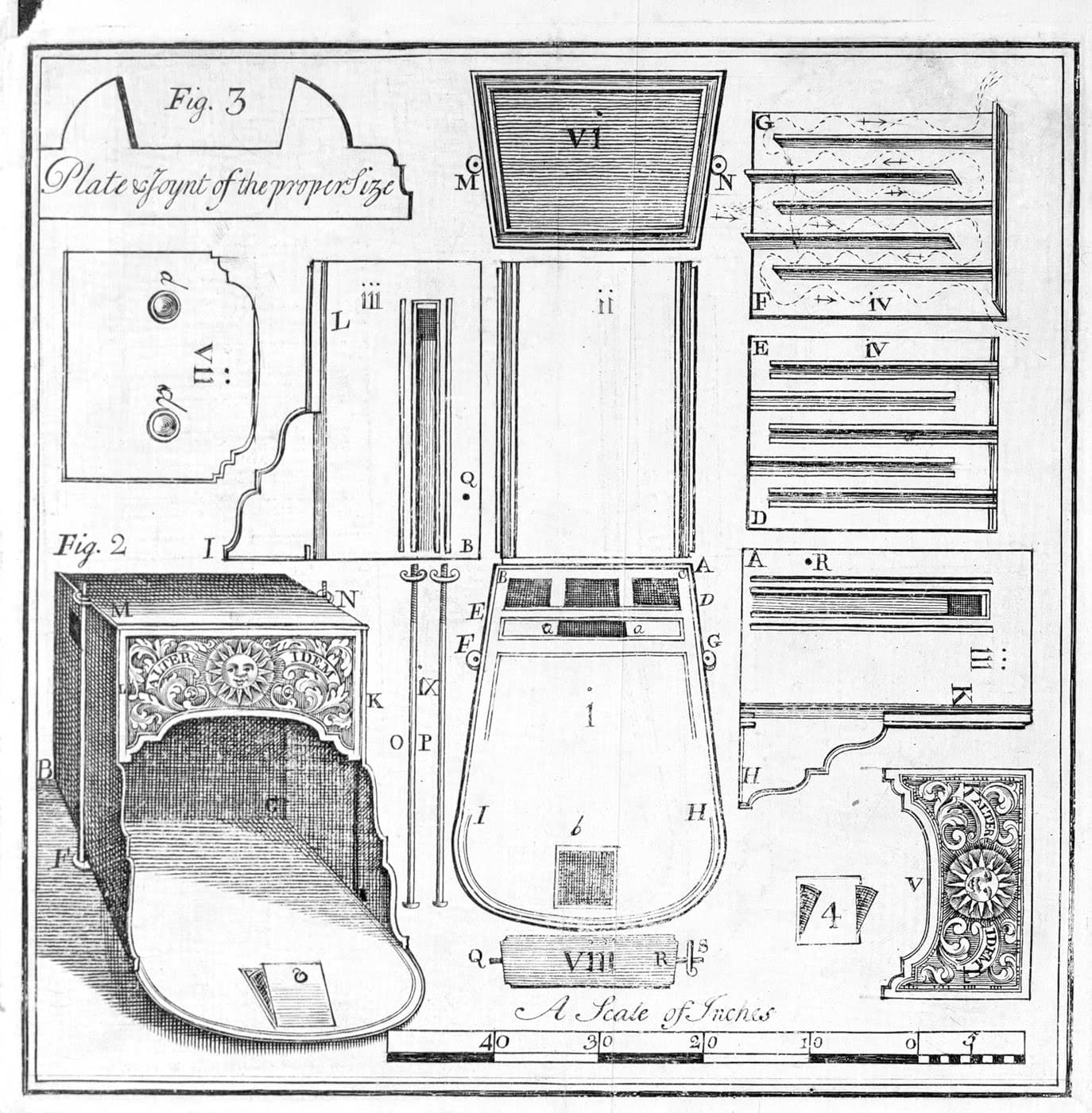
Franklin's stove brought the fire into an iron box in the room. The embedded blueprint builds one.
3
3
Read US 81,139
Read US 81,139
"My invention relates to a novel form and arrangement of circular grate for air-tight and other heating-stoves, which grate is rendered capable of being shaken horizontally about its axis for precipitation of its ashes, or, by a slight change of location, of being tilted into a vertical position for the purpose of dumping the spent fuel into the ash-pit."
"Extending transversely athwart the upper part of the ash-pit is a horizontal bar, C, which supports a circular grate, D, having, at the centre of its under side, a socket, E, for a stud or teat, F, on the top of the bar C. A handle, G, which projects from the edge of the grate, in the plane of the latter, enables the grate to be shaken or vibrated about its axis for precipitating the ashes in the common way."
"Projecting from the edge of the grate, nearly opposite to its handle, is a pivot, H, upon which, in conjunction with the handle, the grate can be tilted at one extremity of its stroke or vibration".
4
4
Airflow through a clogging grate
Airflow through a clogging grate
Stand a coarse wire mesh sieve over a box fan blowing upward, on its lowest speed. Measure the air speed just above the mesh with an anemometer.
Sprinkle a spoonful of fine sand evenly over the mesh (the 'ash') and measure again; repeat until the reading has halved. Now give the sieve a few sharp turns back and forth about its centre, as Caven's handle does, and measure again. Record how much of the flow each shake restores. Wear safety glasses against blown sand.
Materials for this step:
 Fine Sand1 kg
Tools needed:
 Coarse Wire Mesh Sieve
 Box Fan (Variable Speed)
 Handheld Anemometer
 Clear Safety Glasses
 Stove Grate
5
5
A stove that burns low or will not draw
A stove that burns low or will not draw
Stove grate troubleshooting.
Flow
Loading...
6
6
History and honest limits
History and honest limits
**William Caven** of Cincinnati received US 81,139, dated 18 August 1868 (no filing date is printed on patents of that period), for grates in the "cannon" stoves of the day.
**Honest limits.** The patent gives no rates. The clogging time, restored fraction and angle of repose in the notebook are examples; the sand-and-fan test is a model, not a fire.
Tools Required
5- Placeholder
- Placeholder
- Placeholder
- Placeholder
- Placeholder
Related Blueprints
These blueprints share knowledge with this one — techniques, materials, or principles that connect them in the learning graph.


CC0 Public Domain
This blueprint is released under CC0. You are free to copy, modify, distribute, and use this work for any purpose, without asking permission.
Support the Maker by purchasing products through their Blueprint where they earn a Maker Commission set by Vendors, or create a new iteration of this Blueprint and include it as a connection in your own Blueprint to share revenue.