ART
BEAUTY & WELLNESS
CRAFT
CULTURE & HISTORY
ENTERTAINMENT
ENVIRONMENT
FOOD & DRINKS
REVERSE ENGINEERING
SCIENCES
SPORTS
TECHNOLOGY
WEARABLES
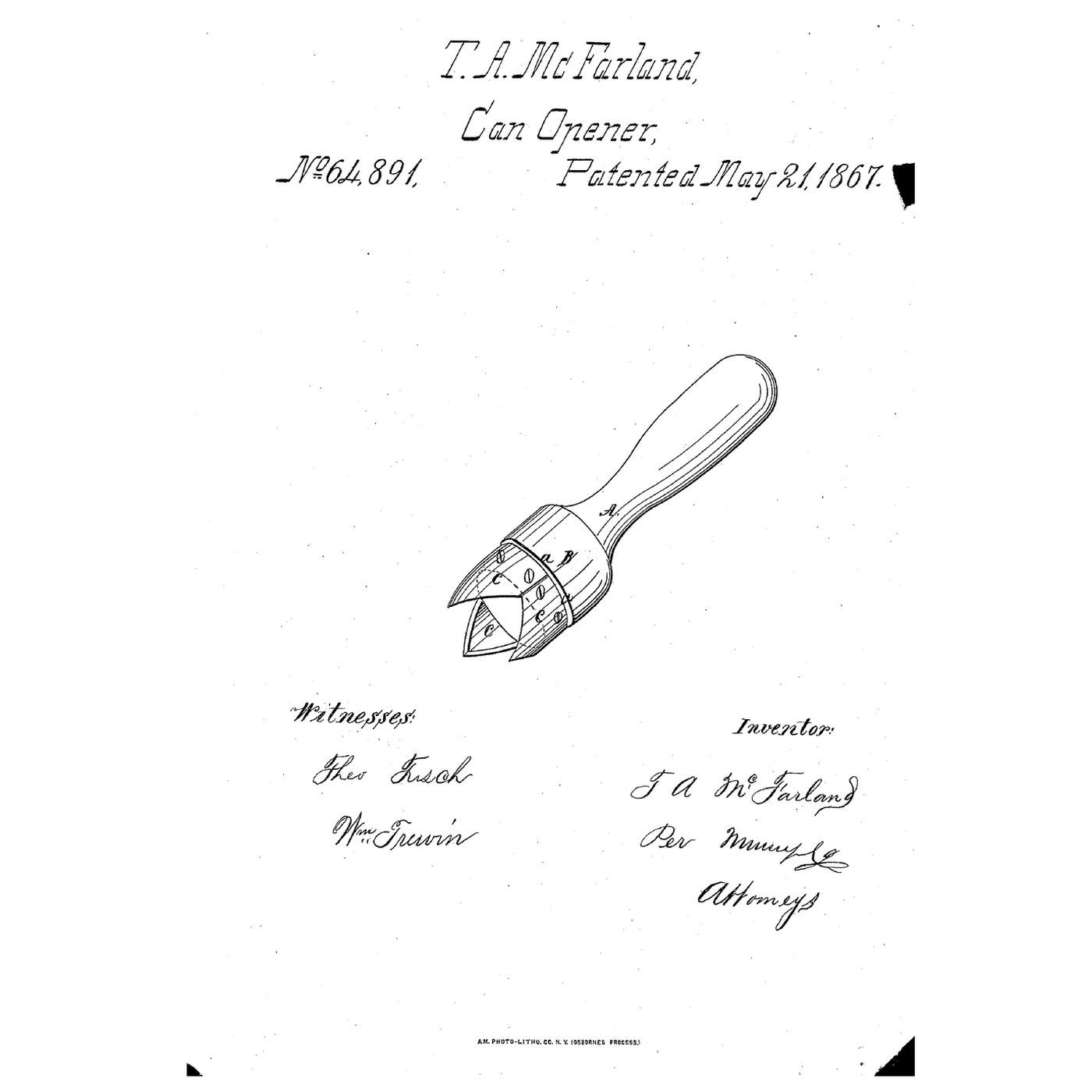


The Single-Blow Can Opener: A Ring of Pointed Teeth Punches the Hole
Cutting into a can with a single blade takes several cuts or blows.
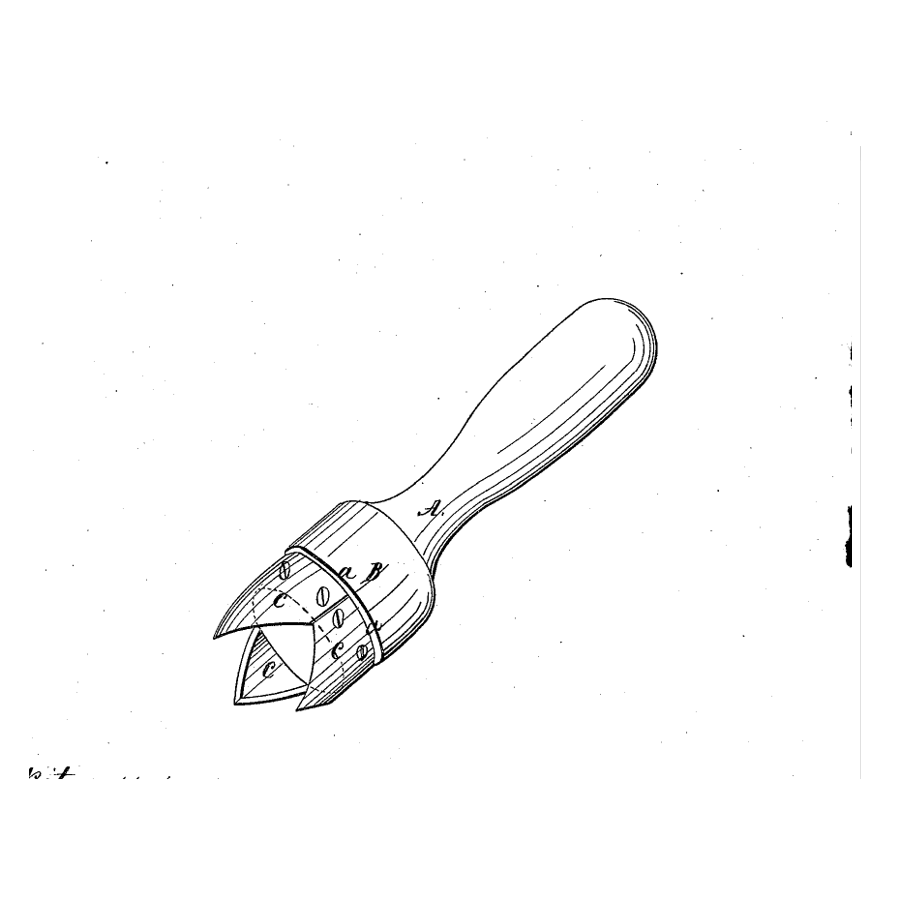
Thomas A. McFarland of Meadville, Pennsylvania, received US 64,891, dated 21 May 1867, for "a cheap, simple, and effective implement for cutting an opening in a can by a single blow": a ring of curved pointed teeth on a handle's head, bevelled inside, whose points enter first and whose edges widen until they meet, punching out a plug that stays inside the cutter.
This rung works out why pointed teeth need so little force, then files the teeth on a steel tube and punches a can top with one blow.
Intermediate
About 3 hours
Instructions
1
1
Peak force and work
Peak force and work
Loading Jupyter Notebook...
2
2
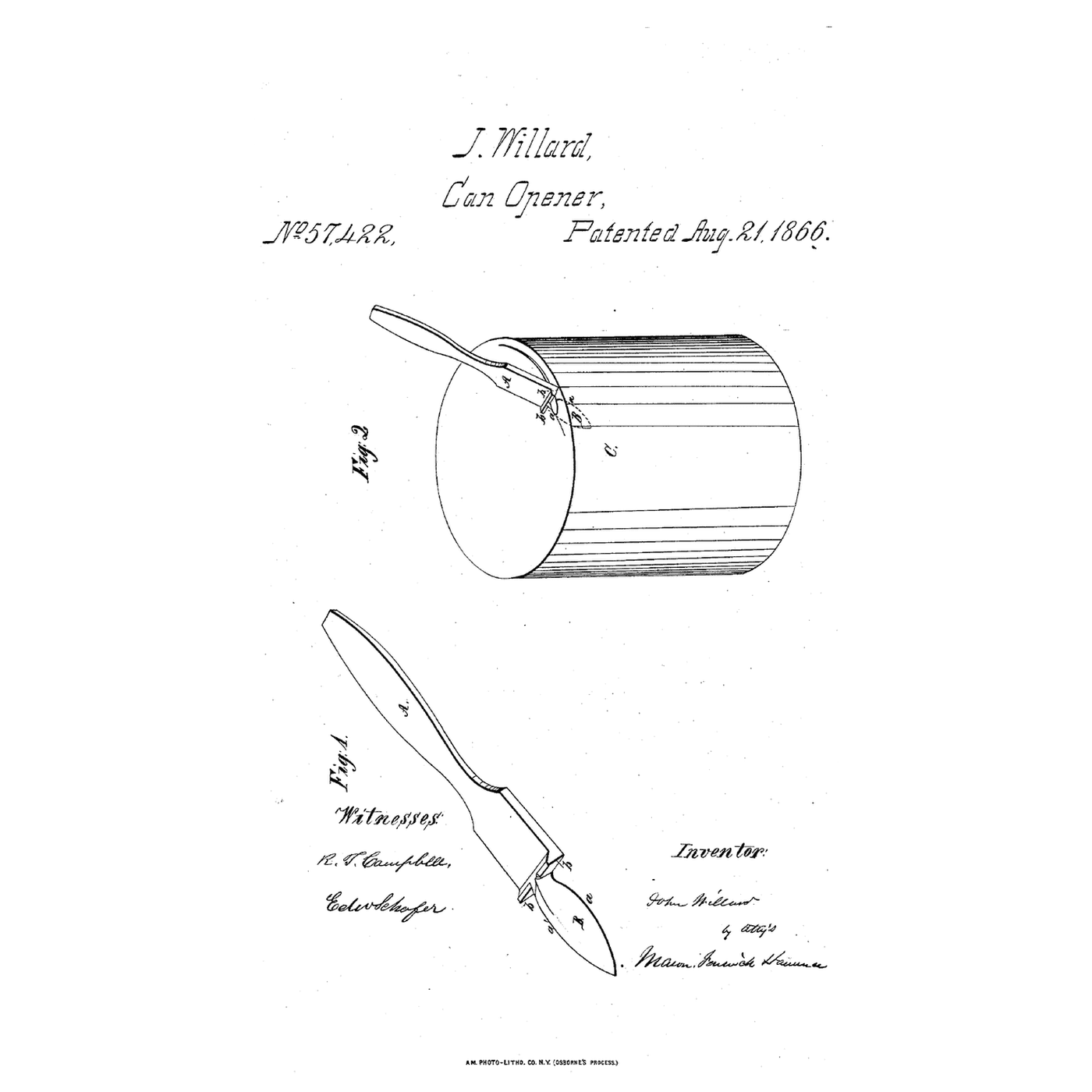
A single blade before it
A single blade before it
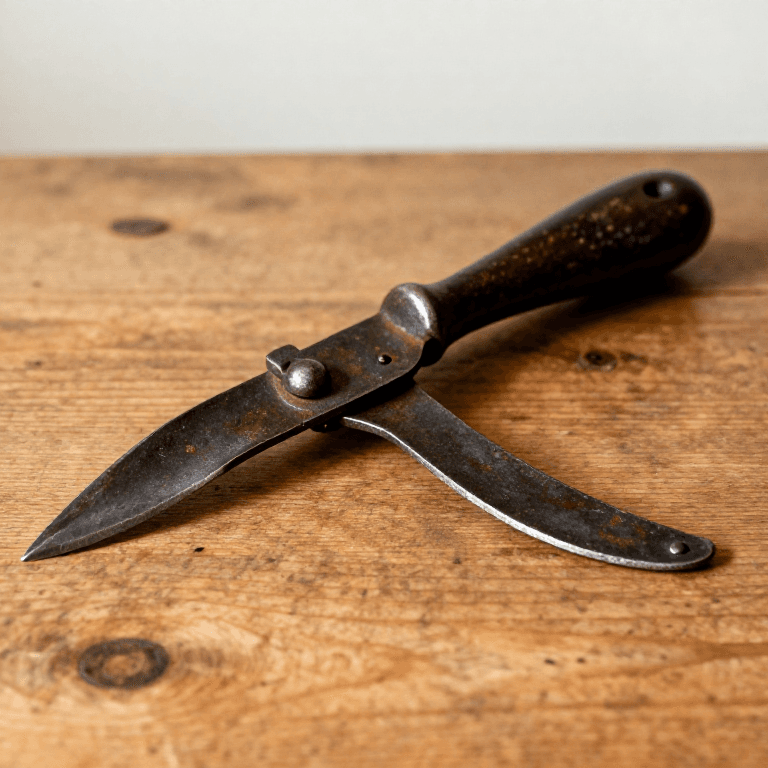
The embedded blueprint cuts a can top a slit at a time with one blade. McFarland rings the blade round into teeth so one blow cuts the whole opening.
3
3
Read US 64,891
Read US 64,891
"In operation the tool is placed on the head of the can, and the points of the teeth driven in by a smart blow, and the cutters forced down until their forks or bases have cut through the can, when a piece will have been cut out of the form of the cutters."
"The teeth being bevelled on the inside tend to compress the plug removed, and cause it to remain inside the cutter, thus facilitating its removal from the can."
4
4
Cut and mark the tube
Cut and mark the tube
Cut 40 mm of 25 mm steel tube. Mark six teeth round one end, 12 mm tall, their bases touching.
Materials for this step:
 Steel Tubing1 piece
Tools needed:
 Hacksaw
 Bench Vise
 Permanent Marker
 Ruler
Ruler5
5
File the teeth
File the teeth
Saw a V between each pair of marks and file the teeth to points. Bevel each tooth's inside edge with a round needle file; leave the outside flush.
Tools needed:
Hacksaw Files (Hand File)
 Needle File SetBench Vise
 Clear Safety Glasses
6
6
Fit the handle
Fit the handle
Sand a hardwood dowel to fit the tube's other end, glue 20 mm of it in with epoxy, and leave 100 mm as the handle.
Materials for this step:
 Hardwood Dowels1 piece
 Two-Part Epoxy1 piece
Tools needed:
 Sandpaper
 Digital Caliper 6-Inch
7
7
The build in 3D
The build in 3D
FreeCAD model of this build, not of the patent: a 25 mm steel tube with six 12 mm pointed teeth bevelled inside, on a hardwood handle.
8
8
Punch a can top
Punch a can top
Stand a sealed can on a hardwood block. Set the teeth on its top and strike the handle once with the mallet; count the blows needed, and measure the plug with the caliper.
Materials for this step:
 Tin Can1 piece
 Hardwood Block1 piece
Tools needed:
 Rubber MalletDigital Caliper 6-Inch
 Leather Work GlovesClear Safety Glasses
9
9
Teeth that bend, skid or leave the plug
Teeth that bend, skid or leave the plug
Single-blow can opener troubleshooting.
Flow
Loading...
10
10
History and honest limits
History and honest limits
**Thomas A. McFarland** of Meadville, Pennsylvania, received US 64,891, dated 21 May 1867, for opening oyster, fruit and other cans. The cutters are curved to fit a shoulder on the handle's head and fastened by screws; they may be one piece or sections. He disclaimed cutting an opening broadly, single shear-like cutters, and cork borers with spring handles, and claimed the handle and cutters cutting a plug at a single blow.
**Honest limits.** Mild steel tube is not hardened; the notebook's shear figures are estimates. Your blow counts are the result.
Materials
5- 1 piecePlaceholder
- 1 piecePlaceholder
- 1 piecePlaceholder
- 1 piecePlaceholder
- 1 piecePlaceholder
Tools Required
11- Placeholder
- Placeholder
- Placeholder
- Placeholder
- Placeholder
- Placeholder
- Placeholder
- Placeholder
- Placeholder
- Placeholder
- Placeholder
Design Files
1Related Blueprints
These blueprints share knowledge with this one — techniques, materials, or principles that connect them in the learning graph.


CC0 Public Domain
This blueprint is released under CC0. You are free to copy, modify, distribute, and use this work for any purpose, without asking permission.
Support the Maker by purchasing products through their Blueprint where they earn a Maker Commission set by Vendors, or create a new iteration of this Blueprint and include it as a connection in your own Blueprint to share revenue.