ART
BEAUTY & WELLNESS
CRAFT
CULTURE & HISTORY
ENTERTAINMENT
ENVIRONMENT
FOOD & DRINKS
REVERSE ENGINEERING
SCIENCES
SPORTS
TECHNOLOGY
WEARABLES


The Steam-Guard Kettle: A Shield Between the Steam and the Hand
Lifting the lid of a boiling kettle sends a puff of steam straight up, and the hand on the handle is above it.
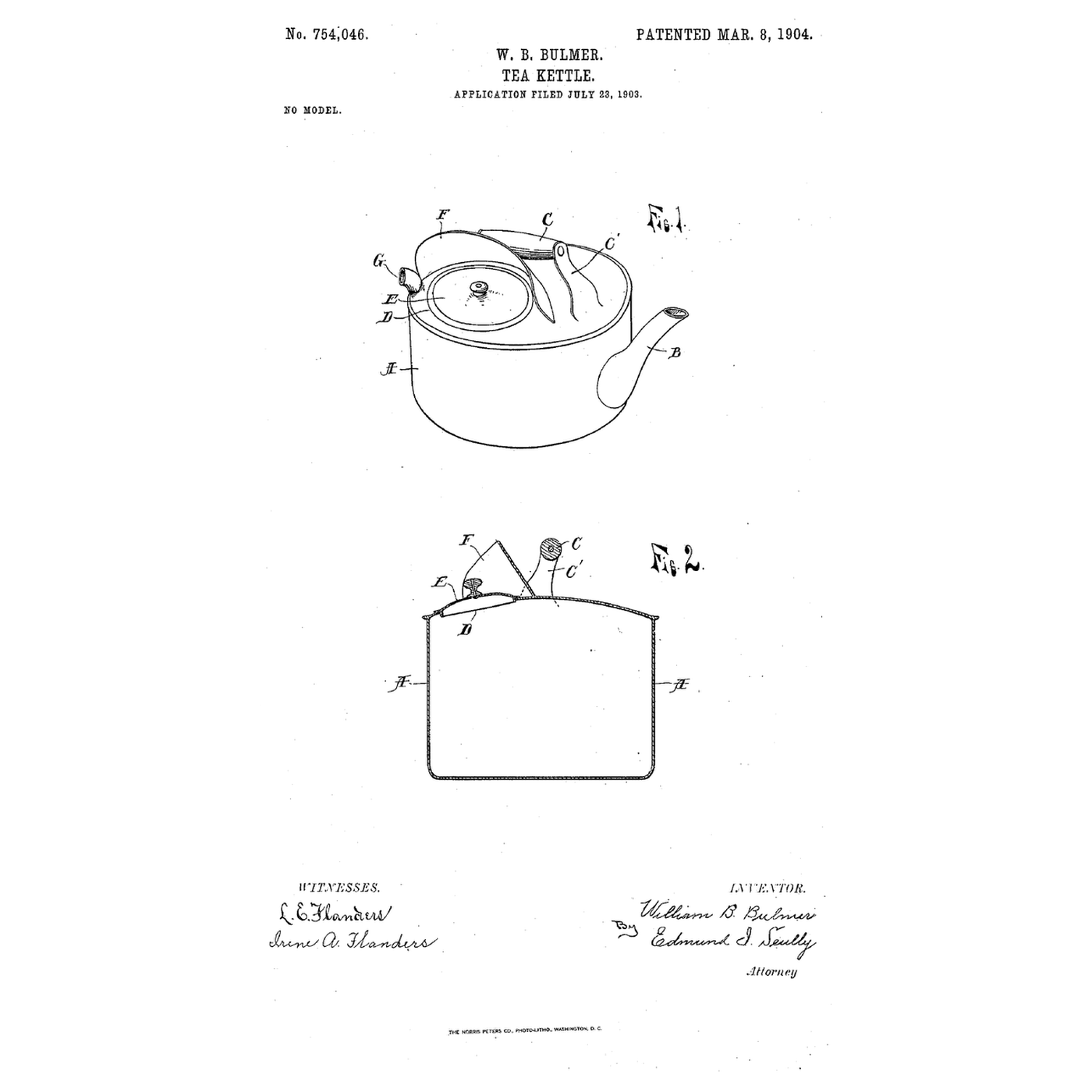
William B. Bulmer of Windsor, Canada, received US 754,046, dated 8 March 1904, for a tea-kettle with a rigid handle set to one side of the fill opening, a shield between the opening and the handle, and a short curved vent pipe "to allow the steam to escape and direct it away from the handle and cover".
This rung works out why steam burns worse than boiling water, then fits a shield to a kettle and measures the handle's temperature with and without it.
Beginner
About 1 hour
Instructions
1
1
Heat from steam and from water
Heat from steam and from water
Loading Jupyter Notebook...
2
2
Steam under control
Steam under control
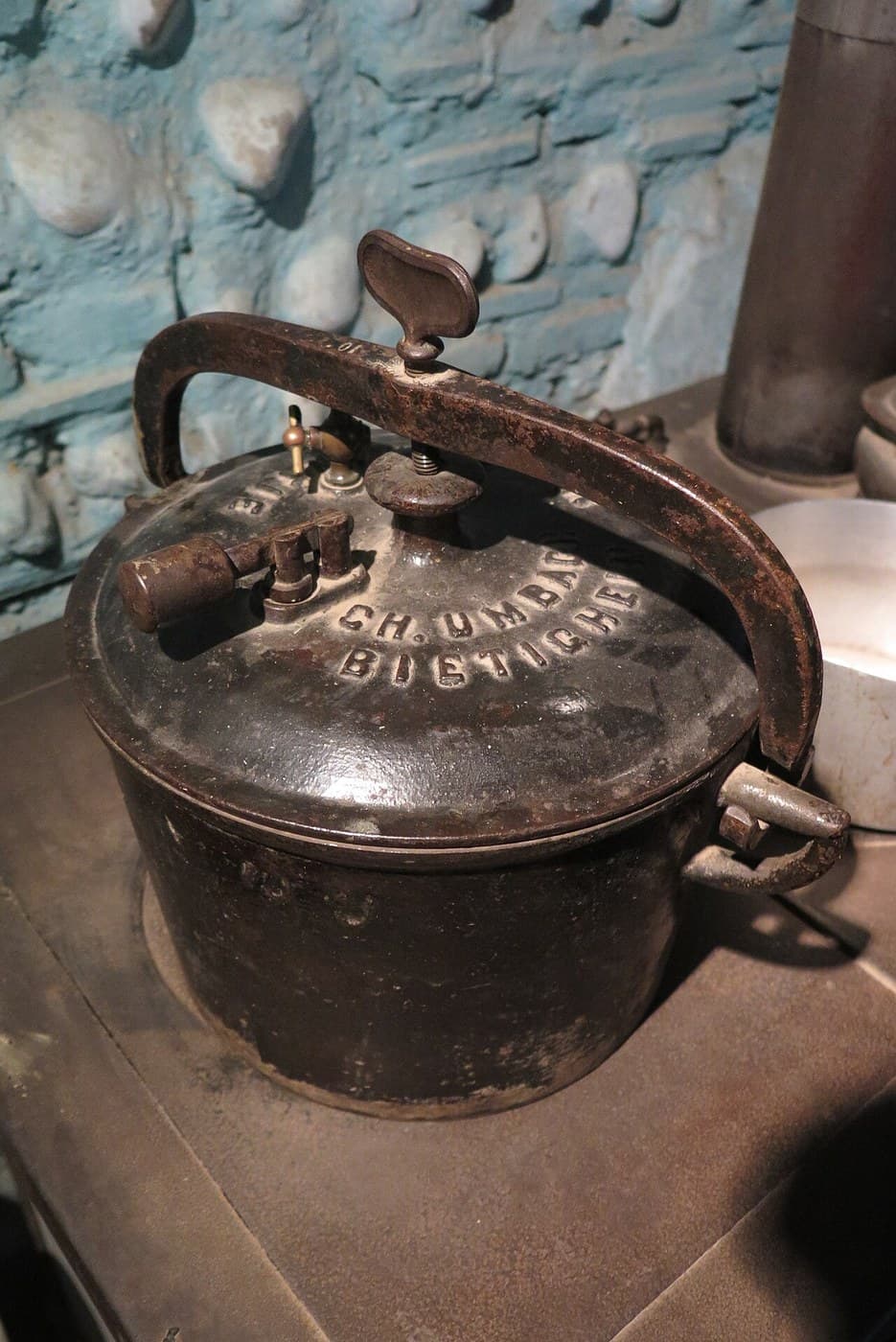
The embedded blueprint holds steam in to cook under pressure, with a valve to let it out safely. Bulmer lets the kettle's steam out where it cannot reach the hand.
3
3
Read US 754,046
Read US 754,046
"This invention relates to improvements in tea-kettles; and its object is to provide the kettle with a rigid handle, so that it will be under better control and in providing means for protecting the hand of the user from the scalding steam."
"Where the opening is located at one side of the handle, the shield is necessary, for the edge of the cover comes directly beneath the handle, and the rising steam would come directly against the user's hand."
"A short curved vent-pipe G is connected to the top at any convenient point to allow the steam to escape and direct it away from the handle and cover."
4
4
Fit a shield and measure the handle
Fit a shield and measure the handle
Cut a piece of stainless steel sheet about 8 cm by 6 cm, file its edges smooth, and bend it into a gentle curve. Bend a tab on one edge and fix it with a hose clamp round the base of the kettle's handle, so the shield stands between the handle and the lid and leans out over the lid's edge.
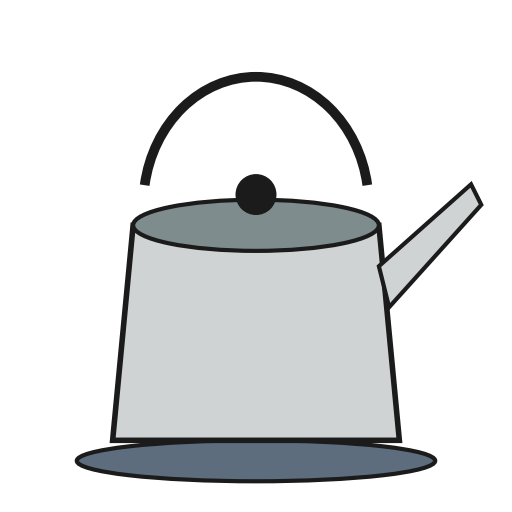
Boil water in the kettle on the hot plate with the lid slightly open. Aim the infrared thermometer at the middle of the handle grip and read it every 30 seconds for 3 minutes. Let it cool, take the shield off, and repeat. Never put your hand over the opening to test it.
Materials for this step:
 Stainless Steel Sheet1 piece
 Hose Clamp Assortment1 piece
 Water1000 ml
Tools needed:
 Stovetop Kettle
 Hot Plate
 Infrared Thermometer
 Tin Snips
 Metal File
 Needle-Nose Pliers
 Stopwatch
5
5
A shield that does not help, or gets in the way
A shield that does not help, or gets in the way
Steam-guard troubleshooting.
Flow
Loading...
6
6
History and honest limits
History and honest limits
**William B. Bulmer** of Windsor, Canada, filed US 754,046 on 23 July 1903; it was patented 8 March 1904. He offset the handle's ears slightly "so that the kettle will balance in the hand of the user", and put the vent pipe diametrically opposite the spout.
**Honest limits.** The notebook compares heat per gram, not how much steam reaches the hand; that depends on the draught and the lid. Your handle temperatures are the measurement.
Materials
3- 1 piecePlaceholder
- 1 piecePlaceholder
- 1000 mlPlaceholder
Related Blueprints
These blueprints share knowledge with this one — techniques, materials, or principles that connect them in the learning graph.
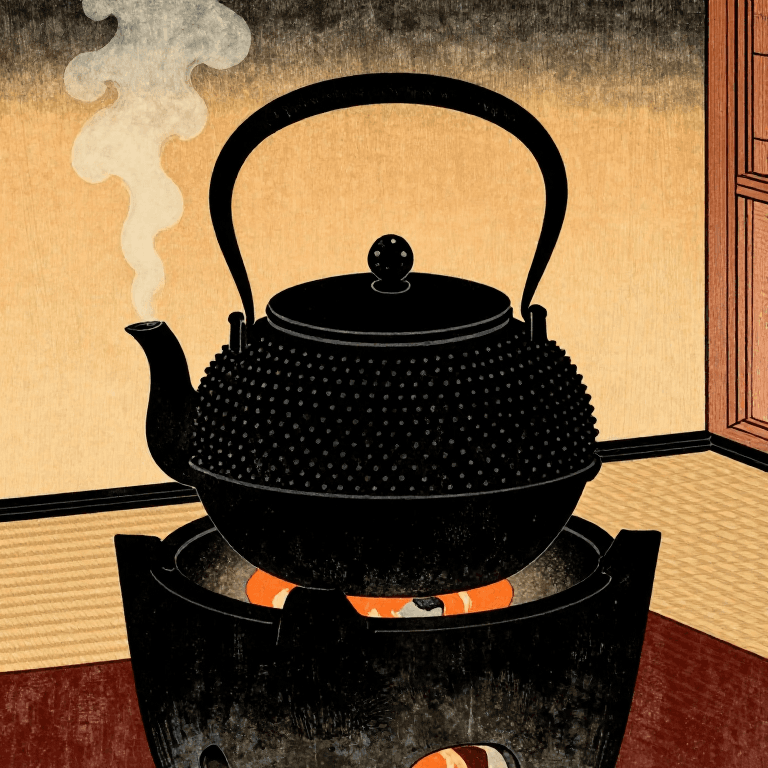


CC0 Public Domain
This blueprint is released under CC0. You are free to copy, modify, distribute, and use this work for any purpose, without asking permission.
Support the Maker by purchasing products through their Blueprint where they earn a Maker Commission set by Vendors, or create a new iteration of this Blueprint and include it as a connection in your own Blueprint to share revenue.