ART
BEAUTY & WELLNESS
CRAFT
CULTURE & HISTORY
ENTERTAINMENT
ENVIRONMENT
FOOD & DRINKS
REVERSE ENGINEERING
SCIENCES
SPORTS
TECHNOLOGY
WEARABLES
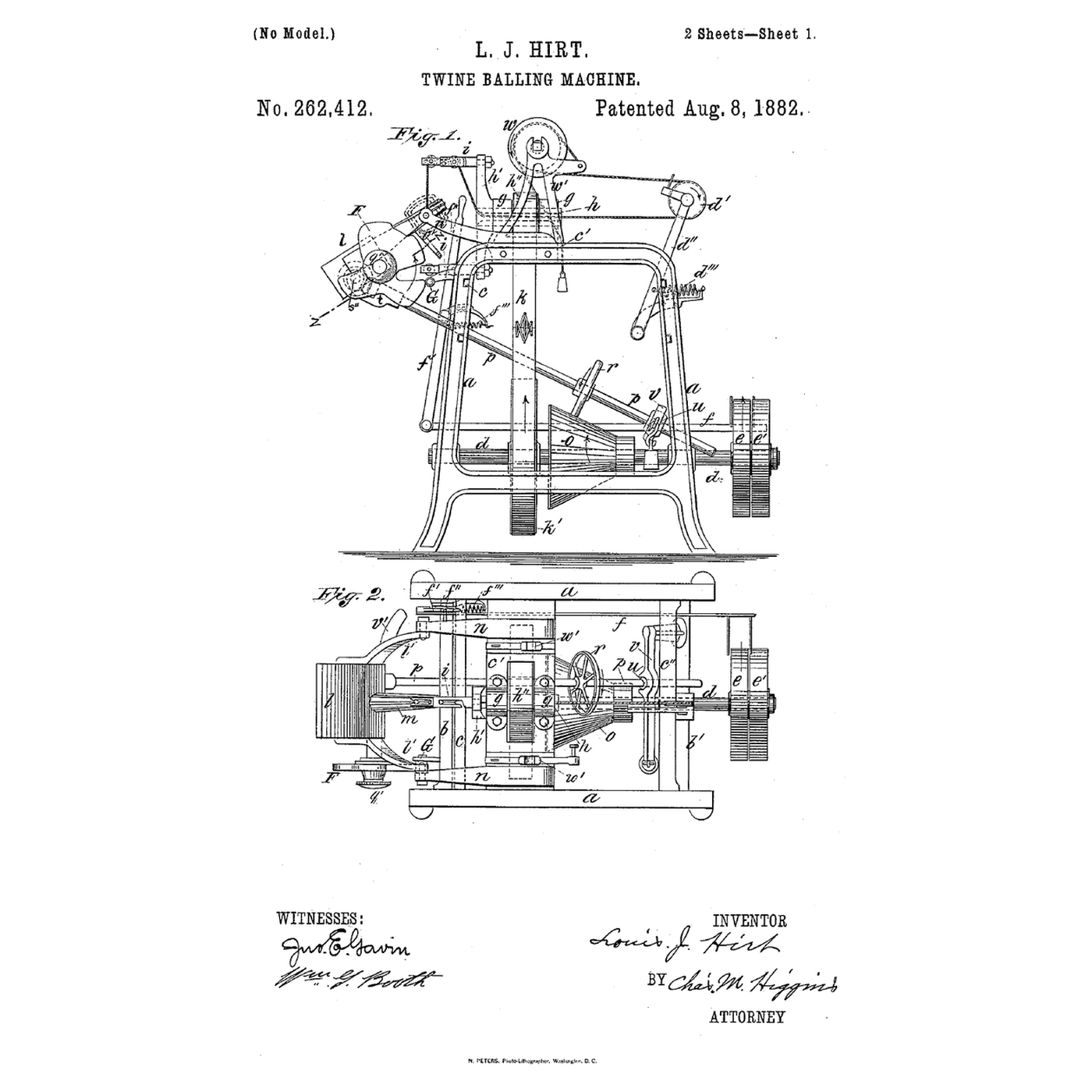


The Twine-Balling Machine: Slow the Ball as It Grows
Harvesters with automatic binders tie each sheaf with twine fed from a large ball. A loose or uneven ball knots and jams.
Louis J. Hirt of Brooklyn, assignor to McLaughlin & Loyd of New York, received US 262,412, dated 8 August 1882 (filed 2 August 1881), for a twine-balling machine. Binding-twine "requires to be wound in unusually large balls, and in a very compact and regular manner". Hirt tilts the ball spindle with a cam and slows it through a friction wheel on a cone as the ball grows.
This rung works out how the spindle must slow as the ball grows and how much twine a ball holds, then winds balls by hand on a slowly turned core and measures them.
Advanced
About 4 hours
Instructions
1
1
Spindle speed and twine length
Spindle speed and twine length
Loading Jupyter Notebook...
2
2
Where the twine comes from
Where the twine comes from
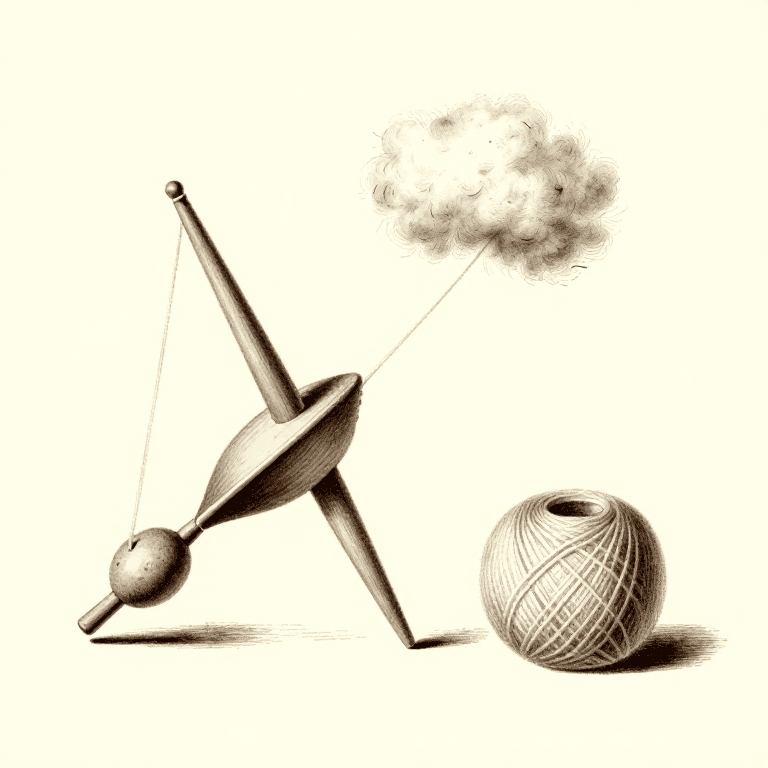
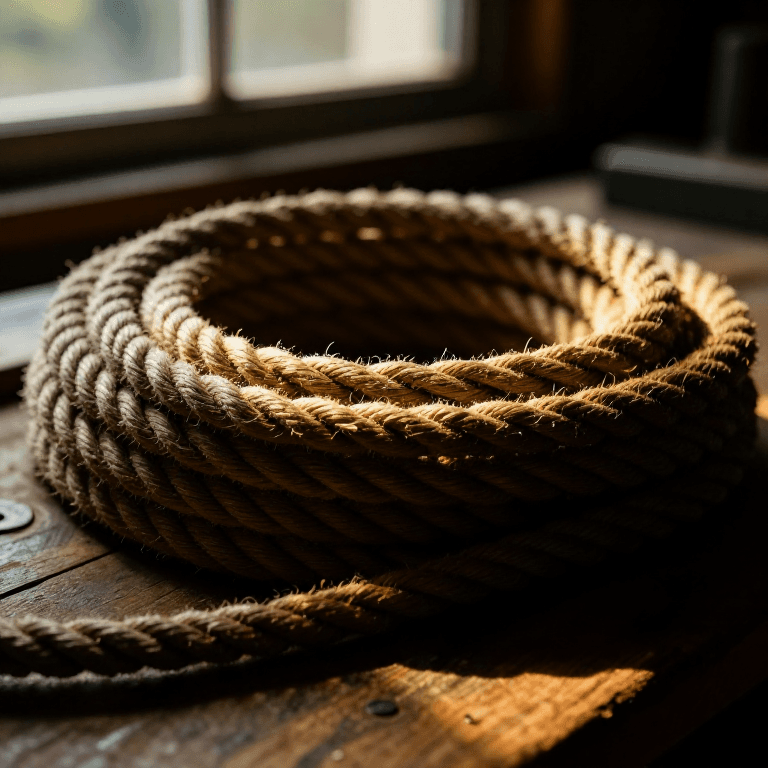
The embedded blueprint twists fibre into rope. Hirt's machine winds the finished cord for the binder.
3
3
Read US 262,412
Read US 262,412
"This binding-twine, to suit the automatic machinery, requires to be wound in unusually large balls, and in a very compact and regular manner, providing as nearly as possible a continuous cord without knots or irregularities".
In the ordinary machine, "as the ball increases in size the rotary motion of the ball-spindle decreases correspondingly, so as to have the strands lie as close in the outer layer as in the inner layers of the ball, or nearly so."
"In my improved machine I employ a similar hollow rotating spindle and fly-arms, and an inclining rotating ball-spindle mounted in a swinging head; but this swinging head is inclined in an accurate automatic manner and at the proper periods and speeds by a cam".
4
4
Wind balls by hand and measure them
Wind balls by hand and measure them
Push a cardboard tube onto a dowel as the core, held at a slant in a clamp so it can turn. Wind jute twine on in steep diagonal turns, turning the core a little after each pass so the turns spread round.
Wind one ball turning the core at the same rate throughout, and a second turning it more slowly as it grows. Weigh and measure both, and compare how firm and even the outer layers are.
Unwind the second ball and measure the twine length; compare with the notebook.
Materials for this step:
 Jute Twine50 m
 Cardboard Tube1 piece
 Wooden Dowel1 piece
Tools needed:
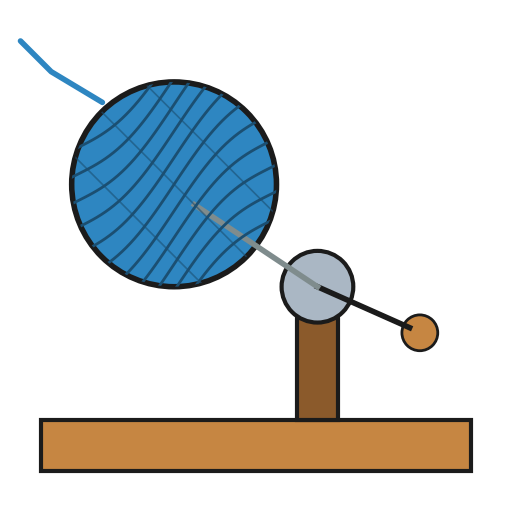 Ball Winder
 Clamps
 Digital Kitchen Scale
 Tape Measure
5
5
A twine ball that is loose, lumpy or tangles
A twine ball that is loose, lumpy or tangles
Twine balling troubleshooting.
Flow
Loading...
6
6
History and honest limits
History and honest limits
**Louis J. Hirt** of Brooklyn, Kings County, New York, assignor to McLaughlin & Loyd of New York, filed US 262,412 on 2 August 1881; it is dated 8 August 1882. He threads the twine through flanged fly-arms so it runs without kinking.
**Honest limits.** The notebook treats the ball as a cylinder of steady packing and the surface speed as fixed. Real balls crown at the ends and pack differently inside. Speeds, sizes and packing are examples. Your measured balls are the measurement.
Materials
3- 50 mPlaceholder
- 1 piecePlaceholder
- 1 piecePlaceholder
Tools Required
4- Placeholder
- Placeholder
- Placeholder
- 1 vendor sell this, none ship to you yetPlaceholder
Related Blueprints
These blueprints share knowledge with this one — techniques, materials, or principles that connect them in the learning graph.

CC0 Public Domain
This blueprint is released under CC0. You are free to copy, modify, distribute, and use this work for any purpose, without asking permission.
Support the Maker by purchasing products through their Blueprint where they earn a Maker Commission set by Vendors, or create a new iteration of this Blueprint and include it as a connection in your own Blueprint to share revenue.