ART
BEAUTY & WELLNESS
CRAFT
CULTURE & HISTORY
ENTERTAINMENT
ENVIRONMENT
FOOD & DRINKS
REVERSE ENGINEERING
SCIENCES
SPORTS
TECHNOLOGY
WEARABLES



The Weight-Closed Bootjack: Lean on Your Toes and the Jaws Close
A bootjack with movable jaws usually closes them by a spring or a hand lever, and a spring strong enough to hold a boot is hard to open.
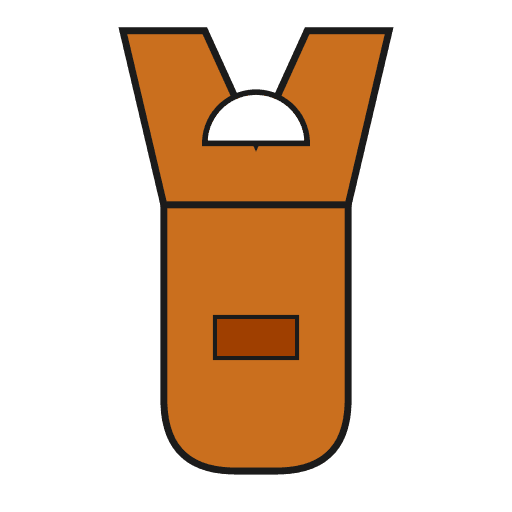
Henry N. De Graw of Green Island, New York, received US 23,015, dated 22 February 1859, for a bootjack in which a swinging platform is connected to two movable jaws by a guide piece, "of such a construction that the jaws open and close by raising or depressing the front end of the platform without the aid of springs", by "applying more or less weight to the heel or to the toes of the foot which rests on the platform."
This rung works out how the standing foot's weight becomes grip on the heel, then builds the jack in plywood and hardwood and tries it with a rubber boot.
Advanced
About 5 hours
Instructions
1
1
From body weight to jaw grip
From body weight to jaw grip
Loading Jupyter Notebook...
2
2
The inclined slot
The inclined slot
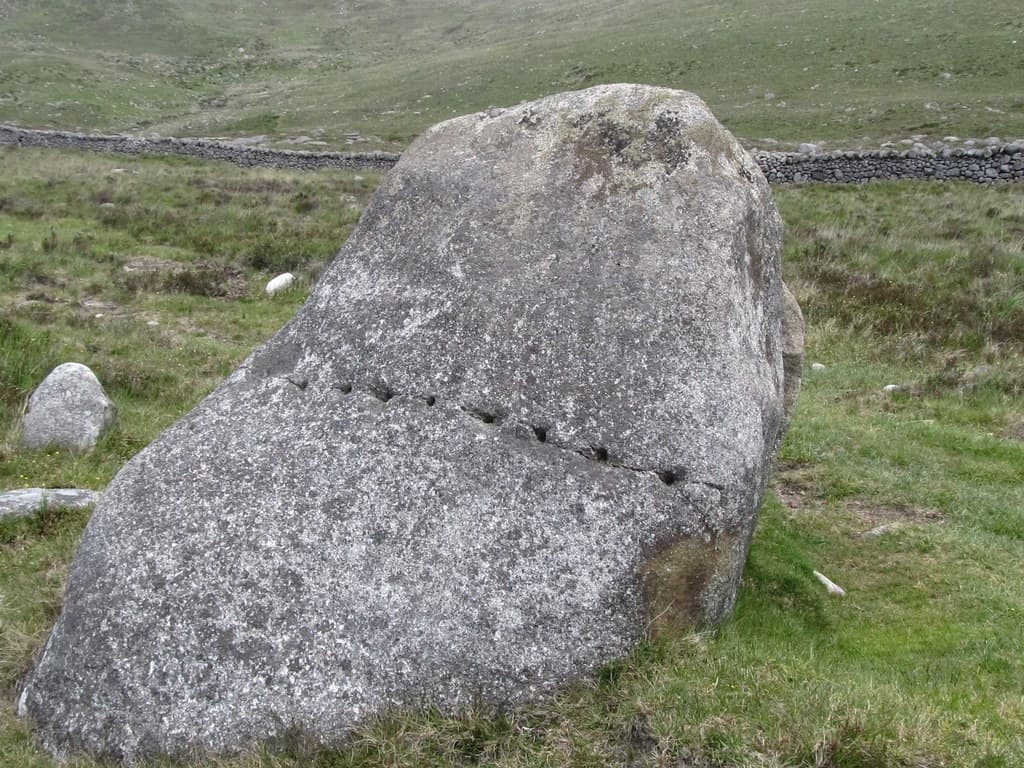
The embedded blueprint splits stone with a wedge. De Graw's inclined slots work the same way, turning a downward push into a sideways one.
3
3
Read US 23,015
Read US 23,015
"D, is a swinging platform which has its bearings in side pieces E, which are attached to the bottom about two thirds of its length from the front end of the same, and the platform D, rests on pivots c, so that it can be moved up and down freely."
"The guide piece G, works into a mortise e′, in the bottom A, of the boot jack and it is obvious that by depressing this guide piece the back ends e, of the jaws are forced apart and consequently the jaws will close and by raising the guide piece the back ends are brought closer together and the jaws open."
4
4
Build the jack and try it
Build the jack and try it
**Bottom.** Saw a bottom 50 × 15 cm from plywood and screw a leg under its back end so it slopes. Cut a mortise 5 × 2 cm through it about 15 cm from the front.
**Jaws.** Saw two jaws 20 × 3 cm from hardwood board and bolt each to the bottom's front end through its middle, so the front ends open and close round a heel and the back ends reach the mortise.
**Platform.** Cut a platform 30 × 12 cm. Screw two side blocks to the bottom about two thirds of the way back and pivot the platform on a length of dowel through them.
**Guide piece.** Cut a plywood tongue that hangs from the platform's front end down through the mortise. Cut two slots in it, sloping at 30° from vertical and apart at the bottom, and put a bolt through the back end of each jaw into its slot, so pressing the platform down spreads the back ends and closes the jaws. Put a light compression spring under the platform's front to lift it.
**Test.** Stand one foot on the platform, heel back, and set the other boot's heel between the jaws. Lean onto the toes of the standing foot and check the jaws close; lean back and check they open. Time taking the boot off.
Materials for this step:
 Plywood Sheet1 piece
 Hardwood Board1 piece
 Hardwood Dowels0.2 meter
 Hex Bolt Assortment1 piece
 Hex Nut4 pieces
 Flat Washer8 pieces
 Wood Screws8 pieces
 Compression Spring Assortment1 piece
Tools needed:
 Hand Saw
 Coping Saw
 Cordless Drill
 Drill Bit Set
 Files (Hand File)
 Protractor
 Adjustable Wrench
 Screwdriver Set
 Ruler
Ruler Stopwatch
 Rubber Boots
 Boot Jack
5
5
Jaws that will not close, stick or grip too hard
Jaws that will not close, stick or grip too hard
Weight-closed bootjack troubleshooting.
Flow
Loading...
6
6
History and honest limits
History and honest limits
**Henry N. De Graw** of Green Island, Albany County, New York, received US 23,015, dated 22 February 1859. His jaws were pivoted to the bottom's front end with a cross brace, the back ends were twisted to match the inclined slots, and a spiral spring balanced the platform. He wrote that jacks with movable jaws were not new; his claim is the guide piece worked by the swinging platform.
**Honest limits.** Plywood, hardwood, dowel and bolts stand in for his parts, and a compression spring for his spiral spring. The notebook ignores friction and the spring; its weights, lengths and angles are examples. Your trial is the result.
Materials
8- 1 piecePlaceholder
- 1 piecePlaceholder
- 0.2 meterPlaceholder
- 1 piecePlaceholder
- 4 piecesPlaceholder
- 8 piecesPlaceholder
- 8 piecesPlaceholder
- Placeholder
Tools Required
12- Placeholder
- Placeholder
- 1 vendor sell this, none ship to you yetPlaceholder
- Placeholder
- Placeholder
- Placeholder
- Placeholder
- Placeholder
- Placeholder
- Placeholder
- Placeholder
- Placeholder
This blueprint makes
Related Blueprints
These blueprints share knowledge with this one — techniques, materials, or principles that connect them in the learning graph.



CC0 Public Domain
This blueprint is released under CC0. You are free to copy, modify, distribute, and use this work for any purpose, without asking permission.
Support the Maker by purchasing products through their Blueprint where they earn a Maker Commission set by Vendors, or create a new iteration of this Blueprint and include it as a connection in your own Blueprint to share revenue.