ART
BEAUTY & WELLNESS
CRAFT
CULTURE & HISTORY
ENTERTAINMENT
ENVIRONMENT
FOOD & DRINKS
REVERSE ENGINEERING
SCIENCES
SPORTS
TECHNOLOGY
WEARABLES
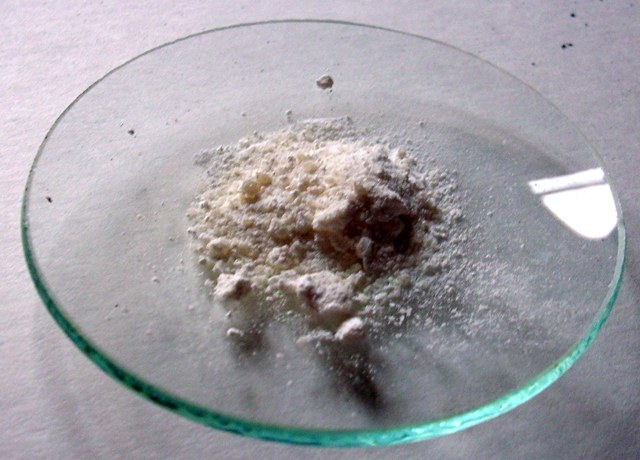


Tin Oxide: Tin Burnt in an Open Iron Pot
Tin oxide is made by burning tin in air: melted tin in an open pot slowly turns to a white powder. Andrew Ure (1839) describes the enamel makers' way, with a lead-tin alloy in a flat iron pot, the powder raked aside as it forms, then ground and washed fine. Done with pure tin it gives the milky white oxide used in glazes, opal glass and polishing.
The picture: tin(IV) oxide powder on a watch glass.
Intermediate
A day
Instructions
1
1
Melt the tin in an open pot
Melt the tin in an open pot
Melt the tin in a flat cast-iron pot over a charcoal fire. Leave the pot open to the air.
Materials for this step:
 Tin Ingot1 kg
 Charcoal1 as required
Tools needed:
 Balance Scale
 Cast Iron Melting Pot
 Charcoal Furnace
 Tongs
Tongs Heat-Resistant Gloves
2
2
Burn it, rake the powder aside
Burn it, rake the powder aside
Raise the heat towards a dull red and keep stirring the surface. Rake the white crust to the sides as it forms, as Ure describes, and add tin as it is used up. Keep the heat as low as will do: Ure warns that too strong a fire fuses the powder and makes it hard to grind.
Tools needed:
Cast Iron Melting Pot Iron Rake
 Perforated SkimmerHeat-Resistant Gloves
3
3
Pick out the metal
Pick out the metal
Let the powder cool. Sift it and pick out any beads of tin; Ure: no metal may be left in the oxide. Melt the beads back in.
Tools needed:
 Fine Sieve
 Chemical Splash Goggles
4
4
Grind and wash
Grind and wash
Grind the powder fine with water. Stir it up in a bucket of water, let the coarse part settle for a moment and pour off the milky water; let the fine part settle out of that, as Ure washed his. Dry it in a dish and store it closed.
Materials for this step:
 Water10 liters
Tools needed:
 Mortar and Pestle
 Muller
 Bucket
 Evaporating Dish
 Glass Jar
5
5
Tin to oxide
Tin to oxide
Loading Jupyter Notebook...
6
6
Limits
Limits
Burning tin in air is how tin oxide is made (Wikipedia); the pot, raking, low heat and washing are Ure's practice for the lead-tin calx of enamel makers, used here with pure tin by our choice. Tin oxidises more slowly than Ure's lead-rich alloy, so allow time.
Tools Required
14- Placeholder
- Placeholder
- Placeholder
- Placeholder
- Placeholder
- Placeholder
- Placeholder
- Placeholder
- Placeholder
- Placeholder
- Placeholder
- Placeholder
- Placeholder
- Placeholder
This blueprint makes
CC0 Public Domain
This blueprint is released under CC0. You are free to copy, modify, distribute, and use this work for any purpose, without asking permission.
Support the Maker by purchasing products through their Blueprint where they earn a Maker Commission set by Vendors, or create a new iteration of this Blueprint and include it as a connection in your own Blueprint to share revenue.