ART
BEAUTY & WELLNESS
CRAFT
CULTURE & HISTORY
ENTERTAINMENT
ENVIRONMENT
FOOD & DRINKS
REVERSE ENGINEERING
SCIENCES
SPORTS
TECHNOLOGY
WEARABLES
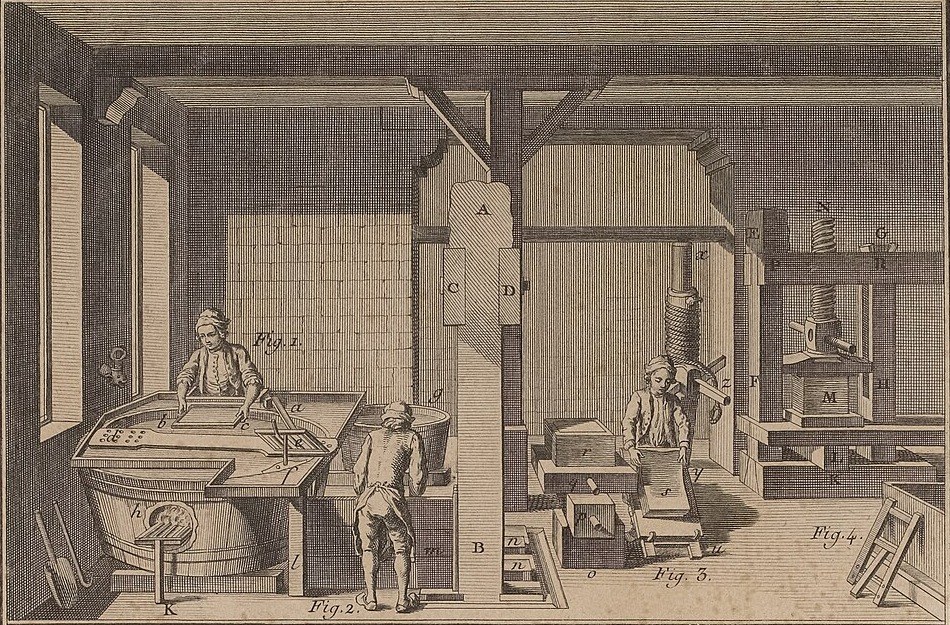


Tracing Paper: Flax Tow Beaten to a Clear Pulp, Ure 1839
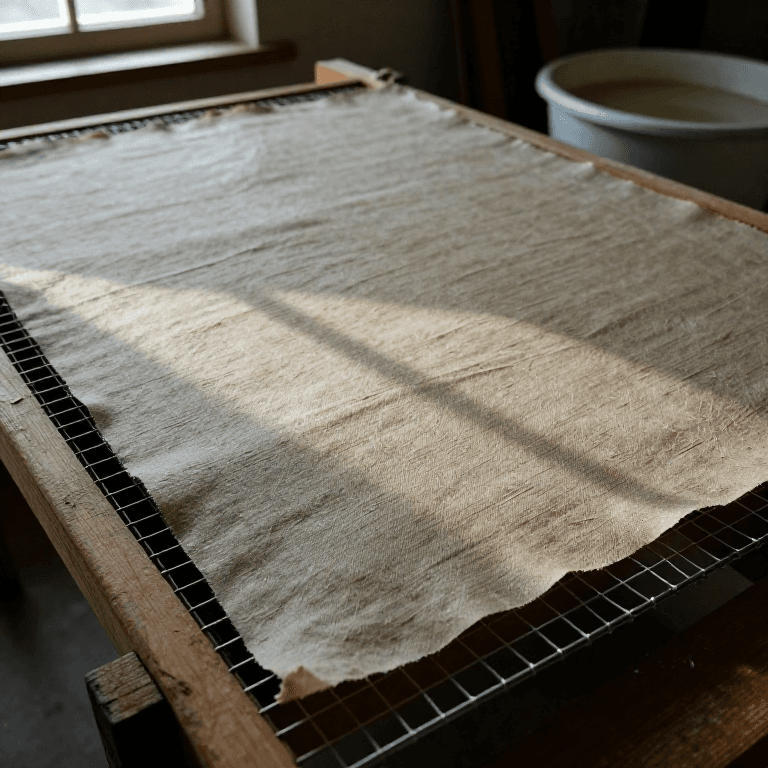
Tracing paper is paper you can see through. Andrew Ure (1839) says the best, sometimes called vegetable paper, is made from the refuse of the flax mills, the tow, beaten without fermenting into a semi-transparent paste that dries into a transparent sheet.
The picture: the vat room of an 18th-century paper mill, the vatman forming a sheet and the press behind (Diderot's Encyclopédie).
Intermediate
Two days
Instructions
1
1
Cut and soak the tow
Cut and soak the tow
Cut flax tow into short lengths and soak it in clean water. Do not let it ferment (Ure).
Materials for this step:
 Flax Tow500 g
 Water20 liters
Tools needed:
 Heavy-duty Metal Shears
 Vat
Vat2
2
Beat to a clear pulp
Beat to a clear pulp
Beat the wet tow for much longer than for ordinary paper, until it forms a semi-transparent paste (Ure). Ure's mills used the beating engine; by hand it takes hours.
Tools needed:
 Wooden MalletVat
3
3
Form the sheets
Form the sheets
Dilute the pulp in the vat and form thin, even sheets on the mould, couching them onto felts as for rag paper.
Tools needed:
 Papermaking Mould and Deckle
 Wool Felt SheetVat
4
4
Press and dry with care
Press and dry with care
Press the stack, then dry each sheet in the press between sheets of blotting paper, changing them several times so the thin sheets do not crease, as Ure describes for bank-note paper of the same stuff.
Tools needed:
 Flat Wooden Press Board (pair)
 Blotting Paper
 Paper Press (Book-Style)
Tools Required
8- Placeholder
- Placeholder
- Placeholder
- Placeholder
- Placeholder
- Placeholder
- Placeholder
- Placeholder
This blueprint makes

Related Blueprints
These blueprints share knowledge with this one — techniques, materials, or principles that connect them in the learning graph.
CC0 Public Domain
This blueprint is released under CC0. You are free to copy, modify, distribute, and use this work for any purpose, without asking permission.
Support the Maker by purchasing products through their Blueprint where they earn a Maker Commission set by Vendors, or create a new iteration of this Blueprint and include it as a connection in your own Blueprint to share revenue.