ART
BEAUTY & WELLNESS
CRAFT
CULTURE & HISTORY
ENTERTAINMENT
ENVIRONMENT
FOOD & DRINKS
REVERSE ENGINEERING
SCIENCES
SPORTS
TECHNOLOGY
WEARABLES
English

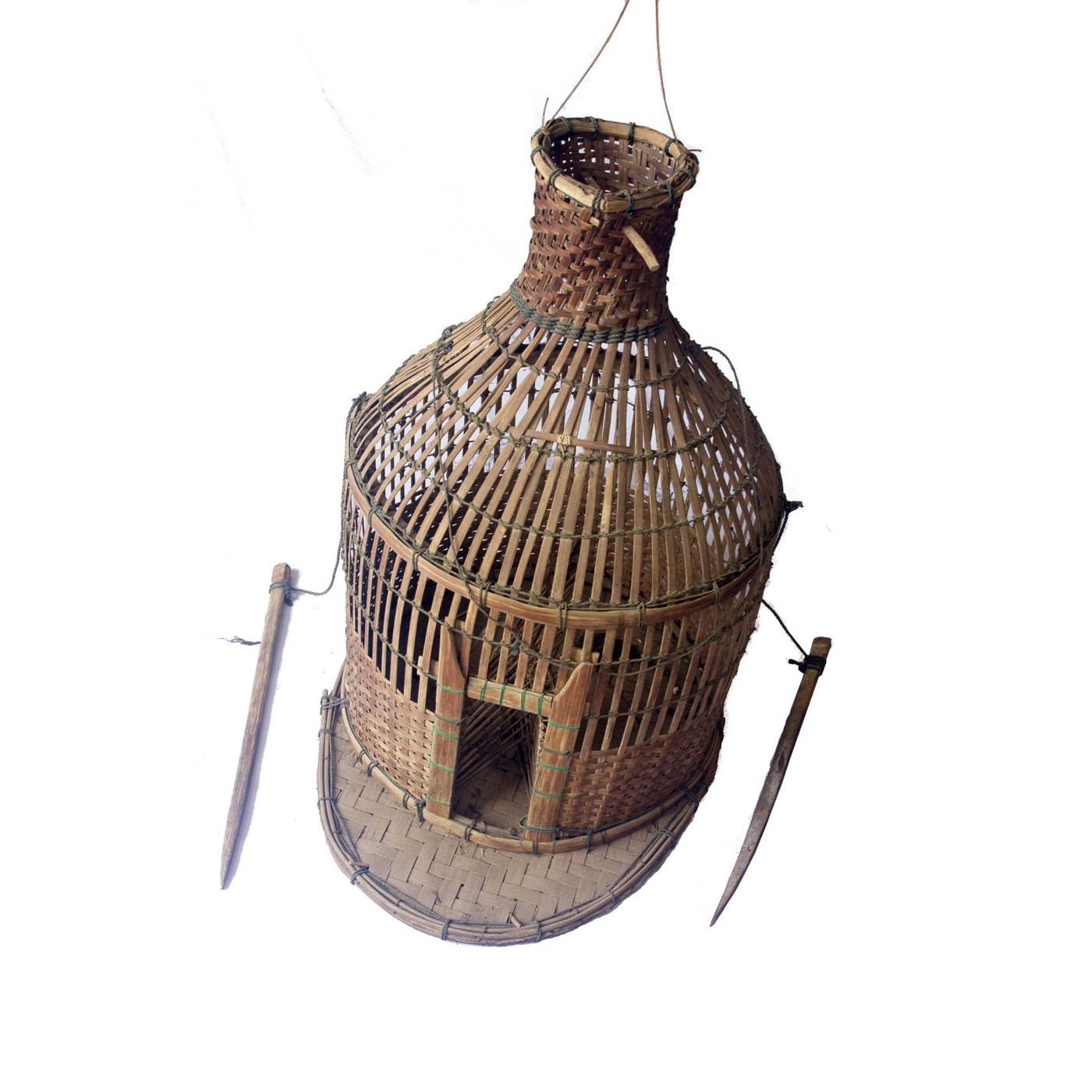
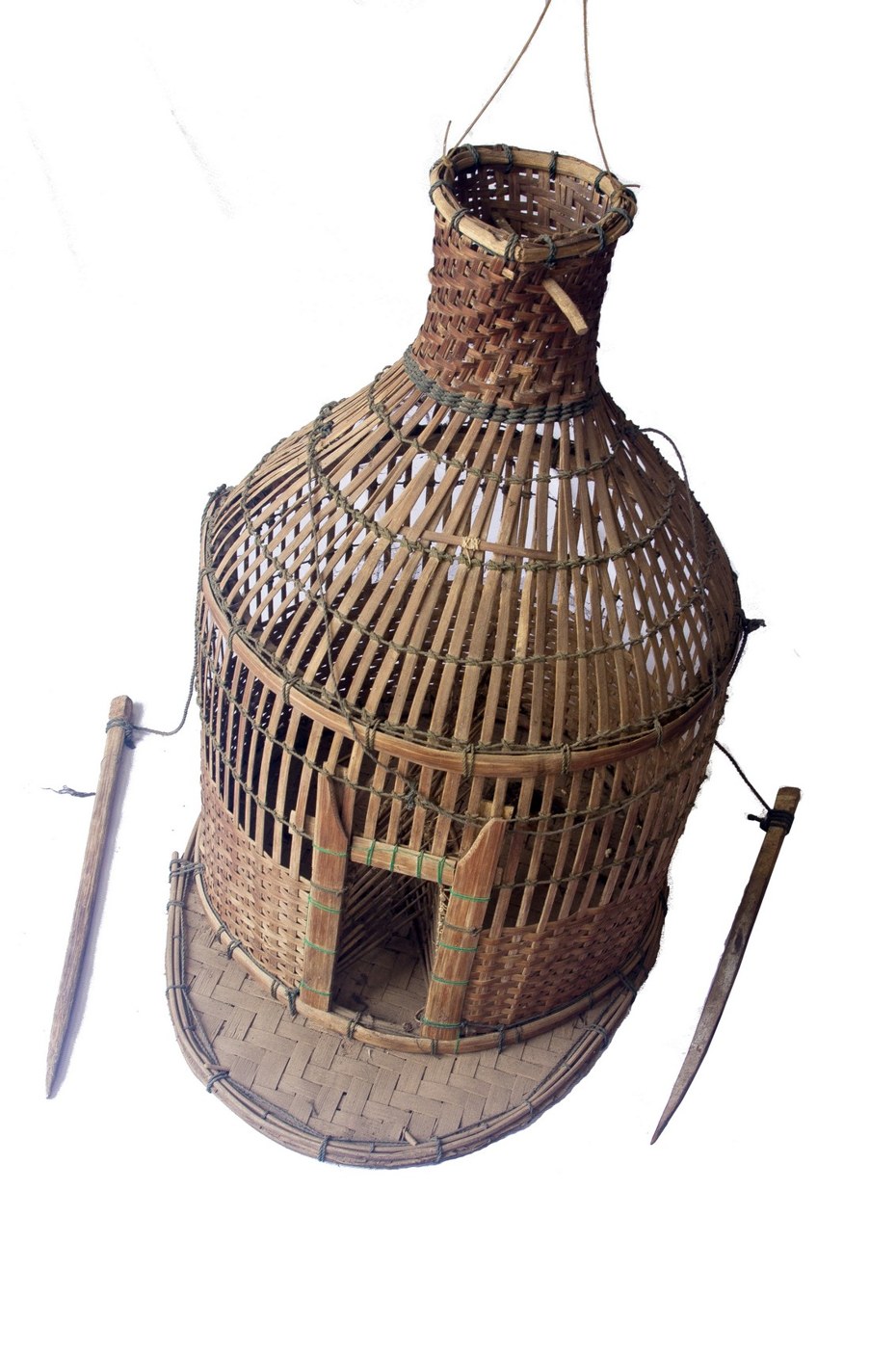
Tum Pla Khao (Tum Lan, Isan Floor Trap) — a Birdcage-Like Trap on a Wire Frame, a Close-Woven Bamboo Floor, a Nga Wai Door, Staked Underwater
ตุ้มปลาขาว (tum pla khao) traps pla khao, a silver-scaled freshwater fish like a small barb, in rivers, canals, streams, ponds and lakes. It is set on the bottom, fully underwater, and can stay overnight, because pla khao survive a long time underwater.
This blueprint weaves a real tum pla khao as described in the source.
Intermediate
About 1-2 days
Instructions
1
1
Parts
Parts
Loading Jupyter Notebook...
2
2
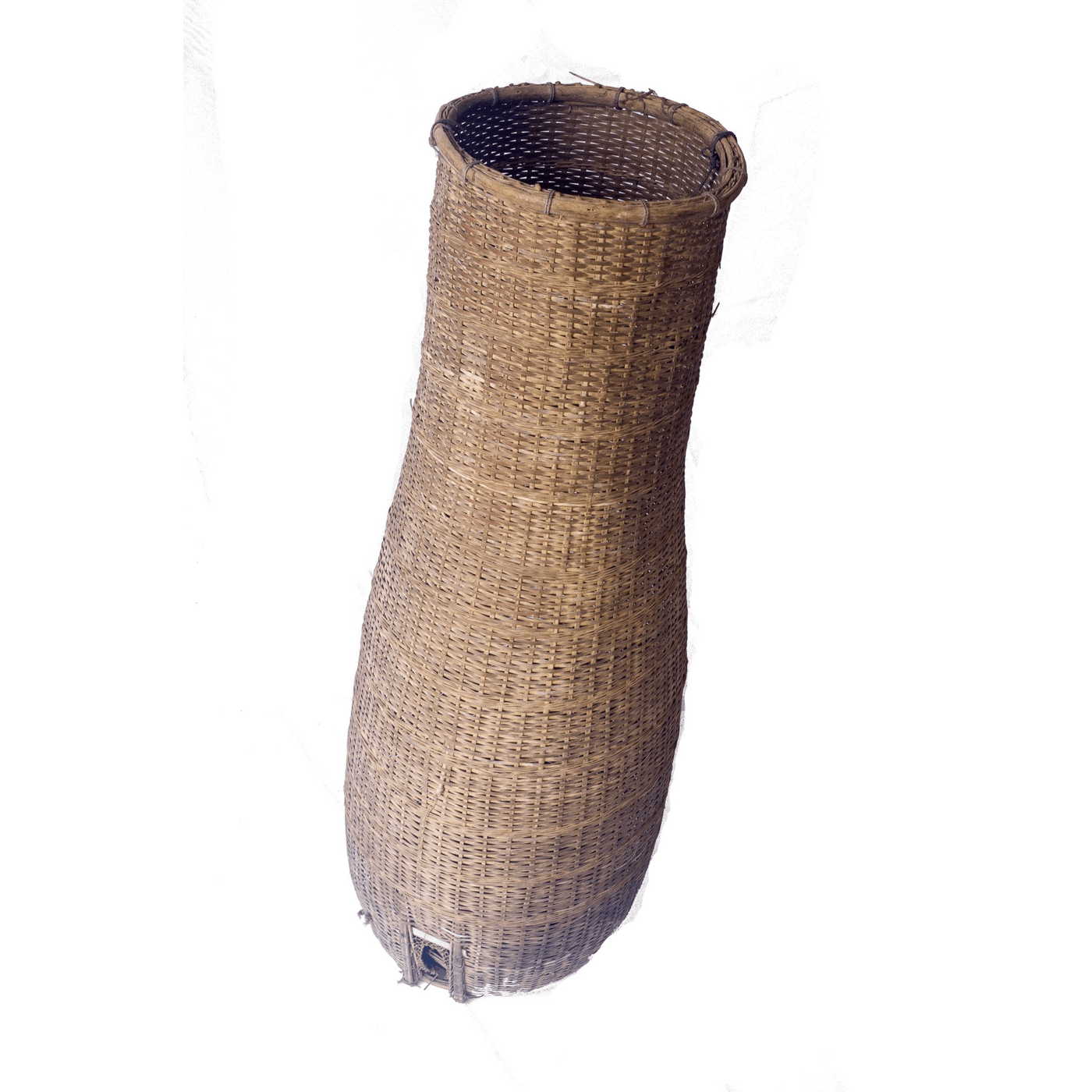
Pot traps, before it
Pot traps, before it
The tum pla duk is set with its mouth above water; the tum pla khao is sunk completely, because pla khao can live underwater overnight.
3
3
Read from the source
Read from the source
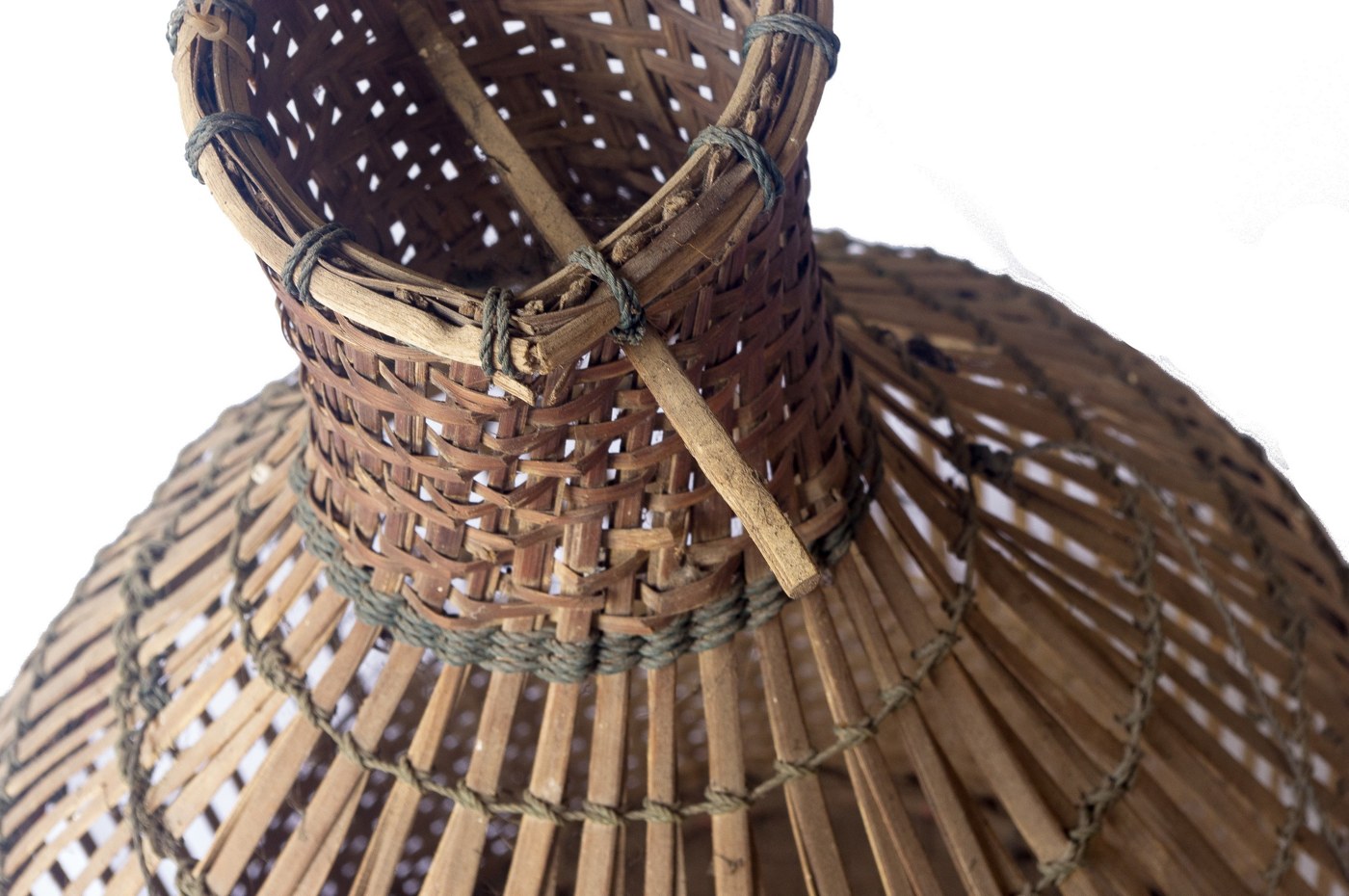
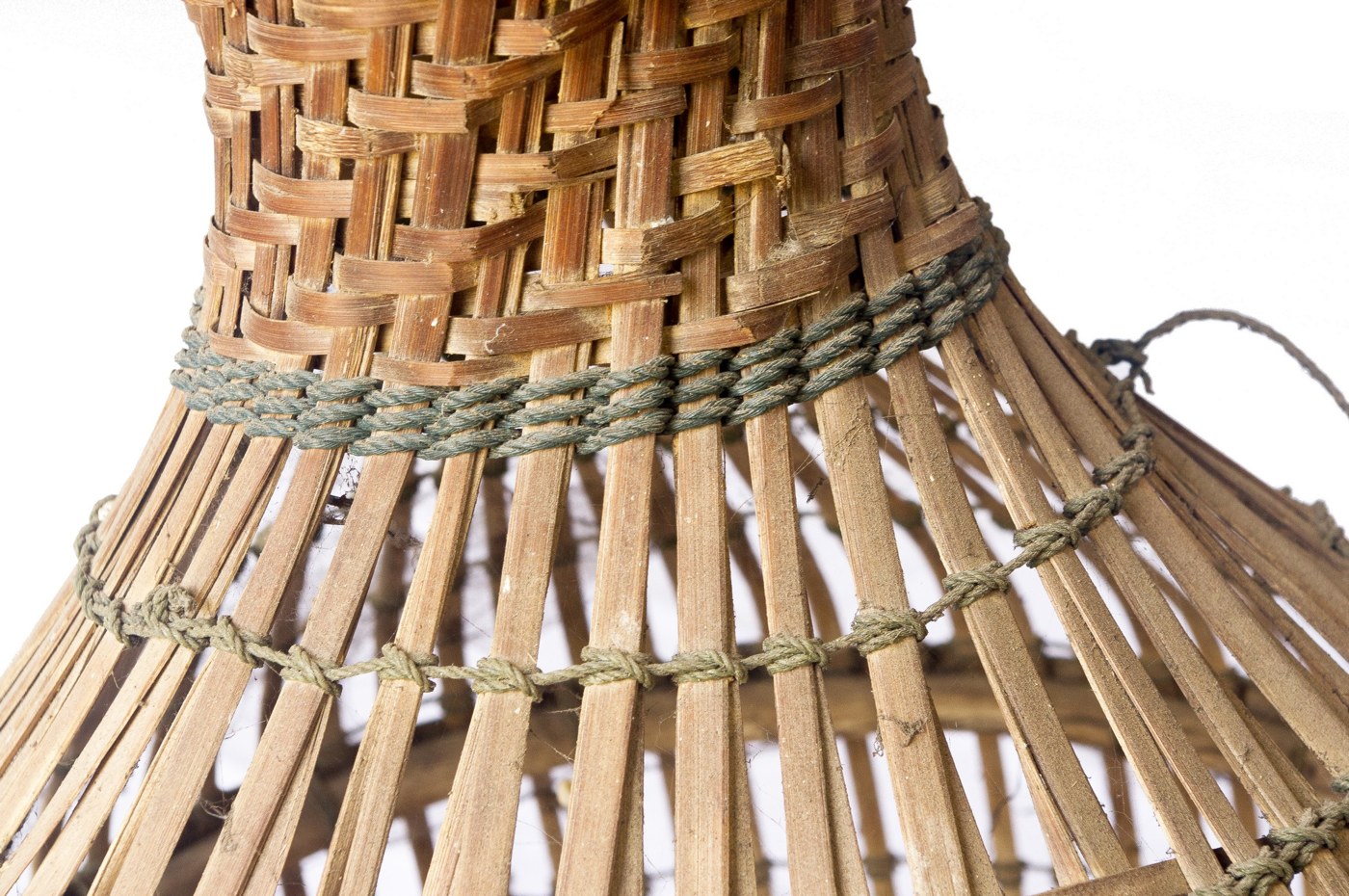
"The funnel is made of bamboo shaved into many slats with equally sharp points, tied with cord at their bases and middles at equal spacing, so the tips interlock crosswise like hands pressed together in a wai." (Sirindhorn Anthropology Centre, author ทำนุ วรธงไชย (Thamnu Worathongchai), CC BY 4.0)
4
4
Floor and frame
Floor and frame
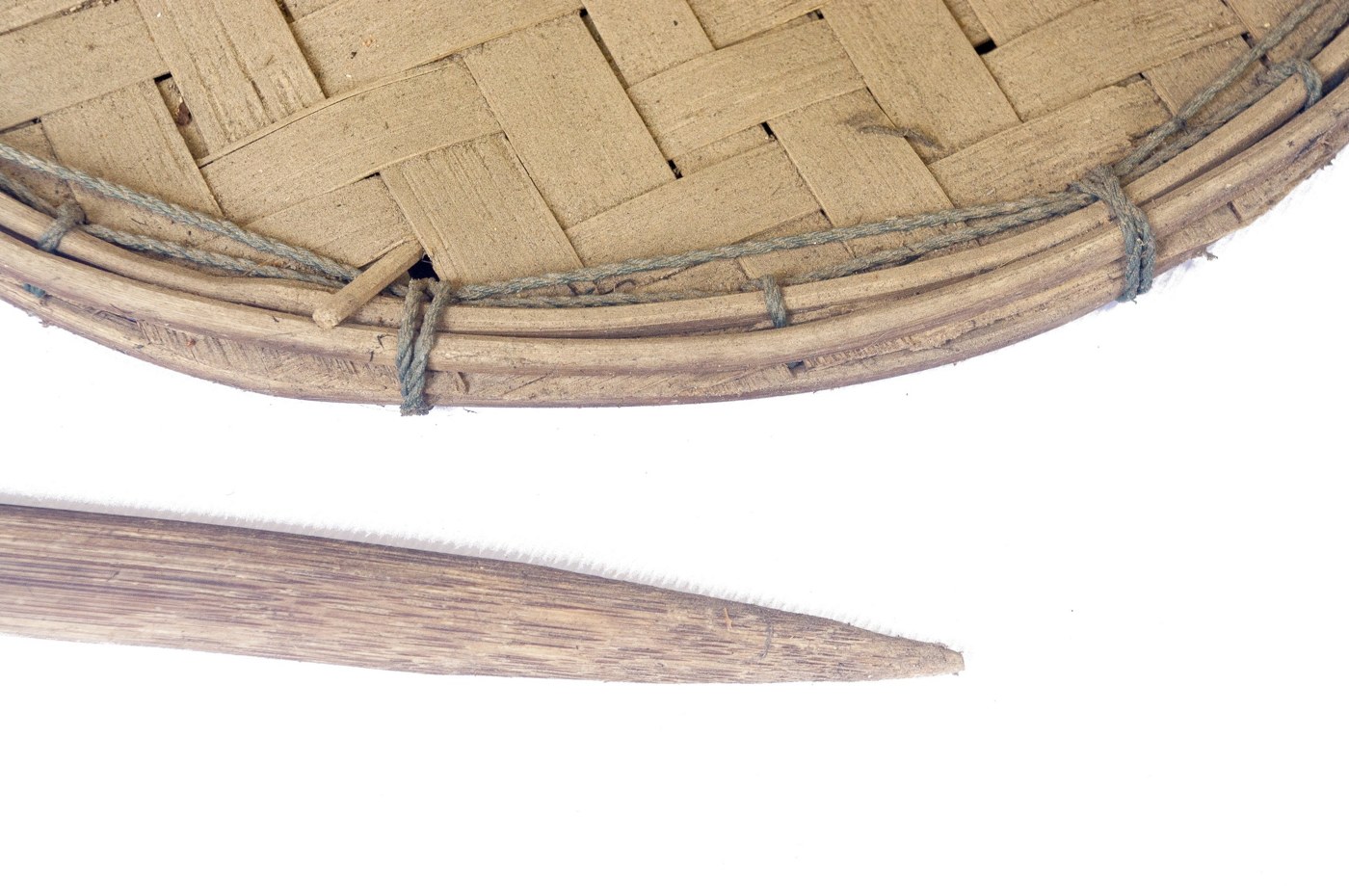
Weave the floor separately from thin bamboo strips, close-woven, round or square; on some traps the floor projects in front of the door as an apron (hence tum lan). Bend wire into hoops for the frame, weave the body from thin bamboo strips, tie the floor on underneath, and make the exit for the fish at the top.
Materials for this step:
 Bamboo Poles1 piece
 Tie Wire1 piece
Tools needed:
 Machete
 Knife
Knife5
5
Door and nga wai
Door and nga wai
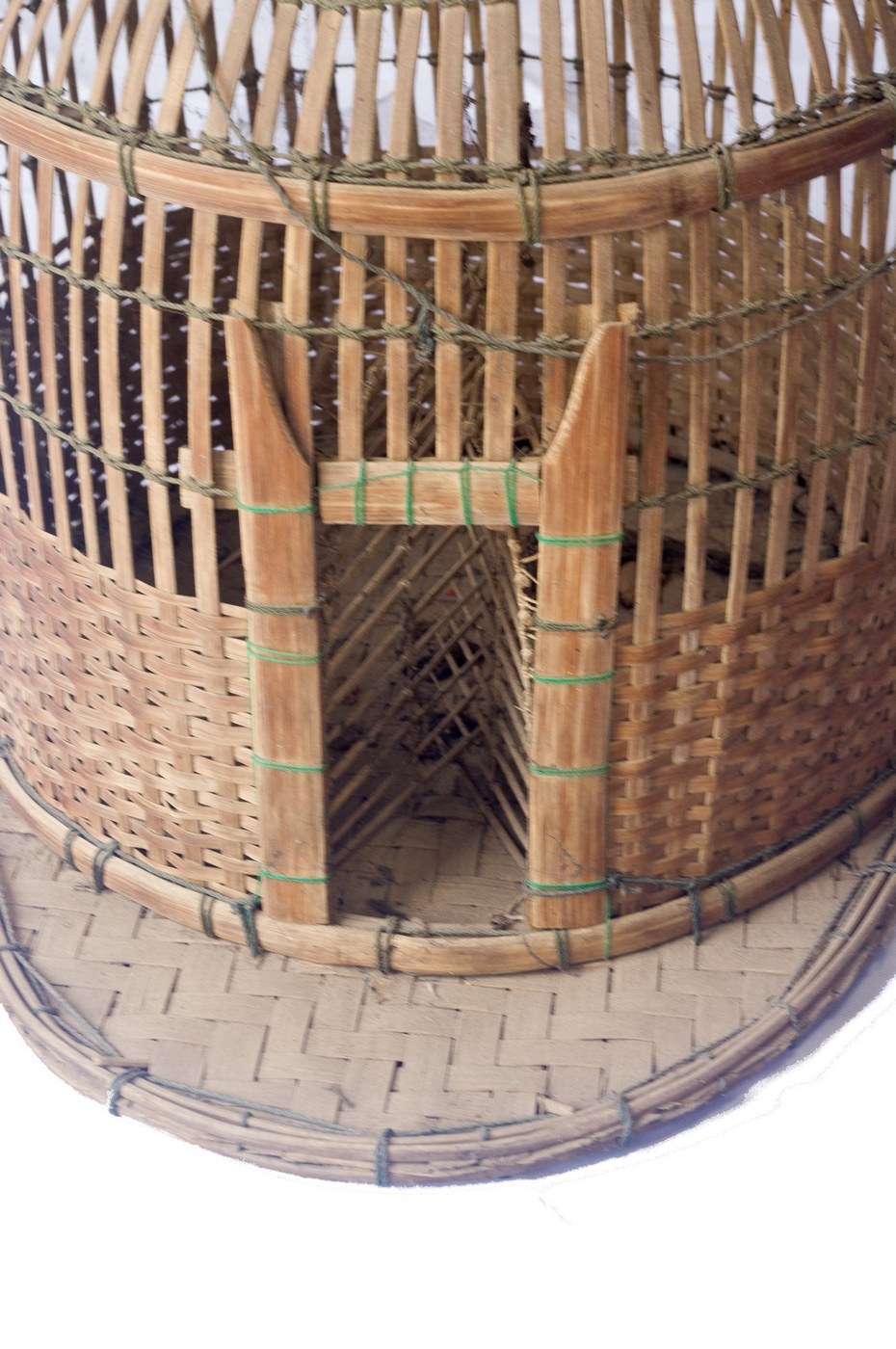
Make a door at floor level in the front, square or triangular. Shave many bamboo slats with equal sharp points and tie cord at their bases and middles at equal spacing, so the tips interlock like praying hands. Tie the bases round the doorway with the tips pointing in. Tie another cord from the middle of the top slat to a small stick wedged above the door, to set the funnel slack, taut or just right.
Materials for this step:
 Cord1 piece
6
6
Cord and stakes
Cord and stakes
Tie a cord about 30 cm long to the side of the trap, running to 2 sharp-pointed stakes, to keep the trap from toppling or being carried off by the current.
7
7
Real photos
Real photos
Photos of a real tum pla khao from the Nong Bua Khok Folk Museum (Sirindhorn Anthropology Centre, author ทำนุ วรธงไชย (Thamnu Worathongchai), CC BY 4.0).
8
8
How it is used
How it is used
The old bait was rice-wine lees (sato) mixed with husk, or husk with bran; today coarsely torn castor leaves are put inside. Set it in the morning in water no deeper than your neck: dive and set the trap on the bottom, with the entrance facing away from the current, and stake the cords taut. Set several, marking each with a branch above the water. Check in the morning; it can be left overnight. You must dive to set it: never alone, and not in water deeper than your neck.
9
9
Troubleshooting
Troubleshooting
Troubleshooting the tum pla khao.
Flow
Loading...
10
10
History and limits
History and limits
Tum pla khao are found in villages near ponds, often hung together under the house, the eaves or beside the granary. They were set in the flood season, August to November; today they are set all year. Villagers confirm castor leaves work better than the old bait. You must dive to set it: never alone, and not in water deeper than your neck.
Source: Sirindhorn Anthropology Centre, Traditional Objects of Everyday Use database, "ตุ้มปลาขาว", author ทำนุ วรธงไชย (Thamnu Worathongchai), Nong Bua Khok Folk Museum, Buriram (CC BY 4.0 licence).
**Limits** Tum pla khao vary in shape; the source gives no size for the body, door or stakes, and there is no listing for castor leaves, so they are named in the text.
Related Blueprints
These blueprints share knowledge with this one — techniques, materials, or principles that connect them in the learning graph.
CC0 Public Domain
This blueprint is released under CC0. You are free to copy, modify, distribute, and use this work for any purpose, without asking permission.
Support the Maker by purchasing products through their Blueprint where they earn a Maker Commission set by Vendors, or create a new iteration of this Blueprint and include it as a connection in your own Blueprint to share revenue.