ART
BEAUTY & WELLNESS
CRAFT
CULTURE & HISTORY
ENTERTAINMENT
ENVIRONMENT
FOOD & DRINKS
REVERSE ENGINEERING
SCIENCES
SPORTS
TECHNOLOGY
WEARABLES
Translated

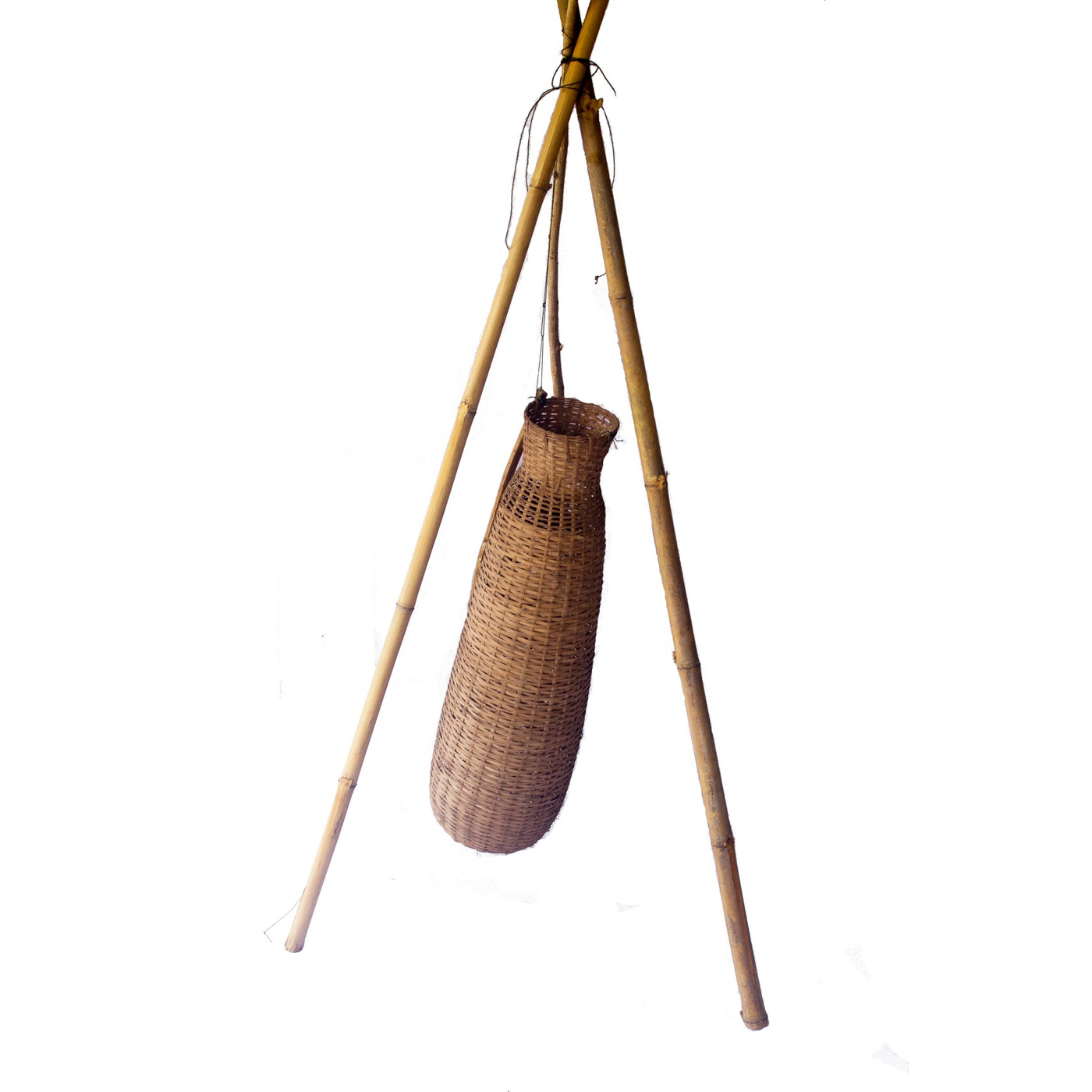
Tum Pla Sio (Isan Rasbora Trap) — a Woven Bamboo Bottle, Body About 65 cm to the Shoulder, Bottom Funnel, Coconut-Shell Lid, Bamboo Spine, Red-Ant Bait
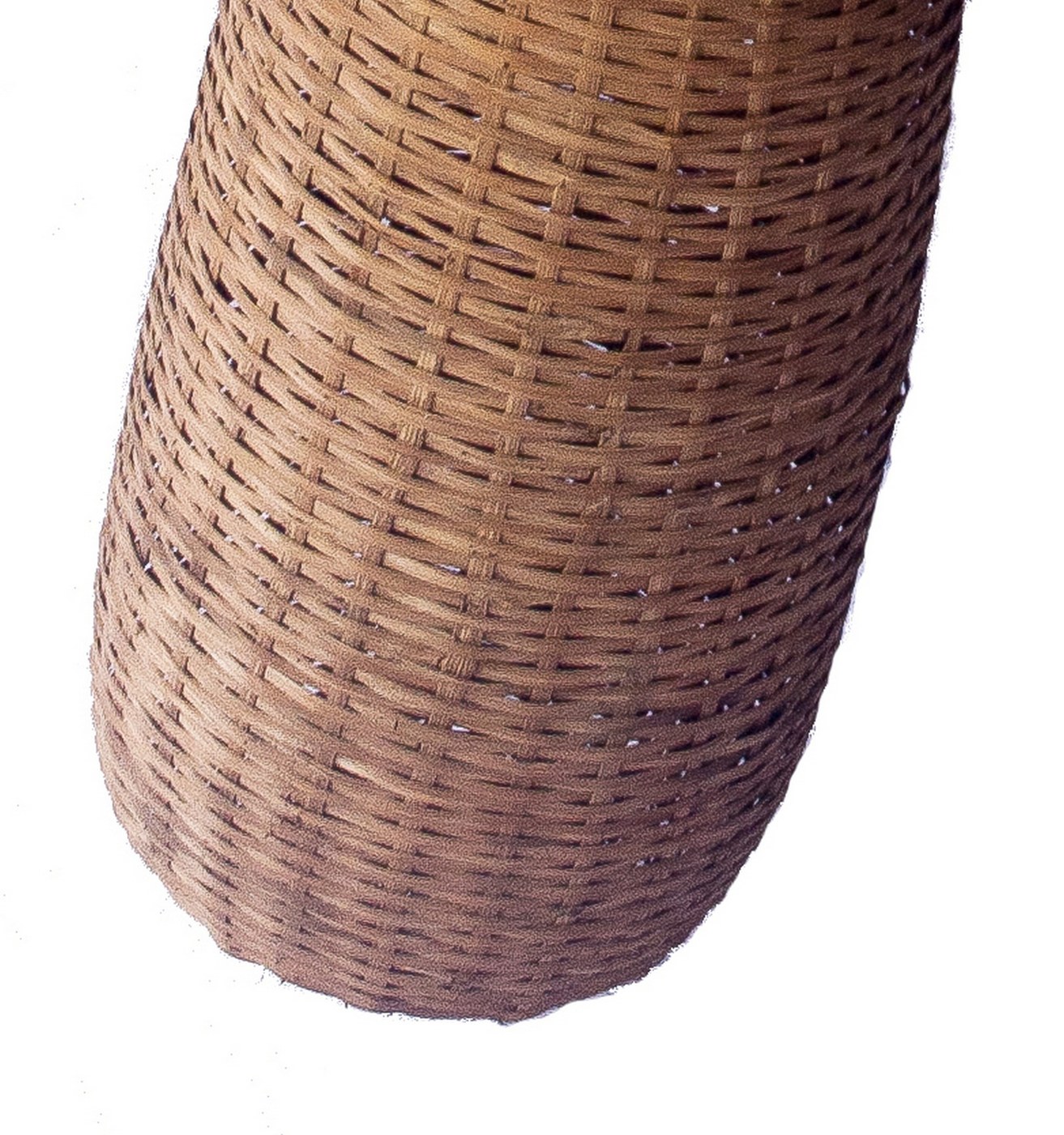
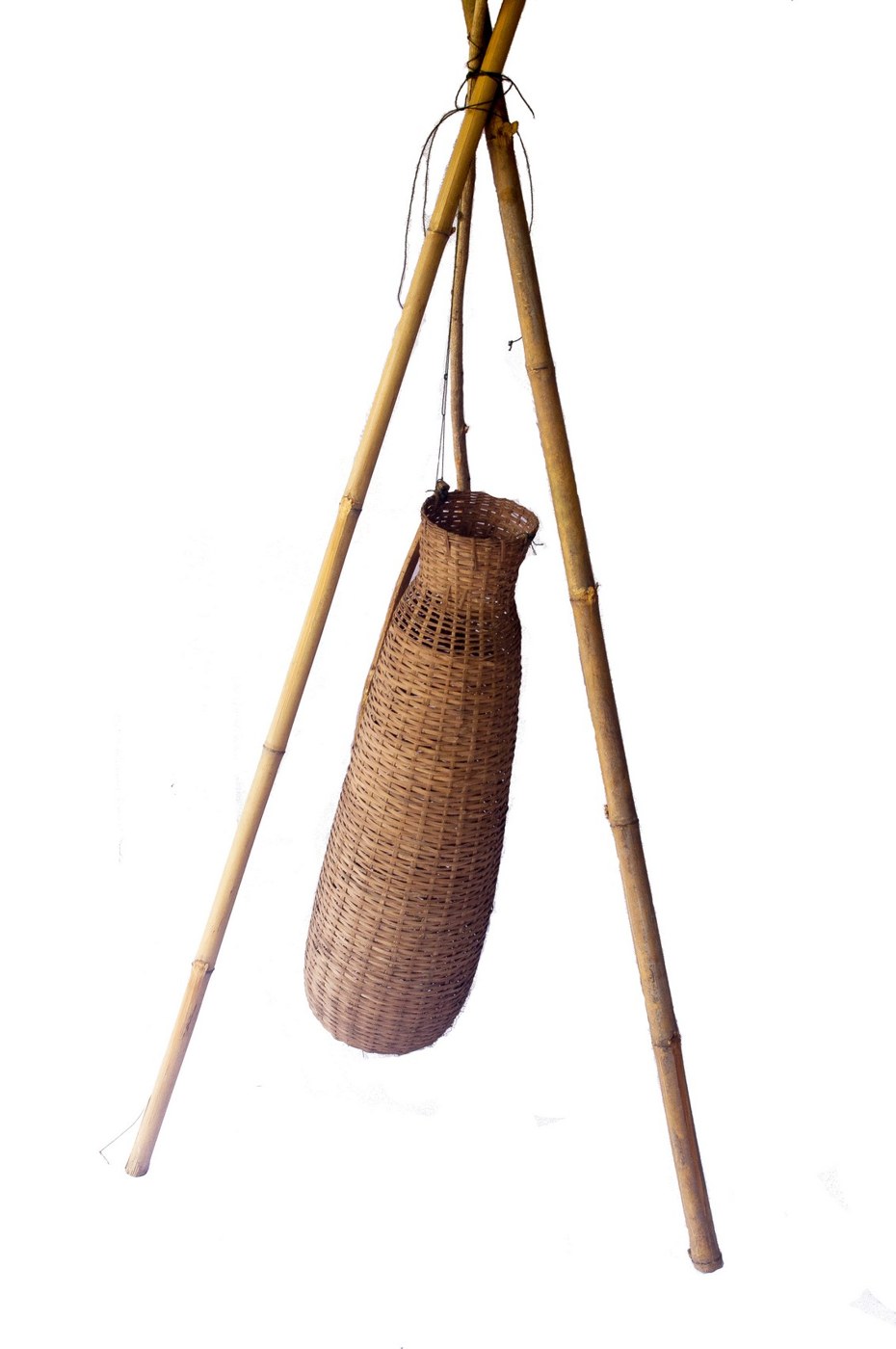
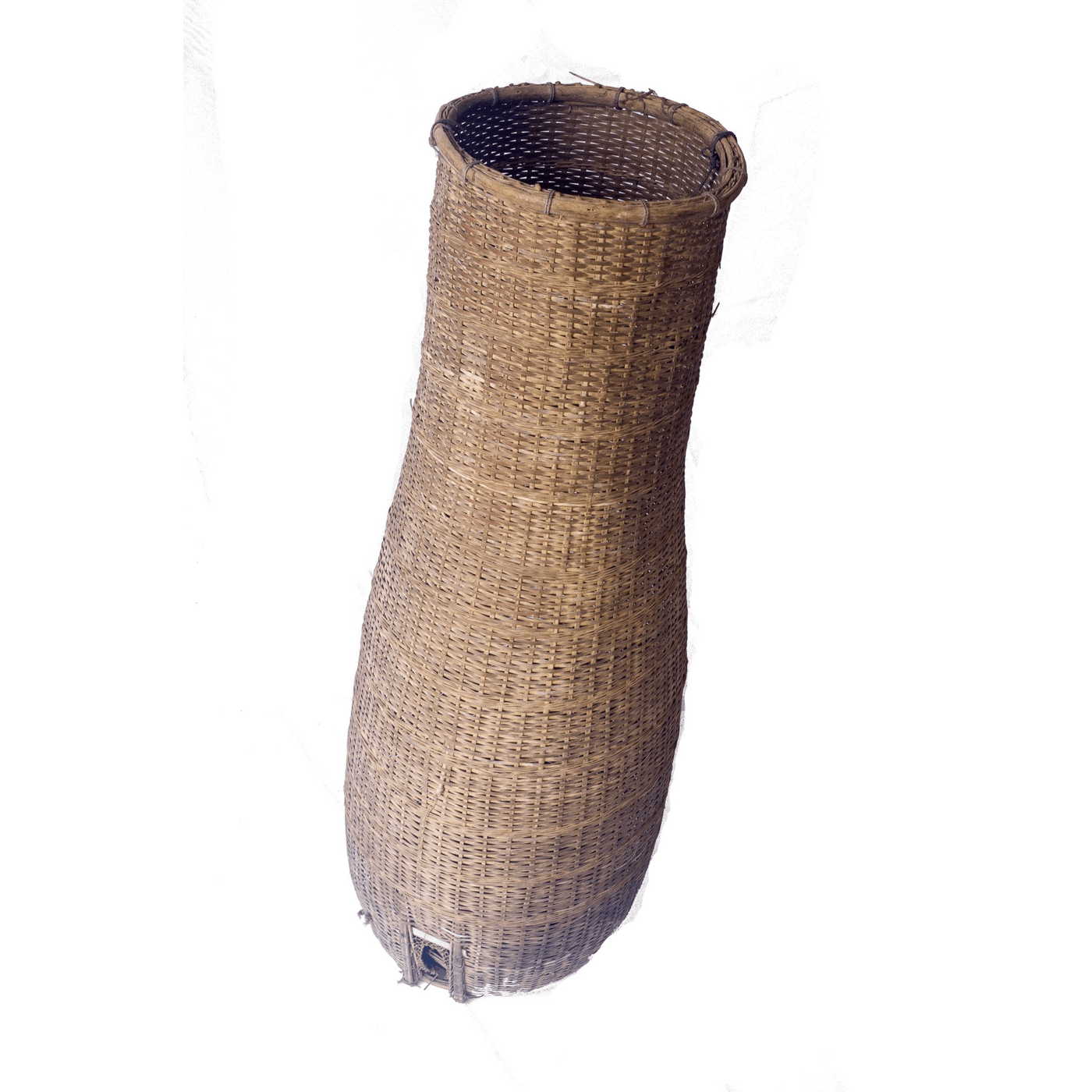
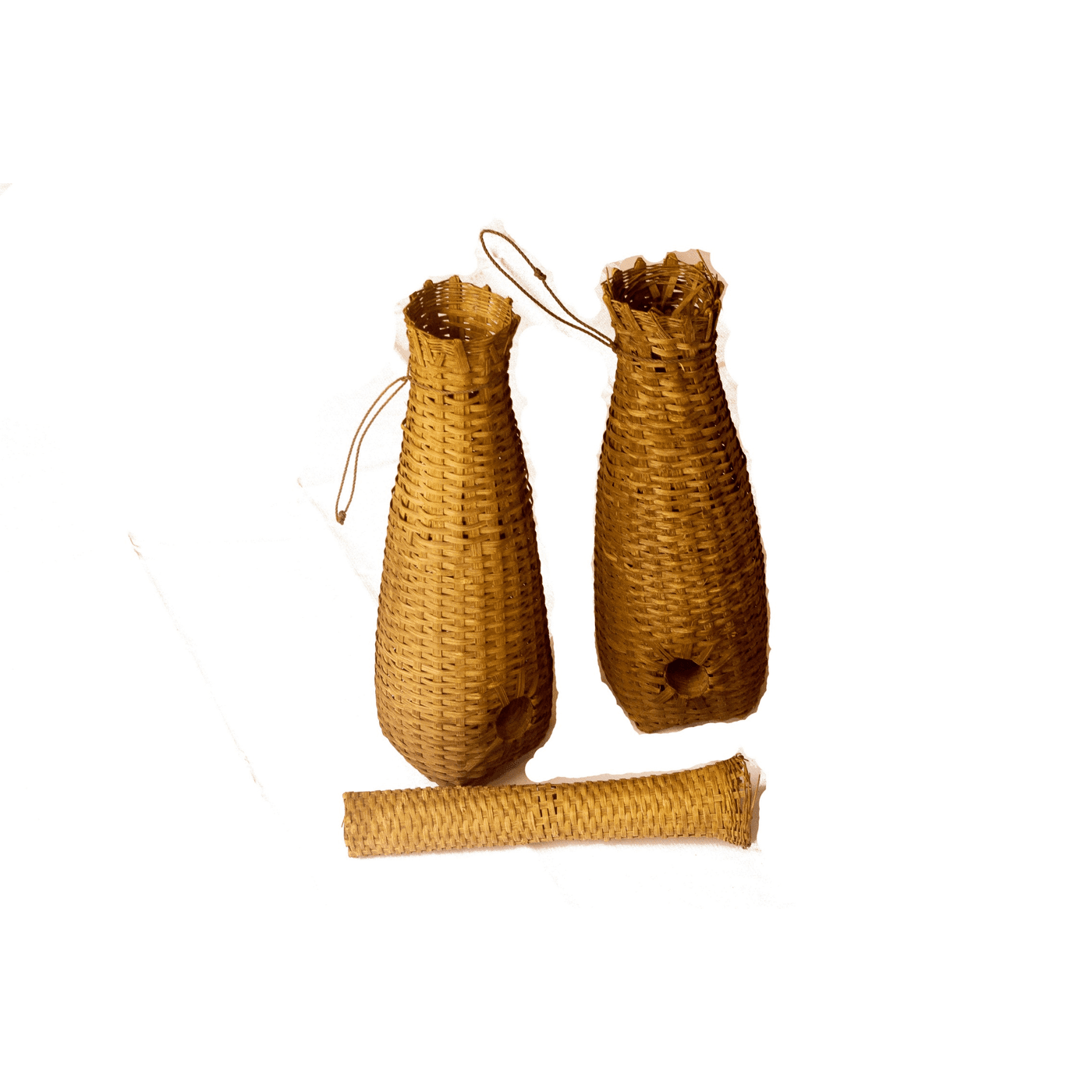
ตุ้มปลาซิว (tum pla sio) traps the larger pla sio ao rasbora. It is a long bottle with a short neck: the fish enter by a funnel in the bottom, and are tipped out through the mouth at the top, which is closed with a coconut-shell lid.
This blueprint weaves a real tum pla sio to the sizes in the source.
Intermediate
About 1-2 days
Instructions
1
1
Real sizes
Real sizes
Loading Jupyter Notebook...
2
2
Pot traps, before it
Pot traps, before it
The tum pla duk stands on the bottom and fish enter by a side door; the tum pla sio hangs in the water and fish enter by a funnel in the bottom.
3
3
Read from the source
Read from the source
"The pla sio ao, feeding at the surface, swim into the opening in the trap's bottom, which is not very deep, to eat the red ants, and are caught inside." (Sirindhorn Anthropology Centre, author ทำนุ วรธงไชย (Thamnu Worathongchai), CC BY 4.0)
4
4
Bottom and funnel
Bottom and funnel
Shave bamboo into strips. Start at the centre of the bottom with a small hole 4 cm across: sharpen the standing strips into a funnel pointing upward, and weave round strips around it to about 20 cm across.
Materials for this step:
 Bamboo Poles1 piece
Tools needed:
 Hand Saw
 Machete
 Knife
Knife5
5
Body and neck
Body and neck
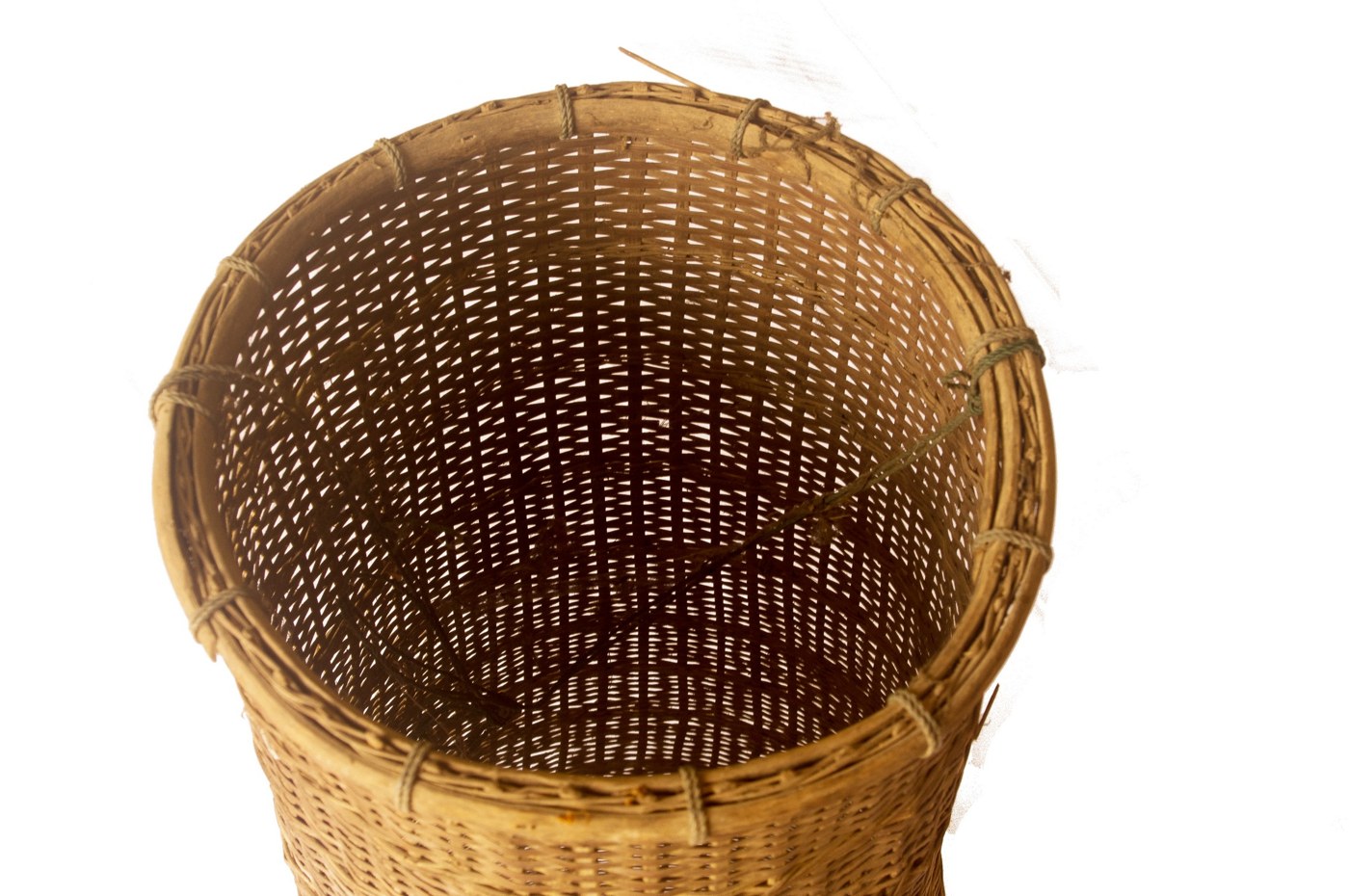
Bend the standing strips upward and weave flat strips into a cylinder up to the shoulder, about 65 cm high. Narrow it slightly into a neck, woven with round strips spaced open for about 8 cm, taper to the base of the neck, then weave close and flare out about 10 cm. The mouth is round, 15 cm across.
6
6
Lid and spine
Lid and spine
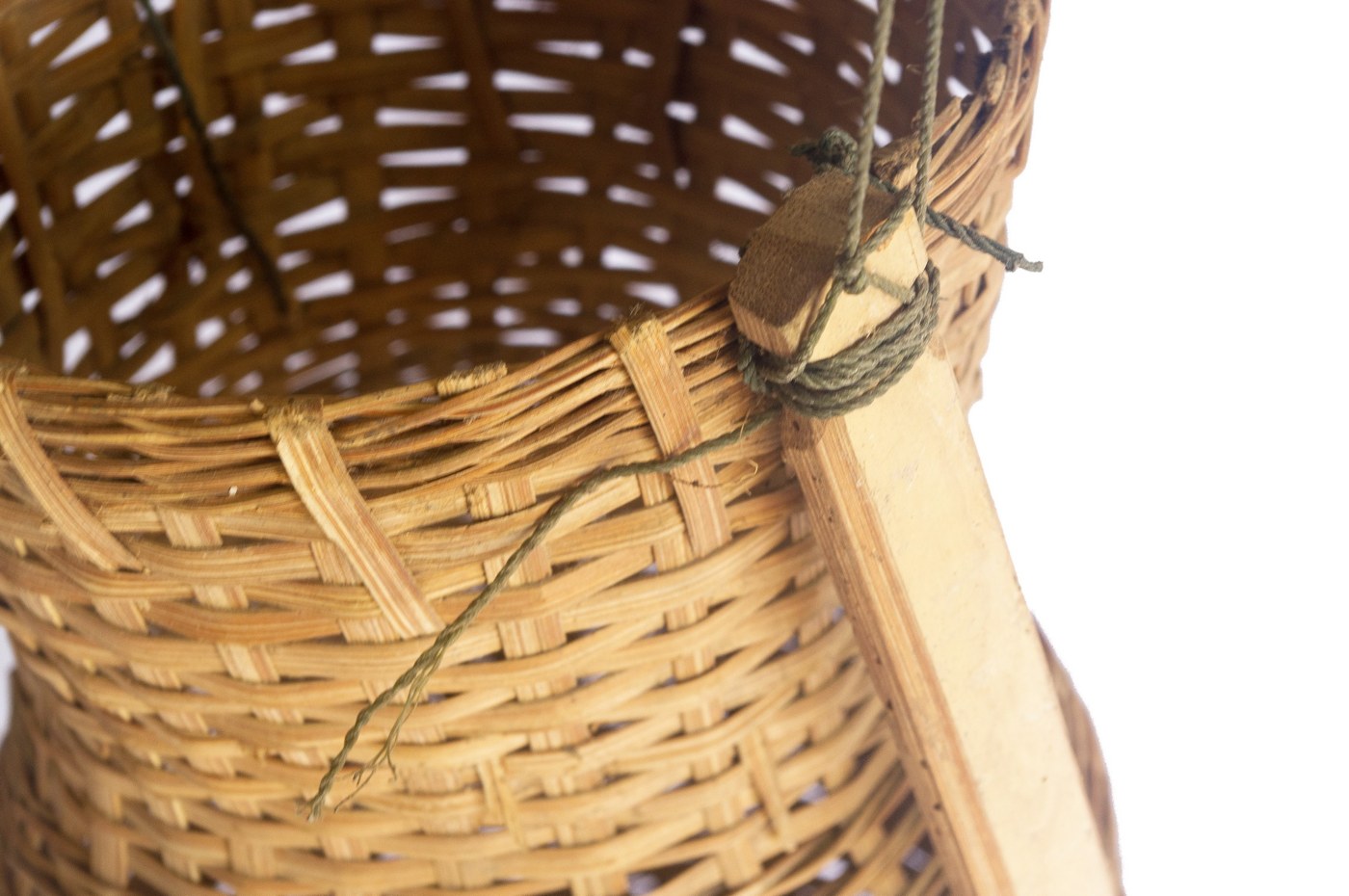
Tie a cord from the mouth to a hole in the rim of a coconut shell, used as a lid. Shave a bamboo spine 1 cm thick, 2 cm wide and about 50 cm long, sharpen its base and push it down into the side weave so its top is level with the mouth; tie it fast at the rim to stiffen the trap.
Materials for this step:
 Cord1 piece
7
7
Real photos
Real photos
Photos of a real tum pla sio from the Nong Bua Khok Folk Museum (Sirindhorn Anthropology Centre, author ทำนุ วรธงไชย (Thamnu Worathongchai), CC BY 4.0).
8
8
How it is used
How it is used
Use it at high water, in months 11-12, or with the new water in months 6-7. Set in the morning and collect at about 3-4 pm, 1-3 traps at a time, in water you can stand in without stooping. Put red ants in through the mouth as bait. Set the bottom about 30 cm above the underwater floor with the neck above water, and tie the spine to a stake set beforehand so the trap stands upright. Tip the fish out through the mouth, and put in fresh red ants to set it again.
9
9
Troubleshooting
Troubleshooting
Troubleshooting the tum pla sio.
Flow
Loading...
10
10
History and limits
History and limits
The pla sio ao is larger than the paddy rasbora, about a forefinger long, and tasty, not bitter; villagers along streams, canals and rivers cook it as mok pla sio. Beware of red-ant bites when baiting.
Source: Sirindhorn Anthropology Centre, Traditional Objects of Everyday Use database, "ตุ้มปลาซิว", author ทำนุ วรธงไชย (Thamnu Worathongchai), Nong Bua Khok Folk Museum, Buriram (CC BY 4.0 licence).
**Limits** There is no listing for the coconut shell, so it is named in the text.
Related Blueprints
These blueprints share knowledge with this one — techniques, materials, or principles that connect them in the learning graph.
CC0 Public Domain
This blueprint is released under CC0. You are free to copy, modify, distribute, and use this work for any purpose, without asking permission.
Support the Maker by purchasing products through their Blueprint where they earn a Maker Commission set by Vendors, or create a new iteration of this Blueprint and include it as a connection in your own Blueprint to share revenue.