ART
BEAUTY & WELLNESS
CRAFT
CULTURE & HISTORY
ENTERTAINMENT
ENVIRONMENT
FOOD & DRINKS
REVERSE ENGINEERING
SCIENCES
SPORTS
TECHNOLOGY
WEARABLES
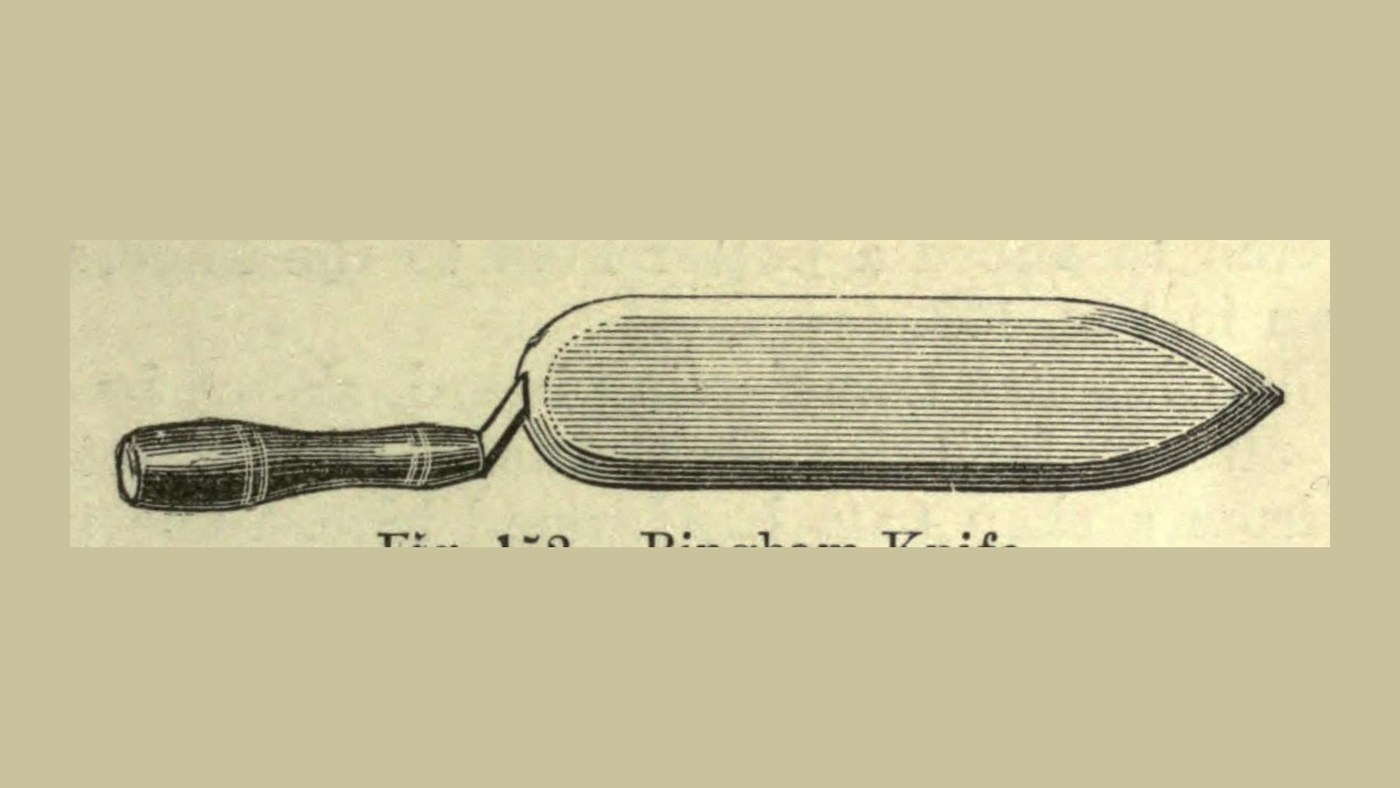


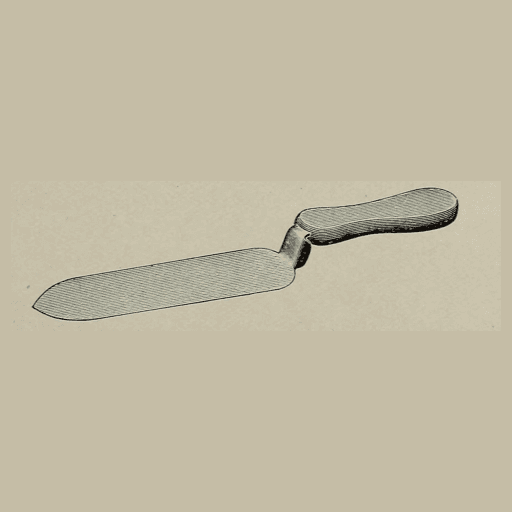
Uncapping Knife: the Bingham Knife (Hasluck, 1905)
The Bingham honey knife: a trowel-like blade of good saw steel, sharpened all round from the underside, riveted to a cranked 3/8 in tang so the handle stands about an inch above the comb.
Hasluck warns it is a job only for a maker with the means for that kind of work.
Source: P. N. Hasluck, Beehives and Bee Keepers' Appliances (1905), p. 155. Picture: the book's Fig. 152.
Advanced
Unknown
Instructions
1
1
Shape the blade
Shape the blade
Cut a blade of good saw steel 6 or 7 in long and 2 to 3 in wide to the pattern of Fig. 152, like a mason's trowel.
Materials for this step:
 Spring Steel Strip1 6-7 x 2-3 in
Tools needed:
 Cold Chisel
 Metal File
2
2
Make the tang
Make the tang
Make a tang of 3/8 in iron or steel: point one end to fit the handle and flatten the other so it can be riveted to the blade.
Materials for this step:
 Mild Steel Round Bar1 3/8 in
Tools needed:
 Forge
 Anvil
 HammerMetal File
3
3
Rivet and set the tang
Rivet and set the tang
Rivet the flattened end to the blade with two rivets countersunk into the underside of the blade and ground flush. Bend the tang so that with the blade flat on a board the handle stands about 1 in above it.
Materials for this step:
 Iron Rivets2 pieces
Tools needed:
 Hand Drill
 Countersink Drill Bit SetHammer
 Grindstone
4
4
Handle and edge
Handle and edge
Fit the handle on the pointed end of the tang. Sharpen the blade all round like a chisel, from the underside only.
Materials for this step:
 Unknown Material1 handle, material not given
Tools needed:
GrindstoneMaterials
4- 1 6-7 x 2-3 inPlaceholder
- 1 3/8 inPlaceholder
- 2 piecesPlaceholder
- 1 handle, material not givenPlaceholder
This blueprint makes
CC0 Public Domain
This blueprint is released under CC0. You are free to copy, modify, distribute, and use this work for any purpose, without asking permission.
Support the Maker by purchasing products through their Blueprint where they earn a Maker Commission set by Vendors, or create a new iteration of this Blueprint and include it as a connection in your own Blueprint to share revenue.