ART
BEAUTY & WELLNESS
CRAFT
CULTURE & HISTORY
ENTERTAINMENT
ENVIRONMENT
FOOD & DRINKS
REVERSE ENGINEERING
SCIENCES
SPORTS
TECHNOLOGY
WEARABLES
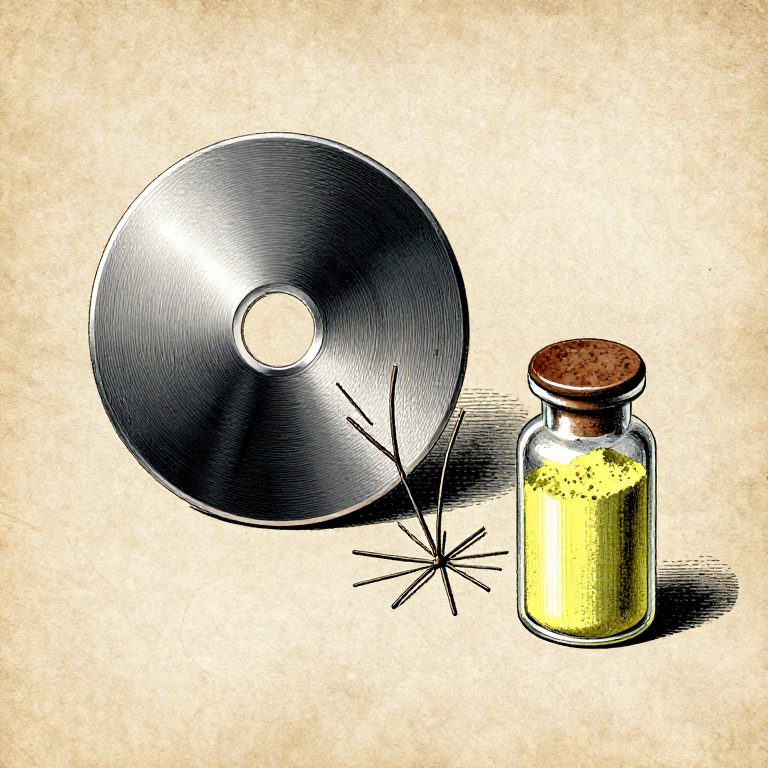
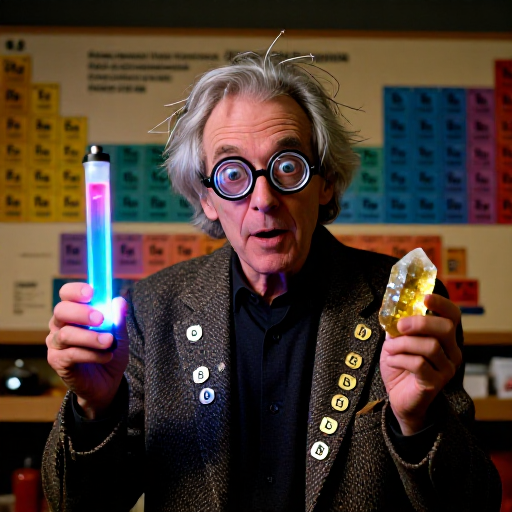
Understanding Samarium from Monazite — The First Rare Earth Magnet
Intermediate
Instructions
1
1
Understand Samarium's Discovery
Understand Samarium's Discovery
Paul-Émile Lecoq de Boisbaudran isolated samarium oxide in 1879 from the mineral samarskite, which had been named after Colonel Vasili Samarsky-Bykhovets — the Russian mining engineer who provided specimens to European chemists. Samarium was the first chemical element named after a living person. The samarskite specimen came from the Ural Mountains and contained a complex mixture of rare earth elements that took decades to fully separate.
2
2
Identify Samarium in Rare Earth Concentrates
Identify Samarium in Rare Earth Concentrates
Samarium makes up about 2.5% of light rare earth concentrates from bastnasite and monazite — less abundant than cerium, lanthanum, neodymium, or praseodymium but still commercially significant at 7 ppm crustal abundance. It sits at the boundary between light and heavy rare earths in solvent extraction cascades, making it one of the more difficult lanthanides to separate to high purity. Annual production is approximately 700 tonnes of samarium oxide.
Materials for this step:
 Monazite Specimen
Tools needed:
 Hand Lens (10x Magnification)Hand Lens (10x Loupe)
 Streak Plate
 Mohs Hardness Picks
3
3
Examine Samarium Metal Properties
Examine Samarium Metal Properties
Samarium is a moderately hard, silvery metal that oxidizes slowly in dry air but rapidly in moist air. It has an unusual rhombohedral crystal structure unique among the elements. Melting point is 1072°C, density 7.52 g/cm³. Samarium ignites at 150°C in air. It has the highest neutron absorption cross-section of any stable element after gadolinium — 5,900 barns — making it valuable for nuclear applications.
4
4
Understand Samarium-Cobalt Permanent Magnets
Understand Samarium-Cobalt Permanent Magnets
Karl Strnat developed SmCo₅ magnets at Wright-Patterson Air Force Base in 1966 — the first rare earth permanent magnets and a revolution in magnet technology. SmCo₅ has a maximum energy product of 20 MGOe, five times stronger than previous Alnico magnets. The improved Sm₂Co₁₇ version reaches 32 MGOe. SmCo magnets resist corrosion without coating and maintain strength to 300°C — superior to NdFeB in harsh environments.
Tools needed:
 Safety Goggles
5
5
Compare SmCo and NdFeB Magnets
Compare SmCo and NdFeB Magnets
Neodymium magnets (NdFeB) replaced SmCo for most applications because they are cheaper and 50% stronger at room temperature. However, SmCo magnets dominate where temperature stability, corrosion resistance, or radiation hardness matter: jet engines, satellite systems, military sensors, downhole drilling motors, and medical implants. A SmCo magnet retains 90% of its strength at 250°C, where NdFeB loses 50%.
6
6
Explore Nuclear Reactor Applications
Explore Nuclear Reactor Applications
Samarium-149 has a neutron absorption cross-section of 40,140 barns — used in nuclear reactor control rods and neutron shielding. Samarium hexaboride (SmB₆) is a topological Kondo insulator studied for exotic quantum states. In nuclear reactors, Sm-149 is also a fission product 'poison' that builds up during operation and absorbs neutrons, requiring compensation by control rod withdrawal — the 'samarium poisoning' effect.
7
7
Discover Samarium-153 Cancer Therapy
Discover Samarium-153 Cancer Therapy
Samarium-153 lexidronam (Quadramet) is a radiopharmaceutical that treats pain from bone cancer metastases. The samarium-153 isotope (half-life 46.3 hours) chelated to EDTMP localizes in bone tissue, delivering targeted beta radiation to cancer cells while minimizing damage to surrounding tissue. It provides pain relief in 65-80% of patients within one week. This is one of the few medical applications of any lanthanide element.
8
8
Survey Optical and Catalyst Applications
Survey Optical and Catalyst Applications
Samarium-doped calcium fluoride (CaF₂:Sm) was used in the first optical memory demonstration — samarium ions trapped in different valence states store data readable by laser. Samarium oxide is a catalyst for ethanol dehydration and is used in infrared-absorbing glass for welding goggles. Samarium iodide (SmI₂) is a powerful single-electron reducing agent widely used in organic chemistry — the 'Kagan reagent' — for forming carbon-carbon bonds.
9
9
Understand Samarium's Role in Dating Rocks
Understand Samarium's Role in Dating Rocks
The samarium-neodymium (Sm-Nd) radiometric dating system uses the alpha decay of Sm-147 to Nd-143 (half-life 106 billion years — seven times the age of the universe). This extremely slow decay rate makes Sm-Nd ideal for dating the oldest rocks on Earth and meteorites, providing constraints on the formation age of the solar system. The Sm-Nd system is less susceptible to metamorphic resetting than rubidium-strontium dating.
Tools needed:
 Precision Scale (0.01g)
10
10
Document Findings and Market Context
Document Findings and Market Context
Record samarium's key data: atomic number 62, density 7.52 g/cm³, melting point 1072°C, silvery metal. Samarium oxide is priced at $5-15 per kilogram — relatively cheap because demand for SmCo magnets is small compared to NdFeB. The defense and aerospace sectors consume most samarium for high-temperature magnets. As electric aircraft and high-temperature motor applications grow, SmCo magnet demand may increase, but NdFeB's cost advantage limits substitution.
11
11
Ore grade: how much monazite per kilogram
Ore grade: how much monazite per kilogram
Loading Jupyter Notebook...
Materials
1- 1 piecePlaceholder
Tools Required
5- Placeholder
- Placeholder
- Placeholder
- Placeholder
- Placeholder
Connected Blueprint Materials

Hazardous
10% Attribution
Extracting Neodymium-Rich Rare Earth Oxide from Monazite — The Magnet Metal That Reshaped Technology
by Peter
Mining
37
0
0
0
11
0
10% Attribution
Understanding Cerium from Bastnasite — The Self-Cleaning Rare Earth
by Peter
Mining
10
0
0
0
9
0
Hazardous
10% Attribution
Extracting Cobalt from Cobaltite — The Goblin Metal That Colors Glass Blue
by Peter
Metalworking
71
0
0
0
4
0
10% Attribution
Understanding Praseodymium from Monazite — The Green Twin That Colors Glass
by Peter
Mining
17
0
0
0
3
0
10% Attribution
Understanding Lanthanum from Monazite — The Hidden Element That Bends Light
by Peter
Mining
18
0
0
0
8
0
Related Blueprints
These blueprints share knowledge with this one — techniques, materials, or principles that connect them in the learning graph.
Hazardous
Understanding Yttrium from Xenotime — The Rare Earth That Lights Red Screens
by Peter
Mining
42
0
0
0
12
0
Hazardous
Understanding Uranium from Uraninite — The Element That Changed Everything
by Peter
Mining
71
0
0
0
8
0
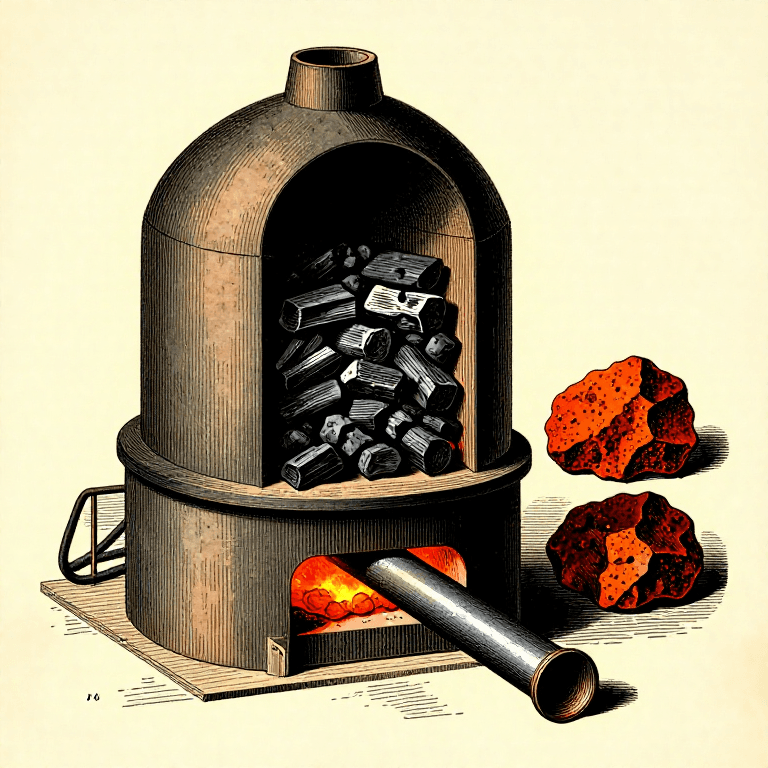
Extracting Iron from Hematite — Bloomery Smelting from Ore to Bloom
by Peter
Metalworking
143
0
0
0
12
0
CC0 Public Domain
This blueprint is released under CC0. You are free to copy, modify, distribute, and use this work for any purpose, without asking permission.
Support the Maker by purchasing products through their Blueprint where they earn a Maker Commission set by Vendors, or create a new iteration of this Blueprint and include it as a connection in your own Blueprint to share revenue.