ART
BEAUTY & WELLNESS
CRAFT
CULTURE & HISTORY
ENTERTAINMENT
ENVIRONMENT
FOOD & DRINKS
REVERSE ENGINEERING
SCIENCES
SPORTS
TECHNOLOGY
WEARABLES
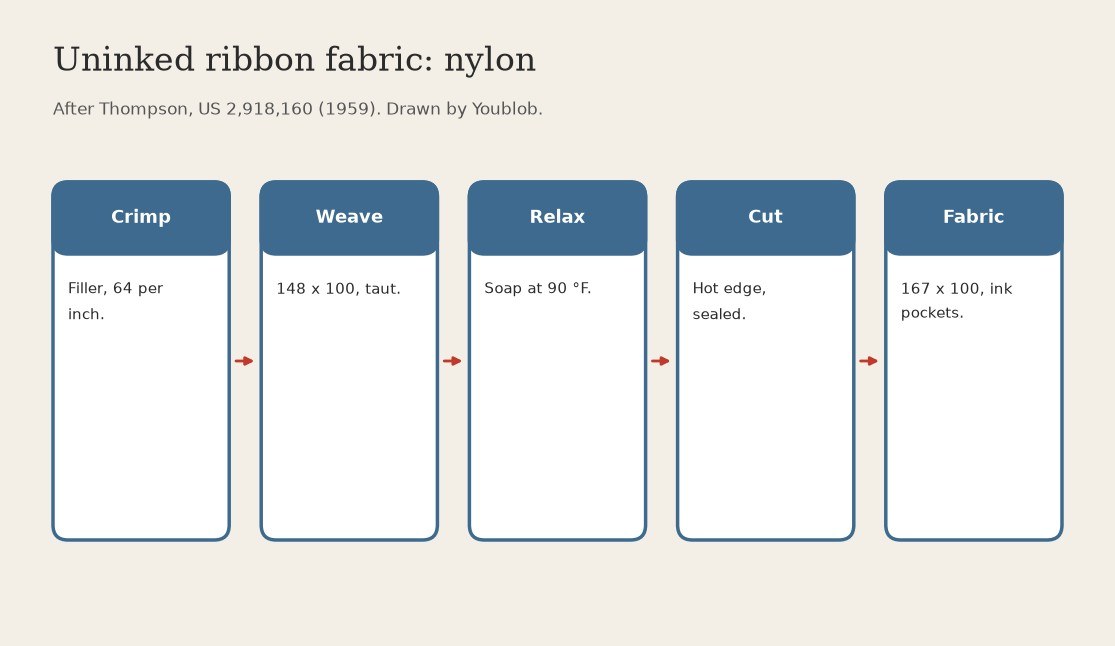


Uninked Ribbon Fabric: Nylon with a Crimped Filler, Relaxed in Soap (Thompson, US 2,918,160, 1959)
Nylon ribbons wear well but hold little ink; cotton holds more but frays under the type. Thompson wove nylon with a crimped filler held taut; relaxed after weaving, the crimped filaments spring apart into tiny pockets that store ink, while the surface stays flat.
Result: a thin nylon ribbon fabric, about 167 x 100 per inch, that held ink for about twice as many lines.
Source: Thompson, US 2,918,160 (1959). Picture drawn by Youblob.
Advanced
Factory process
Instructions
1
1
Crimp the filler yarn
Crimp the filler yarn
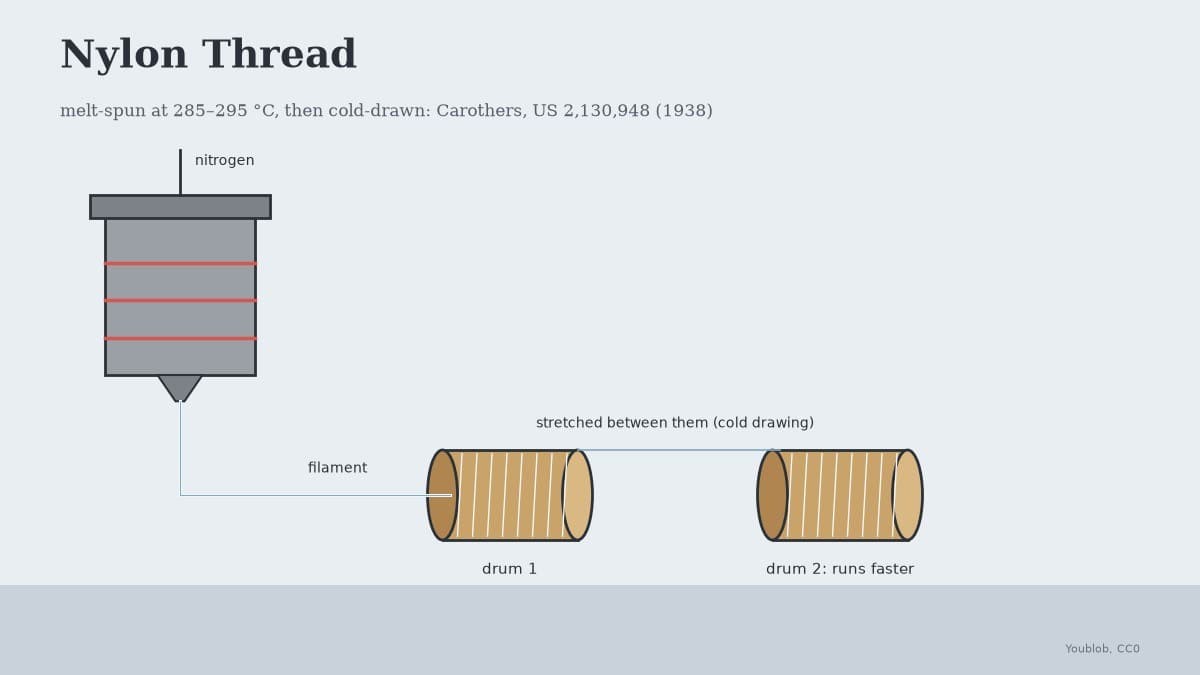
Give 40-denier, 34-filament nylon (5 turns twist) heat-set crimps, about 64 per inch. Thompson points to US 2,575,838 for the crimping. Ours: Nylon Thread by kind.
Materials for this step:
 Nylon Thread1 as required
Tools needed:
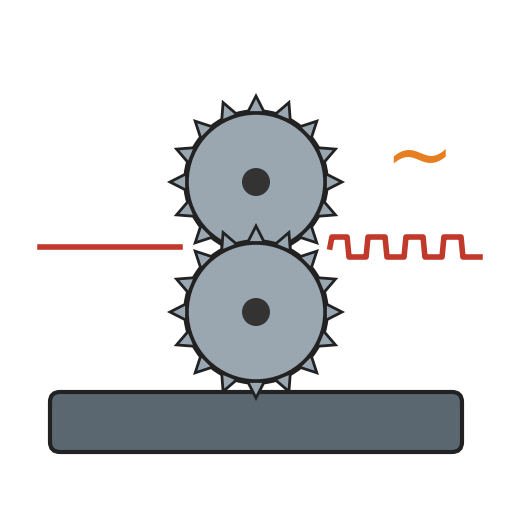 Yarn Crimping Machine
2
2
Weave it under tension
Weave it under tension
Plain weave at loom width: warp 40-denier, 34-filament nylon, 7 turns twist, about 148 per inch; crimped filler 100 per inch, kept stretched so the crimps are held out while weaving. Heavy duty: 70 denier.
Materials for this step:
Nylon Thread1 as requiredTools needed:
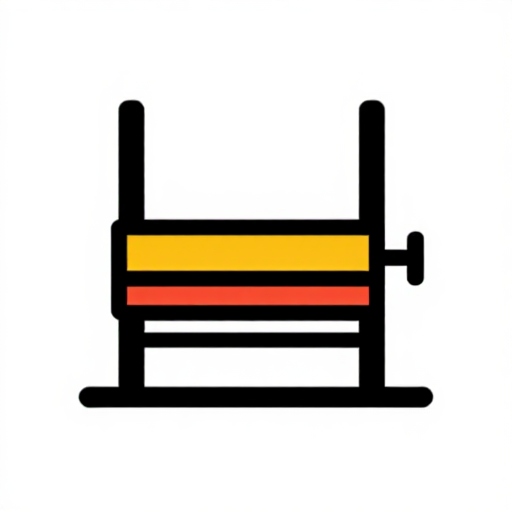 Power Loom
3
3
Relax in warm soap and dry loose
Relax in warm soap and dry loose
Soak the fabric in a neutral soap solution at about 90 °F, then dry it without a frame. The crimps come back and open pockets among the filaments; the surface must stay flat.
Tools needed:
 Soap
4
4
Cut into ribbons, sealing the edges
Cut into ribbons, sealing the edges
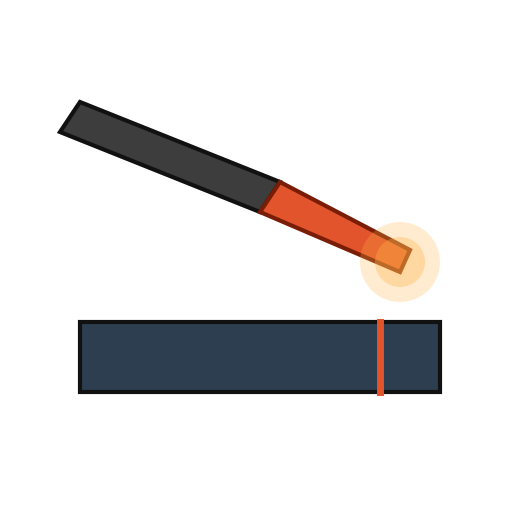
Scour, then cut into ribbon widths with the crimped yarn running across the ribbon. A heated cutter seals the edges. Finished count about 167 x 100; a filler of 95-110 per inch works.
Tools needed:
 Heated Ribbon Cutter
Materials
1- 2 as requiredPlaceholder
Tools Required
4- Placeholder
- Placeholder
- Placeholder
- Placeholder
This blueprint makes
Related Blueprints
These blueprints share knowledge with this one — techniques, materials, or principles that connect them in the learning graph.

CC0 Public Domain
This blueprint is released under CC0. You are free to copy, modify, distribute, and use this work for any purpose, without asking permission.
Support the Maker by purchasing products through their Blueprint where they earn a Maker Commission set by Vendors, or create a new iteration of this Blueprint and include it as a connection in your own Blueprint to share revenue.