Collaboration
ART
BEAUTY & WELLNESS
CRAFT
CULTURE & HISTORY
ENTERTAINMENT
ENVIRONMENT
FOOD & DRINKS
REVERSE ENGINEERING
SCIENCES
SPORTS
TECHNOLOGY
WEARABLES
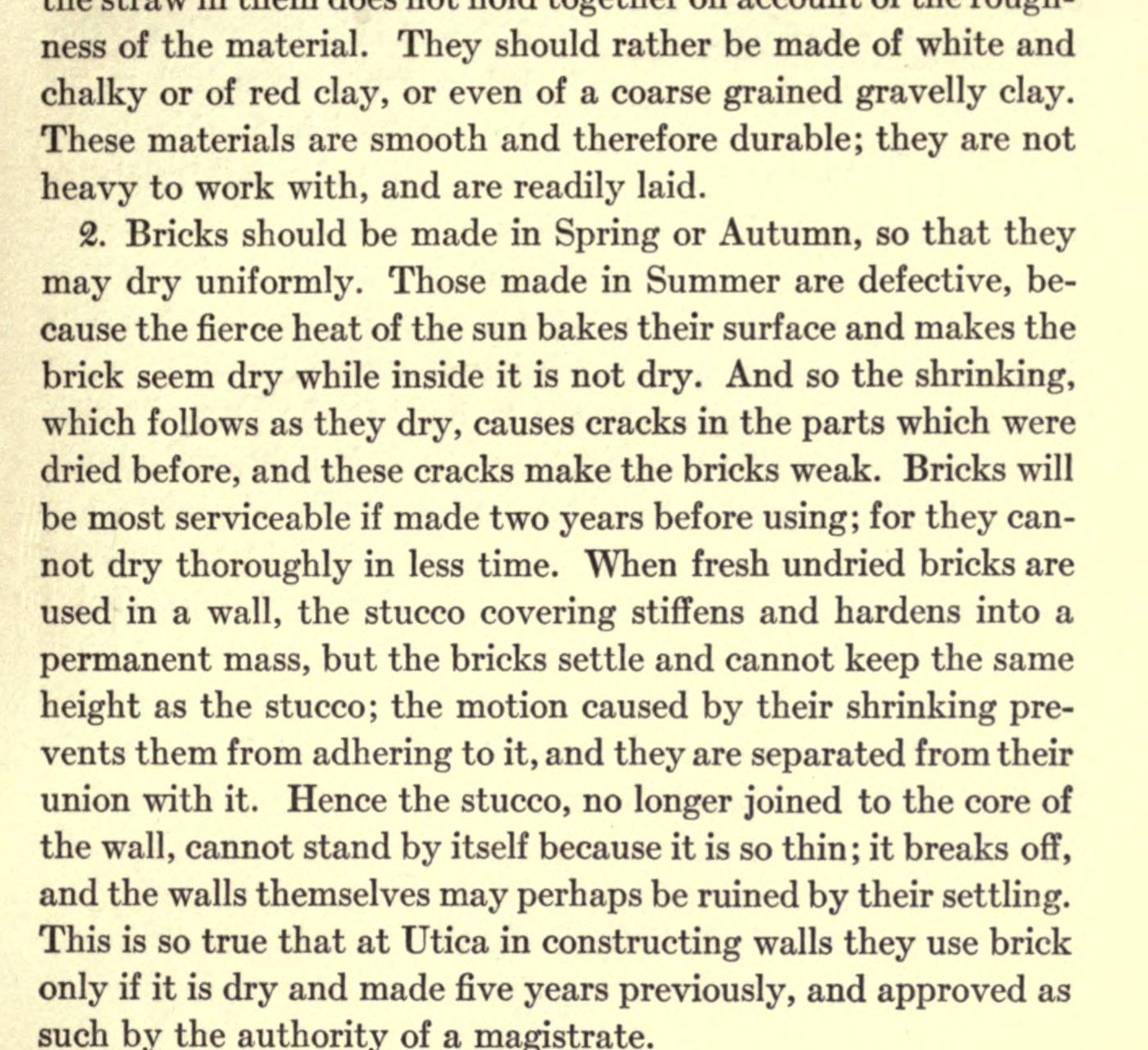


Roman Sun-Dried Bricks: Chalky or Red Clay with Straw, Moulded in Spring or Autumn, Dried Two Years (Vitruvius)
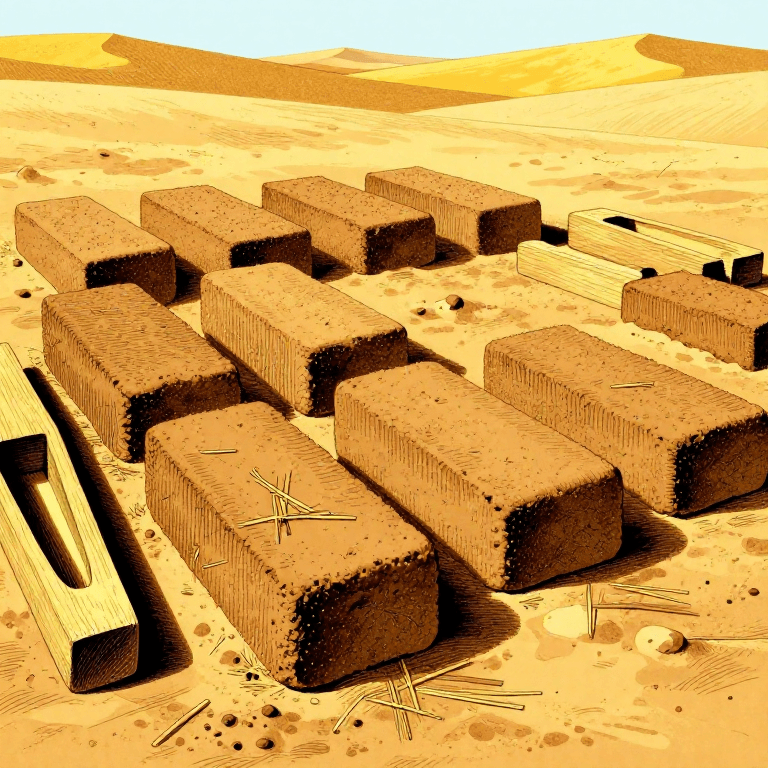
Unburnt brick as Vitruvius describes it in Book II: smooth white-chalky or red clay (never sandy or pebbly) with straw, moulded in spring or autumn so it dries evenly, and left two years before building, in the Roman Lydian size of 1 1/2 by 1 foot or the Greek four- and five-palm squares.
Beginner
A day to mould; two years to dry
Instructions
1
1
His sizes
His sizes
Loading Jupyter Notebook...
2
2
Read Vitruvius
Read Vitruvius
"Bricks will be most serviceable if made two years before using; for they cannot dry thoroughly in less time."
3
3
Choose the clay
Choose the clay
Use white chalky clay, red clay, or even a coarse-grained gravelly clay. Not sandy or pebbly clay or fine gravel: such bricks are heavy, break up in the rain, and the straw will not hold in them.
Materials for this step:
 Clay1 piece
Tools needed:
 Shovel
4
4
Temper with straw
Temper with straw
Work the clay with water and straw into a stiff mass (amounts ours).
Materials for this step:
Clay1 piece Chopped Straw1 piece
 Water1 piece
Tools needed:
 Hoe
 Bucket
5
5
Mould in spring or autumn
Mould in spring or autumn
Mould the bricks in spring or autumn, never summer, when the sun bakes the face dry over a wet core and the shrinking cracks them. Size: Lydian 1 1/2 x 1 ft (about 440 x 300 mm) for Roman work, or the Greek tetradoron (4 palms square) and pentadoron (5 palms square). Make half-bricks too.
Tools needed:
 Wooden Brick Mould
6
6
Dry two years
Dry two years
Stack and let them dry two years before building. Fresh bricks shrink and settle in the wall, the stucco parts from them and breaks off. (At Utica only bricks five years old, passed by a magistrate, were allowed.)
Tools needed:
Shovel7
7
Troubleshooting
Troubleshooting
Brick troubleshooting.
Flow
Loading...
8
8
History and honest limits
History and honest limits
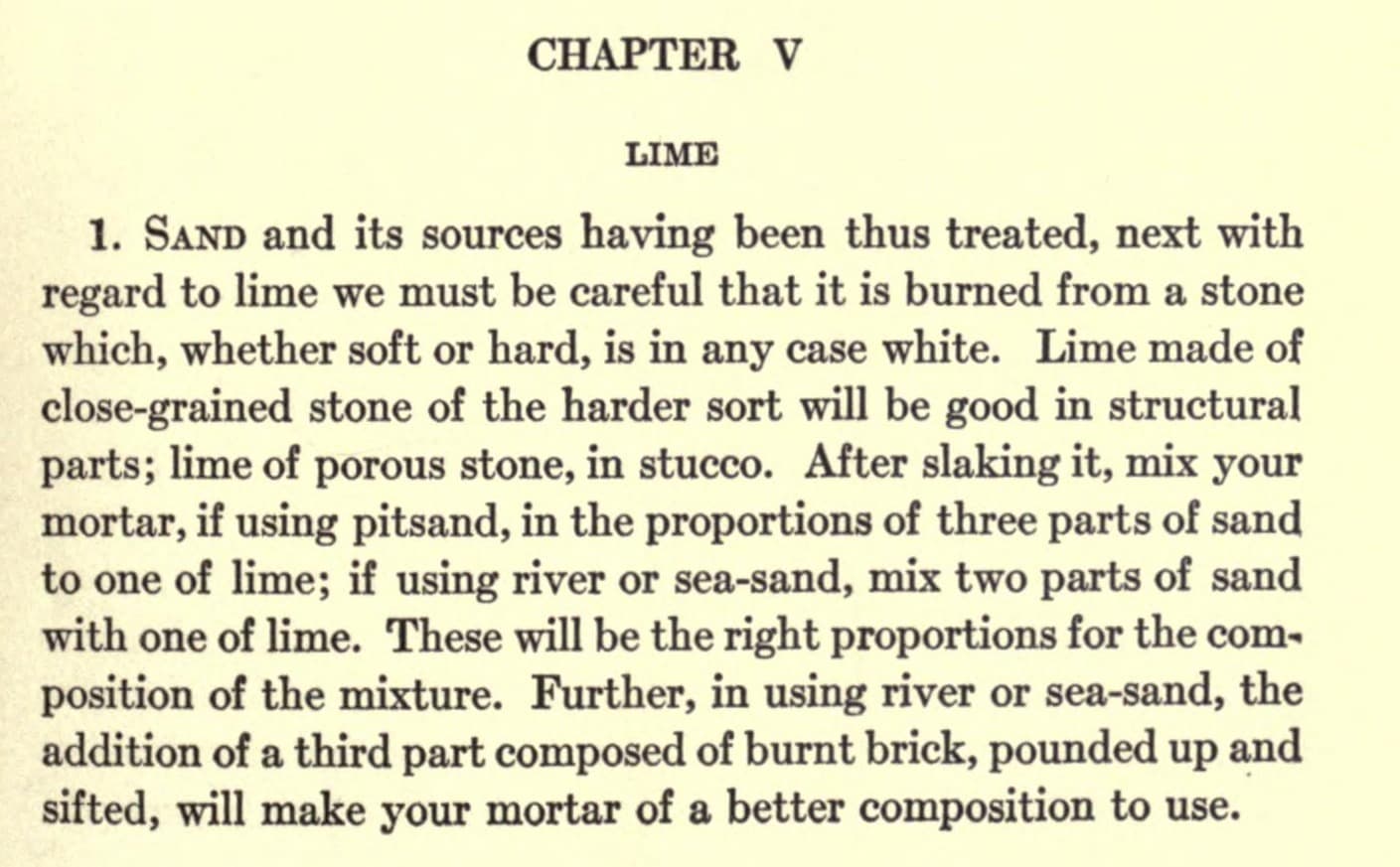
From Vitruvius, **The Ten Books on Architecture**, Book II ch. III, tr. M. H. Morgan (1914), pp. 42-44 (checked on the archive.org scan vitruviustenbook00vitruoft). He gives no thickness, mould or straw amount; those and the metric sizes (Roman foot taken as about 296 mm) are ours.
This blueprint makes
Related Blueprints
These blueprints share knowledge with this one — techniques, materials, or principles that connect them in the learning graph.

CC0 Public Domain
This blueprint is released under CC0. You are free to copy, modify, distribute, and use this work for any purpose, without asking permission.
Support the Maker by purchasing products through their Blueprint where they earn a Maker Commission set by Vendors, or create a new iteration of this Blueprint and include it as a connection in your own Blueprint to share revenue.