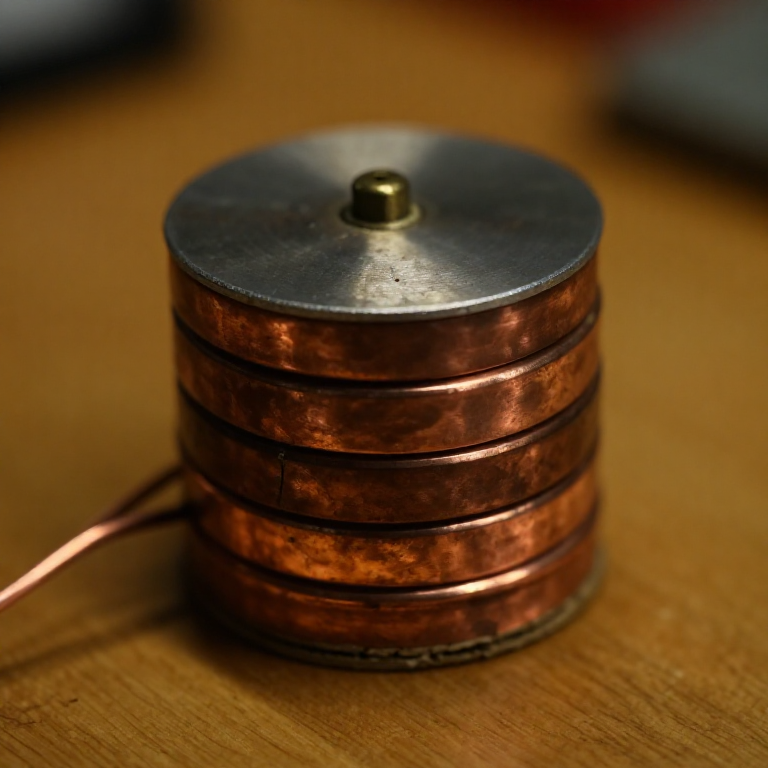


Building a Voltaic Pile — The First Battery and the Birth of Steady Electricity
Until 1800, electricity was a party trick: a spark you could store briefly in a jar and discharge in an instant. Then Alessandro Volta stacked discs of two metals and wet cardboard into a pile and produced something entirely new — a steady, continuous electric current that flowed for as long as you wanted. It was the first battery, and it opened the electrical age.
The principle is beautifully simple. Put two different metals, like zinc and copper, in a salty or acidic liquid and a voltage appears between them. One such pair is feeble, but stack many in a column — zinc, wet disc, copper, zinc, wet disc, copper — and their voltages add up into a useful current. The zinc slowly dissolves, pushing electrons out through a wire to the copper, while the brine carries the charge inside the pile.
With a voltaic pile, scientists could finally do chemistry and physics with electricity on tap. Within a few years it had been used to split water into hydrogen and oxygen, isolate new elements, and reveal the link between electricity and magnetism — the discoveries that led on to the telegraph, electroplating, the dynamo, and everything electrical that followed.
Instructions
Understand the principle
Understand the principle
Cut the metal discs
Cut the metal discs
Materials for this step:
 Zinc Sheet1 sheet
 Copper Sheet1 sheet
Tools needed:
 Tin Snips
Cut and soak the separators
Cut and soak the separators
Materials for this step:
 Cardboard1 sheet
 Table Salt30 g
 Water1 liter
Build the first cell
Build the first cell
Stack the pile
Stack the pile
Keep the order consistent
Keep the order consistent
Attach the leads
Attach the leads
Materials for this step:
 Copper Wire1 meter
Test for current
Test for current
Tools needed:
 Compass
Follow the chemistry
Follow the chemistry
Keep it running
Keep it running
Tune voltage and current
Tune voltage and current
Appreciate what it unlocked
Appreciate what it unlocked
Materials
6- 1 sheetPlaceholder
- 1 sheetPlaceholder
- 1 sheetPlaceholder
- 30 gPlaceholder
- 1 literPlaceholder
- 1 meterPlaceholder
Connected Blueprint Materials
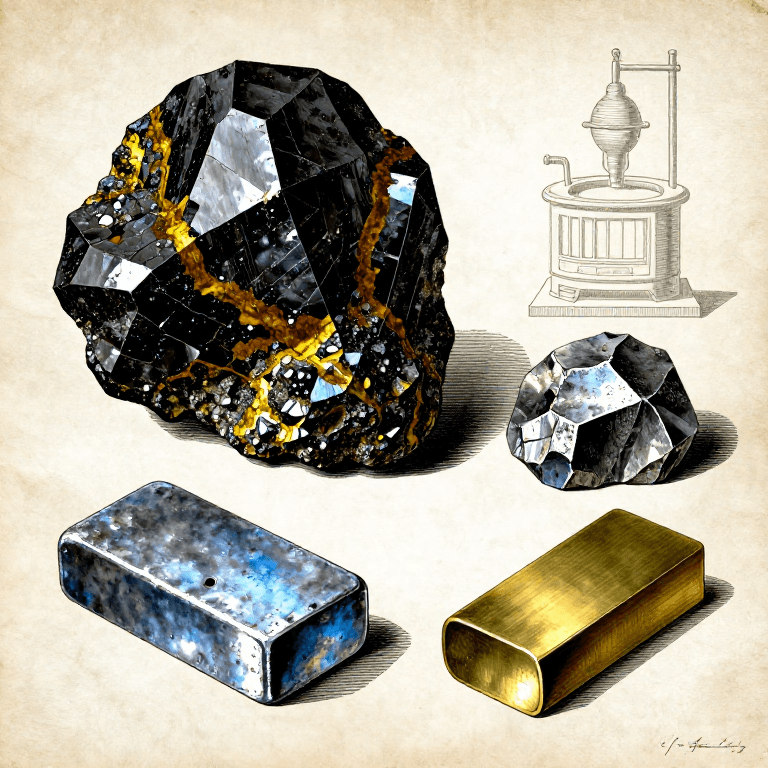

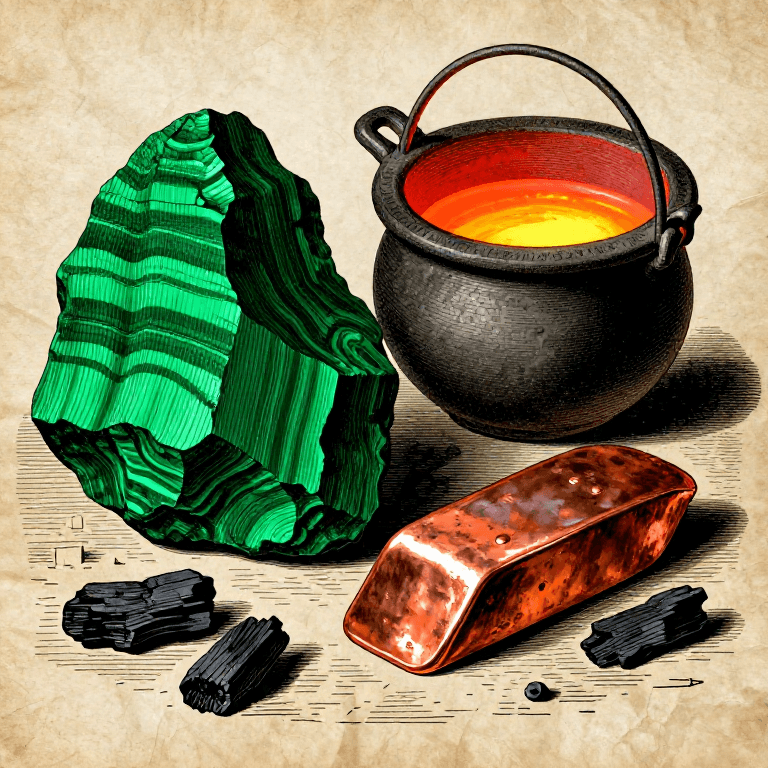
Related Blueprints
These blueprints share knowledge with this one — techniques, materials, or principles that connect them in the learning graph.
CC0 Public Domain
This blueprint is released under CC0. You are free to copy, modify, distribute, and use this work for any purpose, without asking permission.
Support the Maker by purchasing products through their Blueprint where they earn a Maker Commission set by Vendors, or create a new iteration of this Blueprint and include it as a connection in your own Blueprint to share revenue.