ART
BEAUTY & WELLNESS
CRAFT
CULTURE & HISTORY
ENTERTAINMENT
ENVIRONMENT
FOOD & DRINKS
REVERSE ENGINEERING
SCIENCES
SPORTS
TECHNOLOGY
WEARABLES
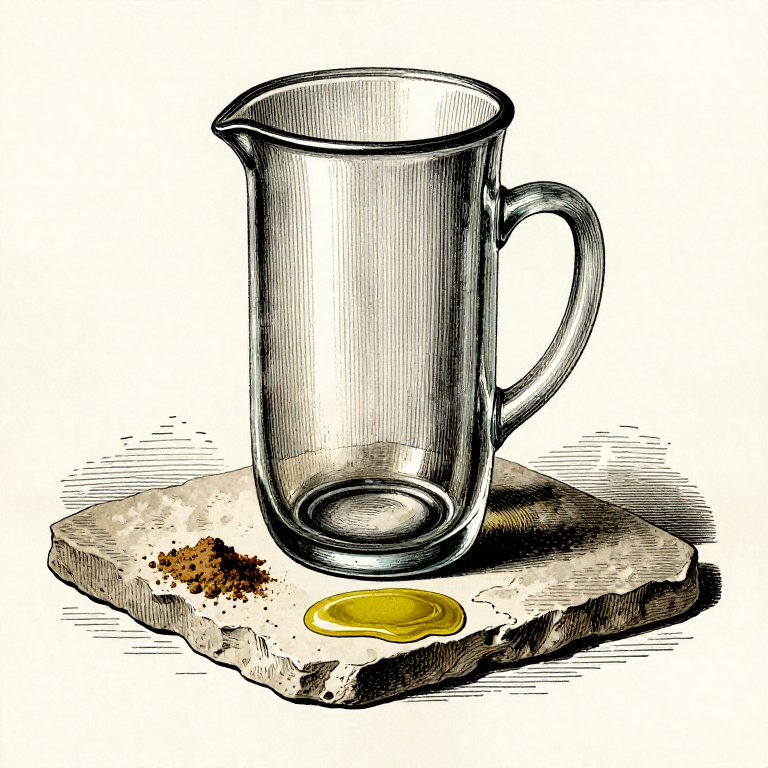

What Paint Is: Pigment, Binder, and the Ratio Between Them
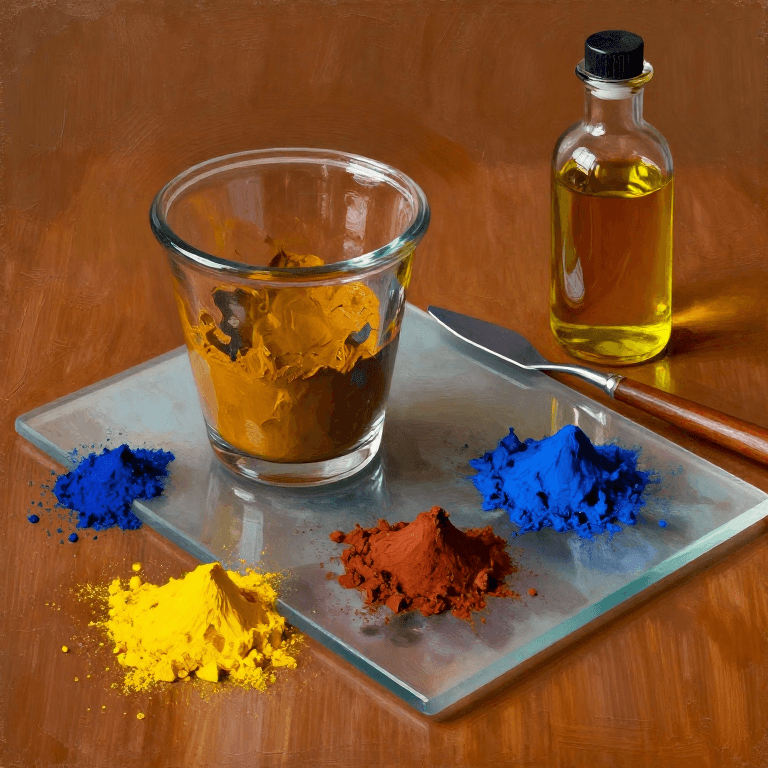
All paint is the same three things: solid coloured PARTICLES, a liquid BINDER that glues them to each other and to the surface, and usually a SOLVENT that makes it workable and then leaves.
Change the binder and you change the medium entirely. Pigment in drying oil is oil paint; the same pigment in gum arabic is watercolour, in egg yolk is tempera, in acrylic dispersion is acrylic. The colour is identical and the material is not.
The ratio between pigment and binder decides almost everything else — gloss, opacity, flexibility, and whether the film holds together at all. There is a specific ratio above which a paint stops being a film and starts being loose powder, and it has a name.
Intermediate
3 hours
Instructions
1
1
Three components, and what each one does
Three components, and what each one does
PIGMENT is insoluble solid particles. It provides the colour and the hiding power, and it does not dissolve — a dye does, and that is the difference between a pigment and a dye.
BINDER is what turns a pile of powder into a film. It wets every particle, fills the space between them, and then hardens — by evaporating, by reacting with oxygen, or by particles coalescing.
SOLVENT or diluent makes the paint thin enough to apply and then leaves completely. It contributes nothing to the final film, which is why thinning too far leaves a weak paint: there is the same pigment with less binder per unit volume once the solvent has gone.
Materials for this step:
 Earth Pigment Powder Set1 piece
 Linseed Oil1 piece
 Gum Turpentine1 piece
Tools needed:
 Glass Muller
 Precision Scale
 Nitrile Rubber Gloves
2
2
Pigment volume concentration, and the critical point
Pigment volume concentration, and the critical point
Loading Jupyter Notebook...
Materials for this step:
Earth Pigment Powder Set1 pieceLinseed Oil1 pieceTools needed:
Precision Scale Desktop ComputerGlass Muller
3
3
The binder decides the medium
The binder decides the medium
DRYING OIL hardens by absorbing oxygen and cross-linking into a tough flexible solid. It is slow, it can be worked wet-into-wet for days, and the film keeps moving for decades.
GUM ARABIC dissolves in water and hardens by simply drying. That makes watercolour re-wettable for ever, which is a feature when working and a vulnerability once framed.
EGG YOLK is an emulsion of oil and water that dries fast and then slowly polymerises into something extremely durable. ACRYLIC DISPERSION is solid polymer particles suspended in water: the water leaves, the particles coalesce, and the film is complete in minutes and is not re-soluble afterwards.
Materials for this step:
Linseed Oil1 piece Gum Arabic1 piece
Tools needed:
 Glass Beaker
 Stirring Rod
 Magnifying Loupe
4
4
Grind it properly, because dispersion is not mixing
Grind it properly, because dispersion is not mixing
Grinding paint is not stirring pigment into oil. It is breaking up clumps of particles and wetting each one, so that every particle is surrounded by binder rather than sitting in a dry cluster.
A glass muller on a ground glass slab does this by shear: the paste is worked in figures of eight until it stops changing. An under-ground paint looks acceptable and is weaker, less colourful and more prone to cracking, because the dry clusters are voids waiting to happen.
You can see when it is done. Under-dispersed paint is grainy against the slab and slightly dull; properly dispersed paint turns noticeably more saturated and smooth. That colour change IS the dispersion, and it is the test.
Materials for this step:
Earth Pigment Powder Set1 pieceLinseed Oil1 pieceTools needed:
Glass Muller SpatulaMagnifying LoupeNitrile Rubber Gloves
Materials
4- 1 piecePlaceholder
- 4 piecesPlaceholder
- 1 piecePlaceholder
- 1 piecePlaceholder
Tools Required
8- Placeholder
- Placeholder
- Placeholder
- Placeholder
- Placeholder
- Placeholder
- Placeholder
- Placeholder
Related Blueprints
These blueprints share knowledge with this one — techniques, materials, or principles that connect them in the learning graph.

CC0 Public Domain
This blueprint is released under CC0. You are free to copy, modify, distribute, and use this work for any purpose, without asking permission.
Support the Maker by purchasing products through their Blueprint where they earn a Maker Commission set by Vendors, or create a new iteration of this Blueprint and include it as a connection in your own Blueprint to share revenue.