ART
BEAUTY & WELLNESS
CRAFT
CULTURE & HISTORY
ENTERTAINMENT
ENVIRONMENT
FOOD & DRINKS
REVERSE ENGINEERING
SCIENCES
SPORTS
TECHNOLOGY
WEARABLES
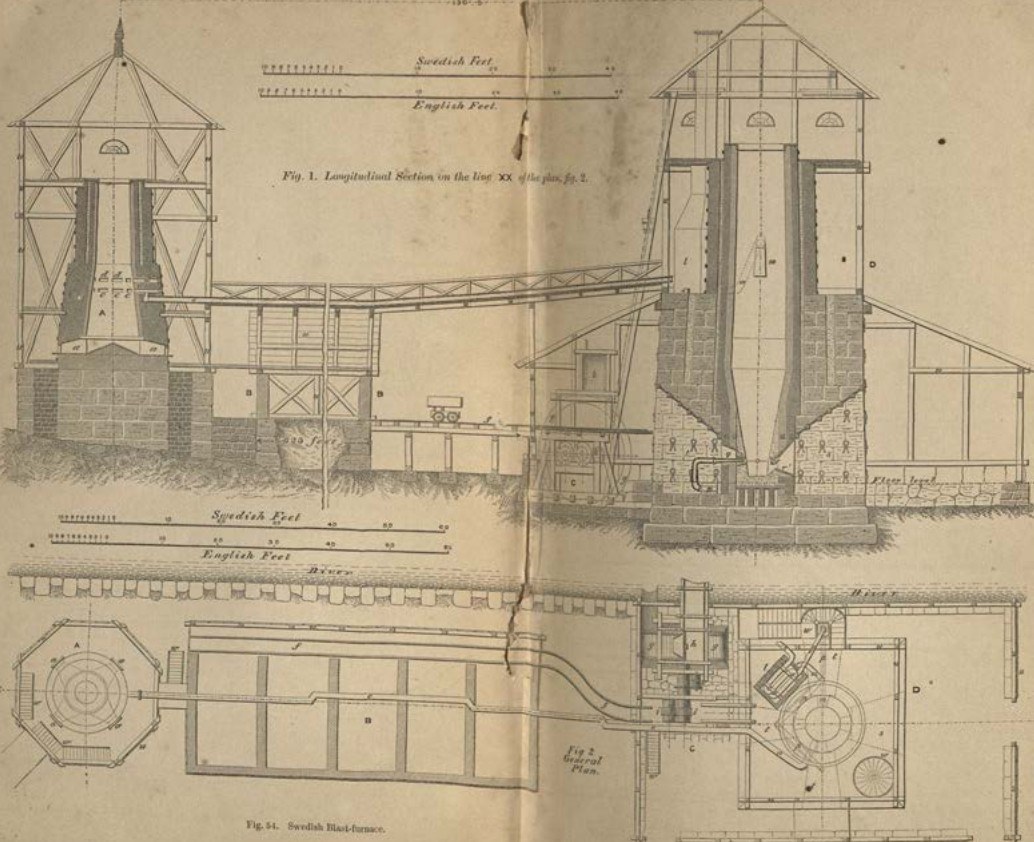


White Charcoal Pig Iron: Calcined Magnetic Ore Smelted with Charcoal in a Swedish Blast Furnace (Percy, 1864)
Sweden's bar iron began in small charcoal blast furnaces fed with roasted magnetic ore. Percy describes the Sten furnace and how the Swedes smelted: slow, with gentle blast, and with no hot blast at all for the best Dannemora iron, whose manganese-rich ore gives a white, crystalline pig made for the finery.
Result: white pig iron in iron moulds, 40-60 tons a week; about half the weight of the ore comes out as iron.
Source: John Percy, Metallurgy: Iron and Steel (1864), pp. 370-375. Picture: Percy's Fig. 54, the Swedish blast furnace.
Expert
continuous; tapped every 6 hours
Instructions
1
1
Calcine the ore
Calcine the ore
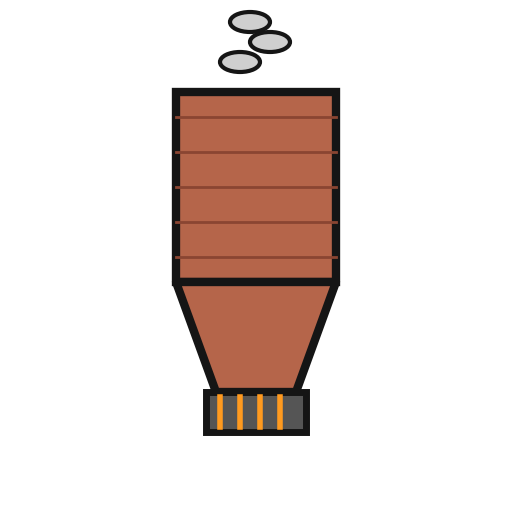
Break the magnetic ore into lumps no bigger than a double fist and roast it carefully in a mine-kiln heated by the waste gas of the furnace. The Swedes always calcine mountain ores, even without sulphur; any sulphur from pyrites is driven off.
Materials for this step:
 Magnetite1 ore
Tools needed:
 Roasting Kiln
2
2
Crush the roasted ore
Crush the roasted ore
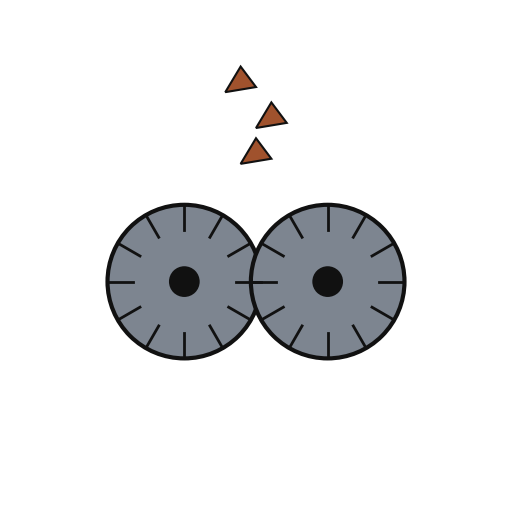
Crush the calcined ore between grooved cast-iron rolls driven by an overshot water wheel, to pieces of ¼ to 1 cubic inch.
Tools needed:
 Crushing Rolls
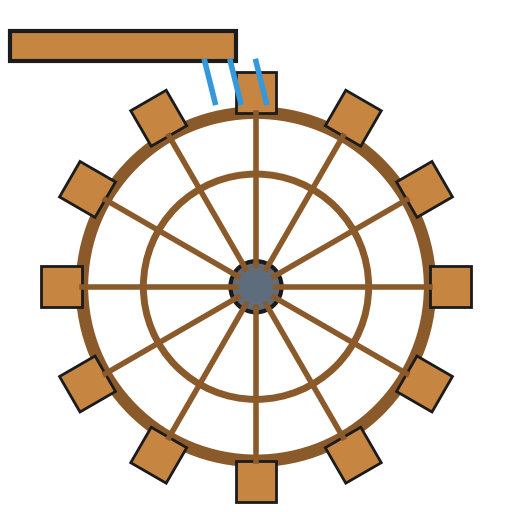 Water Wheel
3
3
Prepare the furnace
Prepare the furnace
Use a charcoal blast furnace of fire-brick in a sand-filled outer shell. Stamp the lower boshes and hearth from 6 parts crushed quartz to 1 part raw fire-clay by measure round a wooden block, and dry it very slowly with a wood fire. It has three water-cooled tuyeres about 2½ inches across.
Tools needed:
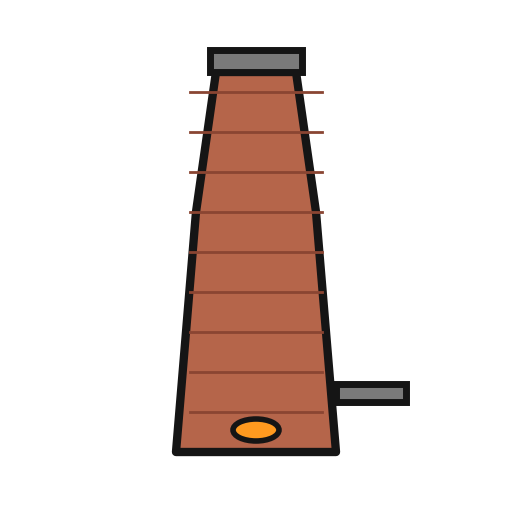 Blast Furnace
4
4
Set the blast
Set the blast
Blow with a water-driven blowing engine (at Sten three cylinders about 45 inches across, 45-inch stroke) at ½ to 1½ lb per square inch, more for hard charcoal. Keep the blast so slow that the furnace contents take at least 12 hours to pass through. For pig meant for bar iron the blast is warmed only to about 100 °C; the best Dannemora iron is made with cold blast.
Tools needed:
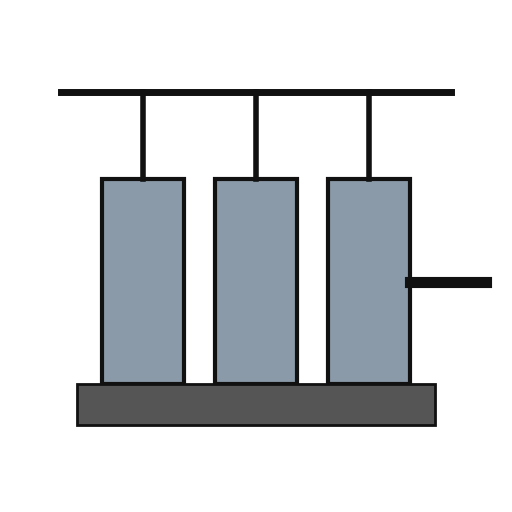 Blowing EngineWater Wheel
5
5
Charge charcoal and ore
Charge charcoal and ore
Charge 30-50 cubic feet of charcoal at a time and 7-10 cwt of ore on top, half spread round the sides and half in the middle, the most siliceous ore first. Dannemora ore needs no flux (other ores take 10-15 % limestone). It takes about 0.8 to 1 ton of charcoal per ton of iron.
Materials for this step:
 Charcoal1 0.8-1 ton per ton of iron
Tools needed:
Blast Furnace6
6
Tap into iron moulds
Tap into iron moulds
Tap every 6 hours and run the metal into iron moulds, not sand. A furnace makes 40-60 tons a week; the cinder runs thin and holds under 1 % iron. Pig from Dannemora ore is white and crystalline, from its manganese.
Tools needed:
 Ingot Mould
Tools Required
6- Placeholder
- Placeholder
- Placeholder
- Placeholder
- Placeholder
- Placeholder
This blueprint makes
Related Blueprints
These blueprints share knowledge with this one — techniques, materials, or principles that connect them in the learning graph.

CC0 Public Domain
This blueprint is released under CC0. You are free to copy, modify, distribute, and use this work for any purpose, without asking permission.
Support the Maker by purchasing products through their Blueprint where they earn a Maker Commission set by Vendors, or create a new iteration of this Blueprint and include it as a connection in your own Blueprint to share revenue.